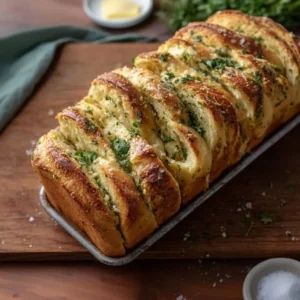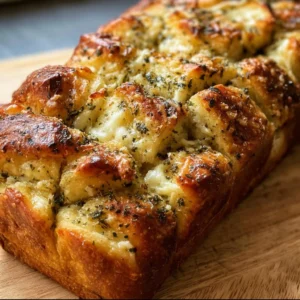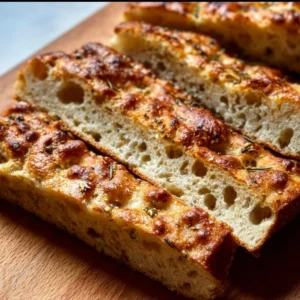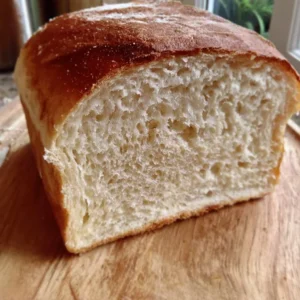

I first made this sandwich bread when I had a bowl of sourdough discard that needed rescuing. The result was a soft, slightly tangy loaf that disappears fast at breakfast and makes the creamiest grilled cheese. This recipe blends active dry yeast with discard so you get reliable rise plus that familiar sourdough flavor — fast enough for weeknights, cozy enough for weekend sandwiches.
Why you’ll love this dish
This is the kind of bread that checks a lot of boxes: it’s fast (no long sourdough ferment), economical (uses discard you’d otherwise throw away), and reliably fluffy because of the added yeast. It yields two sandwich loaves with a tender crumb, a light crust, and just enough sourdough tang to be interesting without overpowering.
“Light, pillowy slices with just the right hint of tang. Fast to make, and everyone asked for seconds.” — home baker review
Reasons to try it:
- Quick turnaround compared with full-fed sourdough (about 2–3 hours start to finish).
- Great use for discard — reduces waste and adds flavor.
- Kid- and sandwich-friendly texture — soft but sturdy enough to hold fillings.
- Versatile: works for toast, sandwiches, French toast, and more.
The cooking process explained
Before you pull out the bowls, here’s the simple flow: activate yeast in warm water with honey, mix in the discard, oil, flours, and salt, knead until smooth, let the dough rise until roughly doubled, shape into two loaves, allow a second rise in pans, then bake until golden and done. Expect about 2–3 hours total including rises and bake time, depending on your room temperature.
What you’ll need
- 180 g (¾ cup) warm water — about 105–110°F (40–43°C) to activate yeast.
- 7 g (2 ¼ tsp) active dry yeast.
- 60 g (¼ cup) honey — or maple syrup, agave for vegan option.
- 180 g (¾ cup) sourdough discard — at room temperature.
- 60 g (¼ cup) olive oil — or neutral oil, melted butter for richer flavor.
- 120 g (1 cup) whole wheat flour — adds nuttiness; swap for more bread flour for a lighter crumb.
- 343 g (2 ½ cups) bread flour — helps structure the loaf.
- 10 g (1 ½ tsp) salt — do not skip; salt controls fermentation and flavor.
Notes on ingredients:
- Sourdough discard: can be unfed discard, straight from the fridge (bring to room temp first).
- Bread flour: if you only have all-purpose, the texture will be slightly softer; consider adding 1–2 tbsp extra to mimic higher-protein flour.
- Yeast: active dry is listed; instant yeast can be used at 20% less (about 5.5 g).
Step-by-step instructions
- Activate the Yeast: Warm the 180 g water to about 105–110°F (40–43°C). Stir in the yeast and 60 g honey. Let sit 5–10 minutes until foamy. If it doesn’t foam, the yeast may be dead — start over with fresh yeast.
- Mix the Dough: In a large bowl combine the foamy yeast mixture, 180 g sourdough discard, 60 g olive oil, 120 g whole wheat flour, and 343 g bread flour. Add 10 g salt (keep salt away from direct contact with yeast initially). Stir until a shaggy dough forms.
- Knead: Turn the dough onto a lightly floured surface and knead 6–8 minutes until smooth and slightly tacky; or knead 4–5 minutes in a stand mixer with a dough hook. You want a windowpane or a dough that holds together and springs back lightly.
- First Rise: Place the dough in a lightly oiled bowl, cover with plastic wrap or a clean towel, and let rise in a warm spot until roughly doubled — about 60–90 minutes depending on room temp. It should look puffy and aerated.
- Shape the Loaves: Gently deflate the dough and divide it in half. Pre-shape into rounds, rest 10 minutes, then roll each into a tight loaf shape and place into two greased 9×5-inch loaf pans. Tuck seams under for a smooth top.
- Second Rise: Cover the pans and let the loaves rise until the dough reaches about 1 inch above the rim of the pan, roughly 30–50 minutes. Don’t overproof — they should still spring back slowly when poked.
- Bake: Preheat the oven to 350°F (175°C). Bake the loaves for 30–35 minutes, rotating pans halfway through. The loaves are done when the crust is golden and an instant-read thermometer inserted in the center reads 190–200°F (88–93°C). If the tops brown too quickly, tent with foil.
- Cool: Remove from pans and cool completely on a wire rack before slicing — at least 1 hour. Cooling sets the crumb and makes slicing neat.

Key Ingredients
- Warm water (105–110°F) — activates yeast safely.
- Active dry yeast — gives predictable rise alongside discard.
- Honey — feeds yeast and adds subtle sweetness; can be swapped.
- Sourdough discard — provides tang and complexity.
- Olive oil — keeps crumb tender and extends shelf life.
- Whole wheat + bread flour — balance flavor and structure.
- Salt — essential for flavor and fermentation control.
Directions to follow
(Condensed quick view)
- Bloom yeast in warm water with honey until foamy.
- Combine liquid with discard, oil, flours, and salt; form a dough.
- Knead until smooth.
- First rise: covered, until doubled.
- Shape into two loaves and place in loaf pans.
- Second rise: until nearly pan-high.
- Bake at 350°F (175°C) for 30–35 minutes until internal temp 190–200°F.
- Cool fully before slicing.
Best ways to enjoy it
- Classic: thick-sliced with butter and jam for breakfast.
- Sandwiches: turkey, Swiss, and apple slices; or a simple tomato-mayo combo.
- Toasted: perfect for avocado toast with flaky salt and chili flakes.
- Indulgent: make grilled cheese with sharp cheddar and a smear of mustard.
- Brunch idea: cube leftover bread for savory bread pudding or strata.
Pairings:
- Soft cheeses, cured meats, or roasted vegetables.
- A cup of coffee or a bright, acidic white wine for brunch.
Storage and reheating tips
- Room temp: store wrapped in plastic or a bread bag for 2–3 days. Keep in a cool, dry place away from direct sunlight.
- Refrigeration: avoid refrigerating whole loaves (it accelerates staling). Only refrigerate if your kitchen is very humid and you expect mold risk — but expect quicker staling.
- Freezing: slice first, then freeze in a sealed bag for up to 3 months. Toast or thaw slices at room temp.
- Reheating: toast slices straight from frozen or warm whole slices in a 350°F oven for 8–10 minutes wrapped in foil. Let cool briefly before slicing.
Food safety note: cool loaves completely before bagging to prevent condensation and mold. Discard any bread that smells off.
Helpful cooking tips
- Water temperature matters: too-hot water kills yeast; too-cool slows rise. 105–110°F is a safe target for active dry yeast.
- Use a thermometer: internal temperature (190–200°F) is the most reliable doneness check.
- Don’t overproof: if the dough overproofs, the crumb can be gummy and the oven spring weak.
- Tidy shaping: create surface tension by rolling the dough tightly — this produces a fine, even top crust.
- For a softer crust: brush with melted butter as soon as the loaves come out of the oven.
- Make ahead: freeze the loaves, or shape, freeze, then proof and bake later for fresh bread on demand.
Recipe variations
- Seeded loaves: fold 2–3 tbsp each of sesame and sunflower seeds into the dough or press on top before baking.
- Honey-free: replace honey with 60 g maple syrup or 60 g granulated sugar dissolved in water.
- Whole wheat-forward: swap up to 150 g of bread flour for extra whole wheat (expect denser loaves).
- Dairy-enriched: replace 30–60 g water with whole milk for a richer crumb.
- Vegan: swap honey for maple/agave and use oil as written.
- Mini loaves or rolls: divide the dough into 12 pieces and bake as rolls (reduce bake time to 18–22 minutes).
Common questions
Q: How long does this recipe take from start to finish?
A: Plan on about 2–3 hours total: 10–15 minutes active prep, 1–1.5 hours first rise, 30–50 minutes second rise, and 30–35 minutes baking. Cooler kitchens will slow rises.
Q: Can I use instant yeast instead of active dry?
A: Yes. Use about 5.5–6 g instant (roughly ¾ of a packet) and mix it directly into the flours — no proofing needed — though you can still proof it if you prefer.
Q: Is it safe to use sourdough discard?
A: Absolutely. Discard refers to unfed starter that’s safe to use in baking. Bring refrigerated discard to room temp for best mixing. If it smells very off (not just tangy), discard it.
Q: Can I make this gluten-free?
A: This recipe relies on gluten for structure. For gluten-free, use a tested GF bread blend, add xanthan gum per blend instructions, and expect different hydration and texture. Start with a separate GF bread recipe for best results.
Q: How can I tell if the bread is done without a thermometer?
A: Tap the bottom of the loaf — it should sound hollow. Appearance and a firm crust also help, but a thermometer is most reliable.
Conclusion
If you want more inspiration or variations on sourdough discard sandwich loaves, check out this detailed version from Farmhouse on Boone: Sourdough Discard Sandwich Bread – Farmhouse on Boone. For another take with slightly different techniques, see the Pantry Mama’s easy approach here: Easy Sourdough Discard Sandwich Bread Recipe – The Pantry Mama.
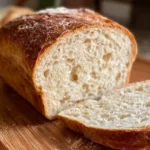
Sourdough Discard Sandwich Bread
Ingredients
Dough Ingredients
- 180 g warm water (105–110°F) Activates yeast safely.
- 7 g active dry yeast Gives predictable rise alongside discard.
- 60 g honey Adds subtle sweetness, can be swapped for maple syrup.
- 180 g sourdough discard Can be unfed, bring to room temp first.
- 60 g olive oil Keeps crumb tender, can use melted butter.
- 120 g whole wheat flour Adds nuttiness, can swap for more bread flour.
- 343 g bread flour Helps structure the loaf.
- 10 g salt Essential for flavor and fermentation control.
Instructions
Activation and Mixing
- Warm the 180 g water to about 105–110°F. Stir in the yeast and 60 g honey. Let sit 5–10 minutes until foamy.
- In a large bowl, combine the foamy yeast mixture, 180 g sourdough discard, 60 g olive oil, 120 g whole wheat flour, and 343 g bread flour. Add 10 g salt (keep salt away from yeast initially) and stir until a shaggy dough forms.
Kneading and Rising
- Turn the dough onto a lightly floured surface and knead for 6–8 minutes until smooth; or knead for 4–5 minutes in a stand mixer.
- Place the dough in a lightly oiled bowl, cover, and let rise in a warm spot until roughly doubled (about 60–90 minutes).
Shaping and Second Rise
- Gently deflate the dough, divide in half, and shape into rounds. Rest for 10 minutes.
- Roll each into a tight loaf shape and place in two greased 9x5-inch loaf pans. Cover and let rise until about 1 inch above the rim (roughly 30–50 minutes).
Baking
- Preheat the oven to 350°F. Bake the loaves for 30–35 minutes, rotating halfway through. They should reach an internal temperature of 190–200°F.
Cooling
- Remove from pans and cool completely on a wire rack for at least 1 hour before slicing.