

Bright, verdant, and quick to make, this pesto turns spring vegetables into a silky, lemon-bright sauce that wakes up pasta, grilled fish, or toasted bread.
It comes together in one food processor and feels like a fancy sauce with minimal fuss.
Keep the flavors bright and the texture vibrant for the best results.
If you love seasonal cooking, this pesto pairs beautifully with salads and light mains.
Try it when asparagus is at its peak for the freshest taste and the most vivid color.
For another asparagus-forward idea, check this asparagus salad that uses similar spring produce: asparagus chickpea quinoa salad.
Why You’ll Love This Lemony Asparagus & Pea Pesto
- Bright, lemony flavor that lifts ordinary pasta into a springtime dish.
- Vibrant green color that looks lively on the plate.
- Fast to make — about 10–15 minutes from start to finish.
- Lower oil content than traditional pesto for a lighter finish.
- Versatile: use as a pasta sauce, spread, dip, or salad dressing.
- Uses seasonal vegetables making it cost-effective and fresh.
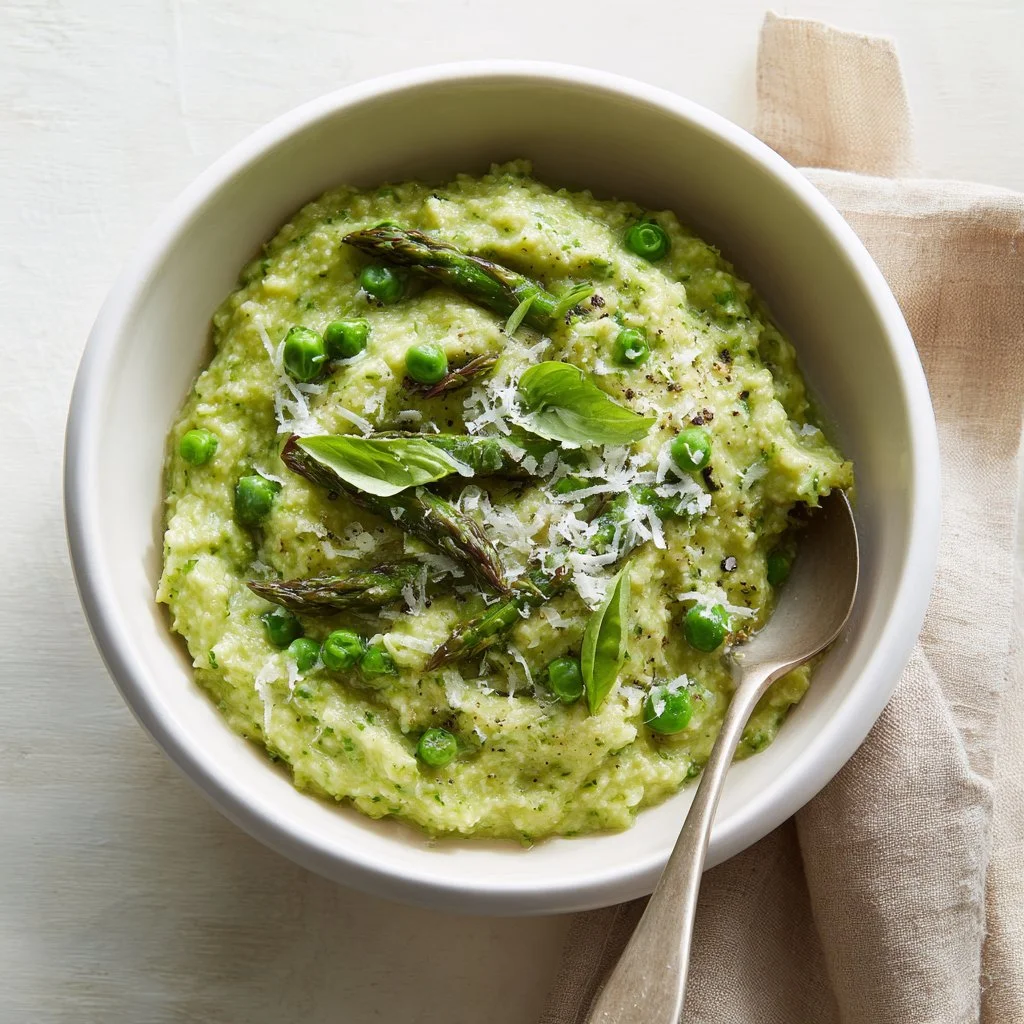
The taste is fresh and slightly sweet from the peas, with an earthy green note from asparagus and basil.
The lemon juice adds sharp citrus brightness while Parmesan rounds the sauce with savory umami.
Texture-wise it’s spoonable and slightly coarse when pulsed — silky enough to coat pasta but with visible flecks of green.
"I made this for a quick weeknight dinner and it felt restaurant-quality. Bright, fresh, and zippy — 5 stars!" — Clara R.
Key Ingredients for Lemony Asparagus & Pea Pesto
Asparagus — Choose firm stalks with tightly closed tips and vivid green color.
Trim the fibrous ends before chopping; overcooked asparagus becomes mushy and dulls the color.
If you must substitute, blanched broccoli stalks can work but they will change the flavor profile and texture.
Fresh peas (or frozen peas) — Fresh peas offer the sweetest, freshest green note; frozen peas are an excellent, convenient substitute.
If using frozen, thaw slightly and blot excess moisture before processing to avoid a watery pesto.
Substituting edamame will add a nuttier flavor and creamier texture.
Fresh basil leaves — Basil provides aromatic lift and rounds the greens with its peppery, sweet notes.
Use young, bright leaves without dark spots; bruised or aged basil can taste bitter.
If you swap basil for parsley, expect a milder, earthier sauce that lacks the classic pesto aroma.
Full Ingredient List for Lemony Asparagus & Pea Pesto
- 1 cup asparagus, trimmed and chopped
- 1 cup fresh peas (or frozen peas)
- 1/2 cup fresh basil leaves
- 1/4 cup grated Parmesan cheese
- 2 tablespoons lemon juice
- 1 clove garlic
- 1/4 cup olive oil
- Salt and pepper to taste
Step-by-Step Instructions for Lemony Asparagus & Pea Pesto
Step 1: Blanch the asparagus and peas
Bring a pot of salted water to a rolling boil and add the chopped asparagus and peas.
Blanch for about 2–3 minutes until the vegetables turn bright green and are just tender.
Drain promptly and transfer to a bowl of ice water to stop cooking and preserve the color.
Pro Tip: The vegetables should look vibrantly green and feel tender but with a slight bite.
Step 2: Combine ingredients in a food processor
Add the cooled, drained asparagus and peas to your food processor along with the basil, Parmesan, lemon juice, and garlic.
Secure the lid and pulse a few times to start breaking down the ingredients evenly.
Pro Tip: You should see the mixture begin to form small, uniformly chopped pieces — not a puree yet.
Step 3: Pulse until finely chopped
Pulse in short bursts, scraping down the sides as needed, until the mixture is finely chopped and cohesive.
Stop before it becomes completely smooth to retain a pleasant, slightly rustic texture.
Pro Tip: The mixture should cling together when pressed between your fingers but still show flecks of pea and basil.
Step 4: Emulsify with olive oil
With the processor running, slowly drizzle in the olive oil until the pesto reaches your desired consistency.
Add a little more oil if you want a silkier sauce, or less for a thicker spread.
Pro Tip: When the oil is fully incorporated, the surface will look glossy and the texture will be spoonable.
Step 5: Season to taste
Taste the pesto and season with salt and freshly ground black pepper.
Adjust lemon juice or Parmesan if you want more acidity or umami.
Pro Tip: The flavor should be balanced — lemon should brighten but not overpower, and salt should enhance the basil and peas.
Step 6: Serve over pasta or use as desired
Toss the pesto with hot pasta, a splash of reserved pasta water, and serve immediately.
You can also spoon it over grilled fish, roasted vegetables, or use it as a sandwich spread.
Pro Tip: When tossed with pasta, the sauce should coat each strand lightly and appear glossy, not oily.
Expert Tips for Lemony Asparagus & Pea Pesto
- Chill your peas briefly if they’re warm; cooler ingredients preserve vibrant color and help the pesto stay bright.
- If the pesto is grainy, pulse less and add a tablespoon of olive oil or a small splash of cream to smooth it out.
- Use a food processor for a rustic texture; a blender will create a smoother, more uniform sauce.
- Wash and dry basil leaves gently to avoid bruising; a salad spinner works well for thorough drying.
- Avoid over-blanching asparagus — it should remain slightly crisp to keep structure and color.
- When seasoning, remember Parmesan brings salt; add salt gradually and taste as you go.
- Common mistake: Adding too much oil at once leads to a greasy pesto — drizzle slowly while processing.
- For a creamier finish, fold in a tablespoon of ricotta or a splash of pasta water just before serving; this tames dryness without losing flavor.
While experimenting, you might enjoy a bright, complementary salad — this chickpea feta avocado salad offers a similar herb-forward profile: chickpea feta avocado salad.
Storage & Freezing for Lemony Asparagus & Pea Pesto
Fridge storage: Store the pesto in an airtight container for up to 4 days.
Smooth the top and drizzle a thin layer of olive oil over the surface to limit oxidation.
Use a glass jar with a tight lid for best results.
Freezer storage: Freeze pesto in ice cube trays for single-serve portions, then transfer frozen cubes to a freezer bag.
Frozen pesto keeps well for 3 months and thaws quickly in the refrigerator or directly in hot pasta.
Use freezer-safe containers or silicone molds and label with the date.
Thawing and reheating: Thaw overnight in the fridge for the cleanest texture.
Gently warm in a pan with a splash of water or olive oil; avoid overheating to keep the bright flavor intact.
If texture separates slightly after thawing, whisk in a little fresh lemon juice or olive oil to revive it.
Variations & Substitutions for Lemony Asparagus & Pea Pesto
Spring Herb Pesto — Swap half the basil for tarragon or mint and add extra lemon zest.
The result is an herbaceous, slightly floral pesto that pairs beautifully with lamb or shellfish.
Nuts Added Pesto — Stir in 2 tablespoons of toasted pine nuts or almonds before pulsing.
This adds nuttiness and a silkier texture similar to traditional pesto.
Creamy Ricotta Pesto — Fold in 1/4 cup ricotta cheese at the end to soften the sharpness and create a richer sauce.
It becomes a creamier pasta sauce ideal for kids or more indulgent dishes.
Pea-Forward Pesto with Lemon Zest — Double the peas and add an extra teaspoon of lemon zest.
This variation highlights the sweet pea flavor and provides a brighter citrus lift; try it over roasted carrots or new potatoes.
For a sweet contrast on dessert night, you might like pairing spring menus with something simple and show-stopping like this dump-cake: 3-ingredient peach cobbler dump cake.
Frequently Asked Questions About Lemony Asparagus & Pea Pesto
Can I make Lemony Asparagus & Pea Pesto without a food processor?
Yes, you can use a mortar and pestle to crush garlic, basil, and peas, then finely chop blanched asparagus and mix everything together.
This method yields a chunkier, more rustic texture and takes more time, but it preserves a pleasing bite.
Is frozen pea pesto as good as using fresh peas in Lemony Asparagus & Pea Pesto?
Frozen peas are a perfectly good alternative and often sweeter because they’re flash-frozen at peak ripeness.
Thaw and drain them well to avoid excess water; you may need to reduce added liquid to maintain texture.
How do I keep the Lemony Asparagus & Pea Pesto bright green?
Blanch and shock the vegetables immediately in ice water to lock in color.
Store with a thin layer of olive oil on top and keep refrigerated; use within 4 days for the best color and flavor.
Can I make Lemony Asparagus & Pea Pesto ahead for a dinner party?
Yes — make it up to 48 hours ahead and store in the fridge with oil on the surface.
For longer storage, freeze in ice cube trays and thaw portions as needed to keep freshness.
What dishes pair best with Lemony Asparagus & Pea Pesto?
Toss with al dente pasta and a splash of pasta water for a simple meal.
It also pairs with grilled chicken, roasted vegetables, or as a spread for crostini; try it as a topping for baked fish for a bright finish.
Final Thoughts on Lemony Asparagus & Pea Pesto
This pesto is a fast, fresh way to celebrate spring produce and brighten weeknight meals.
If you tried it, please leave a star rating in the recipe card below and pin this to Pinterest to save for later.
Lemony Asparagus & Pea Pesto
Ingredients
Main ingredients
- 1 cup asparagus, trimmed and chopped Choose firm stalks with tightly closed tips.
- 1 cup fresh peas (or frozen peas) Fresh peas offer the sweetest flavor; if using frozen, thaw slightly.
- 1/2 cup fresh basil leaves Use young, bright leaves without dark spots.
- 1/4 cup grated Parmesan cheese Adjust to taste for more umami.
- 2 tablespoons lemon juice Adds brightness to the pesto.
- 1 clove garlic Fresh garlic is recommended for best flavor.
- 1/4 cup olive oil Drizzle slowly for optimal texture.
- to taste Salt and pepper Season according to preference.
Instructions
Preparation
- Bring a pot of salted water to a rolling boil. Add the chopped asparagus and peas, and blanch for about 2–3 minutes until bright green and tender.
- Drain promptly and transfer to a bowl of ice water to stop cooking and preserve the color.
Mixing
- Add the cooled asparagus and peas to your food processor along with basil, Parmesan, lemon juice, and garlic. Pulse to start breaking down ingredients.
- Pulse in short bursts until finely chopped, scraping down sides as needed. Stop before it becomes smooth to retain a rustic texture.
Emulsifying
- With the processor running, drizzle in the olive oil until the pesto reaches your desired consistency.
- Taste and season with salt and pepper, adjusting lemon juice or Parmesan as needed.
Serving
- Toss the pesto with hot pasta and a splash of reserved pasta water, then serve immediately.