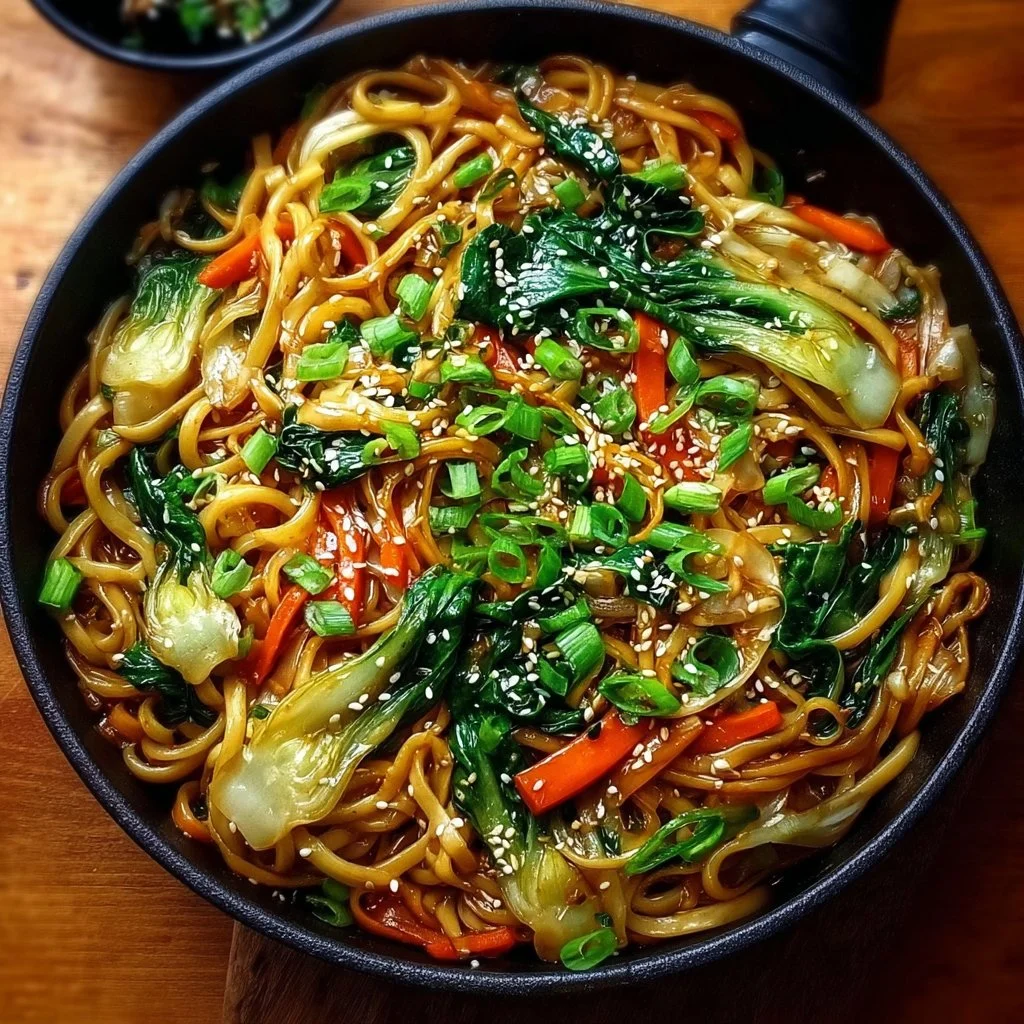
A quick weeknight stir-fry that feels special yet comes together in under 20 minutes. Bright bok choy and crisp vegetables meet slippery lo mein noodles, all lifted by ginger and sesame.
This is the kind of recipe you make when you want something fresh, fast, and satisfying without fuss. It’s forgiving and perfect for improvisation.
If you’re already into noodle bowls, you might also like this chicken lo mein recipe for a protein-forward twist.
Why You’ll Love This Sautéed Bok Choy & Ginger Lo Mein
– Fast to make: ready in about 20 minutes once your noodles are cooked.
– Bright and balanced: bitter-sweet bok choy, crunchy veg, and savory sauce.
– Texture contrast: tender noodles with crisp-tender vegetables.
– Flexible: vegetarian as written and easy to add protein.
– Pantry-friendly: minimal, common ingredients with big flavor.
– Healthy-ish comfort food: high in veg and lower in oil than many takeout lo mein versions.
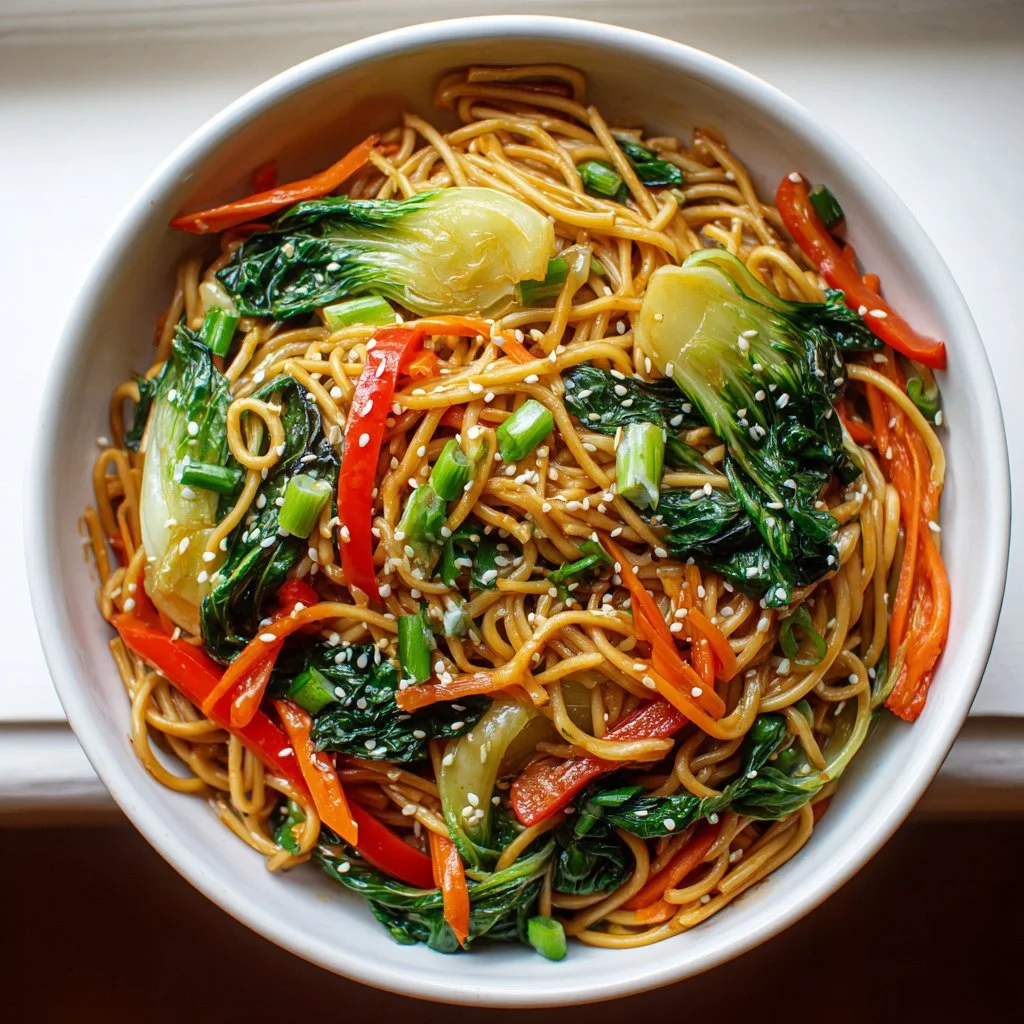
This dish tastes clean and slightly nutty, with a warm ginger aroma and a soy-sesame savor that clings to the noodles. The bok choy leaves wilt and become silky while the stalks keep a pleasant snap, and the carrots and bell pepper add color and crunch that make each bite interesting.
★★★★★ “Simple, fast, and so flavorful. I made this after work and it tasted like we ordered in. The bok choy was perfectly bright — my kids even asked for seconds.” — A reader
Key Ingredients for Sautéed Bok Choy & Ginger Lo Mein
Lo mein noodles — These are the backbone of the dish. Fresh or dried lo mein will work, but fresh has a chewier, springier texture while dried rehydrates to a softer bite. If you substitute with spaghetti or rice noodles, expect a change in chew and flavor absorption; toss early and watch the cooking time.
Bok choy — This leafy brassica gives the recipe its signature freshness and texture contrast. Buy small to medium heads with crisp white stalks and unblemished green leaves; the stalks should feel firm when squeezed. If you swap for napa cabbage or baby spinach, the flavor will still be good but you’ll lose some of the stalk crunch.
Soy sauce — The primary salty umami element that seasons both noodles and vegetables. Use a naturally brewed soy sauce for depth; low-sodium is fine if you want to control salt. Substituting tamari keeps it gluten-free but will change the brightness slightly.
Ginger (fresh) — Fresh grated ginger gives the lo mein its zesty, warming note that lifts the soy and sesame. Buy plump, smooth-skinned roots and grate just before cooking; ground or jarred ginger won’t deliver the same bright heat and aromatic oils.
Full Ingredient List for Sautéed Bok Choy & Ginger Lo Mein
– 200g lo mein noodles
– 2 tablespoons vegetable oil
– 2 cups bok choy, chopped
– 1 cup bell pepper, sliced
– 1 cup carrots, julienned
– 2 cloves garlic, minced
– 1 tablespoon ginger, grated
– 3 tablespoons soy sauce
– 1 tablespoon sesame oil
– 2 green onions, chopped
– Sesame seeds for garnish
Step-by-Step Instructions for Sautéed Bok Choy & Ginger Lo Mein
Step 1: Cook the lo mein noodles according to package instructions.
Boil the noodles in well-salted water, stirring occasionally to prevent clumping. Drain the noodles and toss with a tiny splash of oil to keep them from sticking, then set aside so they’re ready when the vegetables are done.
Pro Tip: The noodles should look glossy and separated, not clumped or sticky.
Step 2: In a large skillet or wok, heat the vegetable oil over medium-high heat.
Allow the oil to shimmer but not smoke; you want enough heat to sear vegetables quickly without burning them. A properly heated wok gives you that classic stir-fry sizzle when ingredients hit the surface.
Pro Tip: The oil should ripple when you tilt the pan and give a faint sizzling sound.
Step 3: Add the garlic and ginger, sauté for 1 minute until fragrant.
Toss in the minced garlic and grated ginger and move them around so they sweat rather than brown right away. This infuses the oil with aromatics and becomes the flavor base for the rest of the dish.
Pro Tip: The pan should smell punchy and fragrant but the garlic should not be browned or bitter.
Step 4: Add the bok choy, bell pepper, and carrots, stir-frying for about 3–4 minutes until the vegetables are tender but still crisp.
Keep the vegetables moving so they cook evenly; the goal is crisp-tender stalks and bright leaves. Cut the bok choy so thicker stalks cook at the same rate as the thinner leaves.
Pro Tip: The bell pepper should look bright and slightly blistered, carrots should be tender yet retain a little bite, and bok choy leaves should be wilted while stalks remain firm.
Step 5: Add the cooked lo mein noodles to the skillet along with the soy sauce and sesame oil. Toss everything together to combine and heat through.
Gently fold the noodles into the pan, using tongs or a spatula to coat each strand with the sauce. Heat just until everything is steamy; overcooking will make the noodles gummy.
Pro Tip: The sauce should cling to the noodles and vegetables and the whole pan should look glossy rather than soupy.
Step 6: Garnish with green onions and sesame seeds before serving. Enjoy!
Scatter chopped green onion and a sprinkle of sesame seeds for texture and a fresh finish. Serve immediately while hot and aromatic.
Pro Tip: The green onions should look bright and uncooked; sesame seeds add a slight sheen and nutty flecks.
Expert Tips for Sautéed Bok Choy & Ginger Lo Mein
– Heat control: Keep the pan hot but not smoking; medium-high is ideal for quick searing without burning aromatics.
– Noodle timing: Cook noodles just to al dente; they will finish cooking in the wok and you don’t want them to go mushy.
– Texture troubleshooting: If vegetables go limp, raise the heat and stir-fry briefly to revive texture. If noodles clump, toss with a teaspoon of oil and separate with tongs.
– Equipment tips: A roomy wok or a large, heavy sauté pan helps distribute heat and gives noodles space to move.
– Sauce ratio: Three tablespoons of soy to one tablespoon of sesame oil is balanced, but adjust soy down if using low-sodium or if adding salty toppings.
– Common mistakes: Overcrowding the pan steams the veg instead of searing them; cook in a single layer or in batches.
– Flavor layering: Always add aromatics early so their oils flavor the entire dish rather than sprinkling them in at the end.
– Finish with acid if needed: A squeeze of lime or a few drops of rice vinegar can brighten the whole dish if it tastes flat.
Storage & Freezing for Sautéed Bok Choy & Ginger Lo Mein
Fridge storage: Cool completely then transfer to an airtight container. Keep in the refrigerator for up to 3 days for best texture. Reheat gently in a skillet over medium heat, adding a splash of water or broth to revive moisture.
Freezer storage: This dish isn’t ideal for long-term freezing because the bok choy can get watery when thawed. If you must freeze, place in a heavy-duty freezer bag and remove as much air as possible; consume within 1 month.
Thawing: Thaw overnight in the refrigerator before reheating, or reheat from frozen on very low heat with a lid to steam and loosen fibers.
Best containers: Use shallow airtight containers for quick cooling in the fridge and to avoid sogginess. Glass containers with tight lids work well for reheating in a pan.
Variations & Substitutions for Sautéed Bok Choy & Ginger Lo Mein
Add protein — Swap or add sliced chicken, tofu, or shrimp. Cook the protein first in the wok, remove, then add back at the end to keep it moist; this will make the dish heartier and more lunch-or-dinner appropriate.
Spicy ginger-sesame — Stir in a teaspoon of chili oil or a spoonful of sambal to the sauce. The heat pairs beautifully with ginger and gives the lo mein a lively kick without overwhelming the vegetables.
Peanut-sesame twist — Stir in a tablespoon of smooth peanut butter or sesame paste with the soy sauce to create a richer, creamier coating for the noodles. The result is a slightly nutty, more indulgent noodle that still keeps the veg bright.
Swap the noodles — Use rice noodles, udon, or even zucchini ribbons for a lower-carb option. Texture and cooking times will vary: rice noodles are more delicate, udon is chewier, and zucchini needs very little cooking time so add at the end.
Frequently Asked Questions About Sautéed Bok Choy & Ginger Lo Mein
Q: Can I make Sautéed Bok Choy & Ginger Lo Mein gluten-free?
A: Yes. Replace regular soy sauce with tamari or a gluten-free soy alternative. Confirm the noodles are rice noodles or another gluten-free variety. Check labels for any added wheat ingredients in pre-made noodles.
Q: How do I keep the bok choy from getting soggy?
A: Cut the stalks uniformly and stir-fry on high heat so the stalks sear quickly. Add leaves later because they cook faster. Avoid overcrowding the pan, as that causes steaming and sogginess.
Q: Can I prepare any parts ahead of time?
A: Absolutely. Julienne the carrots, slice the bell pepper, and chop the bok choy up to a day ahead and refrigerate in separate containers. Cook the noodles just before tossing with hot vegetables for best texture.
Q: What protein pairs best with Sautéed Bok Choy & Ginger Lo Mein?
A: Thinly sliced chicken or beef, tofu, and shrimp are classic choices. For a show-stopping surf-and-turf menu, serve alongside simple broiled items like baked lobster tails for a special occasion pairing.
Q: Why did my noodles turn sticky and clump together?
A: Sticky noodles are usually overcooked or left sitting without a light oil toss. Rinse dried noodles after boiling with cold water, toss with a teaspoon of oil, and cook them through in the hot pan with constant motion to separate strands.
Final Thoughts on Sautéed Bok Choy & Ginger Lo Mein
This lo mein is fast, flexible, and reliably flavorful — a perfect weeknight recipe that rewards small technique choices. If you made it, please leave a star rating in the recipe card below and pin it to Pinterest for later.
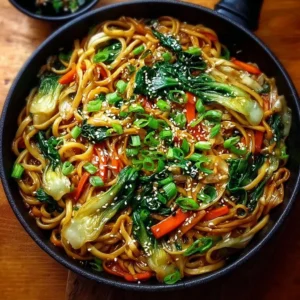
Sautéed Bok Choy & Ginger Lo Mein
Ingredients
Main Ingredients
- 200 g lo mein noodles Fresh or dried. Fresh offers chewier texture, dried softens after rehydration.
- 2 tablespoons vegetable oil For sautéing.
- 2 cups bok choy, chopped Choose small to medium heads with crisp stalks.
- 1 cup bell pepper, sliced Adds color and crunch.
- 1 cup carrots, julienned For added texture and sweetness.
- 2 cloves garlic, minced Aromatic base.
- 1 tablespoon ginger, grated Fresh for best flavor.
- 3 tablespoons soy sauce Use low-sodium if desired.
- 1 tablespoon sesame oil Adds a rich flavor.
- 2 green onions, chopped green onions, chopped For garnish.
- to taste none sesame seeds For garnish.
Instructions
Cooking Noodles
- Cook the lo mein noodles according to package instructions. Boil in well-salted water, stirring occasionally to prevent clumping.
- Drain the noodles and toss with a tiny splash of oil to keep them from sticking, then set aside.
Sautéing Vegetables
- In a large skillet or wok, heat the vegetable oil over medium-high heat until shimmering.
- Add the garlic and ginger, sauté for 1 minute until fragrant.
- Add the bok choy, bell pepper, and carrots. Stir-fry for about 3–4 minutes until tender but still crisp.
Combining Noodles and Sauce
- Add the cooked lo mein noodles to the skillet along with the soy sauce and sesame oil. Toss everything together.
- Heat just until everything is steamy but not overcooked.
Garnishing and Serving
- Garnish with green onions and sesame seeds before serving. Enjoy hot!