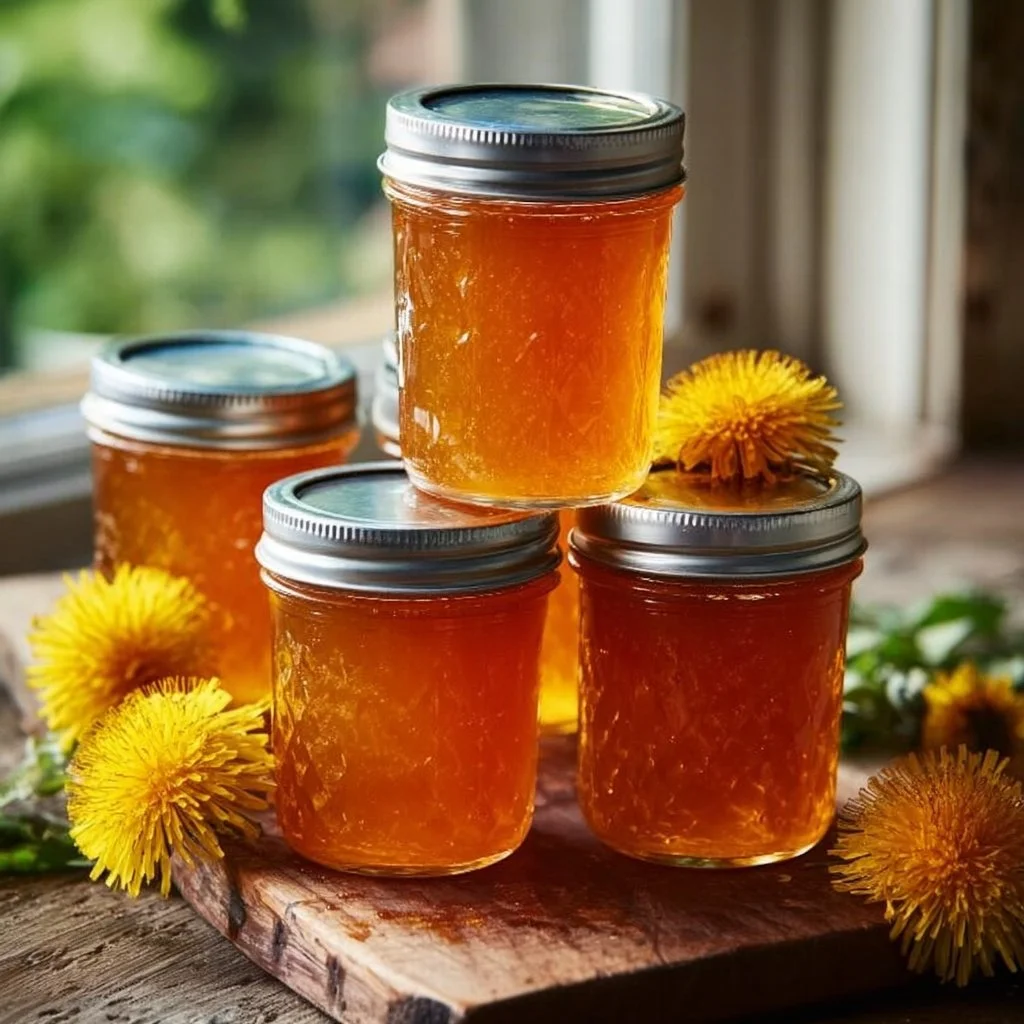
Weeknights are brutal, and so is watching the yard full of dandelions you always mean to pull but never do. I accidentally made this while trying to steep chamomile and ended up with a floral cup that begged to become something spreadable — a surprise pantry win. This jelly turns a stubborn yard weed into breakfast-worthy sunshine and solves the “what to do with those petals?” problem in one sweet jar.
What Makes This Recipe Work
– Floral depth without bitterness: long, gentle steeping pulls the dandelion’s honeyed notes while leaving the greens out.
– Clear, soft-set texture: Pomona’s Pectin plus calcium water gives a reliable gel without excessive sugar.
– Bright acidity: lemon juice balances the bloom and keeps flavor vibrant.
– Flexible sweetness: honey warms the floral notes; sugar keeps it neutral for baking.
– Simple equipment: no candy thermometer, just a saucepan and sterilized jars.
Key Ingredients
Dandelion petals — the heart of the jelly; pick fresh, pesticide-free heads and rinse well to remove grit. Use only the yellow petals for the cleanest flavor; a light, floral aroma is a good sign.
Pomona’s Pectin — this low-sugar pectin needs calcium to set and is forgiving with honey; buy it online or at specialty stores and follow the slurry method for consistent results.
Light honey (or sugar) — honey complements the dandelion’s floral flavor and gives a softer set; swap for granulated sugar if you want a firmer, more neutral-tasting jelly.
Full Ingredient List
– 2 cups dandelion petals (packed)
– 4 cups boiling water
– 4 tsp calcium water
– 1/4 cup lemon juice
– 1 cup light honey (or sugar)
– 4 tsp Pomona’s Pectin
How to Make It
Step 1: Steep
Rinse the petals to remove dirt, then pour 4 cups boiling water over 2 packed cups of petals and cover; steep for 30 minutes to 2 hours depending on how floral you want it. Strain through a fine sieve or cheesecloth, pressing gently, then measure the tea before moving on. Pro Tip: look for a pale gold color and a clean, floral scent — too green means you steeped leaves, not just petals.
Step 2: Mix
Stir 4 tsp Pomona’s Pectin with a small cup of the cooled dandelion tea to make a smooth slurry, and have your 4 tsp calcium water ready in a separate small cup. Pro Tip: texture matters — the slurry should be lump-free and pourable, like thin yogurt.
Step 3: Heat
Warm the remaining dandelion tea with 1/4 cup lemon juice and your 1 cup light honey (or sugar) in a saucepan until hot but not necessarily a rolling boil, then whisk in the pectin slurry thoroughly. Pro Tip: smell for brightness — the lemon should lift the floral notes, not overpower them.
Step 4: Set & Jar
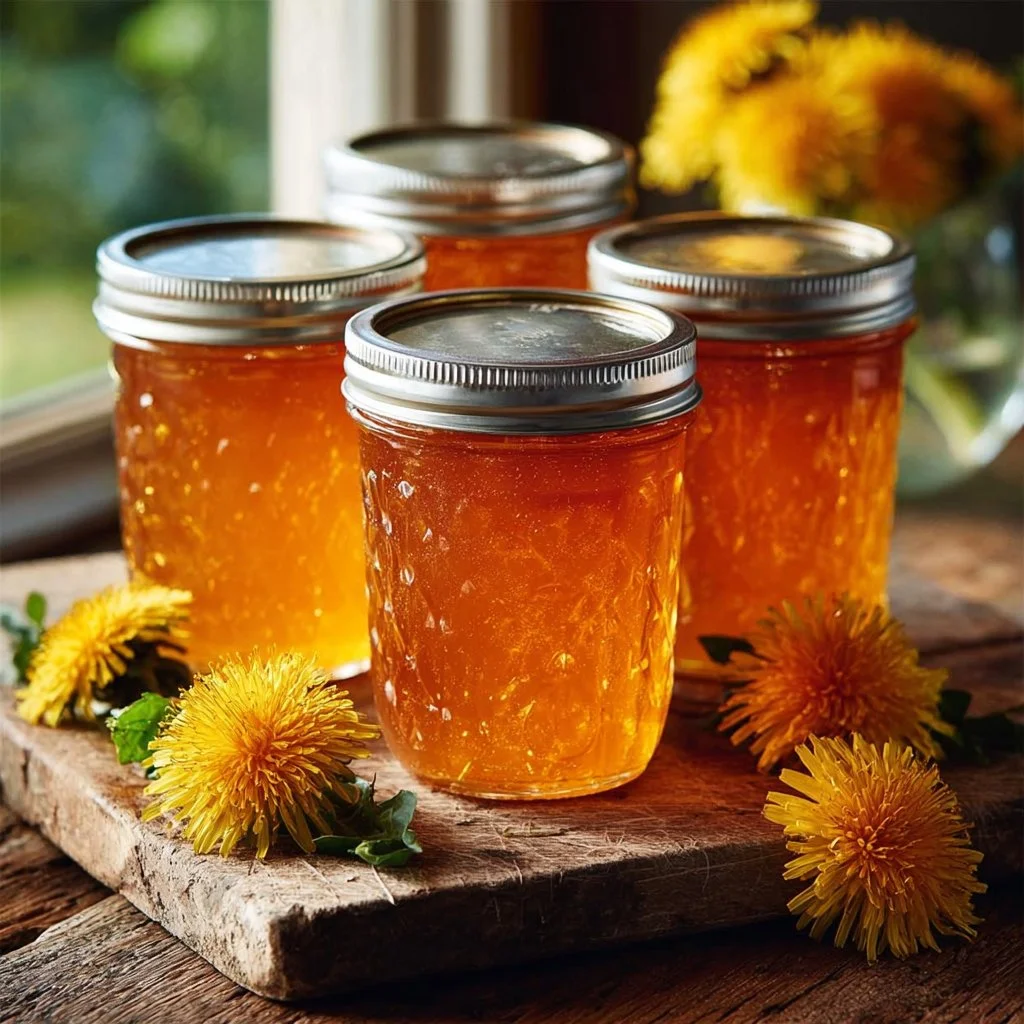
Stir in the 4 tsp calcium water, bring the mixture to a full boil for 1 minute, then remove from heat and ladle into sterilized jars; process according to your jar size and altitude. Pro Tip: look for a glossy surface and a spoon test gel — the jelly should sheet off a spoon but still feel slightly tender.
Tips for Best Results
– Use only yellow petals; any green will add bitterness and cloudy color.
– Steep covered to keep volatile aromatics in the tea; longer steeping = stronger floral taste.
– Measure the strained tea — pectin ratios assume a specific volume.
– Warm jars before filling to prevent breakage and ensure a good seal.
– If using honey, choose a mild, light honey — strong varietals can dominate the dandelion.
– Avoid overboiling after adding calcium; one full minute is enough for Pomona’s system.
Storage & Reheating
Refrigerate opened jars and use within a month for best flavor; unopened, properly processed jars last up to a year in a cool pantry. Freeze in freezer-safe containers for longer storage — note texture may soften slightly after thawing. Reheat gently for spreading by placing a jar in a warm water bath or microwaving short bursts.
Variations to Try
– Lemon-Maple: Replace half the honey with pure maple syrup for a smoky, rounded sweetness that deepens the floral notes.
– Lavender Blend: Add 1 tsp culinary lavender during steeping for a perfumed, bakery-style jam; strain carefully.
– Spiced Orange: Stir in the zest of one orange and a pinch of ground cardamom for breakfast-ready complexity.
Common Questions
Q: Are dandelion petals safe to eat?
A: Yes, if harvested from pesticide-free lawns and rinsed well. Avoid plants near roads or treated areas and remove any green parts to prevent bitterness.
Q: Can I use regular pectin instead of Pomona’s?
A: You can, but timing and sugar ratios differ; Pomona’s is designed for low- or no-sugar preserves and uses calcium to set, which makes it more flexible with honey.
Q: How do I make calcium water?
A: Dissolve the included calcium powder from a Pomona’s kit (or calcium lactate if specified) in cool water per the kit directions; keep it separate until the final step.
Q: What if my jelly doesn’t set?
A: First, check your measurements and that you used the Pomona’s system correctly; you can re-boil with a bit more pectin slurry or mellow with added sugar depending on the issue.
Ready to Try It?
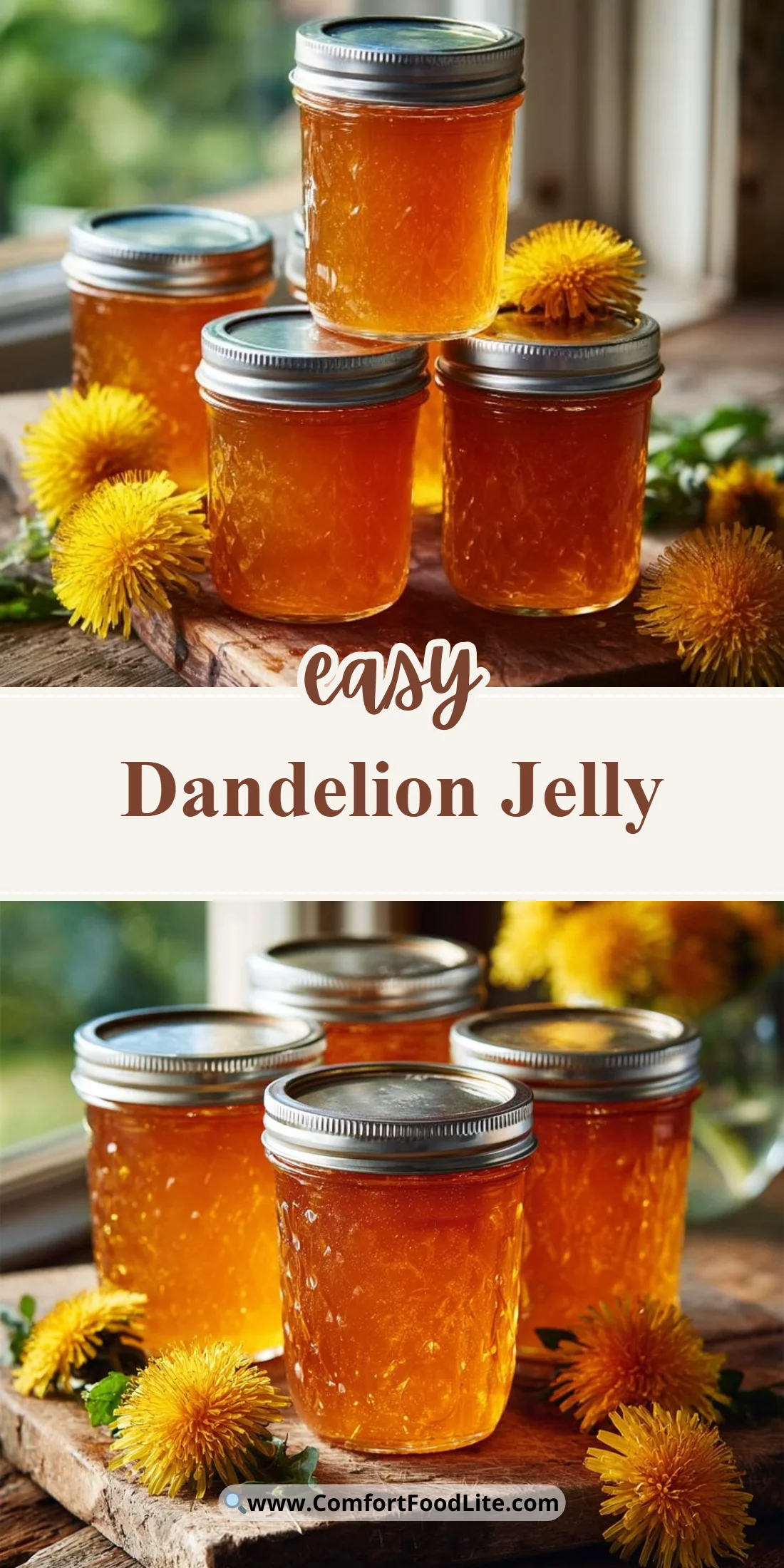
If your yard gives you dandelions, this is the jar-worthy answer — bright, slightly floral, and charming on toast. Please rate below and save this to Pinterest for next spring.
Conclusion
If you want another clear how-to, Practical Self Reliance’s dandelion jelly lays out similar steps with helpful photos. For a tested home-cook perspective, see the classic Allrecipes dandelion jelly recipe for another take on sweetness and technique. Lonely Pines Farm also offers a step-by-step walkthrough that pairs nicely with this method at Lonely Pines Farm’s guide.
Looking for a quick spread idea when your jelly is done will inspire easy snacks.
For a simple appetizer pairing, check this pepper jelly cream cheese bites recipe that works great with floral jellies.
If you want a reference for canning basics while you process jars, this quick guide covers jar prep and sterilization.
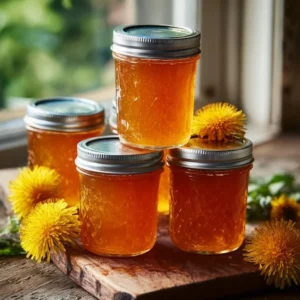
Dandelion Jelly
Ingredients
For the jelly
- 2 cups dandelion petals (packed) Use only the yellow petals for a clean flavor.
- 4 cups boiling water To steep the petals.
- 4 tsp calcium water Prepared from Pomona’s Pectin kit.
- 1/4 cup lemon juice Brightens the flavor.
- 1 cup light honey (or sugar) Honey complements the floral notes.
- 4 tsp Pomona’s Pectin Use the slurry method for best results.
Instructions
Steeping the Dandelions
- Rinse the dandelion petals to remove dirt, then pour the boiling water over the petals and cover. Steep for 30 minutes to 2 hours depending on desired floral strength.
- Strain through a fine sieve or cheesecloth, pressing gently, and measure the resultant tea.
Mixing the Ingredients
- Stir 4 tsp of Pomona’s Pectin with a small cup of the cooled dandelion tea to create a smooth slurry.
- Have your 4 tsp of calcium water ready in a separate small cup.
Heating the Mixture
- Warm the remaining dandelion tea with the lemon juice and honey (or sugar) in a saucepan until hot, but not boiling.
- Whisk in the pectin slurry thoroughly.
Setting and Jarring
- Stir in the calcium water, bring the mixture to a full boil for 1 minute, then remove from heat.
- Ladle into sterilized jars and process according to your jar size and altitude.