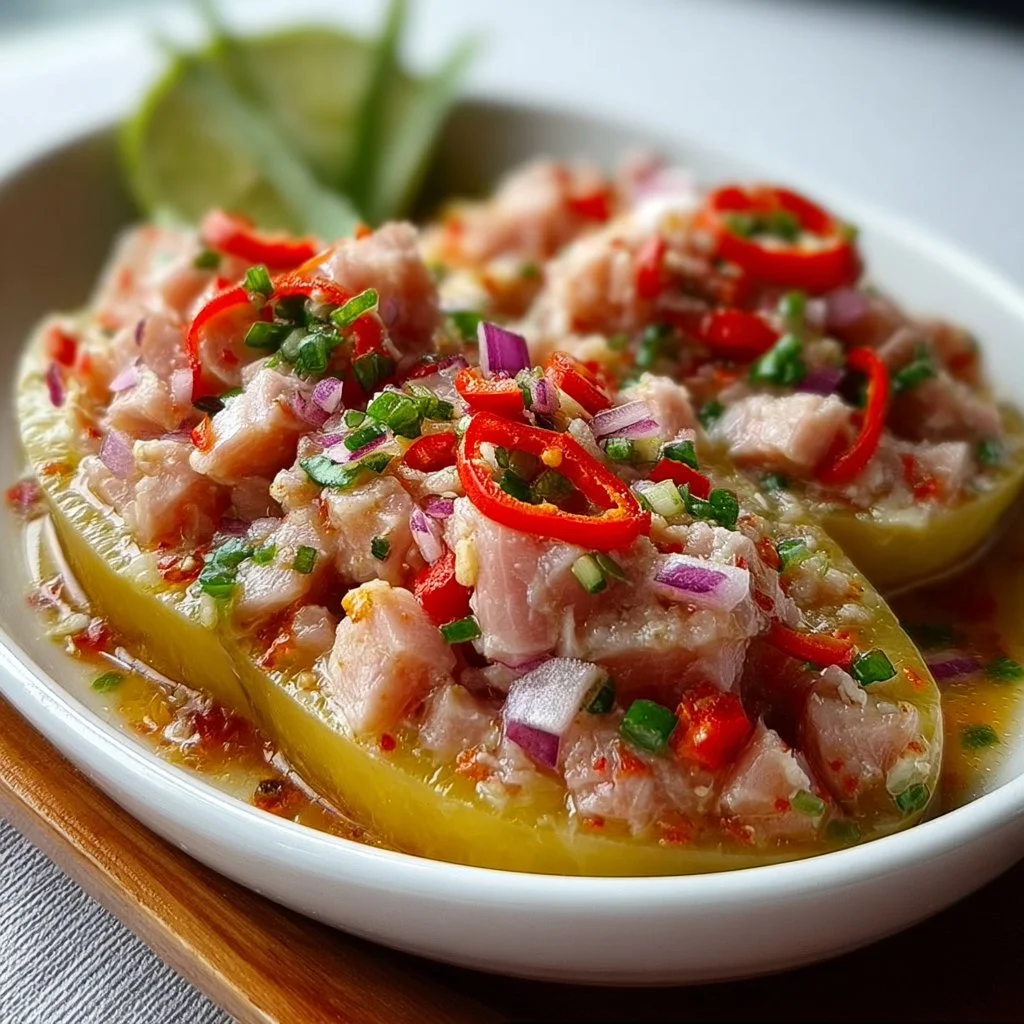
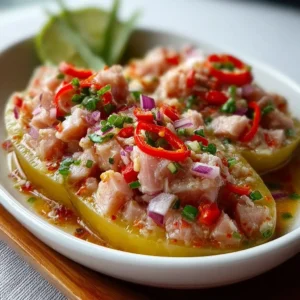
Bright, tangy, and visually stunning, this Tuna Kinilaw Stuffed Dalandan is a fresh twist on Filipino kinilaw served in citrus shells.
It’s fast to assemble and perfect for hot afternoons or as an elegant appetizer at a summer gathering.
If you like ceviche-style dishes, try a simple avocado tuna salad for another light option.
This recipe is all about bright acid, clean fish, and crunchy contrast.
Why You’ll Love This Tuna Kinilaw Stuffed Dalandan
- Bursting citrus aroma that doubles as presentation.
- Fast to make — ready in under 20 minutes.
- Bright, clean flavors that highlight fresh tuna.
- Low in calories but high in umami satisfaction.
- Great for entertaining — makes a memorable appetizer.
- Customizable heat level for any palate.
- No cooking required, preserving tuna’s silky texture.
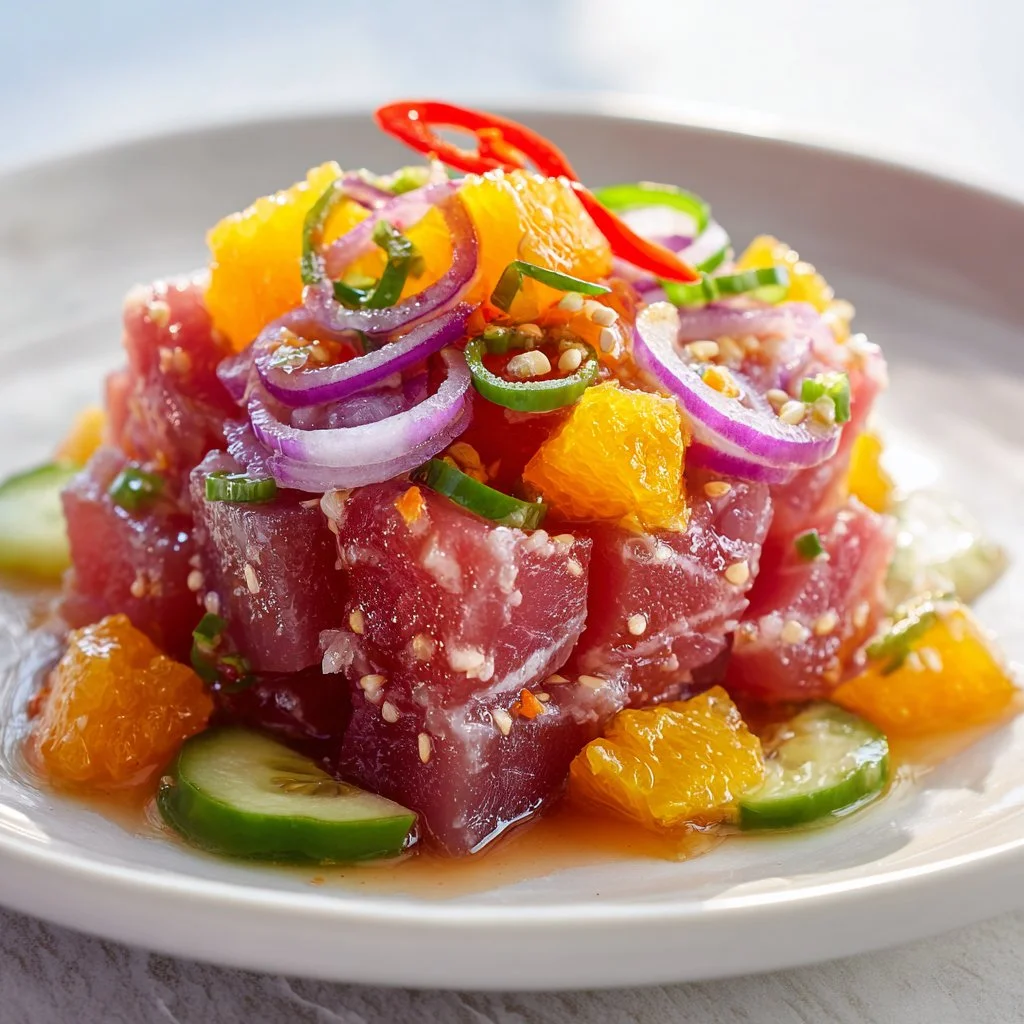
Tasting this dish is a play of contrasts: the tuna remains silky and almost jewel-like because the acid lightly firms the flesh without overcooking it. The dalandan adds a floral orange brightness that’s less sharp than lime but more aromatic than standard orange, while cucumber and red onion provide crisp, cooling crunch. The soy adds depth so the bite isn’t one-note citrus.
“Five stars — every element pops. I served these at a brunch and everyone asked for the recipe. Fresh, crunchy, and so beautiful.” — Reader K.
Key Ingredients for Tuna Kinilaw Stuffed Dalandan
Fresh tuna (diced)
Fresh, sushi-grade tuna is the foundation. Buy bright, translucent flesh with a clean ocean smell — not fishy. If you substitute with cooked tuna or canned, you’ll lose the silky texture and the raw-citrus marriage that defines kinilaw.
Dalandan (local orange), halved
Dalandan gives a floral, slightly bitter orange note that’s more complex than common oranges or lime. Choose heavy, firm fruits; thin-skinned dalandans yield more juice and make nicer serving shells. If you can’t find dalandan, a mix of orange and lime works, but the aroma will shift toward sweeter or more astringent.
Lime juice
Acid is the curing agent that firms and flavors the tuna. Freshly squeezed lime offers the cleanest citrus zip and controls the curing time. Bottled lime or vinegar will work in a pinch, but the flavor will be flatter and less fragrant.
Soy sauce
A small splash of soy provides savory balance and salt without overdrying the fish. Use low-sodium if you’re watching salt, or a good tamari for gluten-free cooking. Substituting with fish sauce intensifies maritime notes but can make the mix sharper and saltier.
Full Ingredient List for Tuna Kinilaw Stuffed Dalandan
- Fresh tuna, diced
- Dalandan (local orange), halved
- Lime juice
- Soy sauce
- Red onion, finely chopped
- Tomato, diced
- Cucumber, diced
- Chili peppers, minced (optional)
- Salt and pepper to taste
Step-by-Step Instructions for Tuna Kinilaw Stuffed Dalandan
Step 1: Combine tuna and aromatics
In a mixing bowl, add the diced fresh tuna, lime juice, soy sauce, finely chopped red onion, diced tomato, diced cucumber, and minced chili peppers if you want heat. Season lightly with salt and freshly ground pepper and stir gently so the tuna is coated but not mashed.
Pro Tip: Look for glossy, translucent tuna cubes and evenly coated vegetables; you should see tiny bubbles of citrus at the surface and bright vegetable colors.
Step 2: Marinate briefly
Let the mixture sit for about 10–15 minutes so the acid can start firming the tuna and the flavors can mingle. Taste after 10 minutes and adjust salt, soy, or chili carefully — acidity intensifies over time.
Pro Tip: Visually the tuna should change from translucent to a slightly paler sheen and feel firmer to the touch when gently pressed with a spoon.
Step 3: Hollow the dalandan halves
Using a small spoon or melon baller, carefully scoop out some of the dalandan flesh from each half to create a small cavity large enough to hold the tuna mixture. Reserve the scooped citrus if you want extra juice for the mix.
Pro Tip: The inside should be mostly hollow with a thin, intact peel; if the peel tears, trim edges cleanly so each half sits flat.
Step 4: Fill the dalandan shells
Spoon the marinated tuna mixture into each hollowed dalandan half, mounding slightly so they look generous and appetizing. Wipe any juice from the rims so they present cleanly.
Pro Tip: The filled dalandan should glisten and hold shape; the tuna should not be soggy or swimming in liquid — a glossy, clingy finish is ideal.
Step 5: Serve immediately
Arrange the stuffed dalandan on a chilled platter and serve at once as a light lunch or appetizer. Offer extra lime or soy on the side for guests to adjust seasoning.
Pro Tip: Fresh kinilaw is best served chilled and immediately; the plate should smell bright of citrus and have a crisp onion and cucumber aroma.
Expert Tips for Tuna Kinilaw Stuffed Dalandan
- Temperature tip: Keep tuna cold until the last moment; chill the serving platter and keep fish on ice if preparing ahead to maintain texture.
- Texture troubleshooting: If tuna becomes chalky or overly firm, you’ve over-marinated — serve the remainder quickly or mix with a neutral oil to soften.
- Equipment tip: A small melon baller and a flexible microplane are worth having; they make hollowing dalandan and fine zesting easier.
- Common mistake: Adding too much acid at the start — add citrus gradually and taste at 10 minutes.
- Salt control: Use soy sauce first, then finish with a pinch of flaky sea salt if needed — soy can mask how much salt you’ve already added.
- Visual cue: Aim for bright, glossy tuna cubes and crunchy, unmushy vegetables; ditch any limp tomatoes or watery cucumbers.
- Make-ahead tip: You can prep the vegetables 1–2 hours ahead and keep tuna chilled separately; assemble at the last minute to preserve texture.
- Safety tip: If you’re worried about parasites, freeze tuna at -20°C (-4°F) for 7 days in a reliable freezer or buy sushi-grade tuna from a trusted vendor.
A make-ahead stuffed bread demonstrates sealing and reheating techniques that can inspire how you prepare components ahead when hosting.
Storage & Freezing for Tuna Kinilaw Stuffed Dalandan
Fridge storage: Because this is a raw fish dish cured in acid, it’s best eaten the same day. Store leftovers in an airtight container and keep refrigerated at or below 40°F (4°C). Consume within 24 hours for quality and safety.
Freezer storage: Freezing the prepared marinated kinilaw is not recommended — the texture will degrade. If you must freeze tuna ahead of time, freeze raw, vacuum-sealed tuna portions for up to 2–3 months. Thaw in the refrigerator overnight.
Thawing: Thaw frozen tuna in its vacuum packet in the fridge for 12–24 hours. Never thaw at room temperature.
Reheating: Do not reheat kinilaw. Serve chilled or at cool-room temperature. If you prefer a warm element, offer toasted crostini on the side rather than reheating the filling.
Best containers: Use airtight glass containers for short-term fridge storage and vacuum seal bags for freezing to minimize freezer burn and bacterial exposure.
Variations & Substitutions for Tuna Kinilaw Stuffed Dalandan
Salmon kinilaw variation
Swap diced fresh salmon for tuna and use the same marinade. Salmon adds richer fat and a buttery mouthfeel; marinate slightly shorter if your salmon is fattier to avoid an overly firm texture.
Cooked shrimp version
Replace tuna with lightly poached, chilled shrimp diced into bite-sized pieces. This yields a firmer texture and makes the dish safer for nervous eaters while keeping the bright citrus profile.
Creamy coconut kinilaw
Add a tablespoon of coconut cream to the marinade and reduce lime slightly. The result is a silky, Thai-influenced kinilaw that pairs beautifully with sweet tropical fruits.
Plant-based hearts-of-palm option
Use diced hearts of palm for a vegetarian take; toss with lime, soy, tomato, and cucumber. The texture mimics tender seafood and soaks up citrus while staying refreshingly light.
For a sweet finish at the end of your meal, serve cheesecake stuffed snickerdoodles — the creamy cookies balance the citrus-forward starter.
Frequently Asked Questions About Tuna Kinilaw Stuffed Dalandan
What if I can’t find dalandan — can I use regular oranges?
Yes. Use a combination of orange and fresh lime juice to mimic dalandan’s sweet-floral and tart balance. The presentation will differ slightly; consider hollowing small naval oranges or using lime halves if you want a similar look.
How long should the tuna marinate for safe and best texture?
For flavor and safety, 10–15 minutes is ideal for dicing that’s about 1/2-inch cubes. Longer marination (30+ minutes) will firm and “cook” the fish further and can make it mealy, so taste test at the 10-minute mark.
Is kinilaw safe to eat raw at home?
Kinilaw uses acid, not heat, to alter texture. Use sushi-grade fish from a reputable source, or freeze the fish at -20°C (-4°F) for 7 days in a proper freezer to reduce parasite risk. Always follow local food-safety guidelines.
Can I make the tuna mixture ahead of time and fill the dalandan later?
You can prep tuna and vegetables separately and chill them for up to 4 hours. Assemble into dalandan halves just before serving to preserve texture and presentation. Do not leave filled shells at room temperature.
How can I tell if the tuna has gone bad?
Fresh tuna smells clean and faintly oceanic, not fishy or sour. If it’s slimy, discolored, or emits a sharp ammonia-like odor, discard it. Spoilage risks increase after 24 hours in the fridge.
Final Thoughts on Tuna Kinilaw Stuffed Dalandan
This Tuna Kinilaw Stuffed Dalandan is a show-stopping, fast, and fresh dish perfect for summer or special occasions. If you enjoyed it, please leave a star rating in the recipe card below and pin this to Pinterest for later.
Tuna Kinilaw Stuffed Dalandan
Ingredients
For the kinilaw
- 1 lb Fresh tuna, diced Use sushi-grade tuna for the best flavor and texture.
- 2 pieces Dalandan (local orange), halved Use firm, heavy fruits for best results.
- 3 tbsp Lime juice Freshly squeezed is preferred for a clean flavor.
- 2 tbsp Soy sauce Use low-sodium for a healthier option.
- 1 medium Red onion, finely chopped Adds crunch and flavor.
- 1 medium Tomato, diced Choose firm tomatoes.
- 1 medium Cucumber, diced Provides refreshing crunch.
- 1 tbsp Chili peppers, minced (optional) Adjust heat level to taste.
- to taste Salt and pepper Season to preference.
Instructions
Preparation
- In a mixing bowl, combine diced fresh tuna, lime juice, soy sauce, red onion, tomato, cucumber, and minced chili peppers if desired. Season lightly with salt and pepper and stir gently.
- Let the mixture marinate for 10–15 minutes.
- Using a small spoon, scoop out some flesh from each dalandan half to create a cavity.
- Spoon the marinated tuna mixture into the hollowed dalandan halves, mounding slightly.
- Serve immediately on a chilled platter.