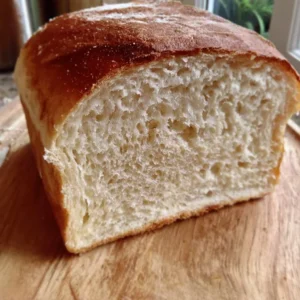
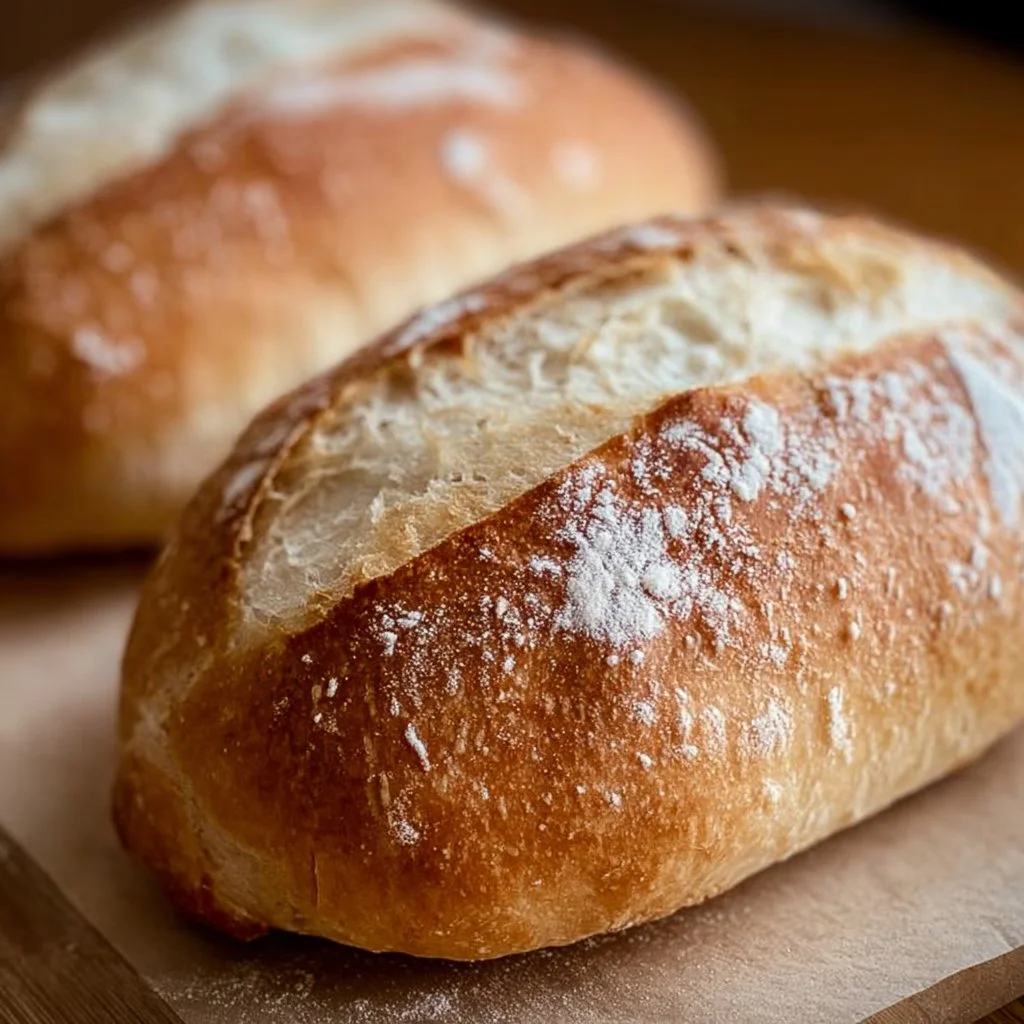
I first made this sourdough discard French bread when I had leftover starter and wanted something faster than my usual long-ferment loaves. The result was a soft, golden loaf with a thin crust and great crumb — perfect for sandwiches, toast, or simply slathered in butter. This recipe uses discard plus a bit of commercial yeast so you get sourdough flavor without the long wait.
Why you’ll love this dish
This loaf is a practical way to use sourdough discard while still keeping the process approachable. With just one rise after mixing (plus a short final rise in the pan), it’s faster than traditional sourdough yet still carries a mild tang from the starter. It’s budget-friendly, kid-approved, and versatile — great for weeknight sandwiches, a Sunday brunch, or a simple dinner side.
“A soft, flavorful loaf that rescued my stale starter and my weeknight menu — crusty enough outside, soft enough inside. Kids loved it toasted with jam.” — home-baker review
Why try it now: if you want sourdough flavor without babysitting a long fermentation schedule, this recipe bridges the gap between convenience and taste.
How this recipe comes together
This recipe starts with activating a little commercial yeast in warm water with sugar, which gives a reliable rise even if your discard is less active. After mixing with flours, oil, and salt, you knead to develop gluten, then give the dough two short rises — one in a bowl and one in the loaf pan — before baking. Expect about 1.5–2 hours total active time (kneading and rises) plus bake and cooling time.
Gather these items
- 2 cups sourdough discard (100% hydration is ideal; if refrigerated, bring to room temp)
- 1 cup all-purpose flour
- 1 cup bread flour (helps with structure; use all-purpose if needed)
- 1 teaspoon salt
- 1 tablespoon sugar (feeds the yeast and helps browning)
- 1 tablespoon active dry yeast
- 1 cup warm water (about 105–115°F / 40–46°C)
- 2 tablespoons olive oil
Substitution notes:
- If you only have active commercial yeast sachets, one packet (~2 1/4 tsp) will work instead of a tablespoon; you may want to increase proof time slightly.
- Swap olive oil for melted butter for a richer flavor.
- For whole wheat version, replace up to 1/3 cup of the flours with whole wheat and increase water slightly.
Step-by-step instructions
- Pour the sourdough discard into a large mixing bowl. Add the warm water and stir to combine.
- Sprinkle in the sugar and the active dry yeast. Stir once and let sit 10 minutes until the surface becomes frothy.
- Add the olive oil and salt, then add both flours. Stir until a shaggy dough forms and no large dry streaks remain.
- Turn the dough onto a lightly floured surface. Knead for about 8–10 minutes until the dough is smooth and elastic. It should be slightly tacky but not sticky.
- Grease a large bowl with oil. Place the dough inside and turn it once to coat. Cover with plastic wrap or a damp towel and let rise about 1 hour, or until doubled.
- Preheat the oven to 375°F (190°C) about 20 minutes before baking.
- Punch down the dough to deflate slightly. Shape into a loaf by flattening into a rectangle and rolling tightly. Pinch the seam closed and tuck the ends.
- Grease a loaf pan and place the shaped dough seam-side down. Cover and let rise 25–30 minutes until puffy.
- Bake 30–35 minutes until the crust is golden brown and the loaf sounds hollow when tapped on the bottom. Internal temperature should reach ~200°F (93°C) for a fully baked loaf.
- Remove from pan and cool on a wire rack at least 30 minutes before slicing.
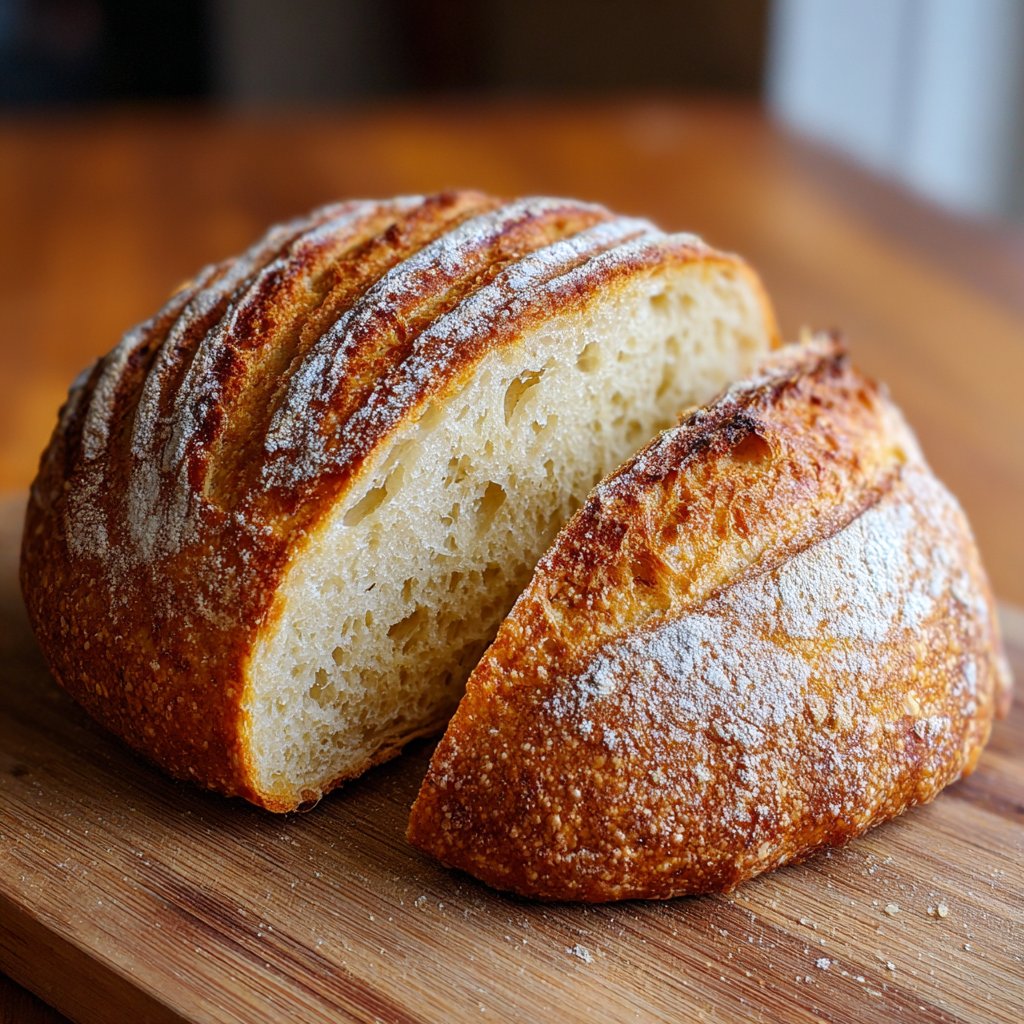
Best ways to enjoy it
- Classic sandwich bread: slice thick for grilled cheese or deli-style sandwiches.
- Toast it: rub with garlic and drizzle olive oil for quick bruschetta, or toast and top with avocado and flaky salt.
- Soup and stew companion: its soft crumb soaks up brothy soups without falling apart.
- Breakfast: lightly toast and spread with butter, jam, or ricotta and honey.
Pairings: aged cheddar, tomato soup, olive tapenade, or herb butter all complement the mild tang of the discard.
Storage and reheating tips
Short-term: store at room temperature in a bread box or wrapped in a cotton bag for 2–3 days to keep the crust from getting too soft. Avoid airtight plastic at room temp for more than a day; it traps moisture and softens the crust.
Refrigeration: not recommended for fresh bread — it speeds staling. Only refrigerate if your kitchen is very humid and you want to slow mold; bring to room temp before using.
Freezing: slice the cooled loaf and freeze slices in a freezer-safe bag for up to 3 months. Thaw at room temperature or toast straight from frozen.
Reheating: warm slices in a toaster or oven (350°F / 175°C for 5–8 minutes) to restore some crispness. For a full loaf, wrap in foil and heat at 350°F for 10–15 minutes.
Food safety: always cool the loaf completely before freezing to avoid condensation and freezer burn. Discard any loaf with visible mold.
Pro chef tips
- Warm water temperature matters: 105–115°F (40–46°C) wakes the yeast without killing it. If your water is too hot, the yeast dies; too cool and it won’t activate well.
- Knead until windowpane: you should be able to stretch a small piece of dough thinly without it tearing. That’s your gluten development.
- Use a thermometer: for consistent results, check the internal temperature; 200°F (93°C) means done.
- Steam trick: place a small oven-safe pan with hot water on the bottom rack during the first 10 minutes of baking for a slightly crisper crust.
- If discard is very sour or watery: reduce discard to 1–1.5 cups or drain a little to keep dough consistency right.
Creative twists
- Herb and garlic loaf: fold in 2 tablespoons chopped fresh herbs (rosemary, thyme) and 1–2 minced garlic cloves during the last minutes of kneading.
- Sesame or poppy seed top: brush the loaf with water or egg wash and sprinkle seeds before the second rise.
- Cheesy pull-apart: press a layer of shredded cheddar into the rolled dough before shaping the loaf.
- Gluten-free variant: this recipe relies on gluten; for gluten-free, use a tested bread blend and xanthan gum with adjusted hydration and no kneading method.
- Sweet version: swap sugar for honey and add cinnamon and raisins for a breakfast bread (expect slightly different rise and texture).
Helpful answers
Q: How long does this take from start to finish?
A: Active time (mixing + kneading) is about 30–40 minutes. Rises add roughly 1.5 hours. Bake and cool add another 1–1.5 hours. Plan 3–4 hours total, most of it hands-off.
Q: Can I use instant yeast instead of active dry?
A: Yes. Use about 2 1/4 teaspoons instant yeast. Mix it directly into the dry ingredients and skip the 10-minute proof step, though letting it sit briefly still helps flavor.
Q: My loaf didn’t rise well — what went wrong?
A: Common causes: water too hot or cold (kills or doesn’t activate yeast), old yeast, very cold discard straight from the fridge (bring it to room temp), or too much salt contacting yeast directly. Also under-kneading gives weak gluten, which can limit rise.
Q: Is it safe to use sourdough discard in yeast-raised bread?
A: Absolutely. Discard adds flavor and a touch of acidity; the commercial yeast ensures predictable rise. Just ensure discard is not visibly moldy or off-smelling.
Conclusion
If you want a fast, reliable way to turn sourdough discard into a soft, flavorful loaf, this recipe fits the bill. For more inspiration and alternate discard-based French bread approaches, see this Sourdough Discard Soft French Bread guide by Amy Bakes Bread and this Easy Sourdough French Bread Recipe [with discard option] from Pantry Mama, which offer variations and extra tips that complement this method.
For reference and further tweaks:
- Sourdough Discard Soft French Bread – Amy Bakes Bread
- Easy Sourdough French Bread Recipe [with discard option] – The Pantry Mama

Sourdough Discard French Bread
Ingredients
Main Ingredients
- 2 cups sourdough discard (100% hydration is ideal) Bring to room temperature if refrigerated.
- 1 cup all-purpose flour
- 1 cup bread flour Helps with structure; use all-purpose if needed.
- 1 teaspoon salt
- 1 tablespoon sugar Feeds the yeast and helps browning.
- 1 tablespoon active dry yeast Can substitute with 1 packet (~2 1/4 tsp) if needed.
- 1 cup warm water (about 105–115°F / 40–46°C) Important to activate the yeast.
- 2 tablespoons olive oil Can substitute with melted butter for richer flavor.
Instructions
Preparation
- Pour the sourdough discard into a large mixing bowl. Add the warm water and stir to combine.
- Sprinkle in the sugar and the active dry yeast. Stir once and let sit for 10 minutes until the surface becomes frothy.
- Add the olive oil and salt, then add both flours. Stir until a shaggy dough forms and no large dry streaks remain.
- Turn the dough onto a lightly floured surface. Knead for about 8–10 minutes until the dough is smooth and elastic, slightly tacky but not sticky.
- Grease a large bowl with oil. Place the dough inside and turn it once to coat. Cover with plastic wrap or a damp towel and let rise about 1 hour, or until doubled.
Baking
- Preheat the oven to 375°F (190°C) about 20 minutes before baking.
- Punch down the dough to deflate slightly. Shape into a loaf by flattening into a rectangle and rolling tightly. Pinch the seam closed and tuck the ends.
- Grease a loaf pan and place the shaped dough seam-side down. Cover and let rise for 25–30 minutes until puffy.
- Bake for 30–35 minutes until the crust is golden brown and the loaf sounds hollow when tapped on the bottom. The internal temperature should reach about 200°F (93°C) for a fully baked loaf.
- Remove from the pan and cool on a wire rack for at least 30 minutes before slicing.