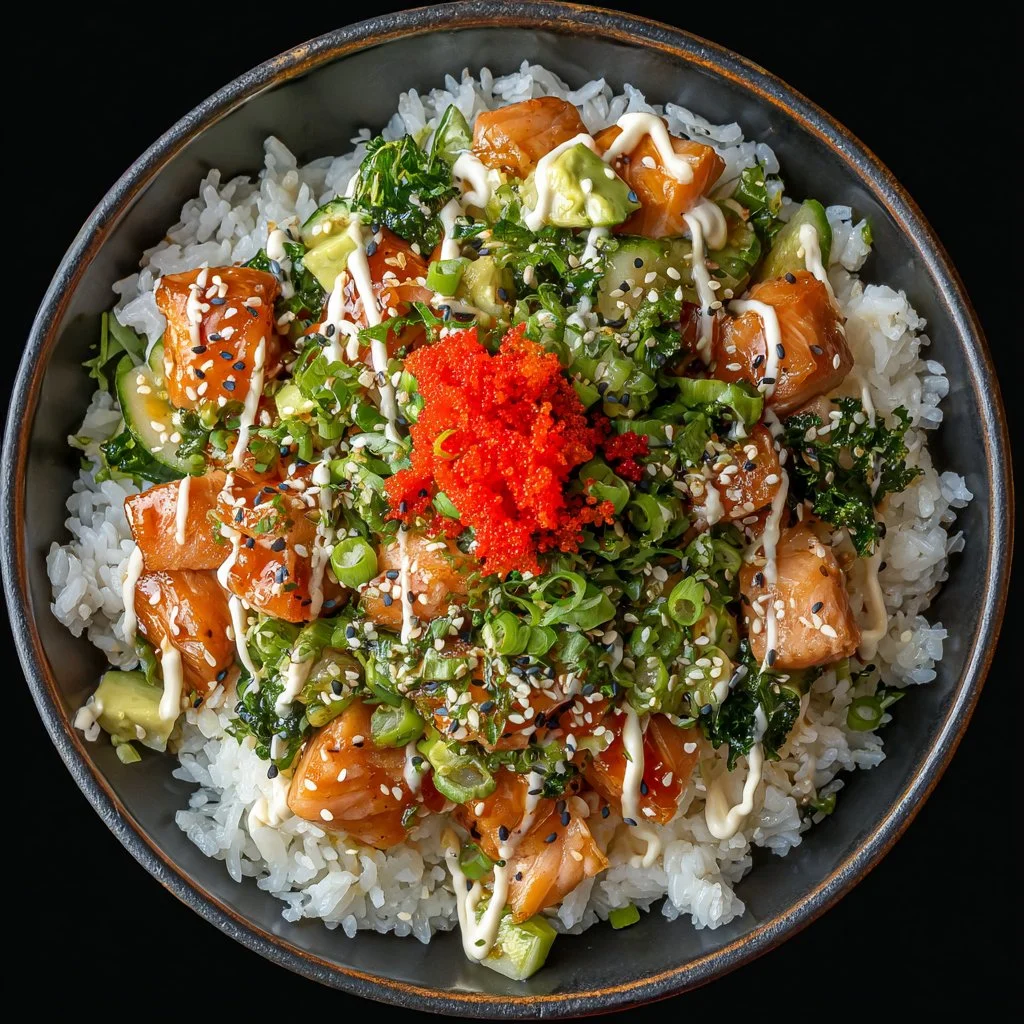
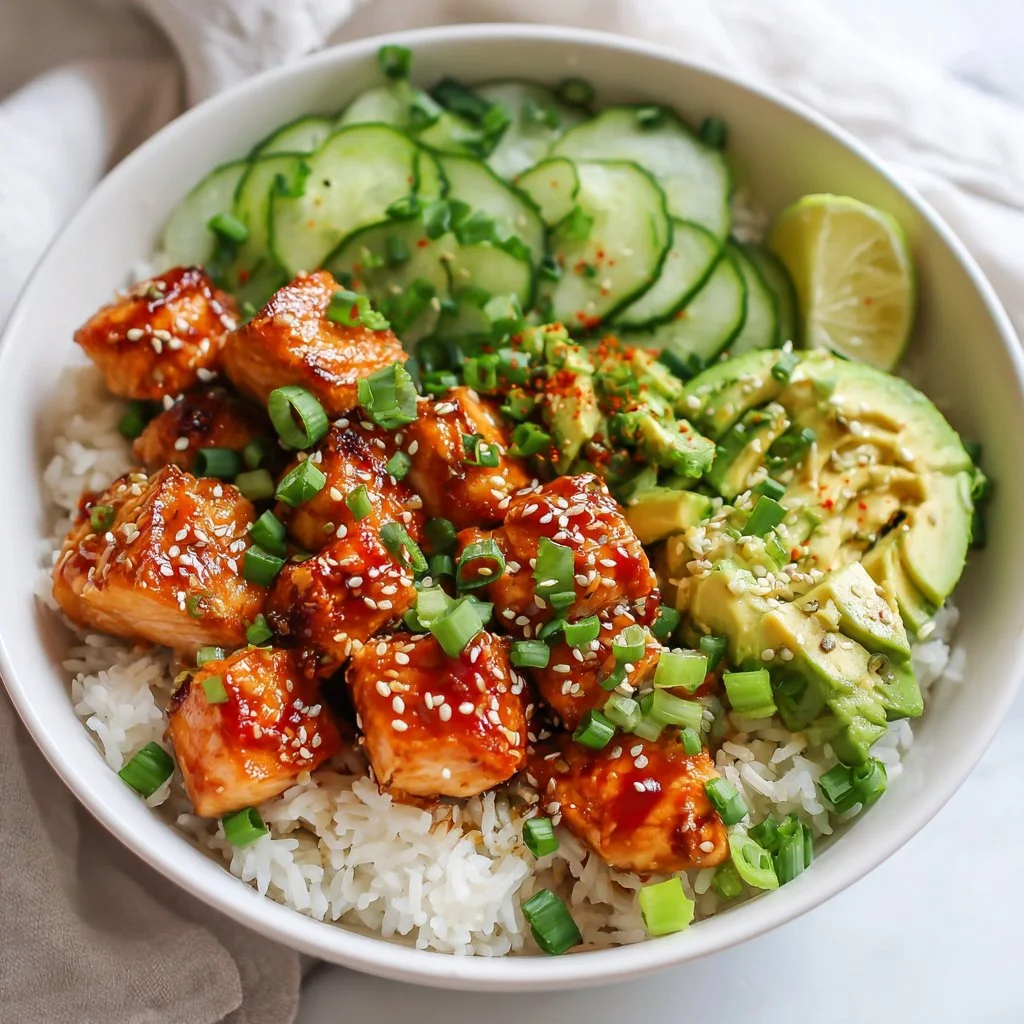
A sticky, glossy glaze clings to perfectly seared salmon cubes over coconut-scented rice.
Bright cucumber and avocado salad cuts through the richness for a bowl that hits sweet, salty, spicy, and silky notes.
This is an easy dinnertime showstopper you can make in under 40 minutes.
Try it on a weeknight or make extra for impressive leftovers.
Why You’ll Love This Sticky Honey Garlic Salmon Rice Bowl
– Fast weeknight dinner with restaurant textures at home.
– Balanced flavors: sweet honey, umami soy, bright lime.
– Coconut rice adds a creamy, fragrant base.
– Flexible: swaps for diet needs or pantry limits.
– Great for meal prep and reheats well.
– Hands-off rice cooking with high-impact salmon sear.
The dish combines crisped salmon edges and a jammy honey-garlic glaze, sitting atop pillowy coconut rice and a cooling avocado-cucumber salad. The contrast in textures — crunchy sear, sticky sauce, silky avocado, fluffy rice — is what makes every bite exciting and craveable.
“Five stars — the sauce caramelized so well and the rice was unbelievably fragrant. My family devoured it and asked for seconds.” — Real reader
If you love the flavor combo of honey and sriracha, these bowls are a natural next step for your dinner rotation.
Key Ingredients for Sticky Honey Garlic Salmon Rice Bowl
– Salmon: The hero protein. Choose firm, sashimi-grade or sushi-grade fillets if you prefer raw-safe sourcing for quick-cooking; otherwise, fresh Atlantic or Pacific salmon fillets work beautifully. Fatty salmon (like king or sockeye) gives a richer mouthfeel; leaner fillets cook faster and can dry out if over-seared. Substituting with tuna or firm white fish yields success but expect a different flavor profile and slightly firmer texture.
– Full-fat coconut milk: This transforms plain rice into a creamy, slightly sweet bed that pairs perfectly with the honey-garlic glaze. Use canned full-fat coconut milk for richness; light coconut milk or extra water will make the rice thinner and less fragrant. If allergic, use equal parts chicken or vegetable stock for savory depth, though you’ll lose the tropical hint.
– Soy sauce (alcohol-free): Provides umami and salt to the glaze, helping the honey caramelize without burning. Look for naturally brewed, low-sodium varieties if you want more control over salinity. Tamari is a good gluten-free swap but tastes slightly deeper and less bright.
– Honey + garlic + sesame oil: Honey gives sticky shine and soft caramelization; garlic supplies aromatic punch; sesame oil adds toasted nuttiness. Use good-quality honey (wildflower or clover) for nuanced sweetness. If you swap honey for maple syrup, expect a more robust, woodsy note and a slightly thinner glaze.
Full Ingredient List for Sticky Honey Garlic Salmon Rice Bowl
– 2 cups basmati or long grain white rice
– 1 can full fat coconut milk
– 1 and 1/4 cups water
– 1 teaspoon kosher salt (for rice)
– 1/3 cup soy sauce made without alcohol
– 3 tablespoons honey
– 2 tablespoons sesame oil
– 1 teaspoon fresh grated ginger
– 1 teaspoon sriracha
– 1 teaspoon salt (for glaze)
– 6 cloves minced garlic
– 2 to 3 tablespoons olive oil or avocado oil
– 4 salmon fillets cut into 1 inch cubes
– Green onion, for garnish
– Sesame seeds, for garnish
– Spicy mayo
– 2 diced avocados
– 1 English cucumber sliced into half moons
– 1/4 cup thinly sliced red onion
– 2 tablespoons lime juice
– 2 tablespoons chopped cilantro
– 1/2 cup Japanese mayo
– 2 tablespoons sriracha
– 1 teaspoon honey
Step-by-Step Instructions for Sticky Honey Garlic Salmon Rice Bowl
Step 1: Rinse and prepare the rice
Rinse the rice in a fine-mesh sieve under cold water until the water runs mostly clear. This removes excess starch for separate, fluffy grains.
Pro Tip: Visual cue — the rinse water changes from cloudy to nearly clear and the rice grains look separated and less powdery.
Step 2: Cook coconut rice
Combine coconut milk, water, and 1 teaspoon kosher salt in a pot and bring to a gentle boil. Add the rinsed rice, reduce heat to medium low, cover tightly, and cook undisturbed for 20 minutes.
Pro Tip: Visual cue — steam should be escaping gently at the lid edge; rice grains will look swollen and a small pocket of steam will hiss when you lift the lid.
Step 3: Chill and build the salad
Prepare the salad by tossing diced avocado, cucumber half-moons, thin red onion, lime juice, and chopped cilantro. Season lightly and refrigerate briefly while you cook the salmon.
Pro Tip: Visual cue — the salad should smell bright and citrusy, with glossy avocado and crisp cucumber pieces that hold shape.
Step 4: Prep salmon and sauce
Pat salmon dry and cut into 1-inch cubes. In a bowl whisk together soy sauce, 3 tablespoons honey, 2 tablespoons sesame oil, grated ginger, sriracha, and 1 teaspoon salt.
Pro Tip: Visual cue — the glaze should be uniformly glossy and pourable, with visible minced ginger threads and a honey-thick viscosity.
Step 5: Sear salmon cubes
Heat 2–3 tablespoons olive oil or avocado oil in a skillet over medium-high heat. Add salmon cubes in a single layer and sear until the exterior is crisp and golden on the first side.
Pro Tip: Visual cue — you should hear an active sizzle and see caramelized brown edges before flipping; the pan will smell nutty and umami-rich.
Step 6: Flip salmon and add garlic
Flip salmon and immediately add 6 cloves minced garlic to the skillet, stirring the aromatics around the fish until fragrant but not burned.
Pro Tip: Visual cue — garlic should bloom to a light golden color and the pan will fill with a toasty, savory aroma within 30 seconds.
Step 7: Add the honey-garlic sauce and finish
Pour in the soy-honey sauce and reduce heat slightly. Cook, spooning glaze until the salmon reaches 135°F for medium. The sauce will thicken as it heats.
Pro Tip: Visual cue — the sauce will bubble and thicken into a glossy, slightly syrupy coating that clings to the salmon cubes.
Step 8: Rest salmon and thicken sauce
Remove salmon to a plate. Whisk a splash of water into the remaining pan sauce and simmer briefly to loosen and thicken to a saucy jam.
Pro Tip: Visual cue — the sauce should coat the back of a spoon and look shiny with small, syrupy ribbons when drizzled.
Step 9: Assemble the bowls
Fluff the coconut rice and divide among bowls. Top with salmon cubes, spoonfuls of the sticky sauce, the chilled avocado-cucumber salad, and a drizzle of spicy mayo.
Pro Tip: Visual cue — finished bowls should present layered contrasts: white fluffy rice, dark glossy salmon, bright green salad, and orange spicy mayo dots.
Step 10: Garnish and serve
Finish with sliced green onion and a sprinkle of sesame seeds. Serve immediately so the salmon stays crisp and the rice warm.
Pro Tip: Visual cue — sesame seeds add tiny matte specks over the shiny glaze; green onion adds a fresh, raw edge in color and smell.
Expert Tips for Sticky Honey Garlic Salmon Rice Bowl
– Temperature tip: Use an instant-read thermometer and pull salmon at 135°F for medium. It will carry over to about 140°F while resting.
– Texture troubleshooting: If the salmon is rubbery, you overcooked it; reduce heat and finish with pan sauce only. If the glaze is gritty, it was overheated — reduce and whisk with water to smooth.
– Rice technique: Rinsing rice reduces stickiness; resting covered for 10 minutes after cooking lets grains firm up and separate.
– Equipment tip: A heavy-bottomed skillet (cast iron or stainless steel) gives the best crust without burning the glaze.
– Sauce control: Add sriracha a teaspoon at a time; its heat can dominate quickly. Taste as you go.
– Oil choice: Avocado oil tolerates high heat best for searing; olive oil is okay but watch the smoke point.
– Common mistake: Crowding the pan steams the salmon instead of searing — work in batches if needed.
– Visual-check tip: Look for glossy, slightly reduced sauce that clings to the fish — that’s the sign the sugar has caramelized but not burned.
Also consider experimenting with plating textures; the contrast helps the sticky sauce feel less heavy and more balanced. For rice and bowl technique inspiration, read about sticky chicken rice bowls to compare methods and timing.
Storage & Freezing for Sticky Honey Garlic Salmon Rice Bowl
Fridge storage: Store components separately in airtight containers for best texture control. Rice and salad will last 3–4 days; cooked salmon keeps 2–3 days. Use shallow containers to cool quickly and place in the fridge within two hours.
Freezer storage: Fully cooked salmon with sauce can be frozen for up to 1 month in freezer-safe containers, though textural loss is possible. Rice freezes well up to 2 months if spread flat in freezer bags to reheat evenly.
Thawing: Thaw overnight in the refrigerator. Reheat salmon gently to avoid drying — use a covered skillet over very low heat or a quick 4–6 minute steam in a microwave covered with a damp paper towel.
Reheating: Reheat rice with a sprinkle of water and cover, 1–2 minutes in the microwave or 5–7 minutes on the stovetop. Reheat salmon on low heat, basting with reserved sauce to restore gloss and moisture.
Variations & Substitutions for Sticky Honey Garlic Salmon Rice Bowl
– Honey-Sriracha Salmon Swap: Increase sriracha to taste, add an extra teaspoon of honey, and finish with a squeeze of lime. The bowl tilts sweeter and hotter, great if you want more kick.
– Teriyaki Twist: Replace soy-honey glaze with store-bought teriyaki and stir in grated ginger. You’ll get a deeper, slightly smokier umami and a familiar Japanese-style glaze.
– Shrimp or Tofu Option: Swap salmon for large shrimp or pressed, cubed tofu. Shrimp cooks faster and gets the same sticky coating; tofu soaks up the glaze but will need extra searing to crisp. See how the flavor profile matches honey-garlic shrimp bowls for technique cues.
– Whole-Grain or Quinoa Base: Substitute brown basmati or quinoa for rice and extend cook time accordingly. The bowl becomes nuttier and heartier, with a firmer chew from the whole grains.
Frequently Asked Questions About Sticky Honey Garlic Salmon Rice Bowl
Q: Can I use frozen salmon for this recipe?
A: Yes — thaw it fully in the refrigerator overnight and pat dry before cutting. Frozen-thawed salmon releases more moisture, so patting dry and using high heat for searing are critical to achieve a crisp exterior.
Q: How do I make the glaze less sweet?
A: Reduce honey by half and increase soy sauce by one tablespoon. Add a teaspoon of rice vinegar or lime juice to brighten and cut sweetness without losing stickiness.
Q: Is this safe for meal prep?
A: Absolutely. Store rice and salad separately from salmon for up to 3 days. Reheat salmon gently and toss salad fresh before serving to keep avocado from browning.
Q: Can I make the spicy mayo ahead of time?
A: Yes, mix Japanese mayo, sriracha, and a teaspoon of honey and refrigerate up to 5 days. Stir before serving; it may thicken slightly after chilled.
Q: What side dishes pair best with this bowl?
A: Simple steamed greens, quick pickled radish, or edamame complement the bowl without overwhelming it. For a protein-forward meal, a light miso soup or seaweed salad adds umami balance.
Final Thoughts on Sticky Honey Garlic Salmon Rice Bowl
If this bowl sounds like your kind of dinner, I’d love for you to leave a star rating in the recipe card below and pin it to Pinterest for later. For more flavor inspiration, check out this twist on salmon with couscous at Sticky Salmon Couscous Bowls, a home cook’s take on a honey garlic salmon bowl at Honey Garlic Salmon Bowl Recipe – The Modern Nonna, and an air-fryer method for honey garlic salmon at Air Fryer Honey Garlic Salmon – The Cooking Jar.
Sticky Honey Garlic Salmon Rice Bowl
Ingredients
For the Coconut Rice
- 2 cups basmati or long grain white rice
- 1 can full-fat coconut milk
- 1.25 cups water
- 1 teaspoon kosher salt for rice
For the Salmon and Sauce
- 1/3 cup soy sauce made without alcohol
- 3 tablespoons honey
- 2 tablespoons sesame oil
- 1 teaspoon fresh grated ginger
- 1 teaspoon sriracha
- 1 teaspoon salt for glaze
- 6 cloves minced garlic
- 2-3 tablespoons olive oil or avocado oil
- 4 pieces salmon fillets cut into 1 inch cubes
For the Salad
- 2 pieces diced avocados
- 1 English cucumber sliced into half moons
- 1/4 cup thinly sliced red onion
- 2 tablespoons lime juice
- 2 tablespoons chopped cilantro
For Garnish
- Green onion, for garnish
- Sesame seeds, for garnish
- Spicy mayo
Instructions
Preparation
- Rinse the rice in a fine-mesh sieve under cold water until the water runs mostly clear. This removes excess starch for separate, fluffy grains.
- Combine coconut milk, water, and 1 teaspoon kosher salt in a pot and bring to a gentle boil. Add the rinsed rice, reduce heat to medium low, cover tightly, and cook undisturbed for 20 minutes.
- Prepare the salad by tossing diced avocado, cucumber half-moons, thin red onion, lime juice, and chopped cilantro. Season lightly and refrigerate briefly while you cook the salmon.
- Pat salmon dry and cut into 1-inch cubes. In a bowl whisk together soy sauce, honey, sesame oil, grated ginger, sriracha, and salt.
Cooking
- Heat 2–3 tablespoons olive oil or avocado oil in a skillet over medium-high heat. Add salmon cubes in a single layer and sear until the exterior is crisp and golden on the first side.
- Flip salmon and immediately add minced garlic to the skillet, stirring the aromatics around the fish until fragrant but not burned.
- Pour in the soy-honey sauce and reduce heat slightly. Cook, spooning glaze until the salmon reaches 135°F for medium. The sauce will thicken as it heats.
- Remove salmon to a plate. Whisk a splash of water into the remaining pan sauce and simmer briefly to loosen and thicken to a saucy jam.
Assembly
- Fluff the coconut rice and divide among bowls. Top with salmon cubes, spoonfuls of the sticky sauce, the chilled avocado-cucumber salad, and a drizzle of spicy mayo.
- Finish with sliced green onion and a sprinkle of sesame seeds. Serve immediately.