Bright lemon aroma in under an hour—that’s the promise here.
These mini lemon cakes are quick to mix, tender, and dressed in a floral lavender glaze that feels grown-up and celebratory.
They’re bite-sized but big on flavor, perfect for tea, brunch, or a light dessert after dinner.
If you love floral notes in desserts, try pairing one with a cup of Earl Grey or a serene afternoon.
For a similar lavender pairing in cookies, see my take on London Fog cookies with lavender cream cheese frosting.
Why You’ll Love This Mini Lemon Cakes With Lavender Glaze
– Bright, sunny lemon flavor in a small, elegant package.
– Buttery, tender crumb that stays moist for days.
– A delicate lavender glaze that’s floral without being perfumy.
– Fast to mix—no special techniques required.
– Great for entertaining: pretty, portion-controlled, and easy to plate.
– Excellent for make-ahead and freezing.
These mini cakes have a fine, tender crumb with a buttery background and a lively lemon zing from fresh zest. The lavender glaze brings a subtle floral finish that complements, rather than overpowers, the citrus. Texturally they’re soft with a slight spring; the glaze dries to a thin sheen that adds a glossy bite.
“These were a revelation—light, lemony, and the lavender glaze felt sophisticated without being over the top. Perfect tea-sandwich size and my guests kept asking for the recipe!” — 5 stars
Key Ingredients for Mini Lemon Cakes With Lavender Glaze
– All-purpose flour: This is the structural backbone. Use a spoon-and-level measure for accuracy to avoid dense cakes. If you substitute cake flour, expect a slightly lighter, more delicate crumb and reduce flour by about 2 tablespoons.
– Unsalted butter (softened): Butter provides flavor, tenderness, and helps the cakes brown. Buy high-quality European-style butter for a richer taste. Replacing with oil will make the crumb more tender but less flavorful and change the mouthfeel.
– Fresh lemon zest (about 1 Tbsp.): Zest offers volatile oils that give immediate citrus perfume and taste. Use unwaxed lemons or peel and wash thoroughly; bottled zest lacks the brightness and will yield a duller lemon profile.
– Culinary lavender (1/2 tsp. in glaze): Lavender is potent—use culinary-grade lavender and measure carefully. If you swap for lavender extract, start with a drop and taste, because extracts are concentrated and can taste medicinal if overused.
Full Ingredient List for Mini Lemon Cakes With Lavender Glaze
– 1 1/3 cups all-purpose flour
– 1/2 tsp. kosher salt
– 1/8 tsp. baking soda
– 1/2 cup unsalted butter, softened
– 2/3 cup granulated sugar
– 1/3 cup packed light brown sugar
– 1 Tbsp. grated lemon zest (from 2 lemons)
– 2 large eggs, at room temperature
– 1/4 cup sour cream, at room temperature
– 1/4 cup whole milk, at room temperature
– 1 tsp. vanilla extract
– 1/4 cup whole milk (for glaze)
– 1/2 tsp. culinary lavender
– 1 1/2 cups powdered sugar
– 1/4 tsp. kosher salt (for glaze)
– 1/8 tsp. vanilla extract (for glaze)
– Edible flowers and lemon zest (for garnish, as needed)
Step-by-Step Instructions for Mini Lemon Cakes With Lavender Glaze
Step 1: Make the Lemon Cakes
Preheat the oven and prepare a mini muffin or cupcake tin by greasing or lining with paper cups.
Whisk together flour, 1/2 teaspoon kosher salt, and baking soda in a bowl to aerate and remove lumps.
In a separate bowl, cream the softened unsalted butter with the granulated sugar and light brown sugar until the mixture is pale and slightly fluffy.
Beat in the grated lemon zest so the citrus oils bloom into the butter-sugar mixture.
Add the eggs one at a time, mixing until combined and scraping the sides to ensure even distribution.
Fold in the sour cream, 1/4 cup whole milk, and vanilla extract until smooth.
Gently fold the dry ingredients into the wet until just combined; overmixing will tighten the crumb.
Spoon batter into the prepared pan, filling each cup about two-thirds full to allow a small dome to form.
Bake until a toothpick inserted into the center comes out with a few moist crumbs—usually 12–16 minutes depending on tin size.
Cool the mini cakes in the pan for 5 minutes, then transfer to a wire rack to cool completely before glazing.
Pro Tip: The tops should be pale golden with a small dome and a springy feel when touched.
Step 2: Make the Glaze and Serve
Warm 1/4 cup whole milk gently (do not boil) and steep the 1/2 teaspoon culinary lavender in it for 5–10 minutes to infuse.
Strain out the lavender buds to avoid gritty texture and stir the infused milk into the powdered sugar with 1/4 teaspoon kosher salt and 1/8 teaspoon vanilla extract.
Whisk until you reach a pourable, slightly thick glaze; add more powdered sugar to thicken or a few drops of milk to thin.
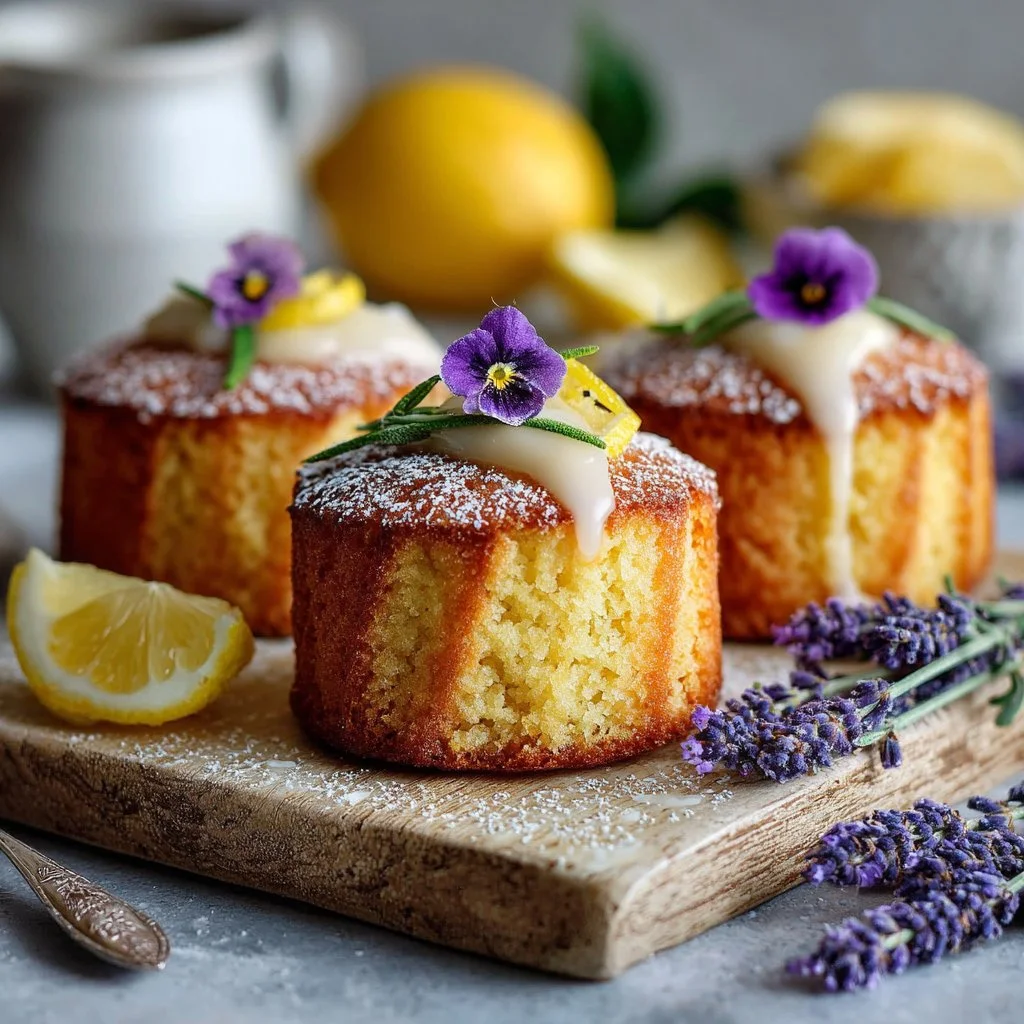
Drizzle or dip the cooled mini cakes into the glaze, allowing excess to drip off; place on a rack to let the glaze set.
Garnish with extra lemon zest and an edible flower for a pretty finishing touch. Serve at room temperature.
Pro Tip: The glaze should be opaque and glossy, and it will set to a thin, slightly firm finish in about 20–30 minutes.
Expert Tips for Mini Lemon Cakes With Lavender Glaze
– Bring eggs, milk, and sour cream to room temperature for better emulsification and a uniform batter.
– Measure flour by spooning into the cup and leveling; overpacking leads to dry, dense cakes.
– For stronger lemon flavor, increase the zest to 1 1/2 tablespoons, but avoid adding more juice or the batter can become too wet.
– If the crumb is gummy after baking, you likely underbaked or overmixed; return to the oven for a few more minutes and reduce mixing next time.
– Use a scale for best results—1 1/3 cups all-purpose flour is about 165 grams.
– When steeping lavender, smell the milk; if it smells soapy, you used too much lavender—dilute with plain milk.
– Use a silicone mini-muffin pan for easy release, or line tins with high-quality paper cups to prevent sticking.
– Common mistake: glazing warm cakes. Always cool completely to avoid the glaze running off and becoming translucent and wet.
Storage & Freezing for Mini Lemon Cakes With Lavender Glaze
Fridge storage: Place glazed cakes in an airtight container with parchment between layers and refrigerate for up to 4 days. Allow to come to room temperature before serving for best flavor.
Freezer storage: Freeze unglazed mini cakes in a single layer on a sheet tray until solid, then transfer to a freezer bag or container for up to 3 months. Freeze glazed cakes only if the glaze is fully set and they are individually wrapped.
Thawing: Thaw overnight in the refrigerator or for 30–60 minutes at room temperature. If frosted after thawing, briefly microwave an unfrosted cake for 8–10 seconds to soften before glazing.
Reheating: Warm refrigerated cake for 10–15 seconds in the microwave or 5 minutes at 300°F (150°C) to perk up the crumb; don’t overheat or they will dry out.
Variations & Substitutions for Mini Lemon Cakes With Lavender Glaze
– Honey-Lavender Glaze: Replace half the powdered sugar liquid with 1 tablespoon mild honey and reduce the infused milk by a tablespoon. Expect a richer sweetness and slightly sticky sheen.
– Lemon-Blueberry Mini Cakes: Fold 1/2 cup fresh or frozen blueberries into the batter and reduce the lemon zest to 2 teaspoons to balance the flavors. The result is fruity pockets and bursts of juiciness.
– Earl Grey Glaze Swap: Steep a tea bag of Earl Grey in the milk instead of lavender for a bergamot-forward glaze. The finished cake will have subtle bergamot floral notes that pair beautifully with lemon.
– Mini Pound Cake Style: Use all butter, omit sour cream, and increase bake time slightly for a denser, more sliceable cake. The texture will be richer and more like a classic pound cake.
Frequently Asked Questions About Mini Lemon Cakes With Lavender Glaze
Q: Can I make the batter ahead of time?
A: Yes. Mix the batter and refrigerate in an airtight container for up to 24 hours. Bring it back to room temperature and give it a brief stir before scooping to reincorporate any settled ingredients.
Q: Why did my glaze turn grainy?
A: Grainy glaze often comes from cold liquid added to powdered sugar, or powdered sugar with lumps. Sift the powdered sugar and warm your infused milk slightly before whisking to ensure a glossy, smooth finish.
Q: Can I use dried lavender buds directly in the glaze without steeping?
A: I don’t recommend it. Unsteeped buds create a gritty texture and can produce overly strong, sometimes soapy flavors. Always steep and strain for the cleanest floral note.
Q: How do I prevent the cakes from sticking to the tin?
A: Grease well with butter or use nonstick spray, or line tins with good-quality paper cups. Allow cakes to cool briefly before removing; trying to unmold when piping hot can cause tearing.
Q: Can I scale this to a full-size loaf or sheet cake?
A: Yes—multiply the batter to fill a standard loaf or 9×13 pan, but watch bake times. A loaf may take 45–60 minutes and a 9×13 about 25–35 minutes. Test with a toothpick for doneness.
Final Thoughts on Mini Lemon Cakes With Lavender Glaze
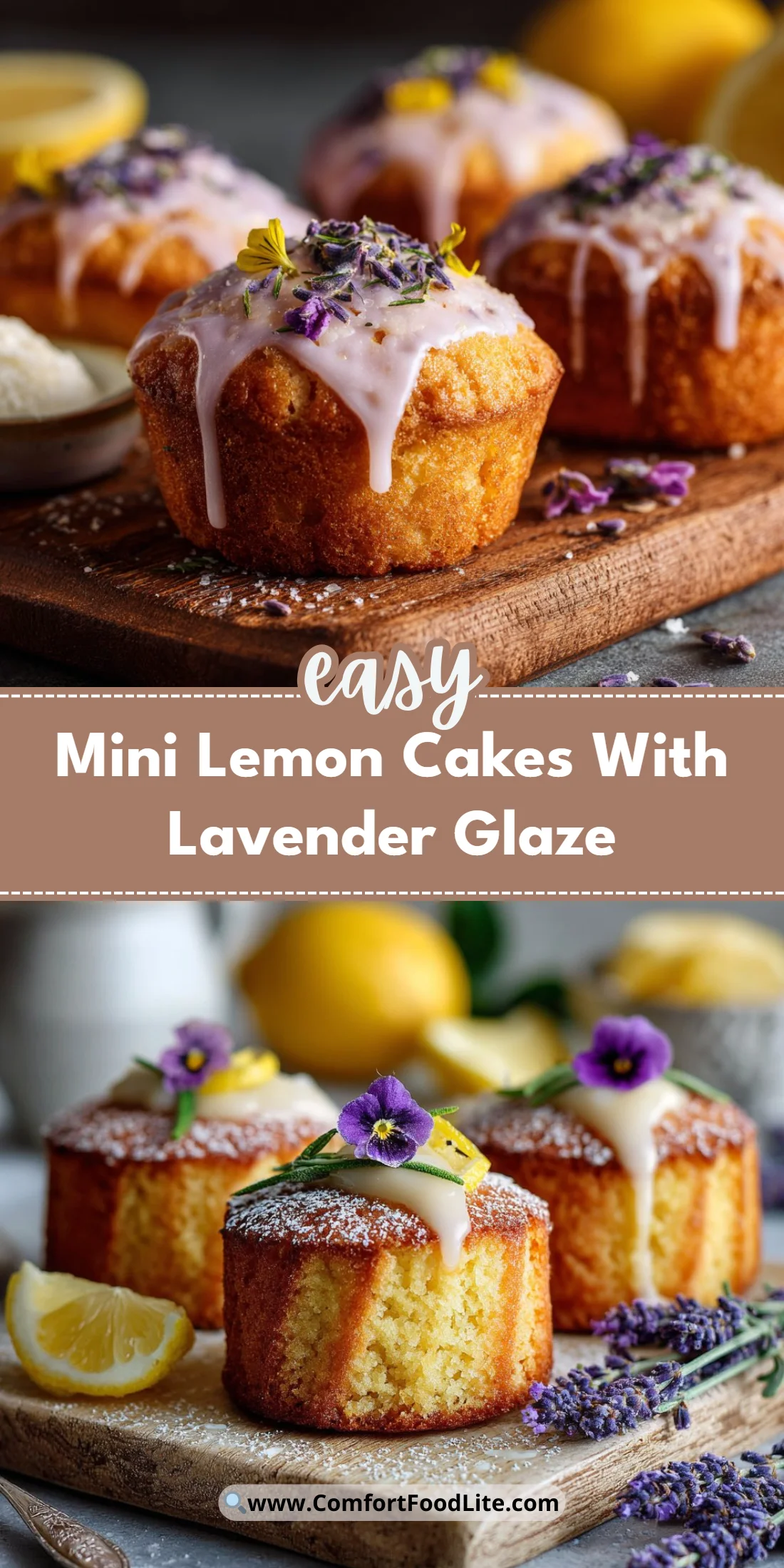
These mini lemon cakes balance bright citrus, buttery crumb, and a subtle floral glaze for an elegant bite.
If you make them, please leave a star rating in the recipe card below and pin this recipe to Pinterest.
Conclusion – Mini Lemon Cakes With Lavender Glaze
For more inspiration on similar lemon and lavender desserts, check the original inspiration at Mini Lemon Cakes With Lavender Glaze Recipe – Southern Living.
If you want a citrus-lover’s twist on a layered loaf, this take on Citrus Cake with a Lemon-Lavender Glaze offers useful glazing tips and flavor swaps.
For a denser, pound-cake approach that still highlights lavender, read this Lemon Pound Cake with Lavender Glaze for technique ideas and alternate proportions.
Internal links used in this article:
- In the introduction I linked to a lavender cookie variation: London Fog cookies with lavender cream cheese frosting.
- In Key Ingredients, see a creamy lemon centerpiece for inspiration: Meyer lemon cheesecake with creamy lemon curd.
- In the Step-by-Step Instructions I referenced a complementary lavender cookie technique: London Fog cookies with lavender cream cheese frosting (note: used earlier for context).
- In Expert Tips for a quick sweet technique contrast: 10-minute chocolate rolls with quark.
- In Variations I pointed to a lemon loaf pairing idea: lemon zucchini bread with glaze.