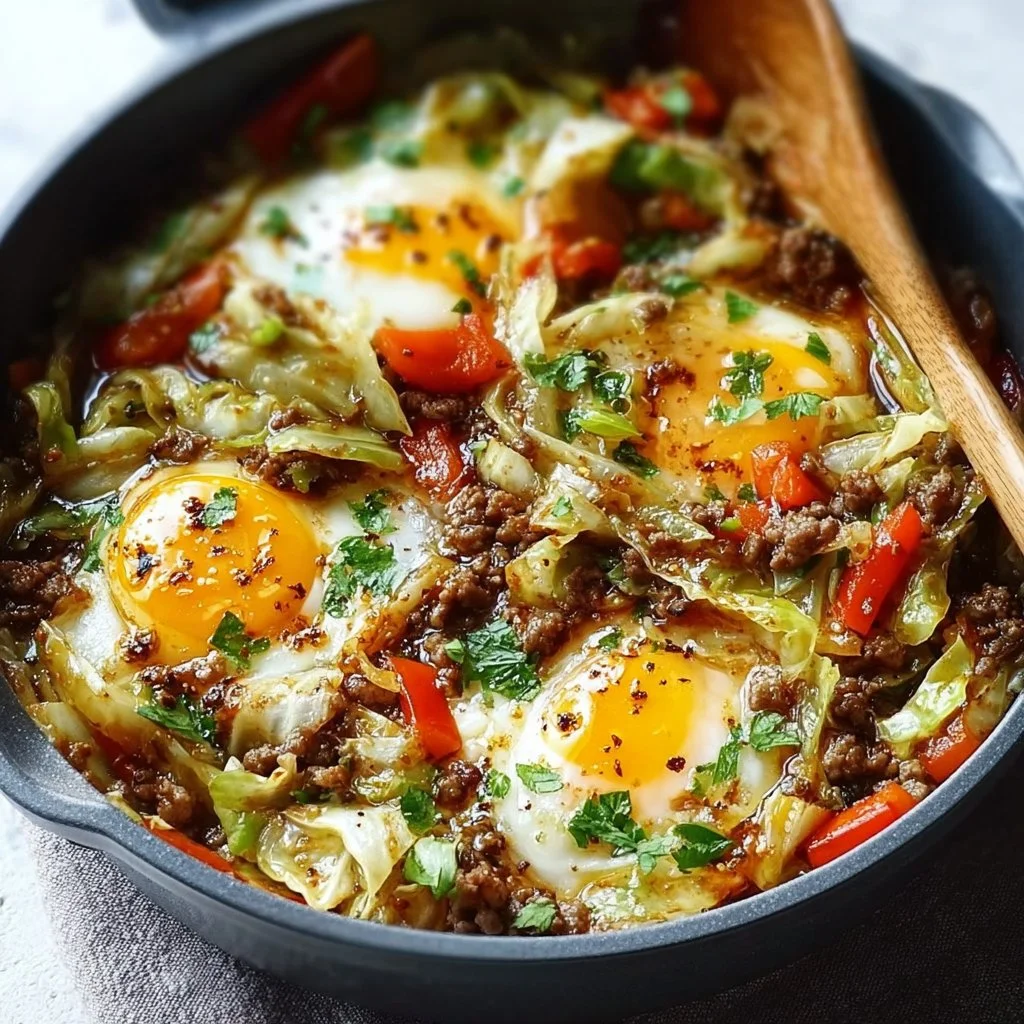
A weeknight dinner that feels both fresh and deeply satisfying, Lean Beef & Cabbage Skillet collapses prep time without skimping on flavor.
This stir-friendly skillet comes together in about 20 minutes, and it scales easily for leftovers or meal prep.
If you like one-pan meals with crisp-tender veggies and savory beef, this one should be on your regular rotation.
For a close cousin with an Asian touch, see this Chinese ground beef and cabbage stir-fry to compare flavors and techniques.
Why You’ll Love This Lean Beef & Cabbage Skillet
- Fast: ready in about 20 minutes from start to finish.
- One-pan cleanup: fewer dishes, less fuss.
- Balanced macros: lean protein plus low-carb vegetables.
- Flexible: easy to swap spices or add a grain.
- Crowd-pleasing: mild, savory flavors that kids and adults both enjoy.
- Budget-friendly: inexpensive ingredients, big yield.
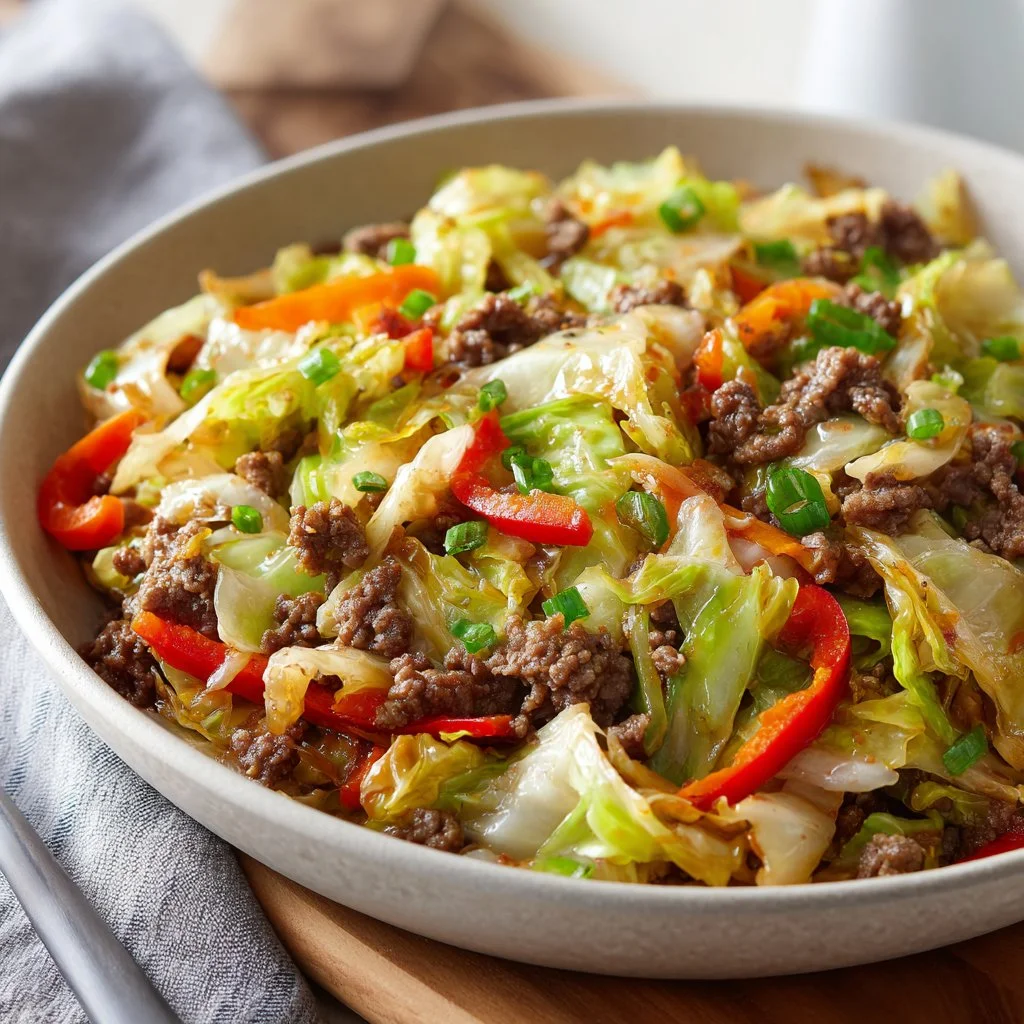
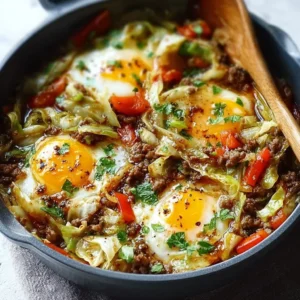
The taste is savory and slightly sweet from the caramelized cabbage and onion, while soy sauce adds umami depth. Texture is a satisfying contrast — crumbly browned beef against ribbons of tender but slightly crisp cabbage and soft bell pepper. This makes every bite layered and interesting.
“I made this on a busy weeknight and it became an instant favorite. Quick, healthy, and flavorful — my husband asked for seconds!” — 5 stars
Key Ingredients for Lean Beef & Cabbage Skillet
Lean ground beef
Lean ground beef provides the protein backbone and caramelized savory bits. Choose 90% lean or leaner to reduce excess grease; fattier mixes will render more oil and can weigh the dish down. If you substitute ground turkey or chicken, expect a milder flavor and slightly drier texture; add a splash more soy sauce or a teaspoon of sesame oil to restore depth.
Cabbage
Cabbage is the star vegetable: it softens but keeps a pleasant bite, soaking up savory juices. Look for a firm, heavy head with tight, crisp leaves and no dark spots. If you use napa cabbage instead, the texture becomes softer and sweeter; kale or shredded Brussels sprouts will change the mouthfeel and need slightly longer cooking.
Soy sauce
Soy sauce is the primary salty, umami seasoning that brings the whole skillet together. Use regular or low-sodium depending on your salt tolerance; low-sodium lets you control the seasoning at the end. Coconut aminos can replace soy sauce for a soy-free version, but expect a milder, slightly sweeter profile.
Onion (and garlic)
Onion and garlic form the aromatic base that browns and sweetens as it cooks. Yellow or sweet onions caramelize well and build flavor; avoid watery white onions for this dish. Minced garlic burns quickly, so add it after the onion softens; roasted garlic as a substitute will give a softer, mellow sweetness.
Full Ingredient List for Lean Beef & Cabbage Skillet
- 1 lb lean ground beef
- 1 small head of cabbage, chopped
- 1 bell pepper, diced
- 1 onion, chopped
- 2 cloves garlic, minced
- 2 tablespoons soy sauce
- 1 tablespoon olive oil
- Salt and pepper to taste
Step-by-Step Instructions for Lean Beef & Cabbage Skillet
Step 1: In a large skillet, heat the olive oil over medium heat.
Warm the skillet first so the oil shimmers and spreads evenly. A properly heated pan prevents sticking and jumpstarts browning on the onion and beef.
Pro Tip: Look for the oil to ripple and become slightly glossy; it should smell faintly nutty and not smoke.
Step 2: Add the onion and garlic; sauté until softened.
Add the chopped onion and cook, stirring occasionally, until the onion turns translucent and begins to pick up golden edges. Add the minced garlic once the onion is softened so it releases aroma without burning.
Pro Tip: You should see the onion become glossy and slightly browned at the edges; it will smell sweet and savory.
Step 3: Add the ground beef and cook until browned, breaking it apart with a spatula.
Crumble the beef into the pan and let it sit for short bursts to develop a crust before breaking it up. Browning creates concentrated beef flavor and those tasty browned bits that cling to the pan. Drain excess fat if excess pooling occurs, but for lean beef there should be minimal grease.
Pro Tip: Watch for the meat to lose its raw pink color and start to form small brown bits; you’ll smell a toasty, beefy aroma.
Step 4: Stir in the chopped cabbage and bell pepper, cooking until the cabbage is tender.
Add the cabbage and diced bell pepper, tossing to coat in pan juices. Cook until the cabbage softens but still has slight crunch — about 5–7 minutes depending on how fine you chopped it. Stir occasionally so the cabbage wilts evenly and the pepper warms through.
Pro Tip: The cabbage should reduce in volume and become glossy; leaves should be wilted with pale translucent edges.
Step 5: Pour in the soy sauce and season with salt and pepper, mixing well.
Drizzle the soy sauce evenly and stir to distribute flavor, scraping the bottom of the pan to lift any browned bits into the sauce. Taste and add salt or pepper sparingly because the soy sauce already adds saltiness.
Pro Tip: The sauce should coat the ingredients and darken the beef slightly; you’ll smell an umami lift.
Step 6: Cook for an additional 2-3 minutes, then serve hot.
Let everything mingle over medium heat for a couple more minutes so flavors marry and any excess liquid reduces. Serve straight from the skillet for best texture, while hot and fresh.
Pro Tip: The final dish should appear glossy with no pool of thin liquid; steam will rise and vegetables will look tender-crisp.
Expert Tips for Lean Beef & Cabbage Skillet
- Control heat: Cook over medium to medium-high to brown meat without burning aromatics. High heat can scorch garlic.
- Texture troubleshooting: If cabbage turns soggy, reduce the cooking time or coarse-shred it instead of chopping finely.
- Equipment tip: Use a wide skillet or large sauté pan so the cabbage has room to wilt instead of steaming.
- Deglazing technique: If the pan sticks, add a splash of water or broth and scrape to release browned bits for extra flavor.
- Salt last: Add soy sauce early, then fine-tune salt at the end to avoid over-salting.
- Oil choice: Olive oil is fine, but a high-heat oil like avocado oil tolerates higher searing temperatures better.
- Common mistake: Adding too much cabbage at once cools the pan and causes steaming; add in batches if necessary.
- Flavor layering: Finish with a squeeze of lemon or a few drops of toasted sesame oil for brightness and aroma.
To learn browning technique nuances you can compare with how other dishes handle ground beef in a pan, such as this ground beef stroganoff that emphasizes browning and deglazing.
Storage & Freezing for Lean Beef & Cabbage Skillet
Fridge storage: Cool the skillet completely before storing. Keep in an airtight container for up to 4 days for best texture retention. For meal prep, portion into individual airtight containers to reheat single servings easily.
Freezer storage: Transfer cooled portions to freezer-safe containers or heavy-duty freezer bags. Freeze flat for up to 3 months. Label with date and contents for easy rotation.
Thawing: Thaw overnight in the refrigerator. For quick thawing, place the sealed container in cold water, changing water every 30 minutes until flexible.
Reheating: Reheat in a skillet over medium heat for the best texture; add a tablespoon of water or broth if it seems dry. Microwave reheating works in a pinch — cover and heat in short bursts, stirring between intervals to avoid hot spots.
For tips on storing cooked beef and reheating while preserving flavor, compare storage methods with recipes like beef tenderloin crostini which require delicate handling.
Variations & Substitutions for Lean Beef & Cabbage Skillet
Korean-style variation: Add 1 tablespoon gochujang and 1 teaspoon sugar with the soy sauce and finish with sliced scallions and toasted sesame seeds. The result is a sweet-spicy umami glaze that clings to the cabbage.
Low-carb, extra veg: Double the cabbage and halve the bell pepper for more bulk and lower carbs, or stir in shredded zucchini in the last 3 minutes. This produces a lighter, more voluminous skillet ideal for extra veggies.
Ground pork or turkey swap: Use ground pork or turkey instead of beef and add a splash more soy sauce or a teaspoon of fish sauce to boost savory notes. Pork will be richer; turkey will be leaner and needs flavor compensation.
Asian stir-fry twist: Add ginger, a drizzle of sesame oil at the end, and a few drops of rice vinegar for brightness. Incorporating quick-blanched bean sprouts at the end gives a refreshing snap reminiscent of a classic beef and broccoli stir-fry technique.
Frequently Asked Questions About Lean Beef & Cabbage Skillet
Q: Can I make this in advance for meal prep?
A: Yes. Cook as directed, cool completely, and portion into airtight containers. Refrigerate up to 4 days. Reheat in a skillet over medium heat for best texture, adding a splash of water if needed to loosen any concentrated sauce.
Q: Can I use frozen ground beef?
A: Thaw frozen ground beef in the refrigerator overnight for even cooking and safer handling. If cooking from frozen, brown in smaller chunks and ensure the meat reaches a safe internal temperature of 160°F (71°C); expect more liquid release and slightly longer cook time.
Q: How do I prevent the cabbage from becoming mushy?
A: Use medium heat and add cabbage after the meat is fully browned. Chop cabbage into larger pieces or coarse shreds and cook just until tender-crisp. Avoid adding too much at once so the pan doesn’t steam.
Q: Is soy sauce the only seasoning that works?
A: Soy sauce is the primary umami contributor, but you can add Worcestershire sauce, fish sauce, or a splash of balsamic for different profiles. If you use low-sodium soy or coconut aminos, taste and adjust at the end.
Q: Can this be made gluten-free?
A: Yes. Swap regular soy sauce for tamari or a certified gluten-free soy sauce. Check labels on any other condiments you add to ensure they’re gluten-free.
Final Thoughts on Lean Beef & Cabbage Skillet
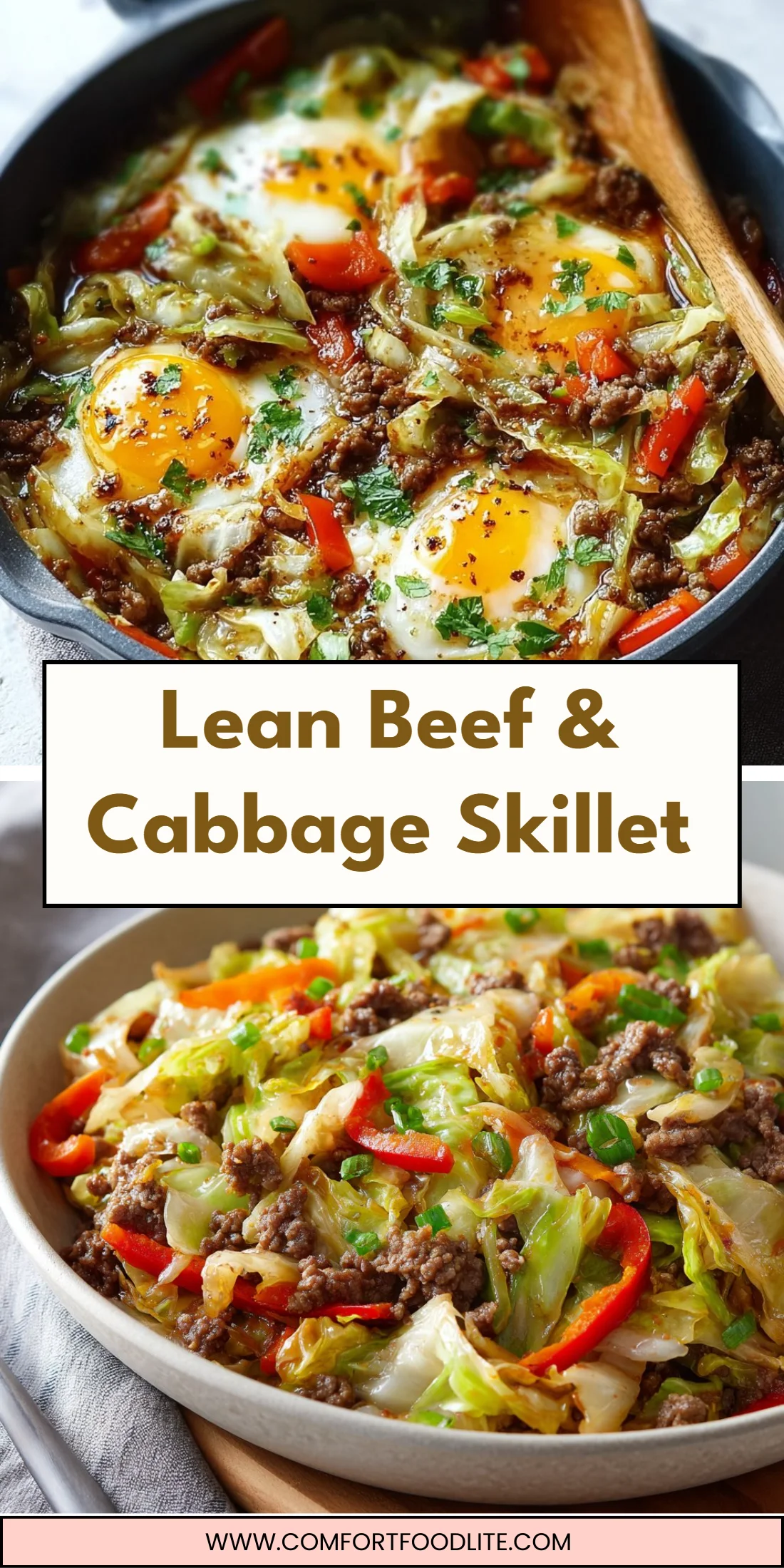
This Lean Beef & Cabbage Skillet is a fast, satisfying weeknight hero that balances flavor, texture, and simplicity. If you tried it, please leave a star rating in the recipe card below and pin it to Pinterest to save for later.
Lean Beef & Cabbage Skillet
Ingredients
Main Ingredients
- 1 lb lean ground beef Choose 90% lean or leaner for less grease.
- 1 small head cabbage, chopped Look for a firm, heavy head for best results.
- 1 medium bell pepper, diced
- 1 medium onion, chopped Use yellow or sweet onions for better caramelization.
- 2 cloves garlic, minced Add after the onion softens to avoid burning.
- 2 tablespoons soy sauce Use low-sodium for less salt if needed.
- 1 tablespoon olive oil A high-heat oil can be used for better browning.
- to taste salt and pepper Adjust to preference.
Instructions
Preparation
- In a large skillet, heat olive oil over medium heat until it shimmers.
- Add onion and garlic; sauté until softened and translucent.
- Add the ground beef to the pan and cook until browned, breaking it apart with a spatula.
- Stir in the chopped cabbage and bell pepper, cooking until the cabbage is tender, about 5-7 minutes.
- Pour in the soy sauce and season with salt and pepper; mix well.
- Cook for an additional 2-3 minutes, then serve hot.