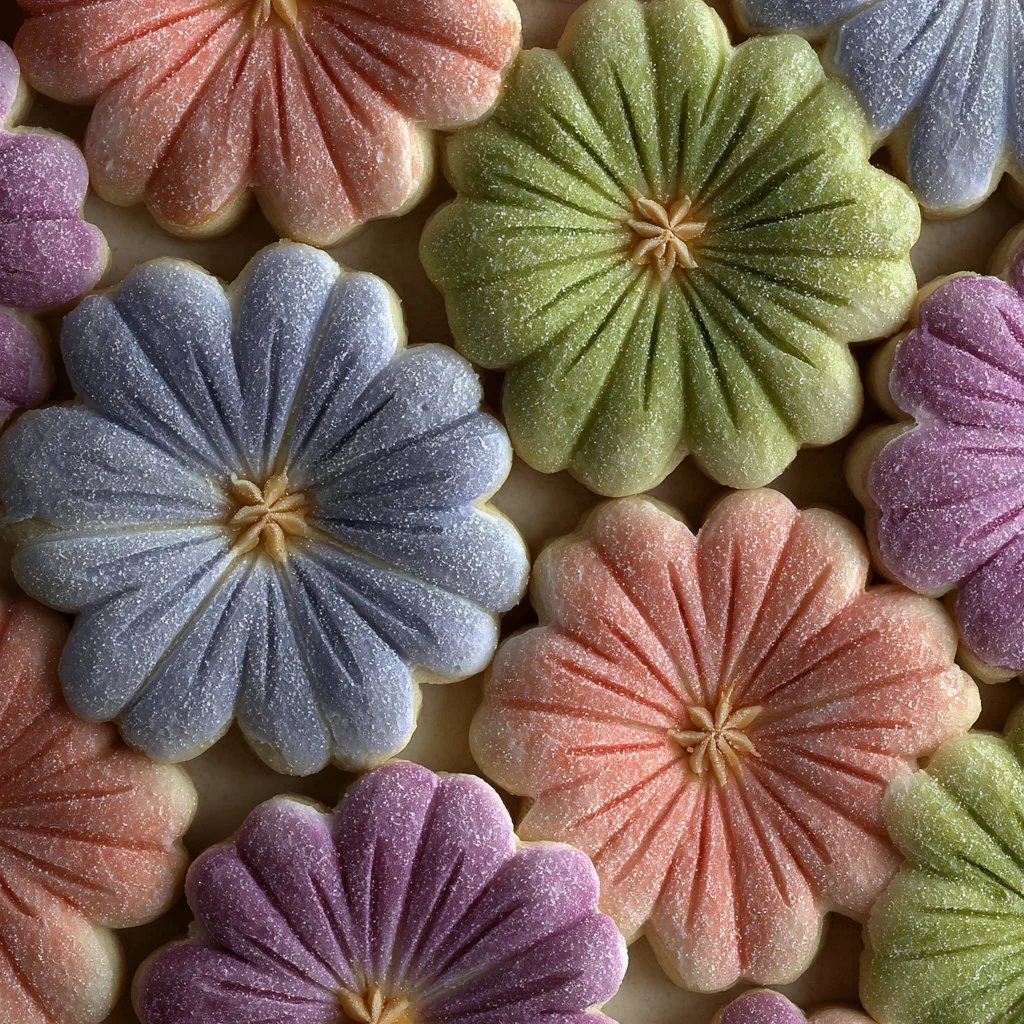
A tray of simple, buttery flower-shaped cookies can brighten any day.
They look delicate but are easy enough for a busy afternoon baking session.
With minimal ingredients and a quick chill, you can stamp out dozens of pretty cookies in one go.
These Flower Cookies are perfect for gifting, tea time, or a springtime dessert table.
Why You’ll Love This Flower Cookies
– Light, buttery flavor that pairs with tea or coffee.
– Crisp edges with a tender, shortbread-like center.
– Simple pantry ingredients with a decorative, impressive finish.
– Quick to mix, easy to chill and roll, great for kids to decorate.
– Customizable: sanding sugar, extracts, or edible flowers change the look.
– Reliable texture that holds shapes well when baked.
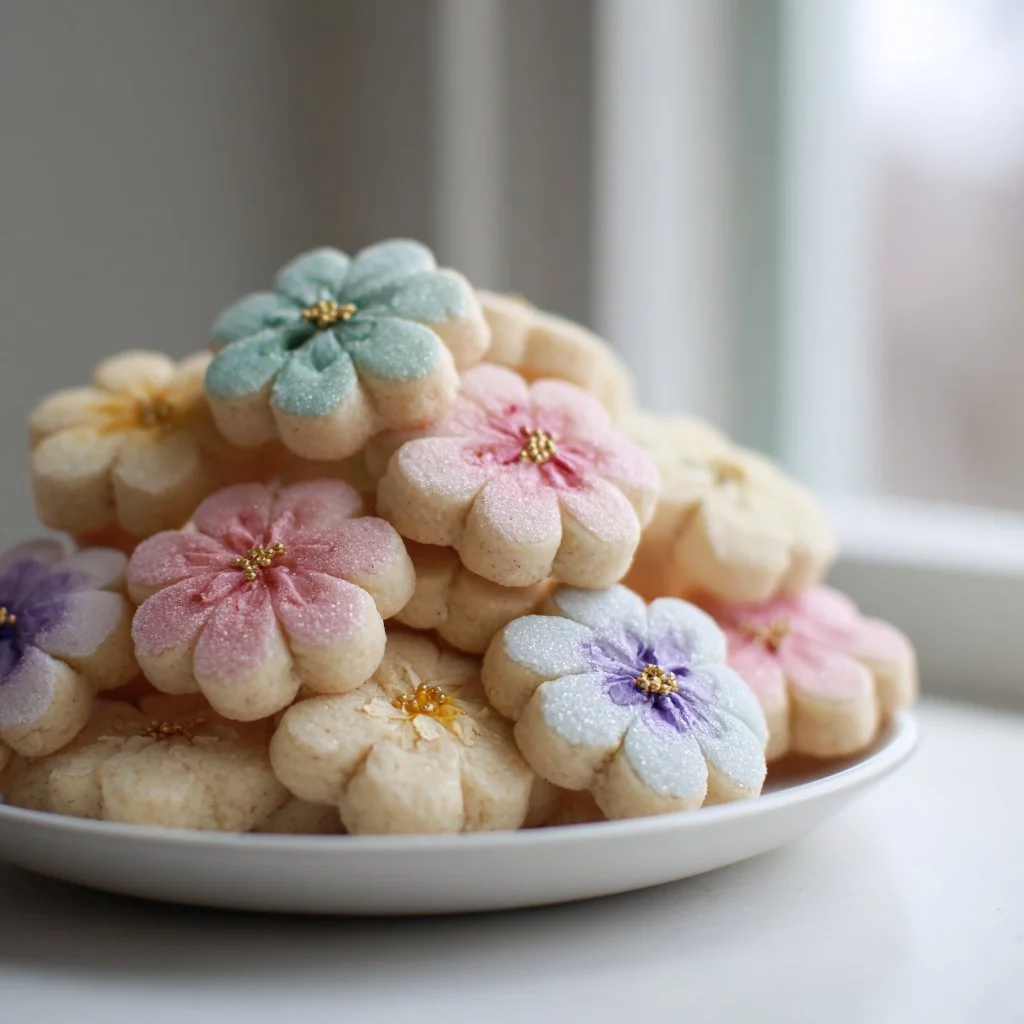
These Flower Cookies taste of rich butter and vanilla with a whisper of almond if you choose it. The texture is crisp at the edges and tender through the middle, similar to a buttery shortbread but with a slightly lighter bite thanks to the egg and baking powder. Small decorative accents like sanding sugar or pressed edible flowers turn them from everyday to celebratory.
"Absolutely gorgeous and so easy — the petals stayed perfect and the flavor is pure butter heaven. Made a batch for a bridal shower and they were gone in an hour!" ★★★★★
Try another shaped cookie idea if you like themed trays for parties.
Key Ingredients for Flower Cookies
Choose the best core ingredients and the cookies will behave reliably. Below are the top ingredients that matter most and why.
Unsalted butter (3/4 cup), softened.
Butter is the flavor backbone and controls spread. Use high-quality European-style butter for a richer, creamier taste. If you substitute margarine, expect less flavor and different texture; melted butter will make the cookies spread more. For a nuttier profile, try browning the butter gently; see our brown butter method for technique tips.
All-purpose flour (2 1/4 cups).
Flour provides the structure. Measure accurately by spooning into the cup and leveling or, better, weigh it. Using cake flour will yield softer, more delicate cookies that may not hold the flower edges as crisply. Bread flour will make them chewier and too tough.
Granulated sugar (3/4 cup) and egg (1 large).
Sugar controls tenderness and browning; granulated sugar gives light crunch and structure. The egg binds and adds lift with the baking powder. If you swap to powdered sugar (confectioners’), you’ll get a more tender, melt-in-your-mouth shortbread with less crispness. Skipping the egg will make shaping and baking more fragile; consider a vegan egg replacer with caution.
Full Ingredient List for Flower Cookies
– 2 1/4 cups all-purpose flour
– 1/2 teaspoon baking powder
– 1/4 teaspoon salt
– 3/4 cup unsalted butter, softened
– 3/4 cup granulated sugar
– 1 large egg
– 1 1/2 teaspoons vanilla extract
– 1/2 teaspoon almond extract (optional)
– Colored sanding sugar or edible flowers for decorating
Step-by-Step Instructions for Flower Cookies
Step 1: Whisk the dry ingredients
In a medium bowl, whisk together the all-purpose flour, baking powder, and salt until evenly combined.
Pro Tip: The dry mix should look uniform with no clumps and be the color of raw dough—light and even.
Step 2: Cream butter and sugar
In a large bowl, beat the softened butter and granulated sugar with a mixer on medium speed until light and fluffy, about 2 to 3 minutes.
Pro Tip: The mixture should look paler and hold soft peaks when you lift the beater.
Step 3: Add egg and extracts
Beat in the large egg, vanilla extract, and almond extract if using, until fully combined.
Pro Tip: After adding the egg, the batter should smell of vanilla and feel smooth, not curdled.
Step 4: Combine dry and wet ingredients
Gradually add the dry ingredients to the butter mixture, mixing on low speed until a soft dough comes together.
Pro Tip: The dough should form a cohesive ball and feel soft but not sticky to the touch.
Step 5: Divide and chill the dough
Divide the dough in half and shape each half into a flat disc. Wrap tightly in plastic wrap and refrigerate for at least 1 hour.
Pro Tip: After chilling, the dough should be firm to the touch and easy to roll without tearing.
Step 6: Preheat oven and prepare baking sheets
Set the oven to 350°F (175°C) and line baking sheets with parchment paper.
Pro Tip: The oven should be fully preheated so the cookies begin setting immediately when placed in.
Step 7: Roll and cut the cookies
On a lightly floured surface, roll one disc of dough to about 1/4-inch thickness. Use flower-shaped cookie cutters to stamp out shapes. Reroll scraps once.
Pro Tip: The rolled dough should be even in thickness with crisp cutter edges for clean petals.
Step 8: Decorate before baking
Sprinkle colored sanding sugar onto the tops or gently press edible flowers into the dough before baking. Press lightly so decorations adhere but do not compress the cookie.
Pro Tip: The sanding sugar will glisten and the flowers will sit flush without sinking into the dough.
Step 9: Bake until edges are light golden
Bake for 8 to 10 minutes, or until the edges begin to turn a light golden color. Rotate the sheet halfway if your oven has hot spots.
Pro Tip: The cookies will look just set on top and the edges will show a pale gold ring.
Step 10: Cool and finish
Allow the cookies to cool on the pan for 5 minutes, then transfer to a wire rack to cool completely. Once cooled, handle gently and store.
Pro Tip: Cooled cookies should feel firm around the edges and still slightly delicate in the center.
For a reliable creaming technique that helps these cookies hold their shape, compare tips in our best-ever chocolate chip cookies guide.
Expert Tips for Flower Cookies
– Temperature tips: Keep butter at room temperature (soft but not greasy) to cream properly. If it’s too cold, you won’t get the aeration; too warm and the dough will spread.
– Chill time: Never skip the chill; chilled discs firm the butter and stop excessive spread. One hour is minimum—overnight improves rollability.
– Rolling advice: Roll between two sheets of parchment for perfect thickness and less flour usage.
– Cutter care: Dip cutters in flour and tap out excess for sharp petal edges.
– Texture troubleshooting: If cookies are crumbly, you likely overfloured—add a teaspoon of milk when forming dough. If they spread, the butter was too warm or the dough too thin.
– Equipment tips: Use a silicone baking mat or parchment and a light-gauge spatula for transferring shapes. A good set of cookie cutters ensures clean outlines.
– Common mistakes: Overworking dough warms it and creates dense cookies; work quickly and chill as directed. Decorating too soon before cooling can melt sugar and flowers.
– Flavor boost: Add a teaspoon of lemon zest or swap half the vanilla for almond extract for a floral lift.
For an unusual tip about handling delicate ingredients and achieving a buttery finish, you may find inspiration in the techniques used for butter cauliflower.
Storage & Freezing for Flower Cookies
Room temperature fridge storage: Store fully cooled cookies in an airtight container layered with parchment at room temperature for up to 5 days. Use a cookie tin or a sealed plastic container to prevent humidity.
Freezer storage (baked): Freeze baked cookies in a single layer on a sheet until firm, then transfer to a freezer bag or airtight container for up to 3 months. Thaw at room temperature in the container to avoid condensation.
Freezer storage (dough): Wrap chilled dough discs tightly in plastic and freeze up to 2 months. Thaw overnight in the refrigerator before rolling.
Thawing & reheating: Thawed baked cookies are best at room temperature; to refresh crispness, warm in a 300°F (150°C) oven for 3–4 minutes. Avoid microwaving or they will soften.
Containers: Use rigid containers for layered storage and heavy-duty freezer bags for long-term freezing to prevent freezer burn.
If you need an airtight-storage guide with temperature notes for baked goods, consult our practical tips in the post about oven and appliance handling.
Variations & Substitutions for Flower Cookies
Lemon Honey Flower Cookies: Replace 1/2 teaspoon of vanilla with 1 teaspoon lemon zest and fold 2 teaspoons of honey into the dough. This yields a bright, floral citrus note and slightly softer crumb.
Almond Blossom Cookies: Use almond extract (1/2 teaspoon) instead of vanilla and add a dusting of sliced blanched almonds pressed into petals. Result is aromatic and slightly nutty with pronounced almond flavor.
Glazed Flower Cookies: After cooling, brush with a thin glaze of powdered sugar and milk, then sprinkle sanding sugar before the glaze sets. This creates a glossy, slightly sweet finish that highlights shape.
Pressed Flower Cookies: Gently press edible, dried flowers into each cookie before baking for a rustic, botanical look. If using fresh flowers, press them dry first or they may darken during baking.
Frequently Asked Questions About Flower Cookies
Q: How do I keep the petals sharp during baking?
A: Use well-chilled dough, roll to exactly 1/4-inch thickness, and avoid over-flouring the cutter. Place cookies on a cold baking sheet straight from the fridge and bake at the recommended 350°F (175°C) so edges set quickly. If petals still round, chill sheets briefly before baking.
Q: Can I make the dough ahead of time?
A: Yes. Dough discs can be wrapped tightly and refrigerated for up to 48 hours or frozen for 1–2 months. Thaw in the refrigerator before rolling and cut while cold for best results.
Q: Are edible flowers safe to bake onto cookies?
A: Use varieties labeled as edible and fully dry fresh blossoms before pressing. Bake at low temperature and use light pressure so petals remain intact. Avoid pesticide-sprayed blooms.
Q: How can I prevent cookies from spreading too much?
A: Ensure butter is properly softened, not melted. Chill the dough; roll to uniform thickness; and use parchment or a cool baking sheet. If spread persists, lower oven temp by 10–15°F and bake a touch longer.
Q: Can I make these gluten-free or vegan?
A: For gluten-free, use a 1:1 gluten-free all-purpose flour blend and chill longer—texture will differ slightly. For vegan, replace the egg with a commercial egg replacer or a flax egg and use vegan butter; results are more delicate and may require extra chilling.
Final Thoughts on Flower Cookies
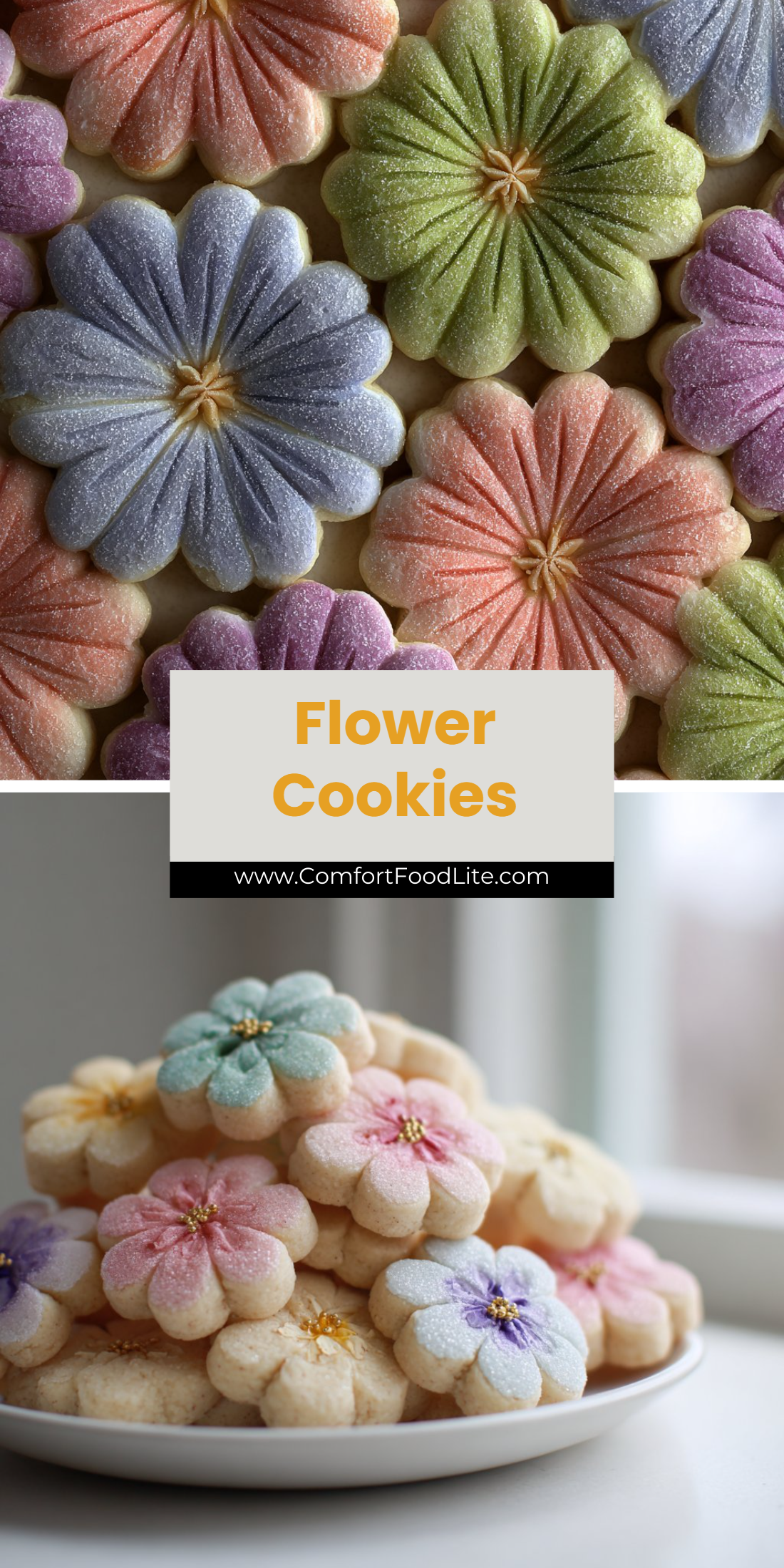
These Flower Cookies are an easy, beautiful way to celebrate any occasion with simple pantry ingredients and a few decorative touches.
If you enjoyed this recipe, please leave a star rating in the recipe card below and pin this to Pinterest for later.
Conclusion: Flower Cookies
For inspiration on royal icing and decorative techniques that complement these Flower Cookies, see the detailed tutorial at Royal Icing Flower Sugar Cookies Recipe – Foodal.
If you want ideas for sculpted or dimensional floral cookies, this creative guide is helpful: 3D Flower Shaped Cookies – Eats Delightful.
For pressed flower decoration methods specifically demonstrated on cookies, read the pressed-flower walkthrough here: Pressed Flower Cookies – Yummy Mummy Kitchen.
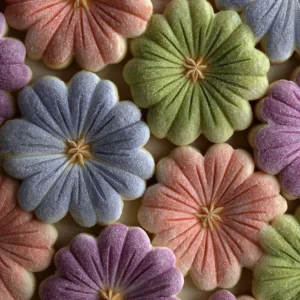
Flower Cookies
Ingredients
For the dough
- 2 1/4 cups all-purpose flour Provides structure; accurately measure by spooning and leveling.
- 1/2 teaspoon baking powder Helps leaven the cookies.
- 1/4 teaspoon salt Enhances flavor.
- 3/4 cup unsalted butter Softened; use high-quality for best results.
- 3/4 cup granulated sugar Controls tenderness and browning.
- 1 large egg Binds and adds lift.
- 1 1/2 teaspoons vanilla extract For flavor.
- 1/2 teaspoon almond extract Optional; adds a nutty profile.
- to taste colored sanding sugar or edible flowers For decorating.
Instructions
Preparation
- In a medium bowl, whisk together the all-purpose flour, baking powder, and salt until evenly combined.
- In a large bowl, beat the softened butter and granulated sugar with a mixer on medium speed until light and fluffy, about 2 to 3 minutes.
- Beat in the egg, vanilla extract, and almond extract until fully combined.
- Gradually add the dry ingredients to the butter mixture, mixing on low speed until a soft dough comes together.
- Divide the dough in half and shape each half into a flat disc. Wrap tightly in plastic wrap and refrigerate for at least 1 hour.
- Preheat oven to 350°F (175°C) and line baking sheets with parchment paper.
- On a lightly floured surface, roll one disc of dough to about 1/4-inch thickness. Use flower-shaped cookie cutters to stamp out shapes.
- Sprinkle colored sanding sugar onto the tops or gently press edible flowers into the dough before baking.
- Bake for 8 to 10 minutes, or until the edges begin to turn a light golden color.
- Allow the cookies to cool on the pan for 5 minutes, then transfer to a wire rack to cool completely.