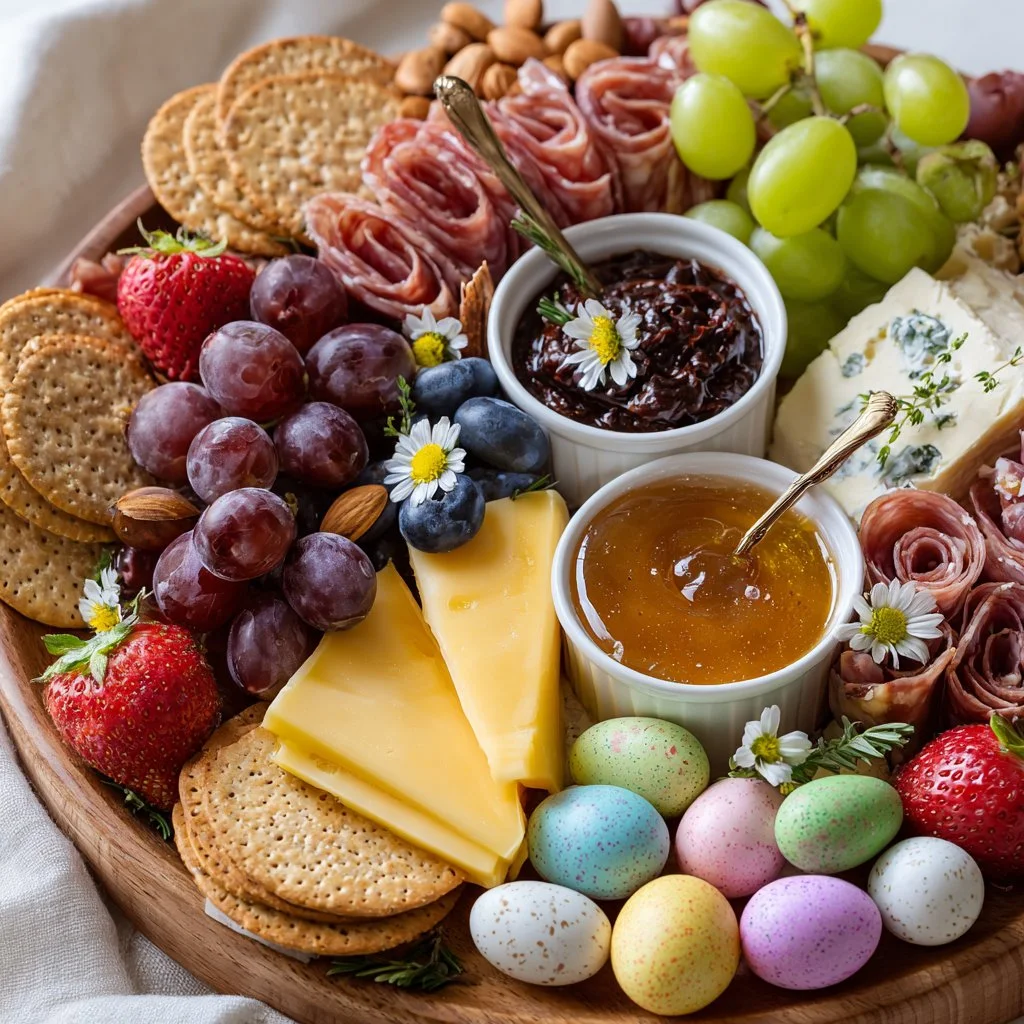
A bright, shareable Easter Charcuterie Board makes entertaining effortless and looks like you worked for hours.
It’s colorful, quick to assemble, and perfect for nibblers of all ages.
This guide walks through ingredient choices, the science behind pairings, troubleshooting visuals, and expert tips so your board steals the holiday table.
Whether you’re hosting brunch or bringing a platter to a potluck, these directions keep things simple and stunning. Try a sweet pairing idea to round out the spread.
Why You’ll Love This Easter Charcuterie Board
- Easy to assemble in under 30 minutes.
- Kid-friendly with festive pastel candies.
- Balanced sweet, salty, creamy, and crunchy bites.
- Highly customizable for dietary needs.
- Visually stunning for photos and social sharing.
- Great for grazing and small group conversation.
- Minimal clean-up with store-bought shortcuts.
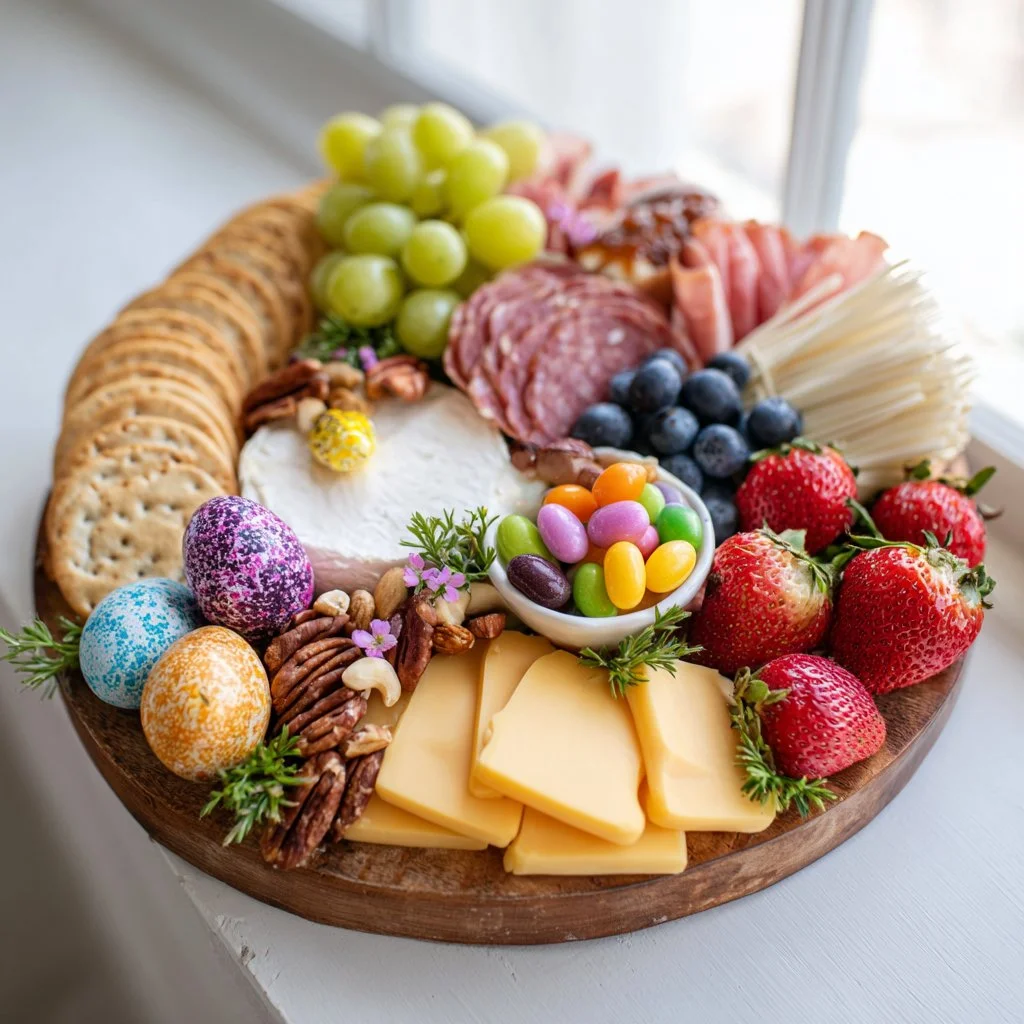
This Easter Charcuterie Board delivers a contrast of creamy cheeses, savory cured meats, fresh fruit brightness, and the nostalgic bite of jelly beans and chocolate eggs. Textures move from silky Brie and tangy goat cheese to crunchy crackers and toasted nuts, while honey or jam ties sweet and savory into single bite harmony.
"Absolutely gorgeous and so easy — guests thought I spent all morning. The mix of cheeses and fruit was perfect, and the little chocolate eggs were the star for the kids. Five stars!" — Emma R., reader
Key Ingredients for Easter Charcuterie Board
Pick the right ingredients and you lock in flavor balance, eye appeal, and textural variety.
Brie cheese
Brie provides a soft, buttery center and a delicate rind that melts slightly at room temperature. Buy a triple-cream or traditional Brie depending on richness preferences; look for a clean, white rind and slight springiness to the paste. If you substitute with Camembert the texture and mushroomy notes are similar; a firmer cheese like Cambozola will change the spread’s softness.
Cheddar cheese
Sharp cheddar adds tang and structure to each bite, giving contrast to milder cheeses and sweet fruits. Choose an aged or vintage cheddar for a pronounced bite, or a mild farmhouse cheddar if serving children. Substituting colby or monterey jack will soften the sharp edge and make the board more buttery than tangy.
Salami or prosciutto
Cured meats supply savory umami and a satisfying chew that complements soft cheeses. For a delicate finish, choose thinly-sliced prosciutto; for bold, peppery notes, select Genoa salami. Replacing with a vegetarian deli option changes the mouthfeel and salt level — boost seasoning with olives or capers if omitting meat.
Fresh strawberries
Strawberries bring bright acidity, juicy texture, and vivid color to the Easter palette. Pick firm, ripe berries with a fragrant aroma and deep red color; hulled smaller berries spread easily across the board. If using raspberries instead, expect a more fragile fruit that needs careful placement to avoid crushing.
Full Ingredient List for Easter Charcuterie Board
– Brie cheese
– Cheddar cheese
– Goat cheese
– Salami or prosciutto
– Crackers or crostini
– Fresh strawberries
– Green grapes
– Blueberries
– Chocolate eggs
– Jelly beans
– Honey or fruit jam
– Nuts (almonds or walnuts)
– Fresh herbs or edible flowers
Step-by-Step Instructions for Easter Charcuterie Board
Step 1: Place small bowls of honey or jam on the board.
Begin by setting 2–3 small bowls across the board for honey and fruit jam so guests can easily reach them. Choose contrasting locations so dips anchor different sections visually.
Pro Tip: The board should smell subtly sweet and floral near the jam; bowls act as visual anchors and prevent soggy crackers.
Step 2: Arrange cheeses evenly across the board.
Space the Brie, Cheddar, and Goat cheese apart to create zones; leave room for knives and garnishes. Slice or wedge a portion of each cheese so guests can serve themselves without cutting into the entire wheel.
Pro Tip: Cheeses should feel slightly cool but not cold; the rind should look intact and the paste creamy and inviting.
Step 3: Fold or roll meats and place beside cheeses.
Fold prosciutto into gentle ruffles or roll salami into cones, then nestle them next to cheeses to create layers and height. Place meats in small stacks so guests can grab a single folded piece.
Pro Tip: Visually, meats should have gentle curves and shadows; they should not look flat or overcrowded.
Step 4: Add fresh fruits between larger items for color.
Tuck clusters of green grapes, blueberries, and halved strawberries between cheeses and meats. Use color repetition to lead the eye across the board and to break up neutral tones.
Pro Tip: Fruit should look plump and glossy; cut edges of strawberries should face up to reveal color and freshness.
Step 5: Fill remaining spaces with crackers and nuts.
Fan crackers and crostini in small stacks around the edges, and sprinkle almonds or walnuts in gaps where items don’t touch. Keep fragile crackers away from jam bowls to avoid sogginess.
Pro Tip: The board should have visible negative space filled by crisp textures; crackers should appear dry and intact, not crushed.
Step 6: Tuck in pastel candies and chocolate eggs for a festive look.
Scatter jelly beans and chocolate eggs in small pockets—avoid large clusters that look messy. Place candies near fruit and nuts for kid-friendly pops of color.
Pro Tip: Candies add seasonal charm; they should glimmer and provide color contrast without overwhelming the savory elements.
Step 7: Garnish with fresh herbs or edible flowers and serve.
Finish by tucking sprigs of mint, rosemary, or edible flowers around cheeses and bowls to add aroma and elegance. Serve with small knives, napkins, and plates for easy grazing.
Pro Tip: The final board should smell herbal and inviting; herbs should be bright green and flowers unfaded.
Expert Tips for Easter Charcuterie Board
– Temperature tips: Pull cheeses out 20–30 minutes before serving so flavors bloom and textures soften for easier spreading. A sweet pairing served slightly chilled balances the soft cheeses.
– Texture troubleshooting: If crackers get soggy, move them to the edge on a separate plate and replenish often; keep wet items like jam in bowls.
– Equipment tips: Use a mix of wood and slate boards for visual contrast; small ramekins and offset spatulas make serving clean and easy.
– Portion guidance: Plan 2–3 ounces of cheese and 1–2 ounces of meat per person for a party where the board is part of a larger spread.
– Styling technique: Create triangles of color by grouping three matching items (for example, three clusters of grapes) to guide the eye.
– Common mistakes: Avoid overcrowding which hides centerpiece items; also don’t serve cheeses straight from the fridge as they will taste muted.
– Allergy-aware swaps: Offer a nut-free section with extra crackers and pretzels, and label it to prevent cross-contamination.
– Visual balance: Vary heights by stacking or folding items and leave small pockets of negative space to prevent the board from appearing cluttered. For inspiration on alternate holiday layouts, see this holiday platter idea.
Storage & Freezing for Easter Charcuterie Board
Fridge storage: Wrap leftover cheeses tightly in wax paper and then plastic wrap; store cold cheeses in an airtight container for 5–7 days. Meats can be refrigerated in airtight containers for 3–5 days.
Freezer storage: Most cheeses don’t freeze well for texture reasons, but hard cheeses like aged Cheddar can be frozen for up to 3 months if grated. Avoid freezing fresh fruits, crackers, or candies; nuts can be frozen in sealed bags for up to 6 months.
Thawing: Thaw frozen hard cheese overnight in the refrigerator then use for cooked dishes or grated applications; thawed texture changes make it less suitable for a cheese board. Never refreeze previously frozen cheeses.
Reheating: Reheating is generally unnecessary; if you want warm crostini, toast separately just before serving. Use airtight glass containers for refrigerated leftovers to maintain freshness.
Variations & Substitutions for Easter Charcuterie Board
– Vegetarian-friendly board: Omit meats and add marinated artichokes, roasted red peppers, and a variety of olives. This keeps savory umami while increasing colorful vegetable choices and accommodates guests who don’t eat meat. See another snack-board idea for vegetable-focused swaps.
– Gluten-free board: Replace crackers and crostini with gluten-free crackers, rice cakes, or corn chips. Be sure to separate them on the board and mark the section to avoid cross-contact with regular crackers.
– Kid-centric board: Increase fruit and pastel candies, include mild cheeses and small dip cups of chocolate-hazelnut spread or honey. The result is playful and approachable for young palates while still offering adult-friendly options on the side.
– Elegant brunch board: Swap jelly beans for candied citrus peel and choose a creamy triple-cream Brie plus a small wedge of blue cheese for sophisticated flavor. Edible flowers and microgreens elevate the visual impact for a refined brunch service. For playful dessert bites that pair well, consider these Peep-stuffed cookie ideas.
Frequently Asked Questions About Easter Charcuterie Board
Q: How long should I let cheeses sit out before serving?
A: For optimal flavor and texture, remove soft and semi-soft cheeses from the fridge 20–30 minutes before serving. Firmer, aged cheeses can sit out up to 45 minutes. Watch humid or very warm rooms—if the temperature exceeds 75°F, keep cheeses cool and pull out in smaller batches.
Q: Can I prepare the board ahead of time?
A: Yes, prepable elements include sliced meats, pre-cut cheeses, and washed fruit stored separately in airtight containers. Assemble the board 15–30 minutes before guests arrive to keep crackers crisp and fruit looking fresh.
Q: What’s the best way to prevent crackers from getting soggy from jams or fruit?
A: Place jams in small bowls and set crackers on a separate area of the board or a side plate. Replenish crackers as needed rather than crowding them right beside juicy fruit.
Q: How do I scale a charcuterie board for a larger crowd?
A: Multiply your quantities based on guests: aim for 3–4 ounces of cheese and 2–3 ounces of meat per person if the board is a main course. Use multiple boards or staggered replenishment to maintain freshness and presentation.
Q: Can I make a themed Easter board for dietary restrictions?
A: Absolutely—create zones labeled for vegan, nut-free, gluten-free, and dairy-free options. Use dedicated utensils and separate bowls to avoid cross-contamination and clearly mark each section for guest confidence.
Final Thoughts on Easter Charcuterie Board
Love how quick and customizable this Easter Charcuterie Board is; it’s perfect for last-minute hosting and looks beautiful in photos. Please leave a star rating in the recipe card below and pin this board to your Pinterest for holiday inspiration.
For more creative layouts and inspiration check out this detailed tutorial on How to Make A Spring/Easter Charcuterie Board!, browse seasonal plating ideas at Easter Charcuterie Board | Heartbeet Kitchen, or explore playful themed boards at Easter Bunny Charcuterie Board Ideas – Foxes Love Lemons.
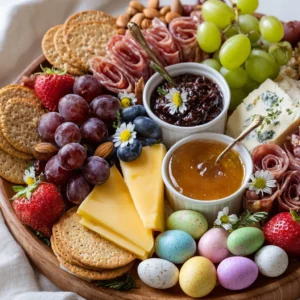
Easter Charcuterie Board
Ingredients
Cheeses
- 1 wheel Brie cheese Use triple-cream or traditional Brie.
- 8 ounces Cheddar cheese Choose aged or mild based on preference.
- 8 ounces Goat cheese For a creamy addition.
Cured Meats
- 8 ounces Salami or prosciutto Thinly sliced for best results.
Fruits and Sweets
- 1 cup Fresh strawberries Choose firm, ripe berries.
- 1 cup Green grapes
- 1 cup Blueberries
- 1 cup Chocolate eggs Adds a festive look.
- 1 cup Jelly beans For sweet contrast.
Miscellaneous
- 1 cup Crackers or crostini Choose a variety for texture.
- 1 cup Nuts (almonds or walnuts)
- 1 cup Honey or fruit jam For sweet dipping.
- 1 bunch Fresh herbs or edible flowers For garnish.
Instructions
Preparation
- Begin by setting 2–3 small bowls for honey and fruit jam across the board.
- Space Brie, Cheddar, and Goat cheese apart to create serving zones.
- Fold prosciutto or roll salami beside cheeses for height.
- Tuck clusters of green grapes, blueberries, and halved strawberries in between items for color.
- Fill remaining spaces with crackers and nuts.
- Scatter jelly beans and chocolate eggs for a festive touch.
- Finish with sprigs of fresh herbs or edible flowers.