
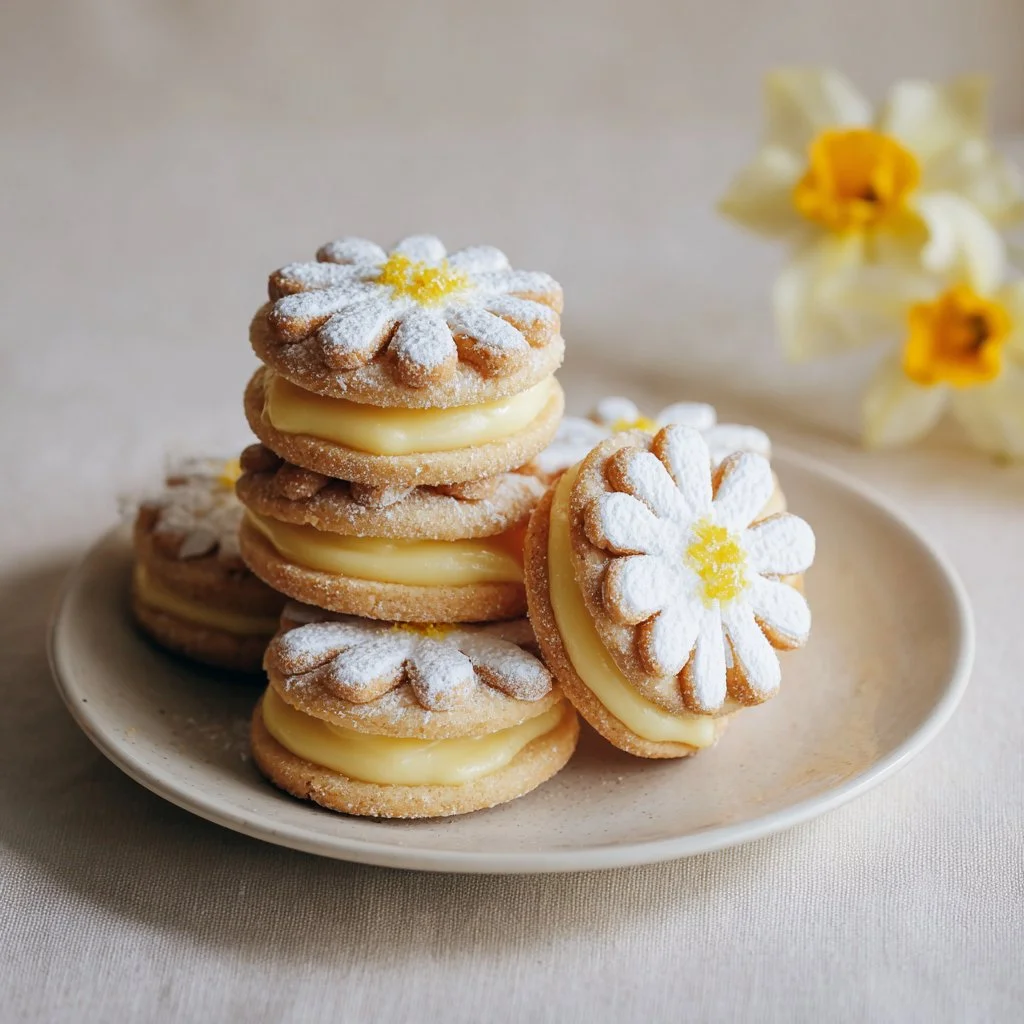
Bright, tangy lemon curd tucked into buttery daisy-shaped cookies—these are the kind of treats that make people smile before the first bite.
They’re crisp at the edges, tender in the center, and glossy with lemon curd that cuts the sweetness just right.
Make the curd ahead and chill it, then use a simple flower cutter for a bakery-worthy result at home.
If you love lemon curd desserts, try my Meyer lemon cheesecake with creamy lemon curd for more citrus inspiration.
Why You’ll Love This Daisy Cookies filled with Lemon Curd
- Bright, fresh lemon flavor that wakes up the palate.
- Buttery, shortbread-like cookie that melts in your mouth.
- Charming daisy shape perfect for gifts and parties.
- Make-ahead lemon curd makes assembly stress-free.
- Easy to adapt for gluten-free or vegan diets.
- Great for afternoon tea, bridal showers, or holiday platters.
These Daisy Cookies filled with Lemon Curd balance a tender, sandy cookie with a vibrant, silky lemon curd center. The sugar-dusted tops add a light crunch while the curd provides a glossy, tart contrast. Texture-wise you get a delicate snap on the edges and a melt-in-your-mouth interior that bright citrus lifts beautifully.
★★★★★ “I made these for a baby shower and everyone asked for the recipe. The lemon curd is perfect—not too sweet—and the daisy shapes make them look like they came from a boutique bakery.” — Sarah, home baker
In the same spirit of citrus baking, you might enjoy this light loaf for a breakfast table: bright lemon zucchini bread with glaze.
Key Ingredients for Daisy Cookies filled with Lemon Curd
Unsalted butter (soft)
Using high-quality unsalted butter gives control over the final salt level and delivers richer mouthfeel. Buy European-style butter if you like a creamier, slightly tangier fat profile. If you substitute margarine or a low-fat spread, the cookies will lose tenderness and may spread too much.
Granulated sugar (zest-rubbed)
Rubbing the sugar with lemon zest releases citrus oils into the sugar, intensifying aroma and flavor. Use fine granulated sugar for even texture; coarse turbinado will leave grittiness. Replacing with brown sugar adds moisture and a caramel note, but alters the shortbread-like crumb.
All-purpose flour
AP flour provides structure while keeping cookies tender when handled properly. For a more delicate crumb, sift the flour and avoid overmixing. Switching to cake flour yields softer cookies; gluten-free blends can work but may need a binder to prevent crumbling.
1 Batch of lemon curd (chilled)
Chilled lemon curd holds shape when piped and gives a bright, clean tartness inside the cookie. Homemade curd chilled overnight is best; high-quality store-bought curd can be used in a pinch. If you overcook curd it will be grainy—strain it and chill to improve texture.
Full Ingredient List for Daisy Cookies filled with Lemon Curd
- 1 Batch of lemon curd (chilled)
- 220 g Unsalted butter (soft)
- 200 g Granulated sugar
- Zest of 1 Lemon
- 2 Eggs
- 1 tsp Baking powder
- 360 g All purpose flour
- 1 pinch of salt
- 2 tbsp Icing sugar (for dusting)
Step-by-Step Instructions for Daisy Cookies filled with Lemon Curd
Step 1: Make the lemon curd and chill it.
Prepare a batch of lemon curd following your favorite recipe and chill it overnight or for at least 4 hours. Cold curd is easier to pipe and keeps the cookies from becoming soggy during assembly.
Pro Tip: The curd should be glossy and thick enough to mound on a spoon without falling off.
Step 2: Create lemon-scented sugar.
In a bowl, rub granulated sugar with lemon zest until the sugar is moist and fragrant. This releases the zest oils and perfumes the whole cookie.
Pro Tip: The sugar should smell bright and lemony and look slightly damp around the zest.
Step 3: Cream butter and sugar.
Beat the lemon-scented sugar with softened butter until light and fluffy, about 2–3 minutes with a hand mixer. Proper creaming incorporates air for a tender lift and even texture.
Pro Tip: Mixture should look paler and feel aerated, not greasy or wet.
Step 4: Add the eggs one at a time, mixing well.
Add eggs slowly, mixing after each addition so the dough emulsifies. This builds a stable batter that will hold shape when rolled.
Pro Tip: The dough will look smooth and cohesive, not curdled; if curdled, mix gently until uniform.
Step 5: Add flour, baking powder, and salt, mixing until just combined, then form dough.
Fold in dry ingredients until no streaks remain; stop before overworking. Turn the dough onto a floured surface and shape into a flat disk for easier rolling.
Pro Tip: The dough should be soft but not sticky—if too sticky, chill 10–15 minutes.
Step 6: Roll dough to 1/4 inch thickness and freeze for 10 minutes.
Roll between parchment for even thickness, then freeze briefly. Chilling firms the butter and prevents excess spread in the oven.
Pro Tip: The dough should feel firm to the touch and hold the rolled pattern without sagging.
Step 7: Cut daisy shapes and place on baking sheets.
Use a daisy cookie cutter to stamp shapes, re-rolling scraps once. Space cookies at least 1 inch apart for even baking.
Pro Tip: The edges should be clean with defined petals; if they’re ragged, chill and recut.
Step 8: Bake at 360°F (180°C) for 10–12 minutes until lightly golden.
Bake on a middle rack until the bottoms and edges begin to color lightly. Avoid over-browning to keep the tender interior.
Pro Tip: Look for a pale golden rim around the edges and slightly set centers.
Step 9: Dust tops with icing sugar and pipe lemon curd onto solid bottom cookies.
Dust tops while warm, then use a piping bag to add a small mound of chilled curd to the center of the uncut (solid) cookies. Work quickly so the dusting looks clean.
Pro Tip: The dusted tops should be matte and evenly powdered; the curd should hold a soft peak.
Step 10: Assemble cookies and refrigerate.
Place the dusted cookie tops over the curd-topped bottoms and press gently to sandwich. Refrigerate assembled cookies for at least 30 minutes to set the curd and firm the texture.
Pro Tip: Sandwiches should be cool to the touch and firm; if curd oozes, chill longer before serving.
Expert Tips for Daisy Cookies filled with Lemon Curd
- Chill for control: Keep dough chilled between steps to prevent spreading and preserve the daisy shape.
- Temperature tips: Ingredients should be at cool room temperature; butter soft enough to press a fingerprint but not greasy.
- Texture troubleshooting: If cookies are crumbly, add 1 tsp milk to the dough; if they spread, chill longer and reduce oven temperature by 10°F.
- Equipment tips: Use an offset spatula and thin metal cookie spatula for clean transfer to the tray.
- Piping vision: For tidy centers, use a small round piping tip and fill to a shallow dome—overfilling leads to leakage.
- Common mistakes: Overworking the dough develops gluten and toughens cookies; mix until just combined.
- Baking consistency: Rotate trays halfway through baking to avoid hot-spot browning in typical home ovens.
- Visual finish: For a professional look, sift icing sugar through a fine strainer for even coverage and wipe any excess before piping.
For a floral twist on sandwich cookies, check this lavender-infused recipe for inspiration: London Fog cookies with lavender cream cheese frosting.
Storage & Freezing for Daisy Cookies filled with Lemon Curd
Fridge storage:
Store assembled Daisy Cookies filled with Lemon Curd in an airtight container in the refrigerator for up to 5 days. Place parchment between layers to prevent sticking.
Freezer storage:
For longer storage, freeze unfilled cookies in a single layer on a baking sheet until solid, then stack with parchment in freezer-safe containers for up to 3 months. Freeze the lemon curd in a sealed container for up to 2 months.
Thawing:
Thaw frozen cookies in the refrigerator overnight before filling. Thaw curd in the fridge and stir gently to restore smoothness before piping.
Reheating:
These cookies are best served chilled or at cool room temperature. If you prefer them slightly warm, zap a single sandwich in the microwave for 6–8 seconds—do not overheat or the curd will run.
Variations & Substitutions for Daisy Cookies filled with Lemon Curd
Lavender-lemon daisy:
Add 1 tsp culinary lavender to the dry ingredients and reduce the lemon zest by half. Expect a floral aroma that pairs beautifully with lemon curd and a slightly more fragrant bite.
Gluten-free option:
Replace all-purpose flour with a 1:1 gluten-free flour blend that includes xanthan gum. Texture will be slightly more fragile; chill dough well and handle gently.
Berry-stuffed daisies:
Swap half the lemon curd for a berry jam or swirl in fresh blackberry puree. The result is a sweeter, fruitier center with a streaked visual that’s stunning on a platter.
Mini tart version:
Press dough into mini tartlet pans, blind-bake for 8 minutes, then fill with curd and chill. You’ll get a crisp shell with the same bright filling, ideal for hors d’oeuvres or buffets.
For quick inspiration on a chocolate roll technique that can inform dough handling, see this easy roll recipe: 10-minute chocolate rolls with quark.
Frequently Asked Questions About Daisy Cookies filled with Lemon Curd
Q1: Can I use store-bought lemon curd instead of making it?
A1: Yes, high-quality store-bought curd can be used. Chill it thoroughly so it holds shape when piping. Note that flavor varies by brand; choose a product with a good balance of tartness and sweetness to avoid overly sugary cookies.
Q2: How do I prevent the curd from making the cookies soggy?
A2: Use chilled, thick curd and refrigerate assembled sandwiches for at least 30 minutes before serving. Also, dust the cookie tops with icing sugar to create a small barrier, and assemble as close to serving time as possible.
Q3: Can I freeze completed cookie sandwiches?
A3: It’s better to freeze unfilled cookies and curd separately. Assembled cookies can be frozen, but the curd may separate upon thawing. If you must freeze sandwiches, wrap each tightly and thaw slowly in the refrigerator.
Q4: My dough cracked when rolling—how can I fix it?
A4: Chill the dough until just pliable, then roll between two sheets of parchment to reduce sticking and tearing. If cracks persist, gather scraps and press gently to re-form the dough, then chill and roll again.
Q5: Can I make these dairy-free or vegan?
A5: Use vegan butter and an egg replacer like aquafaba or a commercial binder. The texture will be slightly different—expect a shorter, crumblier cookie—but flavor remains bright with lemon curd made from a plant-based recipe.

Final Thoughts on Daisy Cookies filled with Lemon Curd
If you made it this far, you’re ready to bake delights that look stunning and taste even better. Please leave a star rating in the recipe card below and pin this to Pinterest to share the sunshine.
For reference and further inspiration, I used elements from a classic recipe roundup like Daisy Cookies filled with Lemon Curd | Lucia Paula, a gluten-free take at Daisy Lemon Curd Sandwich Cookies – The Loopy Whisk, and a floral variation idea from Lavender Lemon Shortbread Cookies – Little Vintage Baking.