
The first time I made this Crème Brûlée Cheesecake I thought it was impossible to marry a silky cheesecake with a glassy caramelized top.
One careful torch and an hour of chilling later, I had dessert that looked like it belonged in a restaurant.
This recipe presses a buttery graham crust, a rich, tangy cream cheese layer, and a crunchy brûlée cap into one stunning slice.
It’s a showstopper for dinner parties and heartbreakingly simple for a weeknight splurge.
Read on for why it works, what to watch for, and every step so you nail it the first time.
Why You’ll Love This Recipe
- Combines two classic desserts into one: creamy baked cheesecake and crisp crème brûlée topping.
- Textural contrast: dense, smooth filling with a thin, glass-like caramel crack.
- Simple ingredient list; no fancy tools beyond a torch and a springform pan.
- Make-ahead friendly: you can bake it a day before and brûlée right before serving.
The texture is what sells this dessert. The cheesecake bakes until the edges are set and the center barely jiggles; that yields a custardy, not curdled, interior. The brûlée sugar creates a paper-thin, glassy shell that snaps under the fork and adds a buttery burnt-sugar bitterness to balance the sweet, tangy filling.
"Absolutely stellar — silky cheesecake and that crackly caramel top blew my guests away. Will make again!" — 5 stars, reader review
Key Ingredients
Cream cheese (full-fat, softened). The filling’s structure and mouthfeel come from cream cheese. Use full-fat blocks like Philadelphia for the creamiest texture and stability; avoid low-fat spreads which add moisture and can make the cake loose.
Graham cracker crumbs and unsalted butter (for the crust). The crumbs give a toasty, slightly grainy base that contrasts the filling. Use finely processed crumbs and melted unsalted butter so the crust binds; if your crumbs are coarse, pulse them more in the food processor.
Sour cream. This adds tang and silkiness and helps prevent cracks by keeping the batter slightly looser and more forgiving. Full-fat sour cream gives the best flavor and mouthfeel.
Eggs. Eggs set the cheesecake and provide structure while keeping it custardy. Room-temperature eggs incorporate more evenly; adding them one at a time reduces the chance of overmixing and incorporating air.
Full ingredient list:
- For the Cheesecake:
- 2 cups graham cracker crumbs
- ½ cup unsalted butter, melted
- 3 (8 oz) packages cream cheese, softened
- 1 cup granulated sugar
- 3 large eggs
- 1 teaspoon vanilla extract
- 1 cup sour cream
- For the Crème Brûlée Topping:
- ½ cup granulated sugar (for caramelizing)
- 1 teaspoon vanilla extract (optional, for added flavor)
Step-by-Step Instructions
Step 1: Prep and Preheat
Preheat your oven to 325°F (160°C).
Line the bottom of a 9-inch springform pan with parchment and butter the sides lightly so the crust and cake release easily.
Pro Tip: Bring all dairy and eggs to room temperature for at least 30 minutes — your batter will smooth out faster and you’ll avoid lumps.
Step 2: Make and Bake the Crust
In a bowl, combine 2 cups graham cracker crumbs with ½ cup melted unsalted butter. Mix until the crumbs are evenly coated and the mixture holds when pinched.
Press the mixture into the bottom of the prepared 9-inch springform pan, using the back of a measuring cup to compact it tightly and form an even base.
Bake the crust for 10 minutes, then remove it from the oven and allow it to cool while you make the filling.
Pro Tip: If the crust pulls away from the edge after baking, press it back gently with a spoon while warm to re-bond the edges.
Step 3: Make the Cheesecake Filling
In a large mixing bowl, beat the softened cream cheese on medium-low with an electric mixer until smooth and lump-free. Gradually add 1 cup granulated sugar and beat until well combined.
Add the 3 large eggs one at a time, mixing on low speed after each addition. Scrape down the sides of the bowl as needed to keep the batter uniform.
Add 1 teaspoon vanilla extract and 1 cup sour cream. Mix just until combined — stop as soon as you see a smooth, glossy batter. Do not overmix.
Pro Tip: Overmixing introduces air and raises the center, which then sinks and cracks. Aim for a silky batter with minimal air bubbles.
Step 4: Bake the Cheesecake
Pour the filling over the cooled crust, smoothing the top with a spatula for an even surface.
Place the springform pan on a middle rack and bake in the preheated 325°F oven for 60–70 minutes. You want the center to be set but still slightly jiggly when you gently shake the pan.
Once baked, turn off the oven and crack the door open. Allow the cheesecake to cool in the oven for 1 hour to gently finish cooking and reduce cracking.
Pro Tip: If you own a water bath (bain-marie), you can wrap the outside of the springform pan with foil and bake it in a shallow pan of hot water for even gentler heat. It reduces cracking and gives an ultra-smooth finish.
Step 5: Chill Completely
After the hour in the oven, transfer the cheesecake to the refrigerator and chill for at least 4 hours or preferably overnight. The long chill firms the cake and develops flavor.
Pro Tip: Chill uncovered for an hour to let the surface dry slightly, then cover loosely with plastic wrap so condensation doesn’t form.
Step 6: Create the Crème Brûlée Topping
Once the cheesecake is fully chilled, sprinkle an even layer of the ½ cup granulated sugar over the top. If you like, mix the sugar with 1 teaspoon vanilla extract for a subtler aromatic note.
Using a kitchen torch, carefully melt the sugar until it liquefies and forms a golden, glassy crust. Move the flame in slow circles to avoid scorching one spot. Allow the caramel to cool for a few minutes to harden before slicing.
Pro Tip: If you don’t have a torch, place the cheesecake under a very hot broiler for 1–2 minutes, watching constantly. Rotate the pan so the sugar caramelizes evenly.
You’ll know it’s ready when the sugar forms a uniform amber glass and you hear that satisfying crack when you tap it with a spoon.

Expert Tips for Success
-
Temperature control matters. Always start with room-temperature cream cheese and eggs. Cold ingredients don’t blend well and lead to lumps and uneven texture. Use a thermometer to make sure your oven holds steady at 325°F; ovens can vary by 10–25°F and that changes bake time.
-
Avoid overmixing. Beat cream cheese until smooth, then add sugar, eggs, and sour cream with minimal whipping. Overbeating incorporates air and causes the cake to puff and crack. Mix until everything is just combined.
-
Use a water bath if you can. Wrapping the springform pan in foil and placing it in a hot water bath keeps the oven environment humid and provides gentle, even heat. This helps prevent cracks and yields a silkier custard center.
-
Watch the jiggle, not the time. Oven times vary; look for the center to be moist and slightly wobbly. The edges should be set and a thin ring of firmness should appear around the sides.
-
Torch technique. Keep the torch moving to prevent hot spots. Hold it at a 45-degree angle about 3–4 inches from the sugar and sweep in small circles until the sugar melts and turns amber. Practice on a spoon if you’re new to torching.
-
Slicing and presentation. Use a sharp, hot knife to slice clean pieces. Dip the knife in hot water and wipe it between cuts. Serve chilled with room for the caramel to snap; avoid keeping slices at room temperature for long or the topping will soften.
Storage & Freezing
Fridge: Store the whole cheesecake or individual slices covered tightly with plastic wrap or in an airtight container. The cheesecake keeps well in the refrigerator for up to 4–5 days. Keep it chilled to preserve texture and prevent the caramel top from sweating.
Freezer: For long-term storage, freeze the cheesecake without the brûlée topping. Wrap the cake tightly in plastic wrap and then in foil, or place slices in a single layer in a freezer-safe container with parchment between slices. Freeze up to 2 months. Thaw overnight in the refrigerator before serving.
Re-brûlée after thawing. Once fully thawed and chilled, sprinkle with granulated sugar and torch just before serving. Do not freeze after the sugar is brûléed — the sugar layer can become sticky and weeps when thawed.
Reheating: If you prefer warm slices, warm gently in a low oven (250–275°F) for 5–10 minutes, then immediately brûlée the top. Avoid microwaving as it can make the texture rubbery.
Variations & Substitutions
Vanilla bean or bourbon. Scrape a vanilla bean into the filling or add 1 tablespoon good bourbon for depth. Both elevate the custard character and pair beautifully with the caramel top.
Chocolate swirl. Fold in ½ cup melted, cooled dark chocolate into half the batter and swirl gently before baking for a marbled effect. The bittersweet chocolate balances the sweet brûlée nicely.
Graham-free crust. Use crushed digestive biscuits, gingersnaps, or almond flour mixed with melted butter for a gluten-free option. Toast the nuts first for extra flavor if using almond crust.
Dairy swaps. For a lighter cake, use Greek yogurt in place of some sour cream, but expect a slightly tangier, less rich texture. Avoid low-fat cream cheese if you want a classic dense mouthfeel.
Frequently Asked Questions
Q: Can I make this without a kitchen torch?
A: Yes. Preheat your broiler and place the cheesecake on the top rack a few inches from the heat. Keep the broiler on high and watch closely; rotate the pan and remove as soon as the sugar melts and turns amber. It’s quicker under a broiler, so don’t walk away.
Q: Why did my cheesecake crack?
A: Cracks come from overmixing, high oven temperature, or sudden temperature changes. Use room-temperature ingredients, mix gently, and let the cake cool gradually in the oven with the door cracked to reduce shock. A water bath can also prevent cracking.
Q: How long should I chill the cheesecake before brûléeing?
A: Chill for at least 4 hours, but overnight is best. The cake needs to be thoroughly cold so the thin brûlée layer sets instantly and snaps when cut. If the cake is too warm, the sugar will sink into the surface.
Q: Can I use a store-bought crust?
A: Yes. A pre-made crust saves time and still works well. Make sure it’s firm and not crumbly. If it’s fragile, press a little melted butter into it and bake for 5–7 minutes to set before adding the filling.
Q: Is it okay to add fruit?
A: Yes, but add fresh fruit as a garnish at serving to avoid extra moisture during chilling. If folding fruit into the batter, use very small pieces and toss with a tablespoon of flour to prevent sinking.
Final Thoughts
This Crème Brûlée Cheesecake is a dramatic but totally achievable dessert that rewards careful technique with restaurant-quality flavor.
Make it for special occasions or any night you want to impress — and torch the sugar last-minute for the best crack.
Please leave a star rating in the recipe card below and pin this to Pinterest so you can find it again.
Conclusion
If you want to compare notes or explore closely related recipes, check out this version at Crème Brûlée Cheesecake – BAKE WITH ZOHA for another take.
For an alternate approach and tips from another baker, see Creme Brulee Cheesecake Recipe – The Food Charlatan.
If you love classic brûlée, try the standalone custard to practice your torch technique with Perfect Vanilla Creme Brûlée – BAKE WITH ZOHA.
For a fun riff that blends brownie and cheesecake textures with a brûlée finish, consider these Brûlée Cheesecake Brownies- The Little Epicurean.
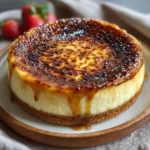
Crème Brûlée Cheesecake
Ingredients
For the Cheesecake
- 2 cups graham cracker crumbs Finely processed for best results.
- ½ cup unsalted butter, melted To bind the crust.
- 3 packages (8 oz each) cream cheese, softened Use full-fat for creaminess.
- 1 cup granulated sugar For sweetness.
- 3 large eggs Room temperature for even mixing.
- 1 teaspoon vanilla extract For flavor.
- 1 cup sour cream Adds tang and prevents cracks.
For the Crème Brûlée Topping
- ½ cup granulated sugar For caramelizing.
- 1 teaspoon vanilla extract (optional) For added flavor.
Instructions
Preparation and Preheating
- Preheat your oven to 325°F (160°C). Line the bottom of a 9-inch springform pan with parchment and butter the sides lightly.
- Bring all dairy and eggs to room temperature for at least 30 minutes.
Making and Baking the Crust
- Combine graham cracker crumbs with melted unsalted butter. Mix until evenly coated.
- Press the mixture into the bottom of the prepared springform pan and bake for 10 minutes. Allow to cool.
Making the Cheesecake Filling
- In a mixing bowl, beat the softened cream cheese until smooth. Gradually add the granulated sugar.
- Add eggs one at a time, mixing on low speed. Add vanilla extract and sour cream, and mix just until combined.
Baking the Cheesecake
- Pour the filling over the cooled crust, smoothing the top. Bake for 60–70 minutes.
- Turn off the oven and crack the door open to cool for 1 hour.
Chilling the Cheesecake
- Transfer the cheesecake to the refrigerator and chill for at least 4 hours, preferably overnight.
Creating the Crème Brûlée Topping
- Sprinkle an even layer of granulated sugar over the chilled cheesecake.
- Using a kitchen torch, melt the sugar until it forms a golden crust. Allow it to cool before slicing.