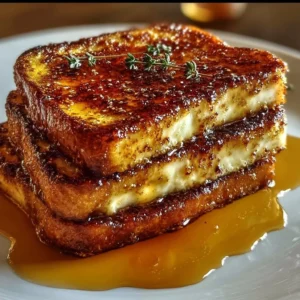
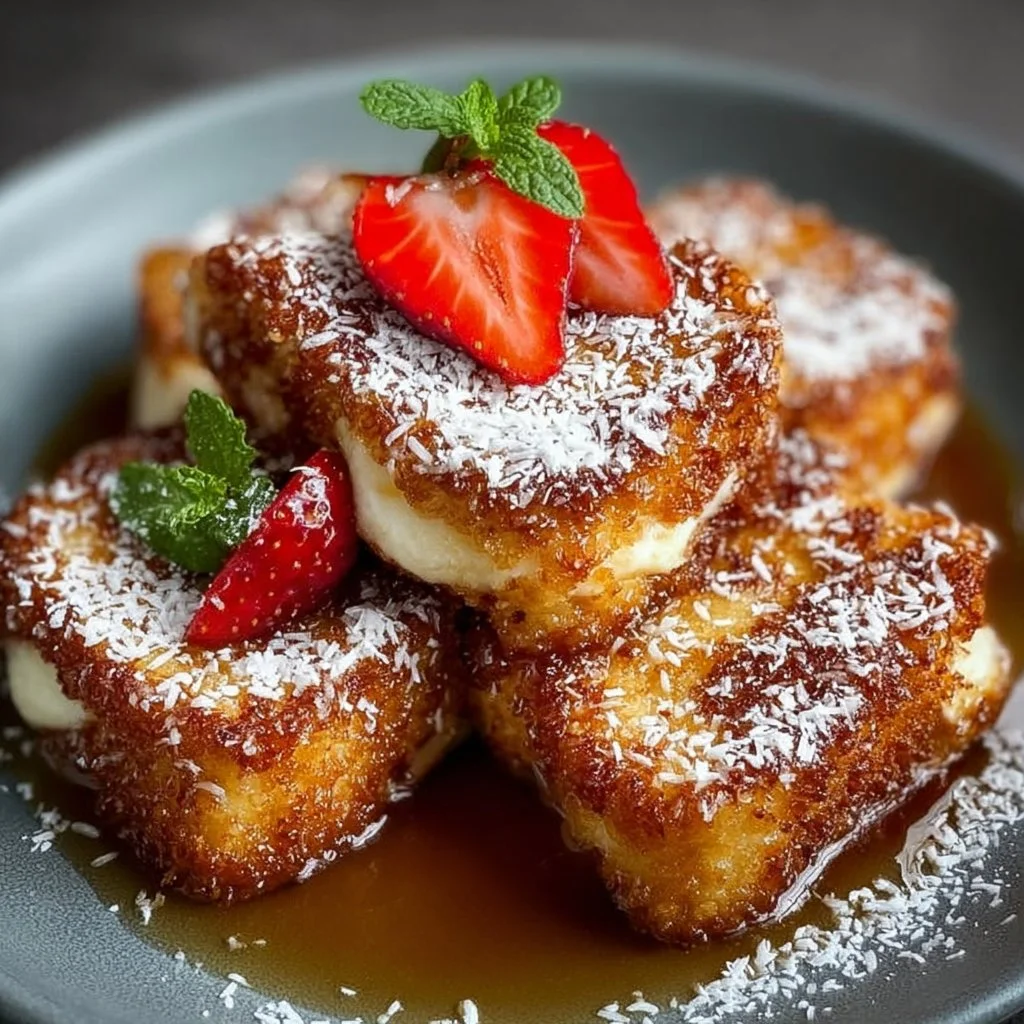
The first time I made this coconut-crusted French toast, the kitchen smelled like a tropical bakery.
The toasted coconut formed a crisp edge while the inside stayed pillowy and custardy.
It’s a simple swap from classic French toast that turns a weekday breakfast into a mini celebration.
This recipe is quick enough for busy mornings and showy enough for company.
You only need a handful of pantry staples and 15 minutes at the stove.
If you love crisp textures and sweet coconut notes, this one becomes a repeat.
Why You’ll Love This Recipe
- Crispy, golden coconut exterior for contrast with soft bread interior.
- A quick custard that soaks just long enough without turning soggy.
- Uses common ingredients but delivers a restaurant-worthy result.
- Easily adaptable for different breads and dietary tweaks.
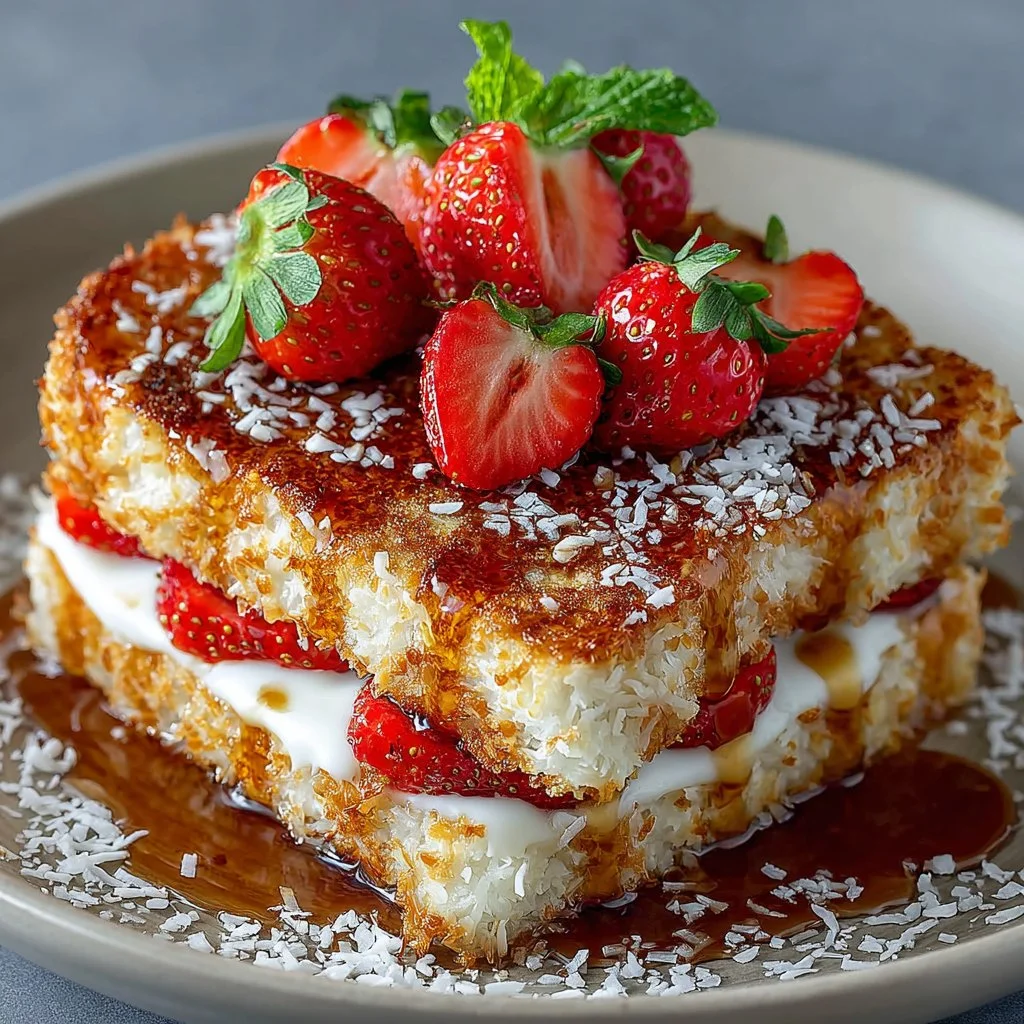
The contrast is the star here: a crunchy coconut crust gives a toasty, nutty bite that frames a soft, tender inside.
The custard is subtly sweet and fragranced with vanilla so the coconut sings without overwhelming.
Together you get textural dimension in every forkful—crispy, creamy, sweet, and slightly caramelized at the edges.
“Made this for weekend brunch and everyone went back for seconds. The coconut crust adds a perfect crunch — absolute keeper!” — reader review
Key Ingredients
Bread — Use slightly stale or day-old bread for best results.
Thicker-cut slices like brioche or challah soak up the custard without disintegrating and give a rich mouthfeel.
If you only have sandwich bread, let it dry out a bit on the counter for an hour.
Shredded coconut — Toasted lightly or straight from the bag, it’s the defining texture.
Unsweetened shredded coconut gives control over sweetness; sweetened coconut will amplify sugar.
If you can, buy flaked coconut from a reliable brand (Bob’s Red Mill or local co-ops) for consistent shredding and fewer tiny dust pieces.
Eggs — They form the custard’s structure and deliver richness.
Use large, fresh eggs; they emulsify with the milk and create that tender, set interior.
For an extra silky custard, beat the eggs until uniformly smooth before adding milk.
Milk — Milk loosens the eggs into a dippable custard.
Whole milk gives a creamier result, but 2% works fine if you prefer lighter texture.
Non-dairy milks (oat or almond) can be used but may change flavor slightly.
Ingredients (full list)
- 4 slices of bread
- 1 cup shredded coconut
- 2 eggs
- 1/2 cup milk
- 1 teaspoon vanilla extract
- 1 tablespoon sugar
- Fresh fruit for serving
- Maple syrup for serving
Step-by-Step Instructions
Step 1: Heat the pan
Preheat your skillet or griddle over medium heat.
A well-heated surface gives you instant sizzle and helps form a golden crust quickly.
Pro Tip: Use a heavy skillet or cast-iron for even heat and reliable browning.
Visual cue: The pan should shimmer slightly when you flick a drop of water — it should dance and evaporate.
Step 2: Whisk the custard
In a bowl, whisk together the eggs, milk, vanilla extract, and sugar until smooth and just combined.
You want a homogenous custard with no streaks of egg white.
Pro Tip: Whisk briefly but thoroughly—over-whipping introduces air that can make the interior spongy.
Visual cue: The mixture should be slightly frothy and pale, not foamy.
Step 3: Soak the bread
Dip each slice of bread into the egg mixture, allowing it to soak for a few seconds per side.
Let excess drip back into the bowl before moving to the next step.
Pro Tip: For very stale bread, give it a longer soak (5–10 seconds each side). For fresh or thin slices, a quick 1–3 second dip keeps structure intact.
Visual cue: The bread should be saturated but not falling apart—firm but pliable.
Step 4: Press on the coconut
Coat each slice in shredded coconut, pressing lightly to adhere so the coconut forms a crust.
Work on a plate or shallow dish to keep coating tidy.
Pro Tip: If the coconut isn’t sticking, pat a little extra egg mixture onto the surface before pressing coconut in.
Visual cue: The coconut should cling evenly with no large bare spots.
Step 5: Cook to golden
Place the coated slices on the hot skillet or griddle and cook until golden brown on both sides, about 3–4 minutes per side.
Flip carefully with a thin spatula so the crust stays intact.
Pro Tip: Don’t overcrowd the pan; cook in batches if needed to maintain steady heat.
Visual cue: You’ll know it’s ready to flip when the bottom is deep golden and the edges look set.
Step 6: Serve immediately
Serve warm with fresh fruit and a drizzle of maple syrup.
A squeeze of citrus or a dusting of powdered sugar brightens the plate.
Pro Tip: Warm the syrup briefly to avoid chilling the toast when serving.
Visual cue: The coconut edge will be crisp and slightly toasted, while the center stays soft.
Expert Tips for Success
-
Heat management matters: Medium heat is your friend.
Too hot and the coconut will burn before the center cooks; too low and the crust won’t crisp.
Aim for steady medium—adjust your burner if the coconut browns too quickly. -
Choose the right bread thickness: 3/4 to 1-inch slices work best.
Thick slices give a custardy interior without collapsing.
If you like a slightly chewier bite, use brioche or challah. -
Toasting the coconut first (optional): Lightly toasting shredded coconut in a dry skillet for 1–2 minutes before coating deepens the flavor.
Watch it closely—coconut goes from golden to burnt in seconds.
This step is optional but adds a roastier, nuttier profile. -
Press gently but firmly when coating: Use a flat palm or the back of a spoon to press coconut into the soaked bread.
Over-pressing can squeeze out the custard; under-pressing leaves gaps.
The goal is an even, cohesive crust. -
Use clarified butter or a neutral oil: For frying, clarified butter tolerates heat better and gives rich flavor without smoking.
A mix of butter and a splash of neutral oil reduces burning and adds flavor.
Nonstick pans can work but won’t give the same Maillard browning as seasoned cast iron. -
Timing for soak vs. structural integrity: Assess your bread as you dip.
Slightly stale slices can handle a longer soak; fresh slices need a quick submersion.
If a slice starts to fall apart, stop soaking and coat immediately with coconut to hold it together. -
Flipping technique: Slide a thin spatula under the slice and use a second spatula or your hand to steady it if needed.
Clean, decisive flips reduce crust loss.
If a bit of coconut falls off, press it back on after flipping and let it adhere during the final minute. -
Serving temperature: Serve immediately or keep on a low oven (200°F / 95°C) on a wire rack to stay crisp without steaming.
Stacking on a plate traps steam and will soften the crust quickly. -
Make-ahead prep: Prepare the custard and shredded coconut coating ahead of time.
Dip and coat right before cooking so the coconut remains crisp.
For brunch service, cook just before serving for best texture.
Storage & Freezing
Fridge storage: Cool leftover French toast to room temperature for no more than two hours.
Wrap in parchment and store in an airtight container for up to 3 days.
When reheating, use a 350°F oven on a wire rack for 8–10 minutes to revive the crust.
Freezer storage: Flash-freeze cooled slices on a tray until firm, then transfer to a freezer bag.
Frozen pieces will keep for up to 1 month.
Reheat from frozen in a 350°F oven for 12–15 minutes, flipping halfway, until hot and crisp.
Microwave notes: Microwaving will heat quickly but softens the coconut crust.
If you must microwave, do 20–30 second bursts and finish for 1–2 minutes in a hot skillet to crisp.
Reheating tips: For best texture, reheat in a toaster oven or skillet rather than the microwave.
A light spray of oil or a small knob of butter on the skillet helps recrisp the coconut without drying the interior.
If you used sweetened coconut, lower the oven temperature slightly to prevent excessive caramelization.
Variations & Substitutions
Citrus-coconut: Add 1 teaspoon of grated orange or lemon zest to the custard for a bright lift.
The zest pairs beautifully with coconut and fresh fruit.
Nutty crunch: Mix 1/4 cup finely chopped macadamia nuts or toasted almonds into the coconut before coating.
This adds extra crunch and a buttery flavor that complements the coconut.
Gluten-free option: Use thick slices of gluten-free brioche-style loaf and check the coconut is gluten-free.
Soaking times are similar; handle gently when flipping.
Vegan swap: Use a flax "egg" (1 tablespoon ground flax + 3 tablespoons water per egg) and full-fat coconut milk for richness.
Use a little aquafaba or a commercial egg replacer if you prefer a closer custard texture.
Sweet spice version: Add 1/2 teaspoon cinnamon and a pinch of nutmeg to the custard for warming aromatics.
This is especially nice in fall or as a brunch staple.
Frequently Asked Questions
Q: Can I use sweetened shredded coconut instead of unsweetened?
A: Yes, you can use sweetened coconut, but it will increase the overall sweetness and caramelization.
Reduce the added sugar slightly if you use sweetened coconut.
Watch the heat when cooking since the sugars brown faster.
Q: What’s the best bread for coconut-crusted French toast?
A: Brioche and challah are ideal because of their rich crumb and sturdy texture.
Day-old or lightly stale bread soaks without falling apart and yields a custardy center.
Q: How do I prevent the coconut from burning?
A: Keep your pan at medium heat, and consider using clarified butter or a butter-oil blend.
If coconut browns too fast, lower the heat and finish cooking a touch longer.
Q: Can I assemble ahead of time for a brunch crowd?
A: You can prepare the custard and shred coconut in advance and dip/coat right before cooking.
Dip-and-hold for more than a few minutes can soften coconut adhesion, so cook shortly after coating.
Q: Is there a low-sugar version?
A: Reduce or omit the tablespoon of sugar and serve with fresh berries and unsweetened yogurt.
Choose unsweetened coconut and a sugar-free syrup if needed for stricter diets.
Final Thoughts
This coconut-crusted French toast is one of those simple upgrades that feels special every time.
It’s fast, forgiving, and endlessly adaptable for different breakfasts and brunches.
Please leave a star rating in the recipe card below or pin this to Pinterest if you loved it.
Conclusion
If you want another take on crunchy coconut-shelled French toast, check this classic version for inspiration: Coconut Crusted French Toast.
For a slightly different technique and flavor profile, this helpful write-up explores coconut in a slightly lighter, custardy version: Coconut French Toast.
And if you’re collecting variations to compare methods and textures, this recipe roundup offers useful photos and notes: Coconut Crusted French Toast | Wishes and Dishes.

Coconut-Crusted French Toast
Ingredients
Main Ingredients
- 4 slices slices of bread Use slightly stale or day-old bread for best results.
- 1 cup shredded coconut Toasted or straight from the bag, unsweetened is preferred.
- 2 large eggs Use fresh eggs for a richer custard.
- 1/2 cup milk Whole milk for creaminess, non-dairy options are fine too.
- 1 teaspoon vanilla extract
- 1 tablespoon sugar
- to taste Fresh fruit for serving
- to taste Maple syrup for serving
Instructions
Preparation
- Preheat your skillet or griddle over medium heat.
- In a bowl, whisk together the eggs, milk, vanilla extract, and sugar until smooth.
- Dip each slice of bread into the egg mixture, allowing it to soak for a few seconds per side.
- Coat each slice in shredded coconut, pressing lightly to adhere.
- Cook the coated slices on the hot skillet until golden brown on both sides, about 3–4 minutes per side.
- Serve warm with fresh fruit and maple syrup.