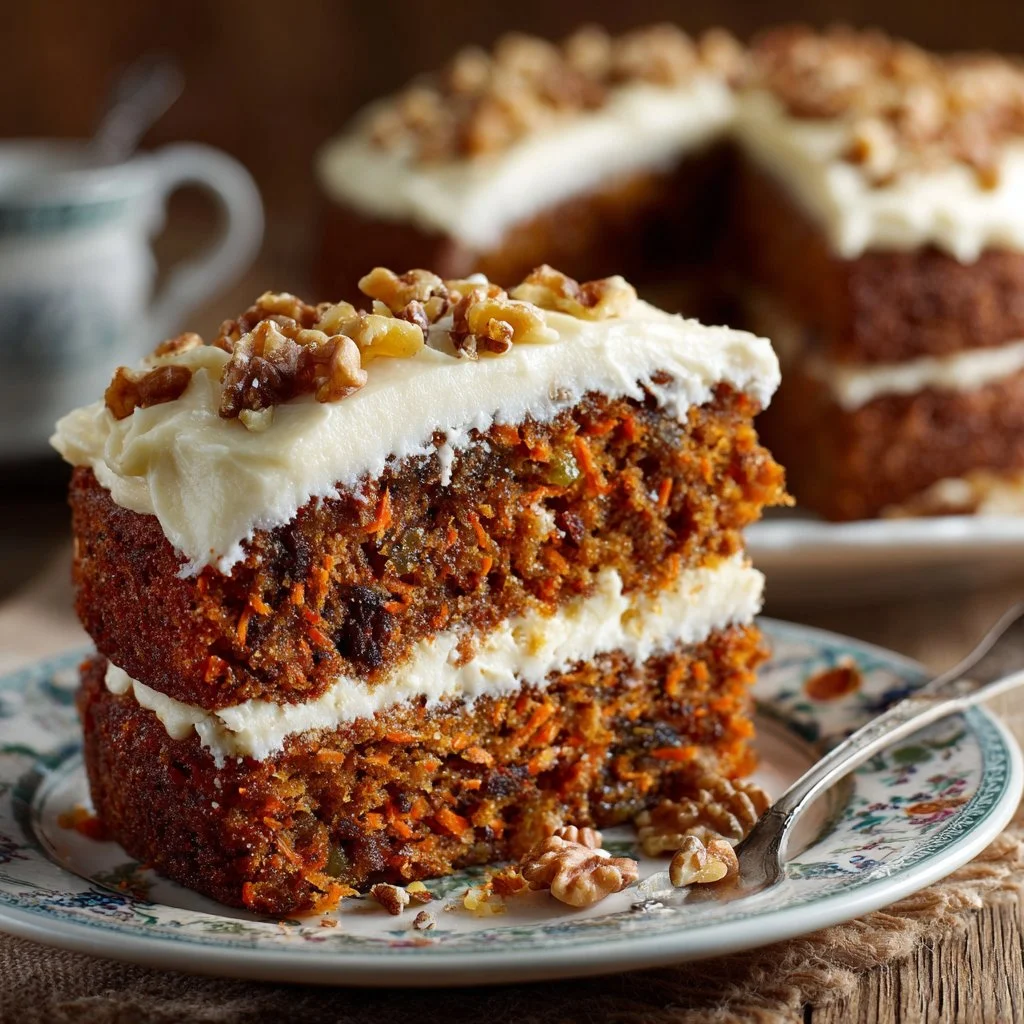
A perfect slice of moist, spiced cake can turn any afternoon into a celebration. This Carrot Cake delivers warmth, texture, and a tangy cream cheese finish that keeps people coming back for more.
It’s straightforward to make and scales well for parties. Little hands will love the sweet spices and crunchy walnuts.
Try a small batch first, then go big for holidays. If you like variations, see my recommended tweaks below and try a related treat like the stuffed carrot cake cookies recipe for a portable twist.
Why You’ll Love This Carrot Cake
– Deeply spiced, not cloyingly sweet.
– Exceptionally moist thanks to oil and yogurt.
– Cream cheese frosting adds tang and richness.
– Easy to assemble into a showstopping layer cake.
– Flexible — nuts and raisins are optional but welcome.
– Holds up well for make-ahead entertaining.
The taste is warmly spiced with cinnamon, ginger and a whisper of cardamom and nutmeg. The crumb is tender and dense without being heavy, and the cream cheese frosting cuts through the sweetness with a silky tang that balances the cake perfectly.
“This Carrot Cake is the best I’ve made — moist, perfectly spiced, and that cream cheese frosting is heavenly. My guests couldn’t stop raving!” — 5★ reader review
Key Ingredients for Carrot Cake
Carrot Cake depends on a few ingredients to create its signature texture and flavor. Below are the top players and why they matter.
Carrots (350 g grated)
Carrots supply moisture, sweetness, and texture. Use firm, fresh carrots and grate them finely for even distribution; coarser shreds give more visible strands and bite. If you substitute with canned carrots or zucchini, expect a different moisture level and a subtler carrot flavor.
Soft dark brown sugar (320 g)
Dark brown sugar brings molasses depth and contributes to a tender crumb and richer color. Buy a fresh bag (brown sugar hardens over time) and press it gently to break up any lumps. Replacing it with white sugar will lighten the flavor and reduce the toffee-like undertones.
Vegetable oil (300 ml)
Oil keeps the cake moist long after baking and yields a tender, even crumb. Choose a neutral oil like sunflower or canola for a clean taste. If you swap oil for butter, you’ll get more flavor but a firmer texture and a slightly drier cake unless you adjust other liquids.
Full fat cream cheese (600 g)
Cream cheese is the foundation of the frosting; its acidity balances the sweet icing and brightens the spices. Use full-fat, block-style cream cheese for stability and flavor. Low-fat or spreadable varieties will make a runnier, less stable frosting that can struggle at room temperature.
Full Ingredient List for Carrot Cake
– 320 g soft dark brown sugar
– 300 ml vegetable oil
– 4 eggs
– 100 g plain yogurt
– 2 teaspoons vanilla extract
– 400 g plain flour
– 1.5 teaspoons baking powder
– 1 teaspoon baking soda
– 2 teaspoons ground cinnamon
– 1 teaspoon ground ginger
– 1/2 teaspoon cardamom powder
– 1/4 teaspoon ground nutmeg
– 350 g grated carrots
– 100 g walnuts, chopped (optional)
– 50 g raisins (optional)
– 300 g unsalted butter, softened
– 300 g icing sugar, sieved
– 2 teaspoons vanilla extract (for frosting)
– 600 g full fat cream cheese
– Chopped walnuts, to decorate (optional)
Step-by-Step Instructions for Carrot Cake
Step 1: Preheat and mix the batter
Preheat the oven to 180°C (350°F) and prepare two cake tins by greasing and lining them with parchment. In a bowl, whisk together the plain flour, baking powder, baking soda, cinnamon, ginger, cardamom and nutmeg until blended and aerated.
In a large mixing bowl, beat the soft dark brown sugar and vegetable oil until emulsified and slightly glossy. Add the eggs one at a time, then mix in the plain yogurt and vanilla extract until the batter is smooth and homogenous.
Fold the dry ingredients into the wet mix in two additions, stirring just until incorporated to avoid overworking gluten. Stir in the grated carrots and, if using, the chopped walnuts and raisins.
Divide the batter evenly between the prepared tins and bake for 25–35 minutes, or until a toothpick inserted into the center comes out with moist crumbs (not wet batter). Allow the layers to cool in the tins for 10 minutes, then turn out onto a wire rack to cool completely.
Pro Tip: The cakes should have a golden-brown edge and a slightly domed top that springs back gently when pressed. You should smell warm spice; the center will be set but still moist to the touch.
Step 2: Make the cream cheese frosting
Beat the softened unsalted butter until light and pale, then gradually add the sieved icing sugar on low speed to avoid a sugar cloud. Scrape down the bowl and mix in the full fat cream cheese and vanilla extract until the frosting is smooth and silky.
Chill briefly if the frosting seems too soft before using; frosting that is too loose will slide off layered cakes. Taste and adjust sugar or vanilla to preference, remembering that the cake itself is not overly sweet.
Pro Tip: The frosting should look glossy and have a spreadable, pipe-friendly consistency. It should hold soft peaks and not drip when you lift a spoon.
Step 3: Assemble the cake
Place the first cooled cake layer on your board and spread an even layer of frosting across the top, about one-third of the total frosting. Add the second cake layer and press gently to level them.
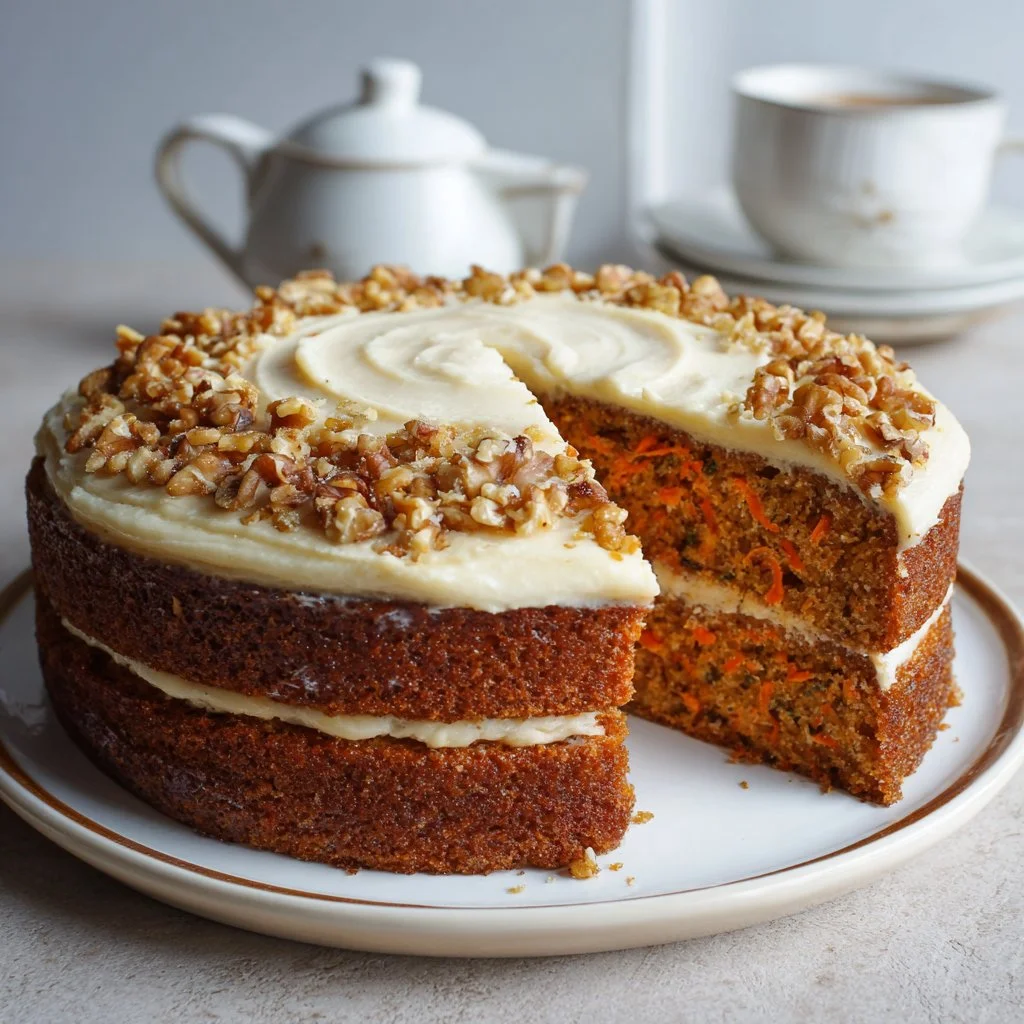
Apply a thin crumb coat over the entire cake to trap loose crumbs, then chill for 15–30 minutes to set. Apply the final coat of frosting smoothly, using a bench scraper for clean edges, and decorate the top with chopped walnuts if desired.
Pro Tip: A successful crumb coat looks like a thin, even skin of frosting with no loose crumbs. The final finish should be smooth with defined edges and a neat walnut ring if used.
Expert Tips for Carrot Cake
– Bake at the right temperature: 180°C (350°F) yields consistent rise; ovens vary so use an oven thermometer.
– Don’t overmix the batter: mix until just combined to keep the crumb tender and avoid toughness.
– Grate carrots finely: fine grating integrates moisture evenly and prevents fibrous bites.
– Chill between coats: a 15–30 minute chill after the crumb coat makes finishing easier.
– Use full-fat cream cheese: it gives structure and flavor to frosting; low-fat versions can be runny.
– Adjust baking time for pans: shallower pans finish faster; a naked cake uses 20–30 minutes, deeper ones 35+.
– Equipment tip — a bench scraper is worth the small investment for smooth frosting and crisp edges.
– Common mistake — adding too much flour: spoon and level the flour when measuring to avoid a dry cake.
Storage & Freezing for Carrot Cake
Fridge storage: Store the frosted Carrot Cake in an airtight cake container or cover with a cake dome. It will keep well in the fridge for up to 5 days; bring slices to room temperature for 20–30 minutes before serving for best flavor.
Freezer storage: For longer storage, freeze unfrosted cake layers wrapped tightly in plastic wrap and foil in an airtight container. They will keep up to 3 months; thaw in the fridge overnight before frosting.
Freezing frosted cake: You can flash-freeze a fully frosted cake on a tray until firm, then wrap loosely in plastic and foil to protect decoration. Freeze up to 1 month for best texture; thaw in the fridge overnight.
Thawing and reheating: Thaw frozen layers in the fridge overnight, then assemble and frost. For single slices, warm briefly in a 160°C (325°F) oven for 6–8 minutes wrapped in foil to revive a fresh-baked mouthfeel.
Variations & Substitutions for Carrot Cake
Spiced walnut Carrot Cake
Add toasted walnuts to the batter and on top of the frosting. Toasting the nuts intensifies flavor and gives a pleasant crunch against the tender crumb.
Pineapple and coconut Carrot Cake
Fold 100 g drained crushed pineapple and 50 g desiccated coconut into the batter for tropical notes. The pineapple adds juiciness while coconut gives chew and aroma; reduce yogurt slightly to compensate for extra moisture.
Gluten-free Carrot Cake
Use a 1:1 gluten-free flour blend that includes xanthan gum and increase baking time slightly. Expect a slightly different crumb and handle the batter gently to avoid gummy textures.
Vegan Carrot Cake
Replace eggs with flaxseed “eggs” (1 tablespoon ground flax + 3 tablespoons water per egg) and use plant-based yogurt and margarine in the frosting. The texture will be slightly denser, but the spices and carrots still shine.
Frequently Asked Questions About Carrot Cake
What makes a carrot cake moist?
Moisture comes from a combination of grated carrots, oil, and yogurt in this recipe. Carrots release liquid during baking, and oil traps moisture in the crumb; yogurt adds acidity and tenderness. Avoid overbaking to prevent drying out.
Can I make the batter the night before?
Yes. You can mix the dry ingredients and wet ingredients separately, then combine and store the completed batter in a sealed container in the fridge overnight. Bring the batter back to room temperature for 20–30 minutes and give it a gentle stir before baking to ensure even rise.
How do I prevent the cake from sinking in the middle?
Sinking often results from underbaking, overmixing, or opening the oven too early. Use toothpick checks for doneness and bake until only moist crumbs cling to the tester. Ensure leavening agents are fresh and avoid heavy frosting on very warm layers.
Can I freeze slices of frosted cake?
You can freeze frosted slices by flash-freezing them on a tray until firm, then wrapping each slice in plastic and foil. Freeze for up to one month and thaw in the fridge before serving to maintain texture.
Why is my frosting runny?
Runny frosting usually means the cream cheese or butter was too warm, or the frosting has too much liquid. Chill the bowl and beaters, and refrigerate the frosting briefly. If needed, add a small amount of sifted icing sugar to thicken without over-sweetening.
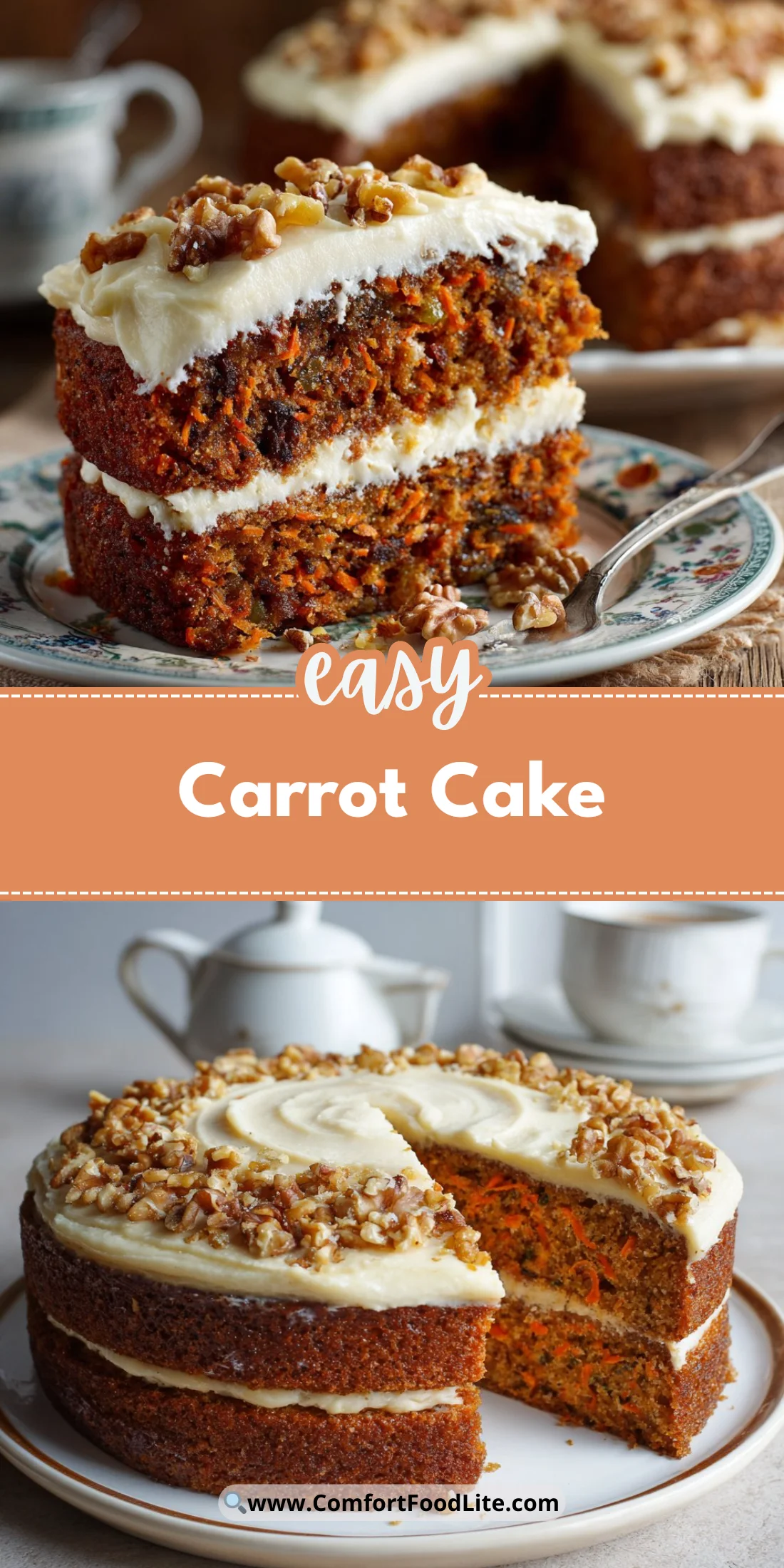
Final Thoughts on Carrot Cake
This Carrot Cake delivers dependable texture, balanced spice, and a classic cream cheese finish that appeals to a wide audience. If you enjoyed the recipe, please leave a star rating in the recipe card below and pin this to Pinterest for later.
For additional carrot cake inspiration see the Inspired Taste easy carrot cake recipe, compare techniques with Sally’s Baking Addiction favorite carrot cake, or explore a classic variation on Allrecipes classic carrot cake recipe.
Carrot Cake
Ingredients
For the cake
- 350 g grated carrots Use firm, fresh carrots grated finely for even distribution.
- 320 g soft dark brown sugar Brings molasses depth and contributes to a tender crumb.
- 300 ml vegetable oil Keeps the cake moist, use a neutral oil like sunflower or canola.
- 4 pieces eggs
- 100 g plain yogurt Adds acidity and tenderness.
- 2 teaspoons vanilla extract Enhances flavor.
- 400 g plain flour The base of the cake.
- 1.5 teaspoons baking powder
- 1 teaspoon baking soda
- 2 teaspoons ground cinnamon Adds warm spice.
- 1 teaspoon ground ginger Adds warmth.
- 0.5 teaspoon cardamom powder
- 0.25 teaspoon ground nutmeg
- 100 g walnuts, chopped Optional.
- 50 g raisins Optional.
For the cream cheese frosting
- 300 g unsalted butter, softened Beaten until light and pale.
- 300 g icing sugar, sieved Add gradually to avoid a sugar cloud.
- 2 teaspoons vanilla extract (for frosting)
- 600 g full fat cream cheese Use block-style for stability.
- To taste Chopped walnuts, to decorate Optional.
Instructions
Prepare the Cake Batter
- Preheat the oven to 180°C (350°F) and grease and line two cake tins.
- In a bowl, whisk together flour, baking powder, baking soda, cinnamon, ginger, cardamom, and nutmeg.
- In a large mixing bowl, beat the brown sugar and vegetable oil until emulsified.
- Add eggs one at a time, then mix in yogurt and vanilla extract until smooth.
- Fold the dry ingredients into the wet mixture, incorporating grated carrots and optional walnuts and raisins.
- Divide the batter between tins and bake for 25-35 minutes, or until a toothpick comes out with moist crumbs.
- Let cool in pans for 10 minutes, then turn out onto a wire rack to cool completely.
Make the Cream Cheese Frosting
- Beat the softened butter until light, then gradually add icing sugar until smooth.
- Mix in cream cheese and vanilla extract, adjusting sweetness to preference.
Assemble the Cake
- Spread frosting on the first cake layer, add the second layer, and frost the entire cake.
- Chill for a crumb coat, then apply the final coat and decorate with walnuts if desired.