Browned butter transforms ordinary carrot cake into something deeply nutty and almost caramel-like.
This recipe takes a classic and adds warm, toasty layers of flavor that perfume your kitchen.
Quick to mix, forgiving to bake, and showy enough for guests.
If you like desserts with depth, you’ll want to save this one.
Try it when you want comfort with a grown-up twist.
For other cozy dessert ideas, see this riff on a peanut butter favorite peanut butter cup dump cake.
Why You’ll Love This Browned Butter Carrot Cake
– Toasty browned butter adds caramel and nutty notes that elevate classic carrot cake.
– Moist crumb from grated carrots keeps the cake tender day after day.
– Warm spices (cinnamon, nutmeg) bring fall-like comfort without overpowering.
– Cream cheese frosting brightens the cake and balances sweetness.
– Optional nuts add a crunchy contrast to the velvety frosting.
– Simple pantry ingredients with an elegant result make this approachable for bakers of all levels.
The taste is warmly spiced and buttery with a tender, dense crumb that still feels moist. The browned butter gives a toffee-like depth while the cream cheese frosting adds tang and silkiness that cuts the sweetness.
"Five stars — the browned butter made this carrot cake unforgettable. Moist, fragrant, and the frosting was perfect." — A satisfied reader
Key Ingredients for Browned Butter Carrot Cake
Browned butter: The 6 tablespoons of butter, cooked until the milk solids caramelize, is the flavor hero. Browning concentrates the butter’s sugars and proteins into toasty, almost nutty compounds that lift the entire cake. Buy unsalted European-style butter if you can for a richer flavor; if you substitute regular butter, reduce added salt slightly to avoid oversalting.
Finely grated carrots: Two cups of finely grated carrots supply moisture and texture without soggy pockets. Grating finely distributes moisture evenly so the batter bakes uniformly. If you substitute shredded carrots from a pre-shredded bag, squeeze out excess moisture and expect slightly coarser texture.
Cream cheese (for frosting): Eight ounces of full-fat cream cheese makes a stable, creamy frosting that offsets the cake’s sweetness. Use full-fat for best texture and flavor; low-fat versions are runnier and less rich. If you substitute mascarpone, you’ll get a silkier, less tangy frosting.
All-purpose flour & leavening: Two cups of all-purpose flour with one teaspoon baking soda provides structure and a tender crumb. The baking soda reacts with the acidic components (brown sugar, buttermilk substitutes if used) to give lift. If you try a 1:1 gluten-free blend, expect denser results and consider adding a binder like xanthan gum.
For frosting buying and technique tips, check a spiced buttercream reference I often use when adjusting sugar and tang: spiced buttercream frosting guide.
Full Ingredient List for Browned Butter Carrot Cake
– 6 tablespoons unsalted butter (browned until golden and nutty)
– 1 cup granulated sugar
– 1/2 cup packed brown sugar
– 3 large eggs (room temperature)
– 1 1/2 teaspoons vanilla extract
– 2 cups all-purpose flour
– 1 teaspoon baking soda
– 2 teaspoons ground cinnamon
– 1/2 teaspoon ground nutmeg
– 1/2 teaspoon salt
– 2 cups finely grated carrots
– 1/2 cup chopped walnuts or pecans (optional)
– 8 ounces cream cheese (softened, full-fat)
– 4 tablespoons unsalted butter (softened)
– 2 cups powdered sugar (sifted)
– 1 teaspoon vanilla extract (for frosting)
– 1 teaspoon fresh lemon juice (optional, for frosting)
Step-by-Step Instructions for Browned Butter Carrot Cake
Step 1: Brown the butter
Place the unsalted butter in a medium saucepan over medium heat and stir frequently. Melt, let it foam, and watch the milk solids until they caramelize to a golden brown, about 5–7 minutes; then remove from heat and cool slightly.
Pro Tip: Look for a deep honey color and smell a warm toffee aroma; the pan will show brown specks but no burnt smell.
Step 2: Mix wet ingredients
Combine the warm browned butter with both granulated and brown sugar, whisking until combined. Add the eggs one at a time, beating briefly after each, then stir in the vanilla extract.
Pro Tip: The batter should look glossy and slightly thick; if it separates, a quick beat will bring it back to a smooth sheen.
Step 3: Combine dry ingredients
Whisk the flour, baking soda, cinnamon, nutmeg, and salt together in a separate bowl until evenly distributed. This ensures the leavening and spices are consistent throughout the batter.
Pro Tip: The dry mix should be uniform in color with no concentrated pockets of spice.
Step 4: Incorporate carrots and nuts
Gradually fold the dry ingredients into the wet mixture until just combined, then fold in the finely grated carrots and optional chopped nuts. Avoid overmixing to keep the crumb tender.
Pro Tip: The batter should be thick but spoonable, studded with orange flecks from the carrots and small nut pieces if used.
Step 5: Bake
Preheat the oven to 350°F (175°C). Grease two 9-inch round cake pans and divide the batter evenly between them. Bake for 30–35 minutes, until a toothpick inserted in the center comes out with a few moist crumbs.
Pro Tip: The tops should be golden and spring back gently when touched; a clean toothpick indicates doneness.
Step 6: Cool
Let the cakes cool in their pans for 10 minutes, then invert the layers onto cooling racks to finish cooling completely before frosting.
Pro Tip: The cakes will still be warm but set; if the layers feel jiggly in the center, give them a few extra minutes in the pan.
Step 7: Make frosting
Beat the softened cream cheese and butter together until smooth, then gradually add sifted powdered sugar and vanilla until creamy. Add a teaspoon of fresh lemon juice if you want a brighter tang.
Pro Tip: The frosting should be silky and pipeable; if it looks runny, chill briefly and rewhip.
Step 8: Assemble cake
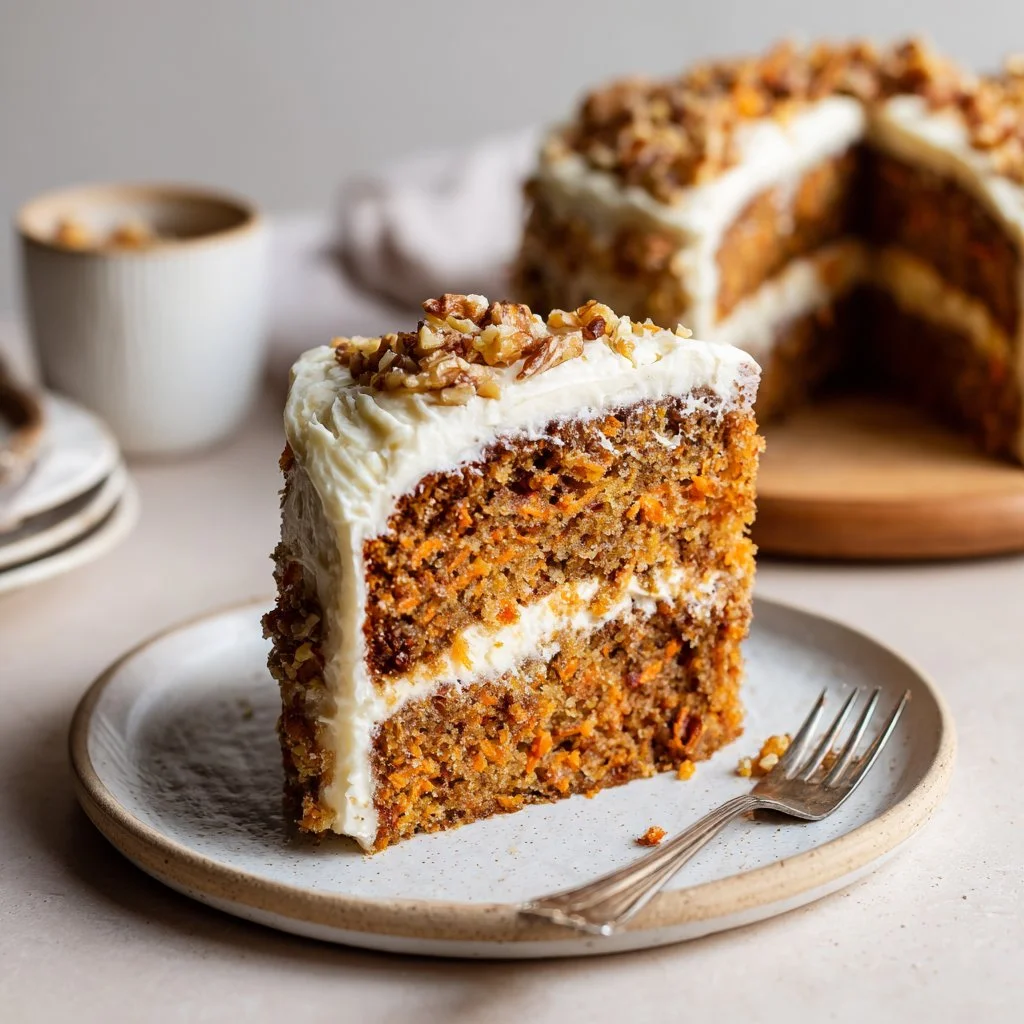
Spread frosting between the layers, then frost the top and sides of the cake. Optionally sprinkle chopped nuts or a dusting of cinnamon for presentation.
Pro Tip: The final cake should have clean edges and a smooth domed top; press a few chopped nuts into the sides for a professional touch.
For a comparable assembly technique used in dense, layered desserts, see this method for a different dump-cake style that uses similar layering and finishing touches: peanut butter cup dump cake assembly tips.
Expert Tips for Browned Butter Carrot Cake
– Temperature tip: Use room-temperature eggs for better emulsion and lift; cold eggs can cause the batter to separate.
– Browning tip: Stir constantly near the end of browning; when you smell a nutty aroma and see amber solids, remove immediately.
– Texture troubleshooting: If the crumb is gummy, you likely underbaked or overpacked the pan; give the cake an extra 5–8 minutes and test again.
– Equipment tip: Use an oven thermometer to ensure your 350°F is accurate; many ovens run hot or cold by 10–25°F.
– Frosting consistency: If frosting is too sweet, add a teaspoon of lemon juice to cut sweetness; if too thin, chill for 10–15 minutes and rewhip.
– Common mistake: Over-grating carrots or adding too much moisture (like fruit juice) will create a soggy cake; stick to two cups finely grated.
– Nut handling: Toast walnuts or pecans briefly for a fresher, crunchier finish; raw nuts can taste muted.
– Presentation tip: Chill the assembled cake for 20 minutes before serving to let the frosting set for cleaner slices.
For more mixing and timing pointers that apply across dense-layered desserts, review this related troubleshooting piece: mixing and bake-time guidance.
Storage & Freezing for Browned Butter Carrot Cake
Fridge storage: Store the frosted cake in an airtight cake keeper or covered with plastic wrap. Keeps well for 4–5 days in the refrigerator.
Freezer storage: For long-term storage, freeze unfrosted layers wrapped tightly in plastic and then foil in a freezer-safe container. Cake layers freeze well for up to 3 months; the frosting can be frozen in a sealed container for up to 2 months.
Thawing: Thaw frozen layers overnight in the refrigerator, then bring to room temperature for 30–60 minutes before frosting. If you froze a fully assembled cake, thaw in the fridge overnight to avoid condensation on the frosting.
Reheating: Gently warm individual slices in a 25–30 second burst in the microwave or in a 300°F oven for 10 minutes; avoid overheating to preserve frosting texture.
For container recommendations and how other bakers store similar layered desserts, see this practical storage example: simple freezer and fridge storage tips.
Variations & Substitutions for Browned Butter Carrot Cake
Walnut-Maple variation: Replace half the brown sugar with 1/4 cup pure maple syrup and fold in chopped toasted walnuts. The maple adds a deeper, woodsy sweetness and complements the browned butter.
Pineapple-boosted version: Fold 1/2 cup crushed, well-drained pineapple into the batter for tropical moisture. Reduce added sugars by 2 tablespoons to balance the fruit’s sweetness and expect a slightly looser crumb.
Spiced citrus twist: Add 1 tablespoon orange zest to the batter and 1/2 teaspoon ground ginger to the spice mix. The citrus brightens the flavor and the ginger adds a fresh, spicy lift.
Gluten-free option: Swap the all-purpose flour for a 1:1 gluten-free flour blend with xanthan gum and bake slightly longer, checking for doneness. The texture will be a bit denser, but the browned butter and spices will preserve the cake’s signature depth.
Frequently Asked Questions About Browned Butter Carrot Cake
Q: Can I brown the butter in advance?
A: Yes. You can brown the butter up to 3 days ahead and keep it refrigerated in a sealed container. Rewarm gently to pour into the batter so it’s warm but not hot enough to cook the eggs when mixed.
Q: Why did my cake sink in the middle?
A: Sinking usually results from underbaking, opening the oven door too early, or too much leavening. Always test with a toothpick and avoid opening the oven in the first 20 minutes of bake time.
Q: How do I make the frosting less sweet without changing texture?
A: Add up to 1 teaspoon of fresh lemon juice or 1–2 tablespoons of sour cream to the frosting and rewhip. Chill briefly to let it firm up if the consistency loosens.
Q: Can I make this as cupcakes or a sheet cake?
A: Yes. For cupcakes, bake at 350°F for 18–22 minutes. For a 9×13 sheet, bake at 350°F for 30–38 minutes. Always test for doneness with a toothpick and adjust bake time to your oven.
Q: What’s the best way to grate carrots for even texture?
A: Use the fine side of a box grater or a food processor with a grating disc. Finely grated carrots distribute moisture evenly and prevent large, raw-feeling shreds in the crumb.
Final Thoughts on Browned Butter Carrot Cake
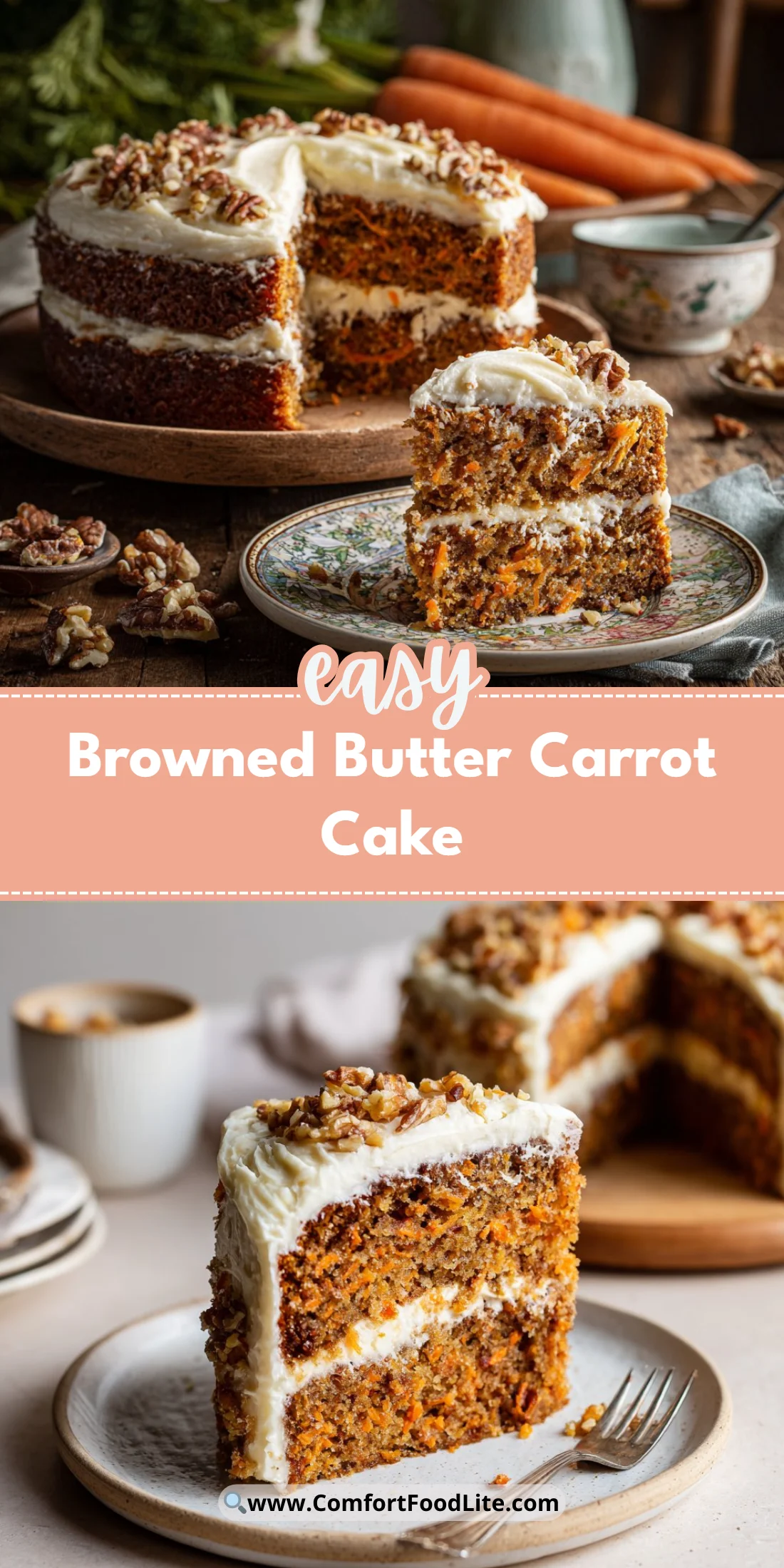
This Browned Butter Carrot Cake balances toasty richness, warm spice, and creamy tang for a memorable dessert.
If you make it, please leave a star rating in the recipe card below and pin it to Pinterest.
Find inspiration and similar brown-butter carrot ideas like a Mini Carrot Cake with Brown Butter Cream Cheese Frosting, a moist alternative in this Moist Carrot Cake with Brown Butter Cream Cheese Frosting, or a rich take at Carrot Cake with Brown Butter Frosting – Celebrating Sweets.

Browned Butter Carrot Cake
Ingredients
For the cake
- 6 tablespoons unsalted butter (browned until golden and nutty) Use unsalted European-style butter for richer flavor.
- 1 cup granulated sugar
- 1/2 cup packed brown sugar
- 3 large eggs (room temperature) Use room-temperature eggs for better emulsion.
- 1 1/2 teaspoons vanilla extract
- 2 cups all-purpose flour For gluten-free, use a 1:1 gluten-free blend.
- 1 teaspoon baking soda
- 2 teaspoons ground cinnamon
- 1/2 teaspoon ground nutmeg
- 1/2 teaspoon salt
- 2 cups finely grated carrots Grate finely for even moisture distribution.
- 1/2 cup chopped walnuts or pecans (optional) Toast for fresher flavor.
For the frosting
- 8 ounces cream cheese (softened, full-fat) Use full-fat for best texture.
- 4 tablespoons unsalted butter (softened)
- 2 cups powdered sugar (sifted)
- 1 teaspoon vanilla extract (for frosting)
- 1 teaspoon fresh lemon juice (optional, for frosting) Adds brightness to the frosting.
Instructions
Preparation
- Brown the butter: Place unsalted butter in a medium saucepan over medium heat and stir frequently until it caramelizes to a golden brown, about 5–7 minutes.
- Mix wet ingredients: Combine warm browned butter with granulated and brown sugar, whisking until combined. Add eggs one at a time, beating briefly after each, then stir in vanilla extract.
- Combine dry ingredients: In a separate bowl, whisk together flour, baking soda, cinnamon, nutmeg, and salt.
- Incorporate carrots and nuts: Gradually fold the dry ingredients into the wet mixture, then fold in finely grated carrots and optional chopped nuts.
Baking and Cooling
- Preheat the oven to 350°F (175°C) and grease two 9-inch round cake pans. Divide the batter evenly and bake for 30–35 minutes.
- Cool in pans for 10 minutes, then invert onto cooling racks to cool completely.
Frosting and Assembly
- Make the frosting by beating softened cream cheese and butter until smooth. Gradually add sifted powdered sugar and vanilla.
- Spread frosting between the layers, then frost the top and sides. Optionally sprinkle with chopped nuts or a dusting of cinnamon.