
The first time I made this cottage cheese flatbread it felt like a kitchen hack that actually lived up to the hype.
It’s just cottage cheese and an egg, but it bakes into a tender, slightly golden flatbread that’s perfect for fast lunches or simple pizzas.
If you like creamy, protein-rich swaps, this one’s a keeper and pairs beautifully with other cottage-cheese-based recipes like an avocado cottage cheese smoothie for a complete, wholesome meal.
Why You’ll Love This Recipe
- Ready in under 20 minutes from start to finish.
- High in protein and low in prep fuss.
- A neutral base that works with savory or sweet toppings.
- Minimal ingredients and kitchen gear required.
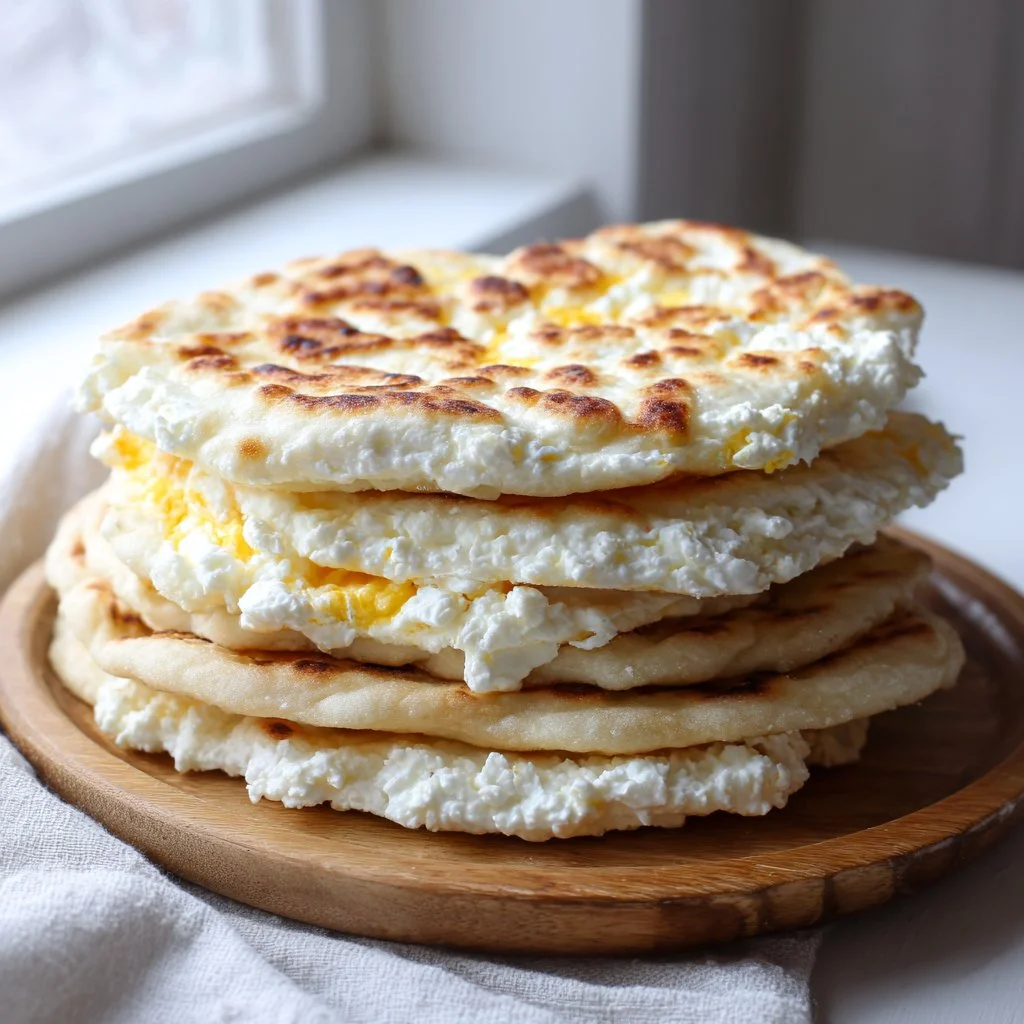
The texture is surprising: tender and slightly chewy with a delicate, golden edge.
It’s more cake-like than grain-based flatbreads, but still sturdy enough to hold toppings without falling apart.
Flavor-wise it’s mildly tangy from the cottage cheese with a rich backbone thanks to the egg — think a blank canvas that adds a gentle savory note rather than competing with toppings.
"Five stars — I made this in a hurry and it was crisp at the edges and pillowy in the middle. Topped it with roasted tomatoes and basil and everyone asked for seconds." — a satisfied reader
Key Ingredients
Cottage cheese (1 cup, full-fat recommended)
Full-fat cottage cheese gives the best texture because the higher milkfat helps the mixture bind and brown more evenly.
If you buy a container with visible whey, drain it briefly on a fine sieve for a firmer final flatbread.
Brands vary: choose one with a creamy mouthfeel rather than a grainy, dry curd for smoother blending.
Large egg (1, room temperature preferred)
The egg acts as the sole binder and provides structure and lift.
Using it at room temperature helps it incorporate more evenly into the cottage cheese, producing a consistent batter that sets reliably in the oven.
If you’re tracking macros, note the egg contributes most of the fat and a good portion of the protein.
Optional topping ideas (not part of the minimal recipe)
Although not in the base ingredient list, toppings make this flatbread versatile.
Think simple combos: olive oil and herbs, shredded mozzarella and marinara, or smoked salmon with dill.
If you plan to broil with cheese, release the flatbread from the pan and broil briefly to avoid sogginess.
Full Ingredients List:
- 1 cup cottage cheese (full-fat for best results)
- 1 large egg (room temperature preferred)
Step-by-Step Instructions
Step 1: Preheat and prepare your pan
Preheat your oven to 375°F (190°C).
Line a baking sheet with parchment paper so the batter won’t stick and cleanup stays simple.
Pro Tip: Use a rimless baking sheet if you have one for more even browning around the edges.
Step 2: Blend until completely smooth
Add the cottage cheese and the room-temperature egg to a blender or food processor.
Blend for 30–60 seconds until the mixture is completely smooth and there are no visible cottage cheese curds left.
Pro Tip: If you still see curds after 60 seconds, scrape the sides and pulse again.
Visual cue: when the batter looks glossy and homogenous, it’s ready.
Step 3: Shape the flatbread
Pour the smooth batter onto your prepared parchment-lined baking sheet.
Use an offset spatula or regular spatula to spread it into a circle roughly 8–10 inches across and about 1/4 inch thick.
Pro Tip: For an even thickness, spread from the center outward and rotate the pan as you go.
Visual cue: the edges should be slightly tapered — not a thick pancake — which helps them crisp in the oven.
Step 4: Bake until set
Bake at 375°F (190°C) for 12–15 minutes.
You’re aiming for golden-brown edges and a center that feels set when gently pressed.
Pro Tip: Start checking at 12 minutes; ovens vary and you don’t want it to dry out.
Visual cue: the center should not wobble when you press the top lightly.
Step 5: Cool slightly before topping
Let the flatbread cool for 2–3 minutes on the baking sheet.
This brief rest firms up the surface so toppings won’t slide off.
Pro Tip: Move to a wire rack after 2–3 minutes if you plan to keep it crisp underneath.
Visual cue: the flatbread will lift cleanly from the parchment rather than stretching.
Expert Tips for Success
- Use full-fat cottage cheese for best results. The extra fat improves mouthfeel and browning. Nonfat versions can be drier and produce a less cohesive batter.
- Room-temperature egg matters. Cold eggs can cause the batter to be slightly lumpy and affect how evenly it sets. If you forget to take the egg out, place it in warm (not hot) water for 5–7 minutes.
- Blender vs. food processor: both work, but a high-speed blender gives you the silkiest finish. If using a food processor, scrape the sides once to ensure there are no curds left.
- Don’t over-thin the batter. If you add liquids or extras, keep the thickness close to the original. Too runny a batter will spread too thin and crisp out like a chip rather than a soft flatbread.
- Parchment paper is non-negotiable. It prevents sticking and allows you to slide the finished flatbread from sheet to rack easily.
- Prevent soggy toppings by layering intelligently. If using wet toppings like tomatoes, blot them dry first. For saucy pizzas, brush a thin layer of oil or sprinkle a little grated cheese on the flatbread before adding wet ingredients.
- Watch your oven’s hot spots. Rotate the pan halfway through the bake if you know your oven runs unevenly; this avoids one side over-browning.
- For a crisper bottom, transfer the parchment and batter to a preheated pizza stone or a hot shallow baking tray for the last 2–3 minutes. Be careful — it will crisp quickly.
- Make-ahead tip: bake the plain flatbread and cool completely. Wrap tightly in plastic, refrigerate up to 48 hours, and reheat in a 350°F oven for 5–7 minutes before topping. This keeps it from getting soggy from refrigerated toppings.
- Protein boost: fold a tablespoon of powdered milk or a spoonful of ricotta into the batter if you want even more protein and a slightly richer texture.
Storage & Freezing
Fridge storage: Cool completely before wrapping.
Place the flatbread between pieces of parchment in an airtight container.
Store in the refrigerator for up to 3 days.
Reheating from fridge: Preheat oven to 350°F (175°C).
Place flatbread on a baking sheet and warm for 5–8 minutes until heated through and edges re-crisp.
Avoid microwaving unless you don’t mind a softer texture.
Freezer storage: Freeze fully cooled flatbreads flat on a sheet pan until solid, about 1 hour.
Once frozen, stack with parchment between layers and transfer to a freezer-safe bag or container.
Freeze for up to 2 months.
Reheating from frozen: Thaw in the fridge overnight or on the countertop for 30–60 minutes.
Reheat in a 350°F oven for 8–12 minutes, or place under a hot broiler for 1–2 minutes to finish and crisp edges.
If you’re topping from frozen, add toppings after partial thaw and finish in a hot oven to avoid sogginess.
Variations & Substitutions
Herb and garlic flatbread: Stir a teaspoon of garlic powder and a tablespoon of finely chopped fresh herbs (parsley, chives, or oregano) into the blended batter.
This adds immediate flavor without extra toppings and works well when you want a quick base for bruschetta-style toppings.
Cheesy crisp version: Fold in 1–2 tablespoons of finely grated Parmesan or Pecorino into the batter and sprinkle more on top before baking.
The cheese will brown and add a savory, crisp rim that’s excellent with salads or as a snack.
Gluten-free add-ins: The base is already grain-free, but if you want more structure, whisk in a tablespoon of almond flour or oat fiber before spreading.
These dry add-ins absorb extra moisture and can help if your cottage cheese is on the wetter side.
Sweet breakfast flatbread: After baking, brush lightly with honey, scatter fresh berries, and top with a dollop of yogurt.
For a tropical spin, try flavoring the batter with a touch of vanilla and serving with a mango or peach compote — see inspiration from the mango smoothie family of flavors.
Frequently Asked Questions
Q: Can I make this flatbread without a blender?
A: You can, but it’s harder to get a completely smooth batter by hand. Use a fork to break up curds, then whisk vigorously until homogenized. Pressing the cottage cheese through a fine sieve first speeds things up and gets you closer to the original texture.
Q: Is this flatbread keto or low-carb?
A: Yes — with only cottage cheese and an egg, the net carbs are very low. Full-fat cottage cheese will increase fat content slightly but keeps carbs minimal, making it suitable for many low-carb diets.
Q: Can I double the recipe and bake two flatbreads at once?
A: Absolutely. Spread each flatbread on its own parchment-lined sheet and bake on separate racks. Rotate the pans halfway if your oven is small or has uneven heat.
Q: How do I keep the flatbread from getting soggy under tomato sauce?
A: Partially bake until just set, brush lightly with olive oil, then add sauce and toppings and return to the oven. Blot tomatoes and other wet veggies before placing them on the flatbread.
Q: Can I use ricotta instead of cottage cheese?
A: Ricotta can work but yields a different texture — smoother and denser. If you substitute ricotta, consider adding an extra egg white to help firm the structure.

Final Thoughts
This viral cottage cheese flatbread is proof that minimal ingredients can yield maximum results.
It’s fast, adaptable, and a great canvas for weeknight creativity — try it as a pizza base or a high-protein snack.
Please leave a star rating in the recipe card below if you make it, and don’t forget to pin this to Pinterest for later.
Conclusion
If you want to compare versions or see where the trend started, check out Andy’s East Coast Kitchen’s cottage cheese flatbread recipe for another take on the method.
For a protein-focused perspective and extra topping ideas, take a look at The Protein Chef’s cottage cheese flatbread recipe.
And for a straightforward viral origin and community-tested tips, read rachLmansfield’s post on the viral cottage cheese flatbread.

Cottage Cheese Flatbread
Ingredients
Main Ingredients
- 1 cup cottage cheese (full-fat recommended) Drain if visible whey is present for a firmer texture.
- 1 large egg (room temperature preferred) Acts as a binder and provides structure.
Optional Toppings
- olive oil and herbs
- shredded mozzarella and marinara
- smoked salmon with dill
Instructions
Preparation
- Preheat your oven to 375°F (190°C). Line a baking sheet with parchment paper.
- Add the cottage cheese and the room-temperature egg to a blender or food processor and blend until completely smooth, about 30–60 seconds.
- Pour the smooth batter onto the prepared baking sheet and spread it into a circle roughly 8–10 inches across and about 1/4 inch thick.
Baking
- Bake at 375°F (190°C) for 12–15 minutes, until the edges are golden-brown and the center feels set when gently pressed.
- Let the flatbread cool for 2–3 minutes before adding toppings.