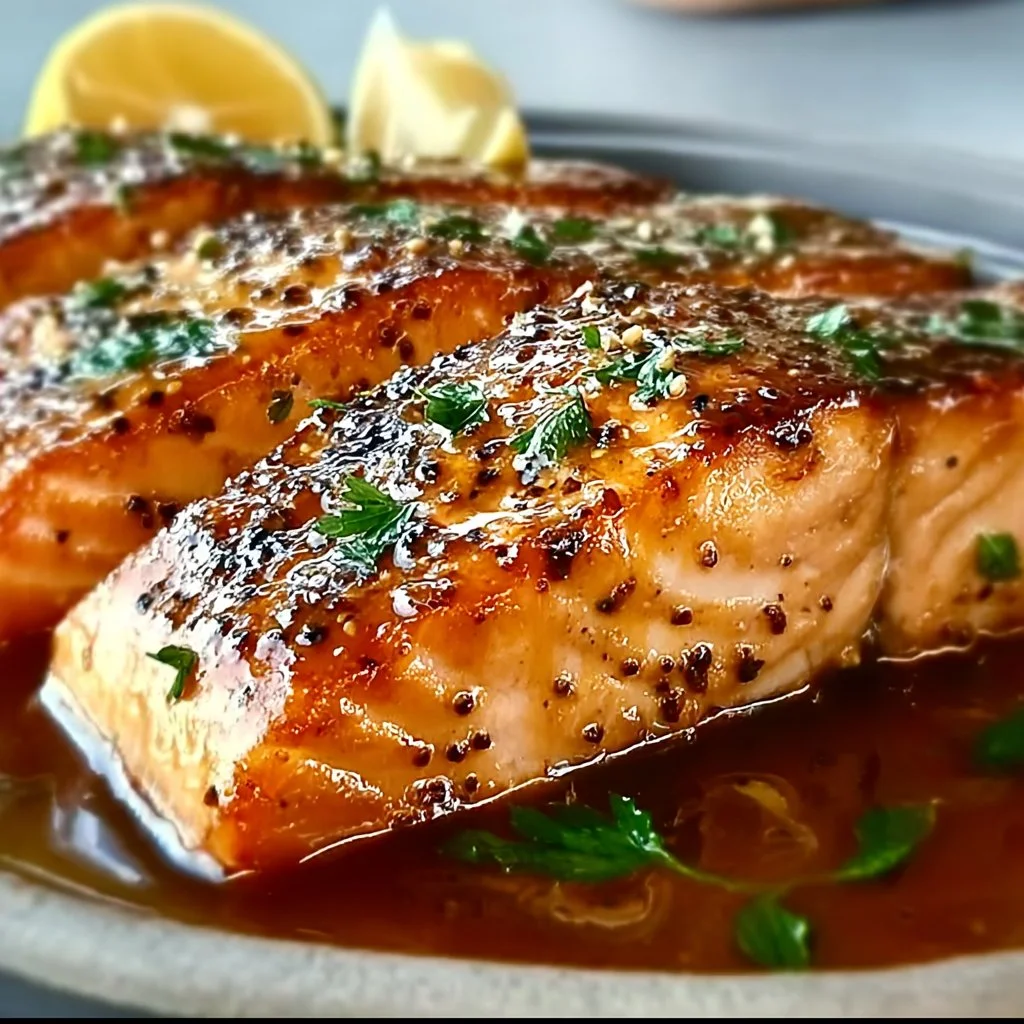
Start here with a hook: imagine a salmon fillet glazed with a sweet-savory honey-soy Dijon glaze that flakes under your fork and melts on your tongue.
This recipe is fast enough for weeknights and special enough for guests.
It pairs beautifully with quick sides and is forgiving for beginner cooks. For a cozy menu, serve it alongside a warming warming baked potato soup recipe for an easy weeknight meal.
Why You’ll Love This Texas Roadhouse Style Baked Salmon that Melts in Your Mouth
– Buttery, flaky salmon that feels restaurant-level at home.
– Sweet-and-salty glaze with a subtle mustard tang.
– Quick prep and under-30-minute bake time.
– Adaptable to gluten-free and low-sugar diets.
– High in heart-healthy Omega-3s.
– Kid-friendly flavor that still impresses adults.
The flavor is layered: honey adds caramelized sweetness, soy sauce brings umami depth, and Dijon lifts with bright acidity. The texture is tender and moist; the edges get a slight caramelized crust while the interior remains silky and flaky.
“Absolutely perfect! I followed the recipe exactly and my family thought it was from a restaurant. Juicy, sweet, and flaky. Five stars!” — Jamie R.
Key Ingredients for Texas Roadhouse Style Baked Salmon that Melts in Your Mouth
Olive oil — Olive oil carries the marinade and helps the glaze adhere while adding a fruit-forward richness. Buy extra-virgin olive oil with a fresh, grassy aroma and use within the bottle’s recommended date. If you swap avocado oil, you’ll get a milder, less peppery flavor but similar roasting performance.
Salmon fillets — Fresh or thawed salmon matters for texture and nutrition; look for firm, glossy flesh with a mild ocean scent. Wild-caught fillets tend to be leaner and more flavorful; farmed salmon is often fattier and more forgiving in cooking. If you substitute a white fish like cod, expect a milder taste and a firmer, flakier texture after baking.
Honey — Honey gives the glaze its golden caramelization and balances the soy’s saltiness. Use runny honey for even mixing; darker honeys give deeper flavor. Maple syrup works as a substitute and gives a more autumnal, less floral sweetness.
Soy sauce — Soy sauce delivers essential umami and salt; use low-sodium if watching salt intake. For gluten-free cooking, tamari is the best swap and will keep the same savory backbone. Coconut aminos can be used for a soy-free, slightly sweeter profile but won’t caramelize exactly the same.
Full Ingredient List for Texas Roadhouse Style Baked Salmon that Melts in Your Mouth
– 4 fillets Fresh or thawed salmon (Ensures rich Omega-3 benefits)
– 2 tablespoons Olive oil (Can be substituted with avocado oil)
– 2 tablespoons Honey (Maple syrup is a great alternative)
– ¼ cup Soy sauce (Use tamari for gluten-free option)
– 2 tablespoons Dijon mustard (Yellow mustard can work in a pinch)
– 2 cloves Garlic (Minced)
– 1 teaspoon Paprika (Smoked paprika adds deeper flavor)
– ½ teaspoon Salt (Adjust according to taste)
– ¼ teaspoon Black pepper (Freshly cracked)
– 1 tablespoon Lemon juice (Lime juice can be a substitute)
– 1 tablespoon Fresh Parsley (Chopped for garnish)
Step-by-Step Instructions for Texas Roadhouse Style Baked Salmon that Melts in Your Mouth
Step 1: Preheat and prepare the pan
Preheat the oven to 400°F (200°C). Line a rimmed baking sheet with parchment paper or lightly oil a shallow baking dish. Position a rack in the middle of the oven.
Pro Tip: The oven should feel hot and steady at 400°F; the pan should be lightly glossy but not pooling with oil.
Step 2: Make the glaze
In a medium bowl, whisk together olive oil, honey, soy sauce, Dijon mustard, minced garlic, paprika, lemon juice, salt, and black pepper until smooth. Taste and adjust salt or lemon for balance; the glaze should be bright, slightly sweet, and well seasoned.
Pro Tip: The glaze should look syrupy and shine in the bowl; you should smell garlic and a hint of citrus.
Step 3: Coat the salmon
Pat the salmon fillets dry with paper towels. Place them skin-side down on the prepared pan and brush each fillet generously with the glaze. Reserve a few tablespoons of glaze for basting mid-bake.
Pro Tip: The salmon surface should feel tacky from the glaze and show an even glossy coating.
Step 4: Bake the salmon
Bake for 10–14 minutes depending on thickness (roughly 10 minutes per inch of thickness). Halfway through, baste with the reserved glaze to build a sticky finish. Check for doneness by testing for flakiness at the thickest part.
Pro Tip: The edges should be lightly browned and the center should flake with gentle pressure, still moist and translucent.
Step 5: Optional broil for finish
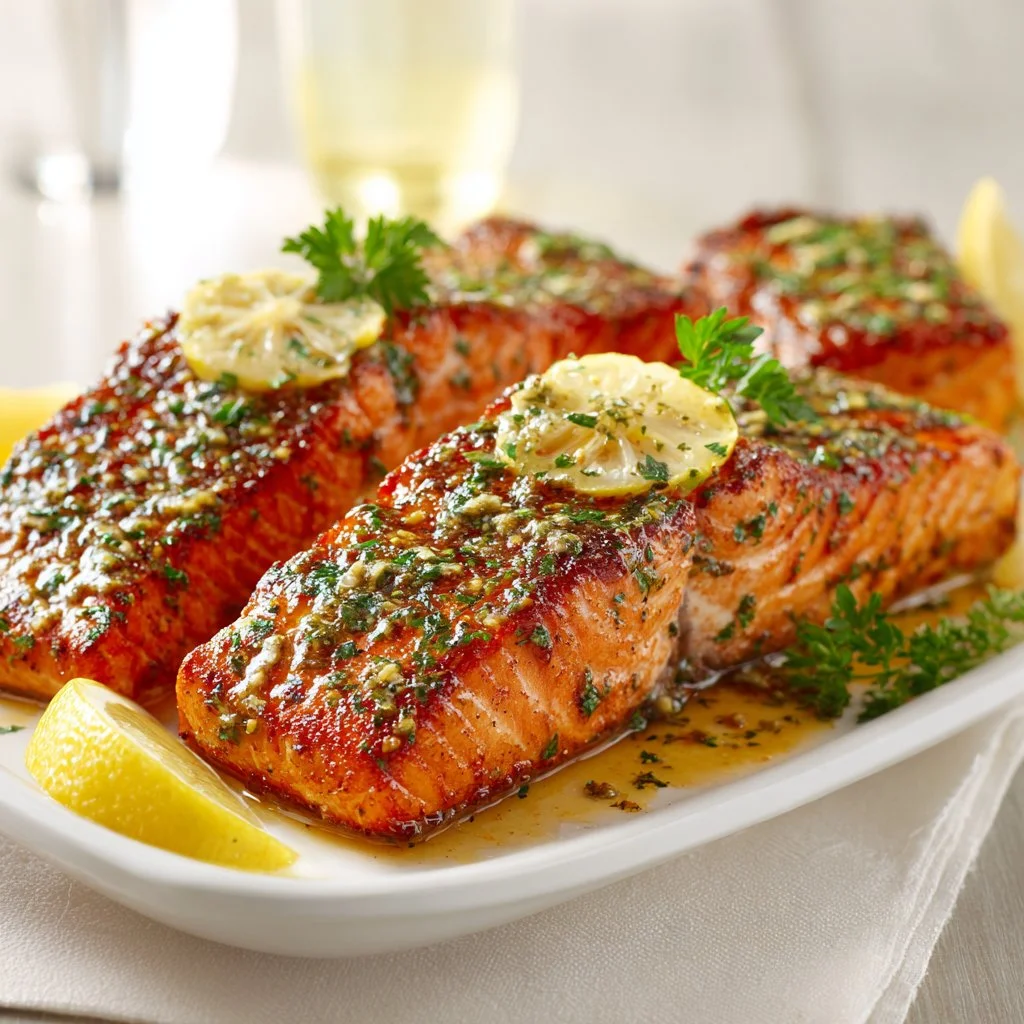
For a caramelized top, switch to broil for 1–2 minutes, watching carefully to prevent burning. Remove from the oven and let rest for 2 minutes before serving. Sprinkle chopped parsley and an extra squeeze of lemon.
Pro Tip: Under broil, the glaze should bubble and show golden spots; it should not blacken.
Pro Tip: If you want more ideas for protein-forward breakfasts or sides while the oven’s on, check out this protein-packed baked cottage cheese eggs recipe for a versatile accompaniment.
Expert Tips for Texas Roadhouse Style Baked Salmon that Melts in Your Mouth
– Temperature tips: Aim for 400°F for even cooking; thicker fillets may need a few extra minutes but keep the broiler option for finish.
– Internal doneness: Use an instant-read thermometer — 125–130°F yields medium-rare, flaky and moist.
– Texture troubleshooting: If your salmon is dry, you likely overcooked it; reduce bake time by 2–3 minutes next time or pull from the oven at 120–125°F and rest to reach final temp.
– Equipment tips: Use a rimmed baking sheet to catch glaze drips; parchment prevents sticking and makes clean-up fast.
– Glaze control: Reserve glaze to baste mid-bake so you build layers of flavor rather than burning sugars on top.
– Common mistakes: Avoid high broil for too long — sugars burn quickly. Also, don’t skip patting the fish dry, which prevents steaming and promotes a better caramelized surface.
– Visual cues: Look for glossy, slightly browned glaze and flaky flesh at the thickest part.
– Serving tips: Let the fillets rest 2 minutes after baking; they continue to carry heat and finish cooking gently.
For tips on searing and finishing proteins similar to this glaze technique, a sauté and sear approach can be useful on complementary dishes.
Storage & Freezing for Texas Roadhouse Style Baked Salmon that Melts in Your Mouth
Fridge storage: Store cooked salmon in an airtight container in the refrigerator for up to 3 days. Use shallow containers to cool quickly and keep texture intact.
Freezer storage: Freeze cooked salmon in a freezer-safe bag or vacuum seal for up to 2 months. Wrap fillets individually in plastic wrap then place in a resealable freezer bag to prevent freezer burn.
Thawing: Thaw frozen cooked salmon in the refrigerator overnight for best texture. For faster use, thaw sealed in cold water for 30–60 minutes, changing the water every 20 minutes.
Reheating: Reheat gently at 275–300°F in the oven for 8–12 minutes covered with foil to retain moisture. Alternatively, reheat in a skillet over low heat with a splash of water or broth and a lid for 3–5 minutes. Avoid microwave reheating which can make salmon rubbery.
Variations & Substitutions for Texas Roadhouse Style Baked Salmon that Melts in Your Mouth
Honey-lime glaze — Swap lemon juice for lime and increase honey by 1 teaspoon. The result is a brighter, tropical-accented glaze that pairs well with cilantro and rice.
Smoky paprika and maple — Use smoked paprika and maple syrup instead of honey for a deeper, smoky-sweet profile. This version caramelizes darker and pairs well with roasted sweet potatoes.
Gluten-free tamari version — Replace soy sauce with tamari and confirm all other ingredients are gluten-free. Flavor is nearly identical but safer for gluten-sensitive diners.
Citrus-herb crust — Mix lemon zest and chopped parsley with breadcrumbs and press lightly on top before baking. This gives a textured crust and fresh herb lift; expect a firmer top and still-tender interior.
Looking for an easy desserts or sides to finish the meal? Try pairing with a simple 3-ingredient peach cobbler dump cake for a fast sweet ending.
Frequently Asked Questions About Texas Roadhouse Style Baked Salmon that Melts in Your Mouth
Q: Can I use frozen salmon fillets for this recipe?
A: Yes. Thaw frozen fillets overnight in the refrigerator, pat them dry, then proceed with the glaze. If baking straight from frozen, expect at least 5–8 extra minutes of bake time and check doneness at the thickest part.
Q: How do I prevent the glaze from burning under the broiler?
A: Keep broiling brief — 1–2 minutes at high heat and watch constantly. Alternatively, broil with the pan on the middle rack instead of the top rack to reduce direct heat intensity.
Q: Is this recipe healthy for everyday eating?
A: Yes. Salmon is rich in Omega-3s and protein. To lower sodium, use low-sodium soy sauce or tamari and reduce added salt; swap honey for a smaller amount of maple syrup if you prefer a different sweetener profile.
Q: What side dishes pair best with this salmon?
A: Light, bright sides like lemon-garlic green beans, roasted asparagus, or a quinoa salad complement the glaze. For comfort sides, consider mashed potatoes or a creamy soup like baked cod in coconut lemon cream sauce for a rich, coastal pairing.
Q: Can I meal-prep this salmon for lunches?
A: Absolutely. Bake and cool completely, then portion into airtight containers with a starch and vegetable. Keep sauces separate if you prefer to reheat quickly; consume within 3 days refrigerated or freeze for longer storage.
Final Thoughts on Texas Roadhouse Style Baked Salmon that Melts in Your Mouth
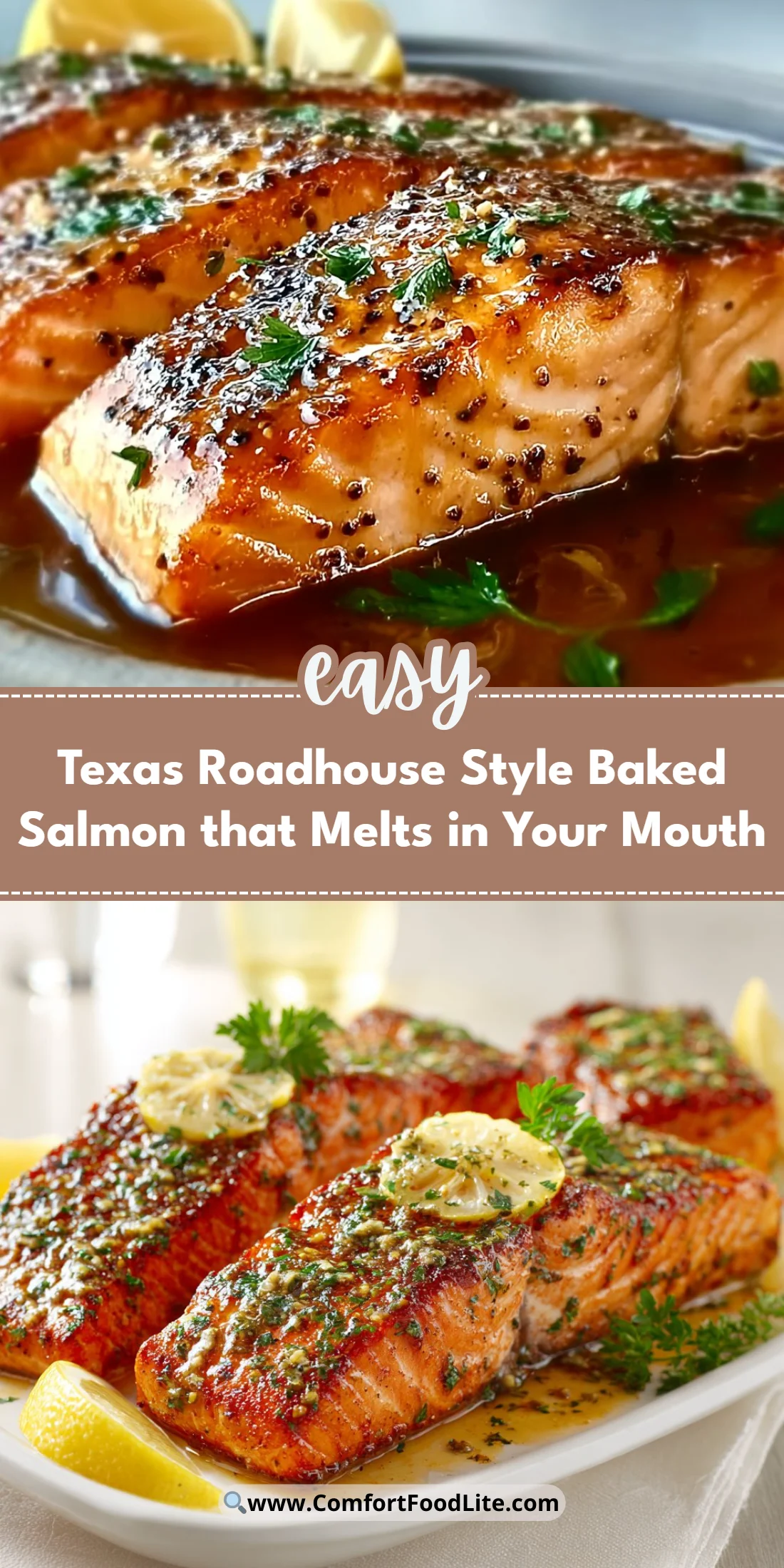
This Texas Roadhouse Style Baked Salmon that Melts in Your Mouth is an easy, elegant recipe you’ll return to for weeknights and entertaining. Please leave a star rating in the recipe card below and pin this recipe to Pinterest if you loved it.
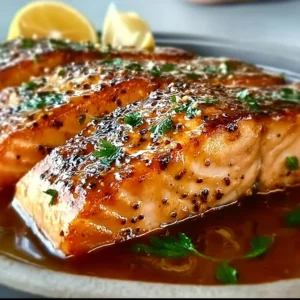
Texas Roadhouse Style Baked Salmon
Ingredients
For the Salmon
- 4 fillets Fresh or thawed salmon Look for firm, glossy flesh with a mild ocean scent.
- 2 tablespoons Olive oil Can be substituted with avocado oil.
- 2 tablespoons Honey Maple syrup is a great alternative.
- ¼ cup Soy sauce Use tamari for gluten-free option.
- 2 tablespoons Dijon mustard Yellow mustard can work in a pinch.
- 2 cloves Garlic Minced.
- 1 teaspoon Paprika Smoked paprika adds deeper flavor.
- ½ teaspoon Salt Adjust according to taste.
- ¼ teaspoon Black pepper Freshly cracked.
- 1 tablespoon Lemon juice Lime juice can be a substitute.
- 1 tablespoon Fresh Parsley Chopped for garnish.
Instructions
Preparation
- Preheat the oven to 400°F (200°C). Line a rimmed baking sheet with parchment paper or lightly oil a shallow baking dish.
- In a medium bowl, whisk together olive oil, honey, soy sauce, Dijon mustard, minced garlic, paprika, lemon juice, salt, and black pepper until smooth. Taste and adjust salt or lemon for balance.
- Pat the salmon fillets dry with paper towels. Place them skin-side down on the prepared pan and brush each fillet generously with the glaze. Reserve a few tablespoons of glaze for basting mid-bake.
Cooking
- Bake for 10–14 minutes depending on thickness. Halfway through, baste with the reserved glaze.
- For a caramelized top, switch to broil for 1–2 minutes, watching carefully to prevent burning. Remove from the oven and let rest for 2 minutes before serving. Sprinkle chopped parsley and an extra squeeze of lemon.