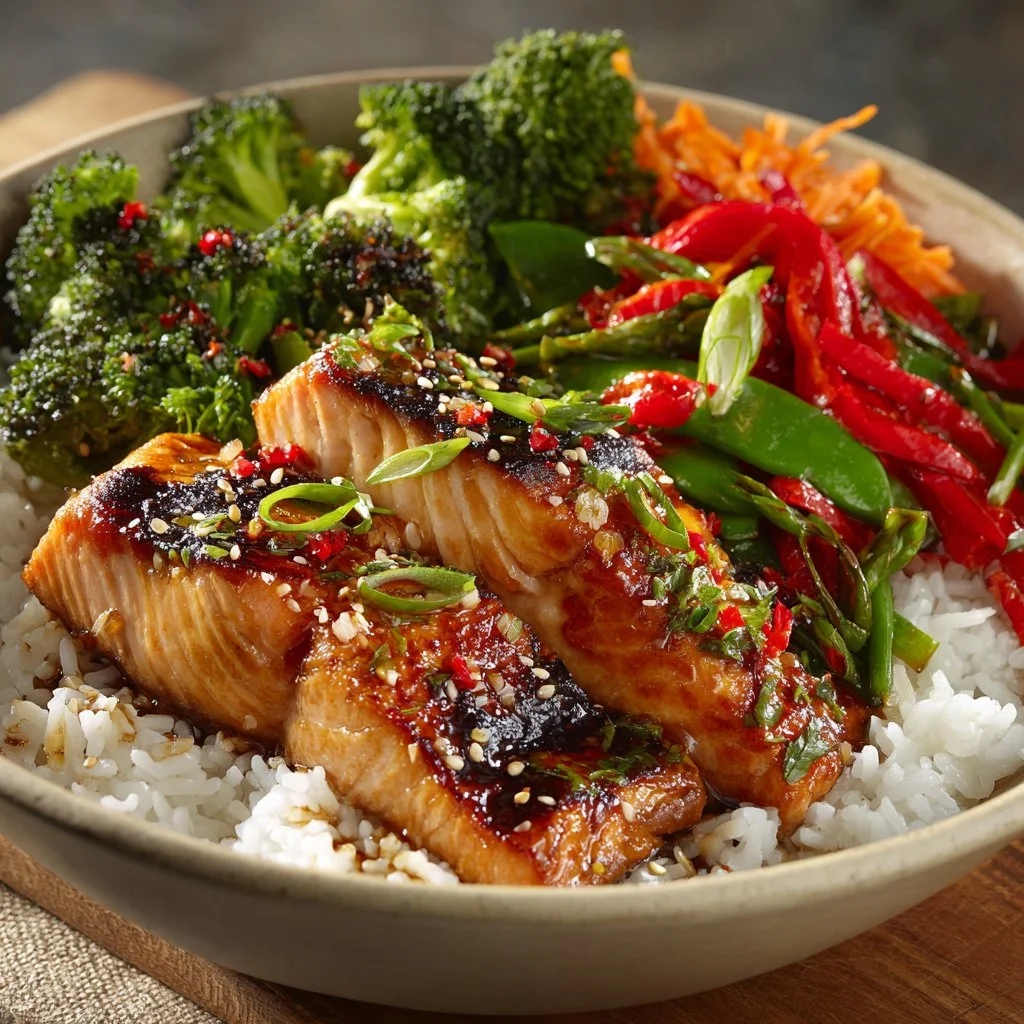
Bright, sticky teriyaki glaze. Flaky, seared salmon. Warm seasoned rice and crisp-tender vegetables in one bowl.
This Teriyaki Salmon Bowl is weeknight-friendly and dinner-party worthy. It layers umami, sweetness, and clean textures for an addictive mouthful.
Read on for ingredient science, step-by-step visuals, and troubleshooting so your bowl looks and tastes like a pro made it.
If you like salmon bowls with a spicy kick, check out a sweet-and-spicy take for inspiration from a similar recipe I love: honey sriracha salmon bowls.
Why You’ll Love This Teriyaki Salmon Bowl
- Fast to make on a busy night.
- Balanced flavors: sweet, salty, and bright.
- Textural contrast: glossy fish, fluffy rice, and crisp vegetables.
- Easy to scale for meal prep or guests.
- Flexible for dietary swaps.
- Makes a visually impressive bowl with little fuss.
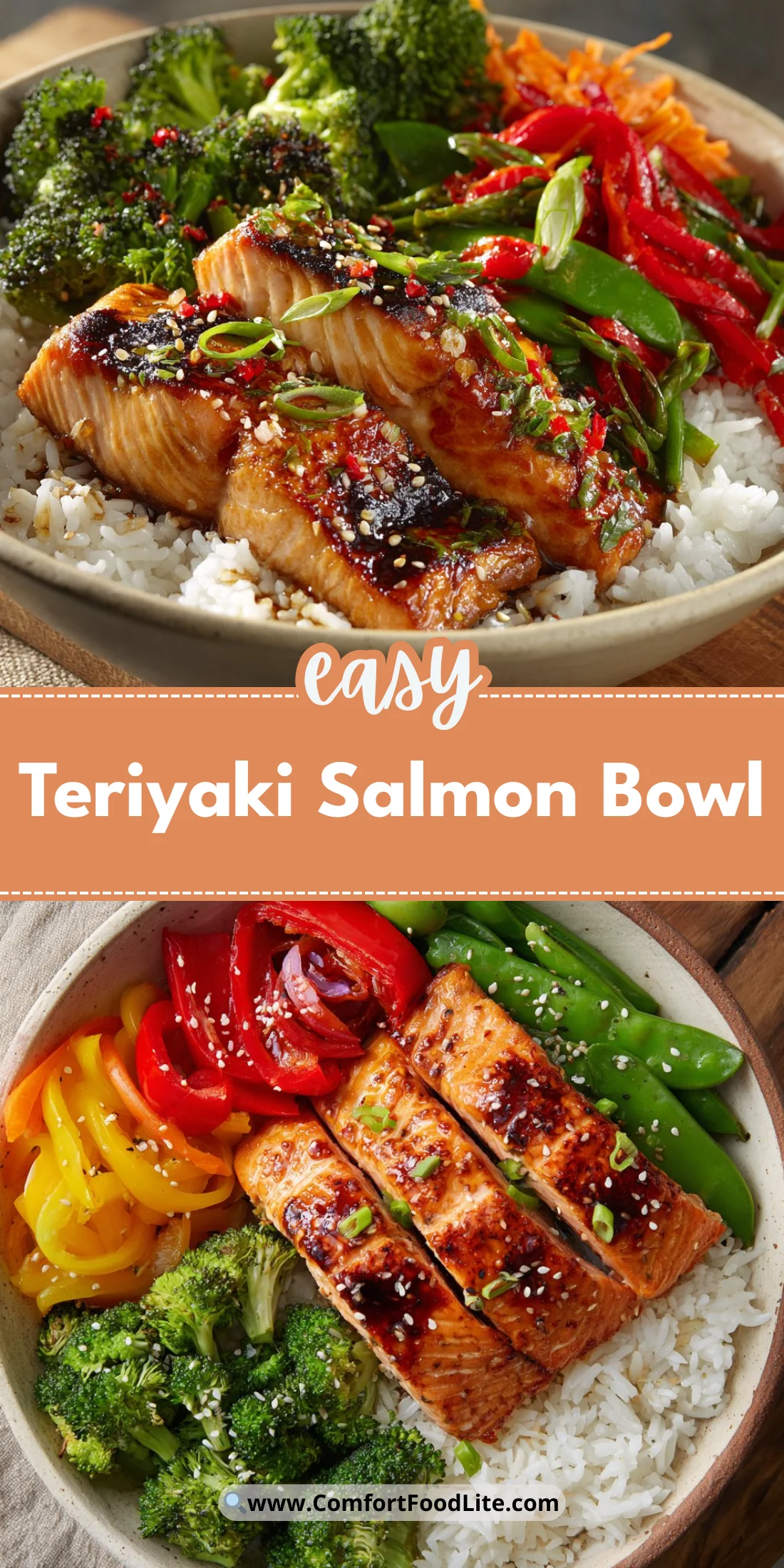
This Teriyaki Salmon Bowl delivers sweet, savory, and slightly gingery teriyaki that clings to a caramelized crust on pan-seared salmon. The short-grain sushi rice is tender and slightly sticky, which lets each grain hold sauce. Roasted broccoli, bell pepper, and snap peas add caramelized edges and a green crunch that offset the richness of the fish.
"Absolutely delicious — the glaze was glossy, not cloying, and the rice was restaurant-level. Weeknight winner!" — 5-star reader
Key Ingredients for Teriyaki Salmon Bowl
Short explanations help you shop smarter and avoid common swaps that flatten the dish.
-
Salmon fillets (4 6-ounce): Fresh, firm salmon gives the best texture and a clean flavor that pairs with the glaze. Buy wild-caught when possible for richer flavor and firmer flesh; farmed works in a pinch but can be softer and more buttery. If you substitute for another fish (like cod), expect a flakier texture and a milder taste that won’t hold glaze as well.
-
Low-sodium soy sauce (½ cup): This controls salt while delivering savory umami. Low-sodium lets you balance with the brown sugar and mirin alternative without over-salting. If you use regular soy sauce, reduce any additional salt by half.
-
Non-alcoholic mirin and sake alternatives (½ cup and ¼ cup): These add sweetness, body, and the characteristic rounded flavor of teriyaki without alcohol. Look for rice wine substitutes or sweet rice cooking wines labeled non-alcoholic. If you can’t find them, use a mix of apple juice plus a splash of rice vinegar — but the glaze will be slightly less aromatic.
-
Short-grain sushi rice (1½ cups): The stickiness of sushi rice keeps the bowl cohesive and carries sauce well. Rinse thoroughly to remove surface starch for distinct, glossy grains. Substituting long-grain rice will give a looser, less clingy texture that doesn’t soak up teriyaki the same way.
For more bowl ideas and vegetable swaps, try this vegan teriyaki noodle bowl for inspiration: vegan teriyaki noodle bowl.
Full Ingredient List for Teriyaki Salmon Bowl
- 4 (6-ounce) salmon fillets
- 2 tablespoons olive oil (for salmon)
- Salt and black pepper, to taste
- ½ cup low-sodium soy sauce
- ½ cup non-alcoholic mirin alternative
- ¼ cup non-alcoholic sake alternative
- 2 tablespoons light brown sugar, packed
- 1 tablespoon fresh ginger, grated
- 2 cloves garlic, minced
- 1 tablespoon cornstarch
- 2 tablespoons cold water (for slurry)
- 1 ½ cups short-grain sushi rice
- 2 ¼ cups cold water (for rice)
- 2 tablespoons rice vinegar
- 1 tablespoon granulated sugar (for rice)
- 1 teaspoon salt (for rice)
- 1 large head broccoli, cut into florets
- 1 red bell pepper, sliced into strips
- 1 cup snap peas, trimmed
- 1 tablespoon olive oil (for vegetables)
- ¼ teaspoon salt (for vegetables)
- ⅛ teaspoon black pepper (for vegetables)
- Toasted sesame seeds, for garnish
- Sliced green onions, for garnish
- Optional: Sriracha or chili flakes
- Optional: Thinly sliced avocado
Step-by-Step Instructions for Teriyaki Salmon Bowl
Step 1: Prepare Homemade Teriyaki Sauce
In a medium saucepan, combine the soy sauce, non-alcoholic mirin alternative, non-alcoholic sake alternative, brown sugar, grated ginger, and minced garlic. Whisk until the sugar dissolves, then bring to a gentle simmer over medium heat. Reduce to low and simmer for 5–7 minutes to concentrate flavors. Whisk the cornstarch and cold water in a small bowl to make a slurry, then slowly pour the slurry into the simmering sauce while whisking. Cook 1–2 minutes until the sauce is thick and glossy, then remove from heat and let cool slightly. For an extra-silky finish, strain through a fine-mesh sieve.
Pro Tip: The sauce should coat the back of a spoon and shine; it will thicken a little more as it cools.
Step 2: Cook Fluffy Sushi Rice
Rinse the sushi rice under cold running water until the water runs clear. Optional: soak rinsed rice for 15–30 minutes, then drain. Combine drained rice with 2 ¼ cups cold water in a heavy saucepan with a tight lid. Bring to a boil over medium-high heat, reduce to the lowest setting, cover, and simmer for 15 minutes without lifting the lid. Remove from heat and let rest, covered, for 10–15 minutes. Mix rice vinegar, granulated sugar, and 1 teaspoon salt; gently fold this seasoning into the warm rice to finish.
Pro Tip: Properly cooked sushi rice will compress when scooped and hold its shape, with shiny, separate grains.
Step 3: Roast Vibrant Vegetables
Preheat the oven to 400°F (200°C) and line a baking sheet with parchment. Toss broccoli florets, red bell pepper strips, and snap peas with 1 tablespoon olive oil, ¼ teaspoon salt, and ⅛ teaspoon black pepper. Spread in a single layer and roast 15–20 minutes, tossing halfway, until edges are caramelized and vegetables are tender-crisp. Keep warm.
Pro Tip: Look for browned tips on broccoli and slightly blistered pepper skin; vegetables should still snap when bitten.
Step 4: Pan-Sear Teriyaki Salmon
Pat salmon dry and season lightly with salt and black pepper. Heat 2 tablespoons olive oil in a large non-stick skillet over medium-high until shimmering. Place salmon fillets, skin-side down if present, and cook undisturbed 4–6 minutes to build a crust. Flip and cook 2–4 more minutes until internal temperature reaches 145°F (63°C) or desired doneness. Reduce heat to low and spoon generous teriyaki sauce over each fillet for 30–60 seconds to glaze. Remove and rest briefly.
Pro Tip: The salmon should release easily from the pan when the crust is set; the glaze will be glossy and cling to the surface.
Step 5: Assemble Your Ultimate Bowl
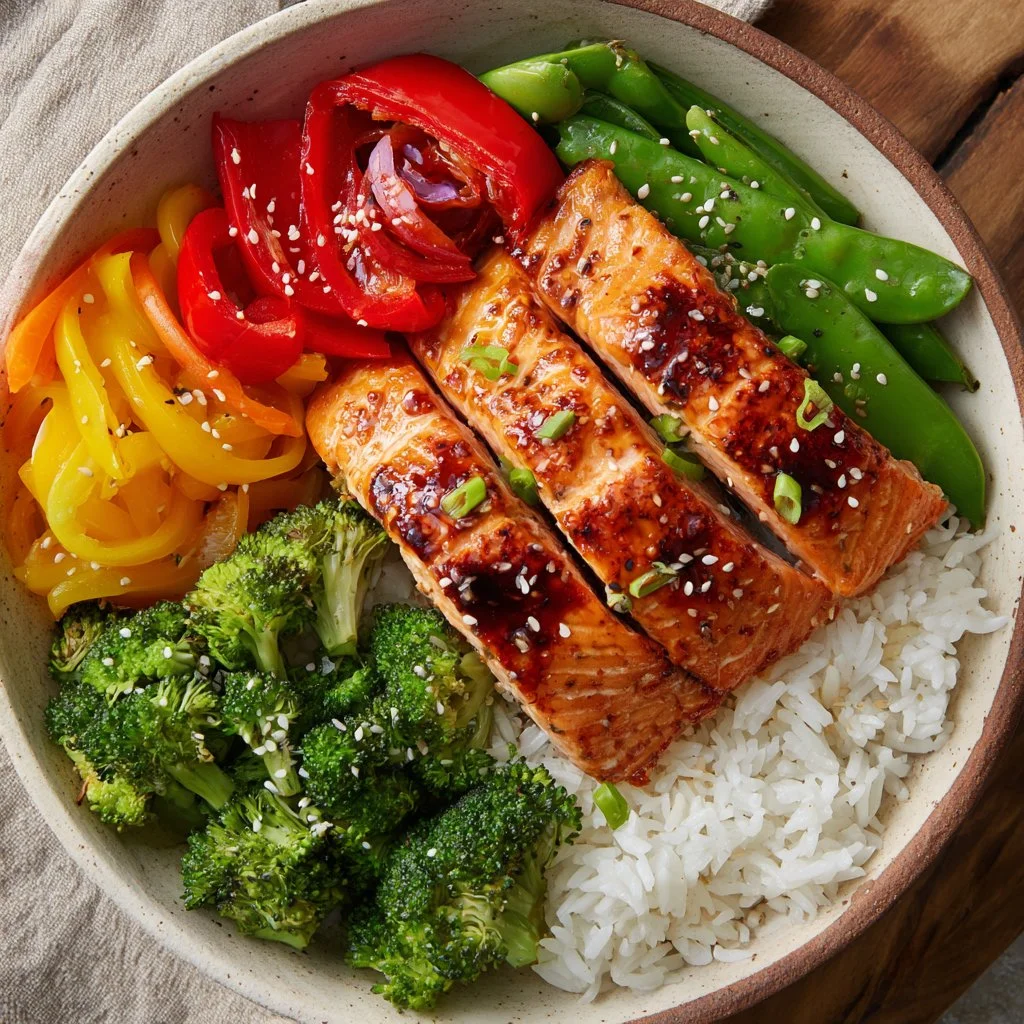
Spoon seasoned sushi rice into four bowls. Arrange roasted vegetables around the rice and place a glazed salmon fillet on top. Drizzle remaining teriyaki sauce over the fish, rice, and vegetables. Garnish with toasted sesame seeds and sliced green onions. Add Sriracha, chili flakes, or sliced avocado if desired. Serve immediately.
Pro Tip: Aim for a glossy glaze sheen on the salmon and a neat partition of rice and vegetables for an attractive bowl.
For a crispy alternative method and plating ideas, consider experimenting with air-fryer techniques like in this air fryer salmon recipe: air-fryer bang bang salmon.
Expert Tips for Teriyaki Salmon Bowl
- Use room-temperature salmon for even cooking; cold fillets can cook unevenly and dry out.
- Monitor the pan temperature — medium-high to start for a sear, then lower to finish; too-hot oil will burn the glaze.
- Texture check: if rice is sticky and gummy, you likely overcooked or under-rinsed it; rinse until water is clear next time.
- Equipment tip: a heavy-bottomed saucepan for rice and a non-stick skillet for salmon give the most reliable results.
- Sauce viscosity: if your teriyaki is too thin, return to low heat and add a cornstarch slurry a teaspoon at a time until it coats a spoon.
- Common mistake: adding salt to the salmon before glazing with a salty sauce can over-season; keep seasoning minimal.
- Visual cue: salmon should have a golden-brown seared crust and not be matte; glossy surface indicates proper glaze adhesion.
- Make-ahead tip: sauce refrigerates well for 5–7 days and can be reheated gently; avoid boiling after cornstarch thickening to preserve sheen.
Use the blueberry cottage cheese bowls for a completely different breakfast mood when you’re done with savory bowls: baked blueberry cottage cheese bowls.
Storage & Freezing for Teriyaki Salmon Bowl
Fridge storage: Store components separately. Keep salmon in an airtight container for up to 3 days. Rice and roasted vegetables last 3–4 days in their own containers. Store sauce in a small jar for 5–7 days.
Freezer storage: You can freeze cooked salmon wrapped tightly in foil and a freezer bag for up to 2 months, though texture will be slightly softer after thawing. Rice and vegetables freeze, but texture may degrade; use freezer-safe containers and consume within 1 month.
Thawing: Thaw salmon overnight in the refrigerator. For faster thawing, use a sealed bag in cold water for 30–60 minutes.
Reheating: Reheat rice covered with a damp paper towel in the microwave or gently steam on the stovetop with a splash of water. Reheat salmon briefly in a 275°F oven for 6–8 minutes, or pan-sear skin-side down for 1–2 minutes to refresh the crust. Add fresh teriyaki sauce after reheating to restore gloss.
Variations & Substitutions for Teriyaki Salmon Bowl
-
Spicy Sriracha Teriyaki: Stir a tablespoon of Sriracha into the finished sauce or drizzle over the plated bowl. The result keeps the classic teriyaki backbone but adds a bright chili heat and visual punch.
-
Miso-Teriyaki Salmon: Add one tablespoon white miso to the teriyaki sauce while simmering for an umami boost. The glaze becomes deeper and slightly savory-buttery, pairing beautifully with roasted umami-rich vegetables.
-
Ponzu & Sesame Twist: Replace the mirin and sake alternatives with ¼ cup ponzu and reduce soy sauce to 1/3 cup. Finish with toasted sesame oil. This creates a brighter, citrus-tinged glaze that’s lighter and more aromatic.
-
Grain Swap Bowl: Use short-grain brown rice or quinoa instead of sushi rice for added fiber. Expect a nuttier flavor and firmer texture; the bowl will be less sticky but heartier for meal prep.
For lighter breakfast or snack ideas, see a baked blueberry cottage cheese breakfast option: baked blueberry cottage cheese breakfast bowls.
Frequently Asked Questions About Teriyaki Salmon Bowl
Q: Can I make the teriyaki sauce ahead of time?
A: Yes. The sauce keeps in the refrigerator for 5–7 days in a sealed jar. Reheat gently over low heat and whisk to restore shine. Do not boil it vigorously after adding cornstarch; that can break down texture.
Q: How do I prevent the salmon from sticking to the pan?
A: Ensure the pan and oil are hot and shimmering before adding the salmon. Pat the fillets very dry and resist moving them until the crust releases naturally. A non-stick skillet or a well-seasoned stainless pan with enough oil reduces sticking.
Q: What internal temperature is best for salmon?
A: USDA recommends 145°F (63°C), which yields fully cooked salmon. For a moister result, many chefs pull salmon at 125–130°F and allow carryover cooking during rest. Use a quick-read thermometer inserted into the thickest part for accuracy.
Q: Can I use frozen salmon?
A: Yes. Thaw overnight in the refrigerator, then pat dry and proceed. If cooking from frozen, you’ll need to adjust technique—finish in a covered skillet or oven to ensure even cooking without over-browning.
Q: How can I make this bowl gluten-free?
A: Use tamari or a certified gluten-free soy sauce instead of regular soy. Check the non-alcoholic mirin and sake substitutes for gluten-containing additives, and ensure any store-bought sauces are labeled gluten-free.
Final Thoughts on Teriyaki Salmon Bowl
This Teriyaki Salmon Bowl balances glossy, savory glaze with bright vegetables and fluffy rice for an all-in-one meal that’s both comforting and elegant. Try the texture and temperature tips above to make a bowl you’ll want to remake.
Please leave a star rating in the recipe card below and pin this Teriyaki Salmon Bowl to Pinterest if you loved it.
Conclusion: Teriyaki Salmon Bowl
For flavor variations and plating inspiration, this sauced bowl pairs well with a creamy counterpart like the spicy Sriracha cream version found at Teriyaki Salmon Bowls with Sriracha Cream Sauce. If you want step-by-step photos and an alternate method, see this thorough guide to make Teriyaki Salmon Rice Bowls at Teriyaki Salmon Rice Bowls – Sailor Bailey. For a different assembly with cucumber and avocado, the technique here pairs well with this recipe from Serious Eats: Easy Teriyaki-Glazed Salmon, Cucumber, and Avocado Rice Bowls.
Teriyaki Salmon Bowl
Ingredients
Salmon and Marinade
- 4 6-ounce salmon fillets Fresh, firm salmon gives the best texture.
- 2 tablespoons olive oil For cooking salmon.
- Salt and black pepper To taste.
Teriyaki Sauce
- ½ cup low-sodium soy sauce Controls salt while delivering umami.
- ½ cup non-alcoholic mirin alternative For sweetness and flavor.
- ¼ cup non-alcoholic sake alternative Adds depth of flavor.
- 2 tablespoons light brown sugar Packed for sweetness.
- 1 tablespoon fresh ginger Grated.
- 2 cloves garlic Minced.
- 1 tablespoon cornstarch To thicken the sauce.
- 2 tablespoons cold water For slurry.
Rice
- 1½ cups short-grain sushi rice Rinse thoroughly before cooking.
- 2¼ cups cold water For cooking rice.
- 2 tablespoons rice vinegar For seasoning rice.
- 1 tablespoon granulated sugar For seasoning rice.
- 1 teaspoon salt For seasoning rice.
Vegetables
- 1 large head broccoli Cut into florets.
- 1 red bell pepper Sliced into strips.
- 1 cup snap peas Trimmed.
- 1 tablespoon olive oil For roasting vegetables.
- ¼ teaspoon salt For seasoning vegetables.
- ⅛ teaspoon black pepper For seasoning vegetables.
- Toasted sesame seeds For garnish.
- Sliced green onions For garnish.
- Optional: Sriracha or chili flakes For heat.
- Optional: Thinly sliced avocado For serving.
Instructions
Prepare Homemade Teriyaki Sauce
- In a medium saucepan, combine the soy sauce, non-alcoholic mirin alternative, non-alcoholic sake alternative, brown sugar, grated ginger, and minced garlic. Whisk until the sugar dissolves, then bring to a gentle simmer over medium heat.
- Reduce to low and simmer for 5–7 minutes to concentrate flavors.
- Whisk the cornstarch and cold water in a small bowl to make a slurry, then slowly pour the slurry into the simmering sauce while whisking.
- Cook for 1–2 minutes until the sauce is thick and glossy, then remove from heat and let cool slightly.
Cook Fluffy Sushi Rice
- Rinse the sushi rice under cold running water until the water runs clear. Optional: soak rinsed rice for 15–30 minutes, then drain.
- Combine drained rice with 2 ¼ cups cold water in a heavy saucepan covered with a tight lid.
- Bring to a boil over medium-high heat, then reduce to the lowest setting, cover, and simmer for 15 minutes without lifting the lid.
- Remove from heat and let rest, covered, for 10–15 minutes.
- Mix rice vinegar, granulated sugar, and salt; gently fold this seasoning into the warm rice.
Roast Vibrant Vegetables
- Preheat the oven to 400°F (200°C) and line a baking sheet with parchment.
- Toss broccoli florets, red bell pepper strips, and snap peas with olive oil, salt, and black pepper.
- Spread in a single layer and roast for 15–20 minutes, tossing halfway, until edges are caramelized and vegetables are tender-crisp.
Pan-Sear Teriyaki Salmon
- Pat salmon dry and season lightly with salt and black pepper.
- Heat olive oil in a large non-stick skillet over medium-high until shimmering.
- Place salmon fillets skin-side down and cook undisturbed for 4–6 minutes.
- Flip and cook for 2–4 more minutes until the internal temperature reaches 145°F (63°C).
- Reduce heat to low and spoon generous teriyaki sauce over each fillet for 30–60 seconds to glaze.
Assemble Your Ultimate Bowl
- Spoon seasoned sushi rice into four bowls.
- Arrange roasted vegetables around the rice and place a glazed salmon fillet on top.
- Drizzle remaining teriyaki sauce over the fish, rice, and vegetables.
- Garnish with toasted sesame seeds and sliced green onions.
- Add Sriracha, chili flakes, or sliced avocado if desired. Serve immediately.