
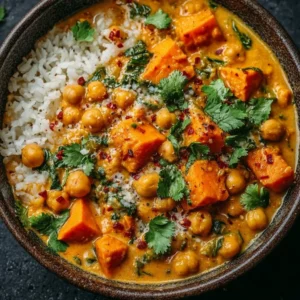
The first time I made this sweet potato and chickpea curry I served it to a skeptical friend who declared it "restaurant-level" before the first bite was even finished.
It’s the kind of weeknight recipe that looks and tastes like you spent hours on it, but comes together in under an hour.
Rich coconut, warming spices, and tender sweet potatoes make this a bowl that feels both comforting and bright.
This recipe is forgiving, pantry-friendly, and scales easily for meal prep or a dinner party.
Why You’ll Love This Recipe
- Ready in about 35–45 minutes from start to finish.
- Naturally plant-based and hearty enough for meat-eaters and vegans alike.
- Uses canned pantry staples for speed, with fresh aromatics for depth.
- One-pot cooking means minimal cleanup.
The texture and taste balance is what makes this dish stand out: creamy coconut sauce coats soft but not mushy sweet potatoes and slightly firm chickpeas, while the sautéed onion, garlic, and ginger add a fresh backbone. The spices—curry powder and cumin—bring warmth without heat, so you get a cozy flavor that’s easily customized with chiles or lemon.
"Five stars — I doubled it for a family dinner and everyone asked for seconds. Simple, cozy, and the leftovers actually taste better." — Hannah, reader
Key Ingredients
Sweet potatoes — Choose firm, dry sweet potatoes with deep orange flesh for the best starch-to-sugar balance. They break down enough to thicken the curry slightly but still hold shape when diced into 1/2–3/4-inch cubes.
Chickpeas — Canned chickpeas add protein, body, and a pleasant bite. Drain and rinse them well to remove excess sodium and any canning liquid that can thin the sauce; if you prefer, use low-sodium cans or cook your own chickpeas from dried for a firmer texture.
Coconut milk — Full-fat canned coconut milk provides creaminess and richness that contrasts the sweet potatoes. Shake the can well before opening; brands like Aroy-D or native-style coconut milk yield a richer flavor, but any 14 oz can will work.
Curry powder — A good-quality curry powder is a shortcut to complex flavor. Look for blends with turmeric, coriander, fenugreek, and mustard seed; freshly purchased or recently opened curry powder tastes brighter than one that’s been in the pantry for years.
Full ingredient list:
- 2 medium sweet potatoes, peeled and diced
- 1 can (15 oz) chickpeas, drained and rinsed
- 1 can (14 oz) coconut milk
- 1 onion, chopped
- 2 cloves garlic, minced
- 1 inch ginger, grated
- 1 tablespoon curry powder
- 1 teaspoon cumin
- Salt and pepper to taste
- 2 tablespoons olive oil
- Fresh cilantro for garnish
Step-by-Step Instructions
Step 1: Heat the oil and sweat the aromatics
Warm 2 tablespoons of olive oil in a large pot over medium heat. Add the chopped onion, minced garlic, and grated ginger and sauté until the onion is translucent and fragrant, about 5 minutes.
Pro Tip: Watch the garlic closely—add it after the onion softens a bit to avoid burning. You’ll know it’s ready when the onion turns glossy and soft with a sweet, mellow aroma.
Step 2: Bloom the spices
Stir in 1 tablespoon curry powder and 1 teaspoon cumin. Cook everything for about 30–60 seconds until the spices are fragrant and cling to the aromatics.
Pro Tip: Cooking the spices briefly in the hot oil unlocks their essential oils and deepens flavor. If the pot looks dry, add a splash of the coconut milk to deglaze and capture any browned bits.
Step 3: Add sweet potatoes and chickpeas
Add the diced sweet potatoes and the drained chickpeas to the pot, tossing to coat them evenly with the spiced onion mixture.
Pro Tip: Cut the sweet potatoes into uniform pieces so they cook at the same rate. If you want smaller chunks that break down more, dice finer; larger chunks yield more distinct bites.
Step 4: Add coconut milk and simmer
Pour in the 14 oz can of coconut milk and bring the mixture to a gentle simmer. Reduce heat, cover, and cook for about 20 minutes.
Pro Tip: Keep the simmer gentle—vigorous boiling can make the coconut milk separate. You’ll know it’s done when the sweet potatoes are tender and a fork slides through easily.
Step 5: Season and finish
Remove the lid, season with salt and pepper to taste, and simmer uncovered for a few minutes if you want the sauce thicker. Finish with a handful of chopped fresh cilantro just before serving.
Pro Tip: Adjust salt slowly—canned chickpeas can vary in sodium. A squeeze of lime or a pinch of sugar can round flavors if the curry tastes one-note.

Expert Tips for Success
- Heat control matters. Use medium heat to sweat the onions and aromatics; too hot and the garlic will scorch, too low and you won’t extract full flavor. Aim for a gentle sizzle rather than a furious fry.
- Choose your coconut milk with intent. Full-fat gives silkier texture and body; light versions thin the sauce. For an extra glossy finish, stir a tablespoon of coconut cream or a splash of neutral oil at the end.
- Texture is everything with sweet potatoes. Dice them into even pieces and check doneness after 15 minutes; older or larger sweet potatoes can take longer. If the cubes are falling apart, reduce your simmer time next cook.
- Rinse your chickpeas. Canned liquid contains starch and salt; rinsing prevents the curry from tasting tinny and removes excess sodium. If using home-cooked chickpeas, add them toward the end to avoid over-softening.
- Spice layering deepens flavor. Add a pinch of smoked paprika, a teaspoon of garam masala at the end, or a bay leaf during simmer to introduce complexity without adding heat.
- Adjust consistency intentionally. If the curry is too thin, simmer uncovered to concentrate flavors. If too thick, stir in a splash of water, vegetable broth, or reserved coconut milk until you reach the desired texture.
- Use fresh aromatics. Fresh ginger and garlic give a brighter taste than powdered versions. Grate ginger rather than chopping for better distribution and more immediate flavor release.
- Equipment choice affects outcome. A wide, heavy-bottomed pot encourages even cooking and helps evaporate liquid to the right consistency. Nonstick works, but stainless or enameled cast iron gives better browning and fond development.
- Make it ahead—flavors deepen overnight. If possible, refrigerate the curry for a few hours before serving; reheat gently and stir in fresh cilantro and a splash of coconut milk to refresh the top layer.
- Balance the dish. If the curry leans sweet from the potatoes and coconut, brighten it with acid—lime juice, tamarind, or a dollop of plain yogurt (or plant-based yogurt for vegan) just before serving.
Storage & Freezing
Fridge: Cool the curry to room temperature within two hours and store in an airtight container. It will keep well for 3–4 days. Reheat on the stove over low heat, stirring occasionally to prevent sticking.
Freezer: Cool completely and transfer to freezer-safe containers or heavy-duty freezer bags. Freeze flat for easier stacking; the curry will keep up to 3 months.
Thawing & reheating: Thaw overnight in the fridge for best texture. Reheat gently on the stovetop over low-to-medium heat, adding a splash of water or coconut milk if the sauce thickened. Avoid high heat which can separate the coconut fat.
Serving from frozen: You can reheat directly from frozen in a covered pot on low heat, stirring more often and adding liquid as needed. Taste and adjust salt, acid, and cilantro after reheating.
Variations & Substitutions
Add greens: Stir in a couple of handfuls of baby spinach or chopped kale during the last 3–5 minutes for a color and nutrient boost. Spinach wilts quickly and is a classic pairing.
Make it spicy: Add 1 chopped green chili at step 1 or a pinch of cayenne with the spices. Alternatively, finish with chili oil or crushed red pepper flakes to taste.
Swap the protein: Use cubed firm tofu or cooked lentils instead of chickpeas. Lentils need less cooking time and will absorb the sauce, while tofu benefits from a quick pan-sear before mixing in.
Lower the carbs: Replace half the sweet potato with cauliflower florets for a lower-carb version. Cauliflower holds up well and soaks up the curry flavors.
Frequently Asked Questions
Q: Can I make this curry oil-free?
A: Yes. Use a splash of vegetable broth to soften the onion, garlic, and ginger instead of olive oil. Cook slowly to avoid sticking and add a small amount of coconut milk earlier to keep the pot lubricated.
Q: Is this dish gluten-free?
A: Absolutely. All ingredients here are naturally gluten-free, but always check your curry powder label for any cross-contamination or added wheat-based fillers if you’re cooking for someone with celiac disease.
Q: Can I use fresh coconut instead of canned coconut milk?
A: You can, but it’s more work. Fresh coconut yields a lighter, potentially less consistent texture than canned full-fat coconut milk. If using fresh, aim to emulsify the flesh with hot water and strain to get a creamy consistency.
Q: How can I make this more filling for meal prep?
A: Serve over brown rice, quinoa, or with naan for carbs and extra texture. Adding a side of roasted cauliflower or a scoop of cooked barley can bulk it up while keeping it hearty and satisfying.
Q: Will this recipe work in a slow cooker or Instant Pot?
A: Yes. For a slow cooker, sauté aromatics briefly, then combine all ingredients and cook on low 4–5 hours. In an Instant Pot, use the sauté function for the aromatics and spices, add liquids and sweet potatoes, then pressure cook for 5–6 minutes with a quick release.
Final Thoughts
This sweet potato and chickpea curry is my go-to for busy weeks and casual dinner guests—simple, forgiving, and comfortingly flavorful.
If you try it, please leave a star rating in the recipe card below or pin this to your favorite boards for later.
Conclusion
If you liked this version and want to experiment with greens or slightly different spice blends, try the spinach-studded take in this recipe from Sweet Potato, Chickpea and Spinach Coconut Curry for inspiration.
For another widely praised variation and extra serving suggestions, check out this tested guide at Vegan Sweet Potato Chickpea Curry Recipe.
Sweet Potato and Chickpea Curry
Ingredients
Vegetables
- 2 medium sweet potatoes, peeled and diced Choose firm, dry sweet potatoes with deep orange flesh.
- 1 can (15 oz) chickpeas, drained and rinsed Rinse well to remove excess sodium.
- 1 onion, chopped
- 2 cloves garlic, minced Add later to avoid burning.
- 1 inch ginger, grated Grate ginger for better flavor release.
Liquids and Seasonings
- 1 can (14 oz) coconut milk Full-fat recommended for creaminess.
- 1 tablespoon curry powder Use a good-quality blend.
- 1 teaspoon cumin
- to taste salt and pepper
- 2 tablespoons olive oil For sautéing.
Garnish
- to taste fresh cilantro For garnish.
Instructions
Preparation
- Heat 2 tablespoons of olive oil in a large pot over medium heat. Add the chopped onion, minced garlic, and grated ginger. Sauté until the onion is translucent and fragrant, about 5 minutes.
- Stir in 1 tablespoon curry powder and 1 teaspoon cumin. Cook for about 30–60 seconds until the spices are fragrant.
- Add the diced sweet potatoes and drained chickpeas to the pot, tossing to coat with the spiced onion mixture.
- Pour in the coconut milk and bring the mixture to a gentle simmer. Cover and cook for about 20 minutes.
- Remove the lid, season with salt and pepper to taste, and simmer uncovered for a few minutes to thicken the sauce. Garnish with fresh cilantro before serving.