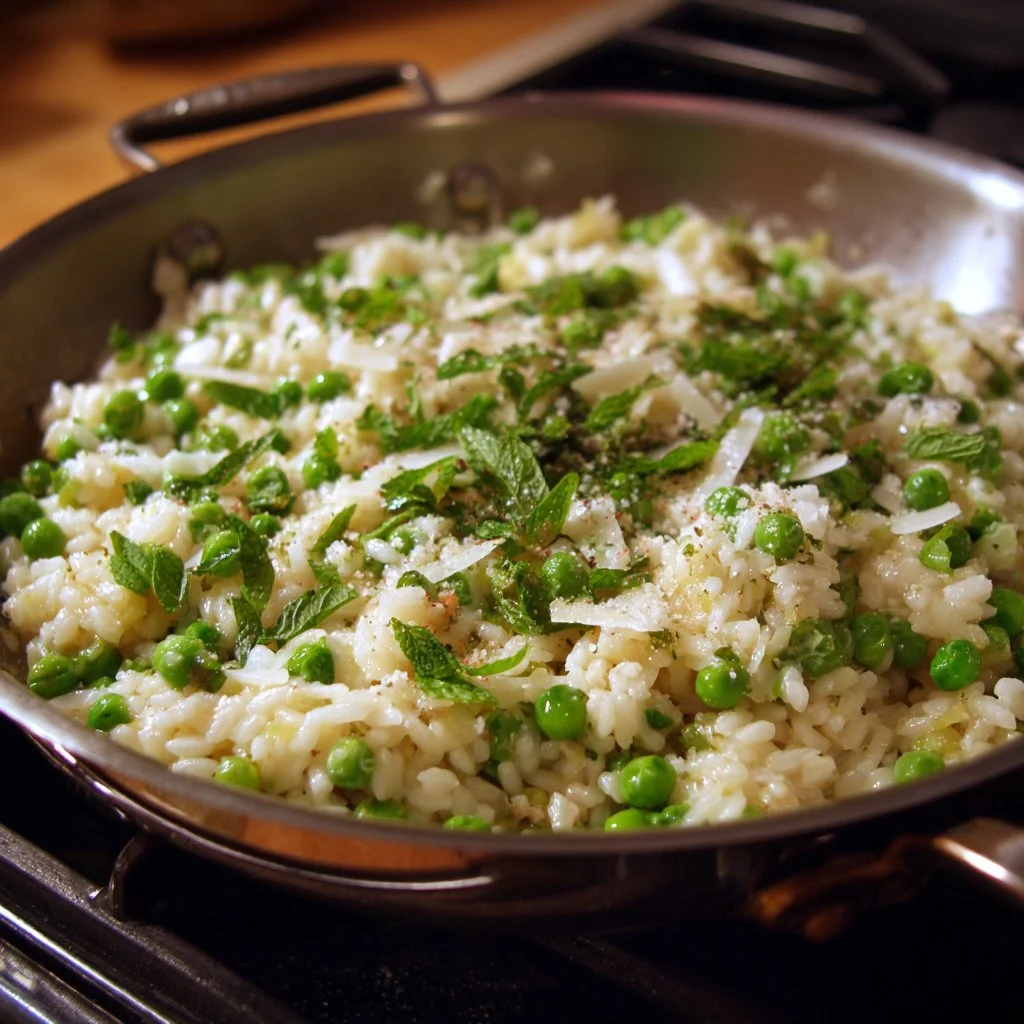
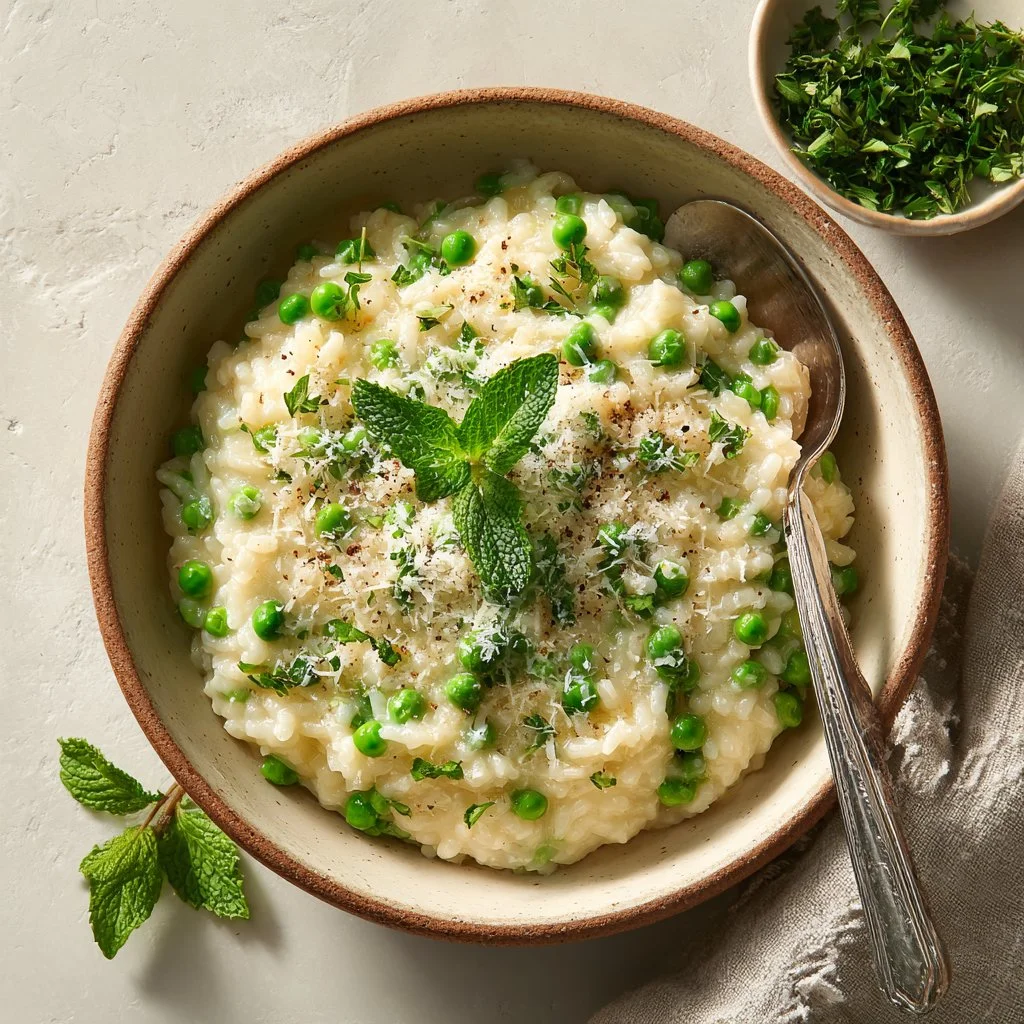
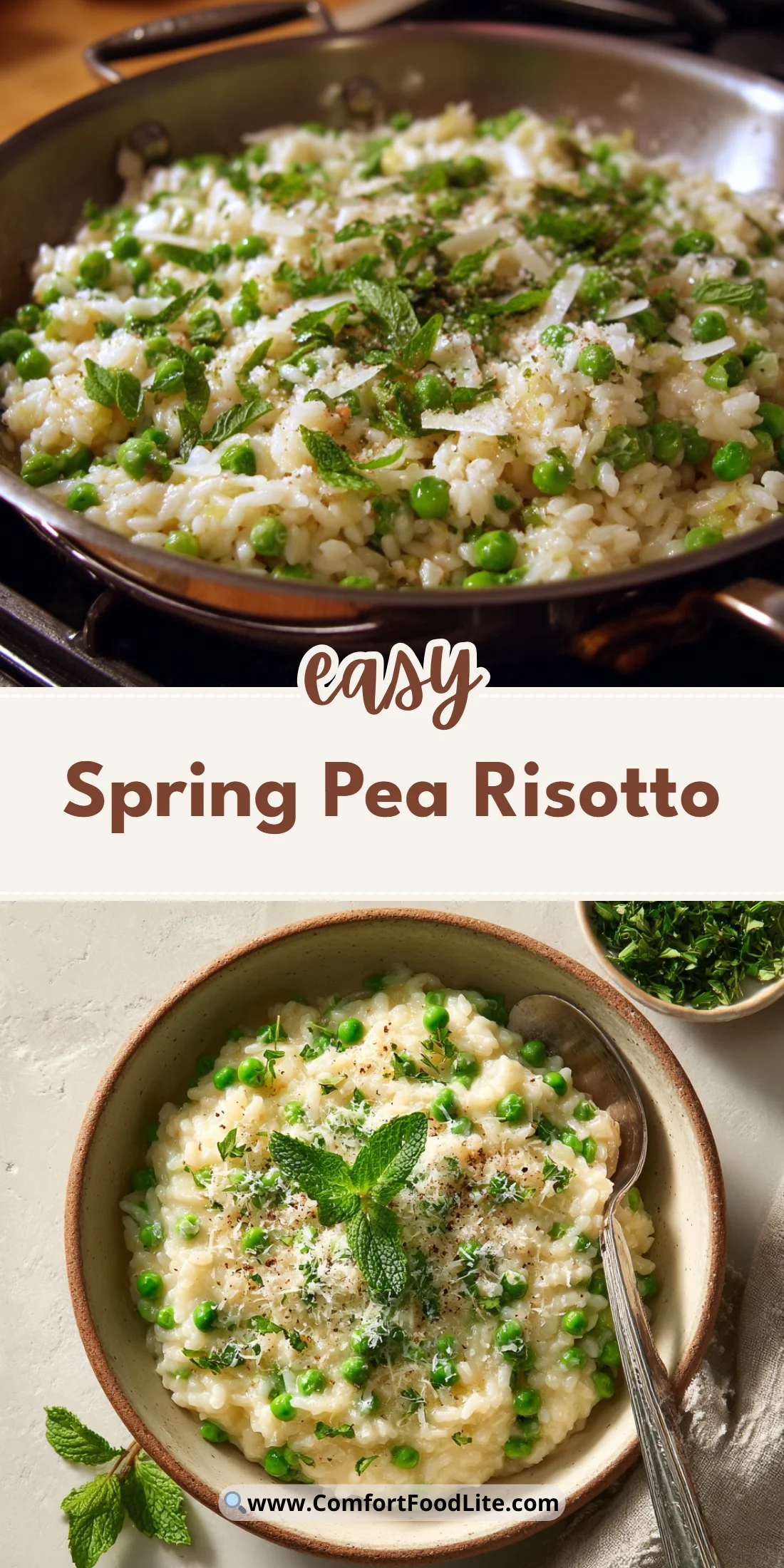
Bright, glossy, and utterly comforting, this Spring Pea Risotto is the kind of dish that makes simple ingredients sing. It’s quick enough for a weeknight yet elegant enough for a dinner party.
Fresh peas and mint brighten the creamy rice, and a hit of Parmesan ties everything together. Read on for why this version works every time and how to nail the texture.
For a light seasonal menu pairing, try a crisp salad alongside it and serve with lemon wedges for extra lift. This asparagus chickpea quinoa salad is a great companion.
Why You’ll Love This Spring Pea Risotto
– Bright, seasonal flavor that feels fresh, not heavy.
– Silky, creamy texture without adding cream.
– Uses pantry staples plus a handful of peas.
– Fast-ish: about 30 minutes from start to finish.
– Flexible—easy to adapt for vegans or add proteins.
– Great make-ahead base for weeknight dinners.
– Impressive-looking plate with minimal effort.
The taste is sweet but savory: sweet spring peas, nutty Parmesan, and a faint onion-garlic backbone. The texture should be luxuriously creamy with individual grains of rice that remain slightly firm in the center.
"This Spring Pea Risotto was restaurant-quality at my kitchen table—silky, bright, and perfectly seasoned. Five stars!" — A happy reader
Key Ingredients for Spring Pea Risotto
Arborio rice
Arborio is a short-grain Italian rice that releases starch as it cooks, which creates the creamy texture risotto is famous for. Buy good-quality Arborio (not sushi or long-grain) and check the harvest date if possible; fresher rice yields more predictable cooking times. Substitute with Carnaroli for an even creamier, more forgiving result; do not use basmati or jasmine.
Vegetable broth
Warm, flavorful broth is the cooking liquid that infuses the rice; it should be hot so the cooking temperature stays steady. Use low-sodium broth so you can control salt, and if using store-bought, taste and adjust. If you swap for water, add extra seasoning and a bay leaf while simmering to deepen flavor.
Peas (fresh or frozen)
Peas bring sweetness, color, and a spring lift to this risotto. Frozen peas are fine and convenient—no need to thaw before stirring in—and preserve sweetness if frozen at peak ripeness. If you replace peas with asparagus tips or edamame, the texture and sweetness change, so adjust cooking time and salt.
Parmesan cheese
Freshly grated Parm adds umami and helps bind the risotto into a silky finish. Buy a wedge and grate it yourself; pre-grated powders contain anti-caking agents that can affect melting and texture. For a vegan alternative, use nutritional yeast plus a touch of cashew cream.
Full Ingredient List for Spring Pea Risotto
– 1 cup Arborio rice
– 4 cups vegetable broth
– 1 cup fresh or frozen peas
– 1 small onion, chopped
– 2 cloves garlic, minced
– 1/2 cup white wine
– 1/2 cup grated Parmesan cheese
– 2 tablespoons olive oil
– Salt and pepper to taste
– Fresh mint or parsley for garnish
Step-by-Step Instructions for Spring Pea Risotto
Step 1: Heat the vegetable broth and keep it warm over low heat.
Bring the 4 cups of vegetable broth to a simmer in a saucepan and reduce to the lowest warm setting; you’ll be ladling this into the rice. Keeping the broth warm prevents the cooking temperature from dropping each time you add liquid, which maintains even starch release.
Pro Tip: The broth should steam gently but not boil; a faint shimmer is the visual cue.
Step 2: Sauté the onion and garlic in olive oil until translucent.
In a large skillet, heat 2 tablespoons of olive oil over medium heat. Add the chopped onion and minced garlic and cook until softened and translucent, about 3–4 minutes; don’t let the garlic brown or it will taste bitter.
Pro Tip: The smell should be sweet and savory, with no bitter or burnt notes.
Step 3: Toast the Arborio rice for 2–3 minutes.
Add the Arborio rice to the skillet and stir constantly for 2–3 minutes until the grains look glossy and lightly toasted at the edges. This step helps each grain stay distinct and jump-starts the starch-release process.
Pro Tip: The rice should look glossy and slightly translucent at the edges—no browning.
Step 4: Pour in the white wine and stir until absorbed.
Add 1/2 cup white wine and stir until the rice has absorbed the liquid. The alcohol will cook off, leaving a bright acidity that balances the creaminess.
Pro Tip: The skillet should smell tangy and fresh; the rice will appear slightly drier when the wine is absorbed.
Step 5: Add warm broth one ladle at a time, stirring frequently for 18–20 minutes.
Ladle in about 1/2 cup of warm broth at a time, stirring frequently and waiting until the liquid is mostly absorbed before adding the next ladle. Continue this gradual addition for roughly 18–20 minutes until the rice is creamy and near al dente.
Pro Tip: The risotto should look loose and saucy, not dry; it will spread slowly when tilted.
Step 6: Stir in the peas and Parmesan, season to taste.
When the rice is creamy and al dente, stir in 1 cup peas and 1/2 cup grated Parmesan. Season with salt and pepper, tasting as you go. The residual heat will cook frozen peas; fresh peas may need a minute to soften.
Pro Tip: The color should be vivid green from the peas and a glossy sheen from the cheese.
Step 7: Serve warm, garnished with fresh mint or parsley.
Spoon the risotto onto plates or into bowls and garnish with torn mint or chopped parsley for a refreshing finish. Serve immediately for the best texture.
Pro Tip: The finished risotto should be warm through, slightly loose, and scoopable—not stodgy or gluey.
Expert Tips for Spring Pea Risotto
– Keep the broth hot: always add warm broth to maintain a steady cooking temperature and predictable starch release.
– Stir often but not constantly: frequent stirring encourages creaminess, but a gentle pause between stirs lets the grains settle.
– Watch texture, not time: start tasting at 15 minutes; Arborio ages differently, so use chew (al dente) as your guide.
– Use the right equipment: a heavy-bottomed skillet or wide sauté pan gives even heat and more surface area for evaporation.
– Avoid overbaking the onion and garlic: translucent, not browned, prevents bitter flavors.
– Finish off-heat with cheese: add Parmesan after removing from heat so it melts smoothly and the mixture stays glossy.
– Common mistake — adding too much broth at once: that creates a soupy, undercooked center. Add in measured ladles.
– If it turns gluey: fold in a splash of hot broth or a pat of butter and serve immediately; prolonged sitting tightens the starch.
Storage & Freezing for Spring Pea Risotto
Fridge storage: Cool risotto to room temperature within an hour and transfer to an airtight container. Store for up to 3 days.
Freezer storage: Portion into shallow, freezer-safe containers and freeze for up to 1 month. Use small portions for fastest thawing and reheating.
Thawing: Thaw overnight in the refrigerator for best results, or reheat from frozen on low heat with added broth.
Reheating: Gently reheat on the stovetop with a splash of warm broth, stirring to restore creaminess. Avoid microwave reheating without adding liquid; it tends to dry the rice.
Best containers: Use glass or BPA-free plastic with tight lids for fridge storage and rigid containers for the freezer to prevent freezer burn.
Variations & Substitutions for Spring Pea Risotto
Pea and lemon risotto
Add zest and a squeeze of lemon when finishing to brighten the dish. The citrus cuts the richness and gives a sunny, spring flavor.
Pea and mint vegan risotto
Swap Parmesan for a mix of nutritional yeast and blended cashews, and finish with olive oil instead of butter. The result is creamy with a slightly nutty, cheesy note without dairy.
Pea and prosciutto risotto
Stir in torn prosciutto at the end or crisp slices in a pan and top the risotto for salty, savory contrast. This yields a richer, more celebratory main course.
Pea and spring vegetable risotto
Add blanched asparagus tips or peas plus thinly sliced leeks during the final few minutes. This makes the risotto heartier and showcases seasonal produce—perfect for a vegetable-forward plate. For another fresh side idea, try pairing with this chickpea feta avocado salad.
Frequently Asked Questions About Spring Pea Risotto
What rice is best for Spring Pea Risotto?
Use Arborio or Carnaroli; both are high-starch, short-grain rices that release starch and create the creamy texture risotto requires. Carnaroli is slightly firmer and more forgiving, while Arborio is widely available and reliable.
Can I make Spring Pea Risotto ahead of time?
You can prepare risotto up to the point of finishing and refrigerate for up to 24 hours. Reheat gently with warm broth and stir in the peas and cheese just before serving to refresh texture.
How do I fix risotto that’s too thin or too thick?
If too thin, simmer uncovered for a few minutes to reduce, or stir in a small handful of grated Parmesan to thicken. If too thick, stir in warm broth a tablespoon at a time until the desired loose, saucy consistency returns.
Are frozen peas okay to use in Spring Pea Risotto?
Yes—frozen peas are an excellent, convenient option and are often frozen at peak ripeness. Add them at the end to cook through with residual heat or stir and cook for 1–2 minutes if you prefer them warmer.
Can I add protein to Spring Pea Risotto?
Absolutely. Fold in cooked shrimp, seared chicken, or flaked fish toward the end of cooking. Alternatively, top with crispy pancetta or prosciutto for salty contrast while keeping the risotto vegetarian if you choose.
Final Thoughts on Spring Pea Risotto
If you loved this Spring Pea Risotto, please leave a star rating in the recipe card below and pin this recipe to your favorite board. For more inspiration and a slightly different take, check out this flavorful Spring Pea Risotto Recipe – Barley & Sage, a gorgeous variation with bright herbs.
If you want a version that pairs seafood and savory accents, this Spring Pea Risotto | Feasting At Home has great technique and plating ideas. For another Parmesan-and-herb riff, see this Spring Pea Risotto with Parmesan & Basil – The Original Dish.
Spring Pea Risotto
Ingredients
Main ingredients
- 1 cup Arborio rice Short-grain Italian rice; can substitute with Carnaroli.
- 4 cups vegetable broth Warm and low-sodium for best flavor.
- 1 cup fresh or frozen peas Frozen peas are convenient; do not thaw.
- 1 small onion, chopped Provides flavor base.
- 2 cloves garlic, minced Adds aromatic flavor.
- 1/2 cup white wine Brightens the dish.
- 1/2 cup grated Parmesan cheese Add freshly grated for best texture.
- 2 tablespoons olive oil For sautéing the onion and garlic.
- Salt and pepper to taste
- Fresh mint or parsley for garnish Optional for serving.
Instructions
Preparation
- Heat the vegetable broth and keep it warm over low heat.
- Sauté the onion and garlic in olive oil until translucent.
- Toast the Arborio rice for 2–3 minutes.
- Pour in the white wine and stir until absorbed.
- Add warm broth one ladle at a time, stirring frequently for 18–20 minutes.
- Stir in the peas and Parmesan, season to taste.
- Serve warm, garnished with fresh mint or parsley.