
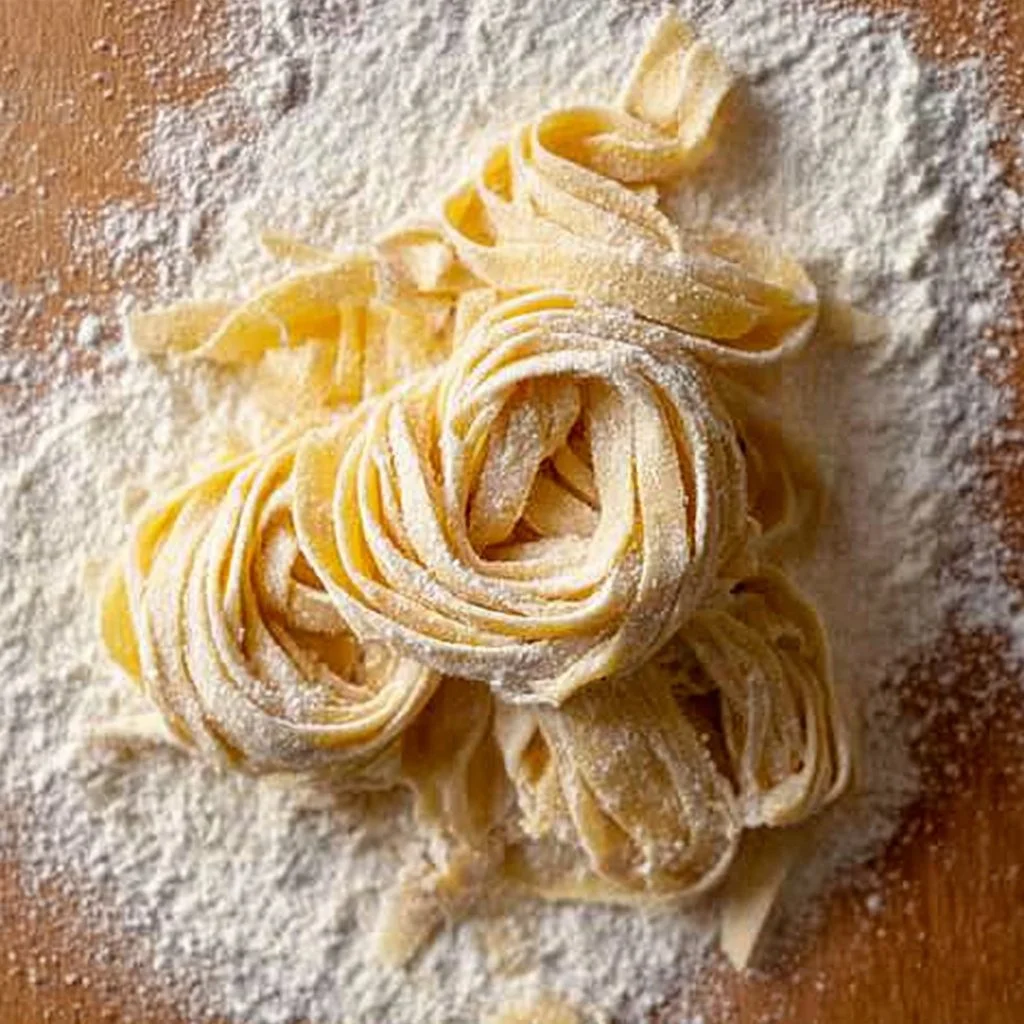
I first tried sourdough pasta on a rainy weekend and never looked back. This is a simple, tangy, and surprisingly forgiving dough that uses your active sourdough starter to add depth and texture to fresh pasta. It’s great for using up starter discard or for turning a jar of bubbly starter into something both rustic and elegant.
Why you’ll love this dish
Sourdough pasta turns pantry staples into a pasta with subtle acidity and more complex flavor than plain egg pasta. It’s ideal when you want something homemade without needing weird ingredients. Make it for a relaxed weekend dinner, a special date night with a simple brown-butter sage sauce, or whenever you want to impress without a lot of fuss.
“The tang from the starter brightens every bite — light, elastic noodles with a flavor you can’t get from store-bought pasta.” — a happy home cook
Benefits at a glance:
- Uses everyday ingredients: flour, eggs, and your starter.
- Flexible timing: dough can rest overnight for deeper flavor.
- Great for reducing waste: works well with sourdough discard (see notes below).
The cooking process explained
Before you dive in, here’s a quick roadmap so you know what to expect:
- Mix flour and salt, add starter and eggs into a well.
- Bring the mixture together into a shaggy dough; hydrate if needed.
- Knead until smooth and elastic (5–10 minutes).
- Refrigerate wrapped for at least 12 hours to let the starter ferment the dough.
- Roll the dough thin and cut into your preferred shape.
- Cook briefly (2–4 minutes) until al dente.
This recipe is mostly hands-on for mixing and kneading, then mostly hands-off while the dough ferments.
What you’ll need
- 2 cups all-purpose flour (sub: 00 flour for silkier texture; up to 25–30% whole wheat for a nuttier flavor)
- 1 cup active sourdough starter (100% hydration is assumed; if using a stiff starter, you may need a little more water)
- 2 large eggs (room temperature)
- 1/2 teaspoon salt
- Water as needed (start with a tablespoon and add sparingly)
Notes on ingredients:
- Starter: Ideally feed it the day before so it’s active and bubbly. You can use discard, but texture and rise may be milder.
- Eggs: If you need an egg-free version, see the Variations section for options.
- Flour: All-purpose works great. 00 gives a silkier bite; whole-wheat adds chew and flavor but can make the dough denser.
Directions to follow
- Put the flour and salt in a large bowl and stir to combine. Make a well in the center.
- Add the sourdough starter and eggs into the well.
- Mix with a fork or your fingers, pulling flour from the sides into the center until a dough forms. If it looks dry, add water a teaspoon at a time.
- Turn the dough onto a floured surface and knead 5–10 minutes until smooth and elastic. It should spring back slightly when pressed.
- Wrap the dough tightly in plastic wrap and refrigerate for at least 12 hours to ferment. Overnight is ideal for flavor development.
- After fermentation, unwrap and let the dough return to room temperature for 20–30 minutes. Roll it out to your desired thickness and cut into noodles, sheets, or shapes. Cook in boiling salted water for 2–4 minutes until al dente, then drain.

Best ways to enjoy it
- Classic: Toss with browned butter and fresh sage, finish with flaky salt and grated Parmesan.
- Light option: Olive oil, lemon zest, toasted breadcrumbs, and parsley.
- Hearty: Ragù or Bolognese clings beautifully to the slightly chewy strands.
- Fresh herb butter or a silky cream sauce also complements the tang of the starter.
Serve with a crisp salad and a glass of white wine for balance. For plating, twirl a nest of pasta in the center, top with a thin drizzle of sauce, and finish with microgreens or grated cheese for a restaurant-finish look.
Storage and reheating tips
- Uncooked pasta: Dust with semolina or flour, spread in a single layer, and freeze on a tray. Once solid, transfer to a sealed bag for up to 2 months. Cook from frozen; add an extra 30–60 seconds to the cooking time.
- Cooked pasta: Keep in an airtight container in the fridge for 3–4 days. Reheat gently in a skillet with a splash of sauce or a little olive oil to avoid drying out.
- Safety: Because this dough contains eggs, store uncooked and cooked pasta properly chilled. If you leave freshly made pasta at room temperature, keep the time under two hours to limit bacterial growth.
Pro chef tips
- Hydration check: Starter hydration varies. If your dough feels too stiff, add water a teaspoon at a time. Aim for a tacky but not sticky dough.
- Knead smart: Use the “poke and hold” test — the dough should slowly spring back and hold a slight indentation before you stop kneading.
- Resting warms: Letting the chilled dough sit 20–30 minutes before rolling makes it easier to roll thin without springing back.
- Roll thin: For delicate bites, roll to nearly translucent for tagliatelle or sheets for lasagna.
- Use semolina for dusting: It prevents sticking and gives a pleasant texture on the pasta surface.
- Flour choices: If you switch to whole-wheat, add a splash more water and knead a bit longer to develop gluten.
Creative twists
- Herb-infused dough: Fold finely chopped basil, spinach purée, or parsley into the dough for color and flavor.
- Cheese pasta: Replace up to 1/4 cup of flour with finely grated Parmesan for savory depth.
- Gluten-free: Use a blend of brown rice flour, tapioca starch, and xanthan gum — expect a different texture and adjust hydration.
- Egg-free: Substitute each egg with 1/4 cup water plus 1 tablespoon oil or use a commercial egg replacer; kneading and resting times will vary.
- Stuffed options: Roll thinner, cut squares, and use as a base for filled agnolotti or ravioli (seal well).
Common questions
Q: Can I use discard starter instead of an active feed?
A: Yes. Discard works, but the dough may have a milder tang and slower fermentation. If you want stronger flavor and more lift, use a recently fed, bubbly starter.
Q: How long should I ferment the dough?
A: The recipe calls for at least 12 hours in the fridge. Overnight (12–24 hours) is ideal. Longer fermentation increases tang but can weaken structure if you go much beyond 48 hours.
Q: Do I need to bring the dough to room temperature before rolling?
A: It helps. Chilled dough can be stiffer and harder to roll thin. Let it sit 20–30 minutes at room temperature before rolling.
Q: How long does homemade pasta take to cook?
A: Fresh sourdough pasta cooks quickly — typically 2–4 minutes. Check for al dente by tasting a strand; it should be cooked through but still slightly firm.
Q: Can I freeze the dough?
A: Yes. Wrap tightly and freeze for up to 1 month. Thaw in the fridge overnight and bring to room temperature before rolling.
Conclusion
If you want more technique notes or variations to compare, this Best Sourdough Pasta {1-hour or Overnight} – The Clever Carrot post is a great deep dive into timing options. For another approachable take with same-day and long-fermented versions, check out Easy Sourdough Pasta Recipe ~ Same day or Long-Fermented for extra inspiration.
Sourdough Pasta
Ingredients
Pasta Ingredients
- 2 cups all-purpose flour Substitute with 00 flour for a silkier texture or whole wheat for a nuttier flavor.
- 1 cup active sourdough starter 100% hydration is assumed; add more water if using a stiff starter.
- 2 large eggs Use room temperature eggs or see the Variations section for egg-free options.
- 1/2 teaspoon salt
- 1 tablespoon water Add more as needed, a teaspoon at a time if the mixture looks dry.
Instructions
Preparation
- Put the flour and salt in a large bowl and stir to combine. Make a well in the center.
- Add the sourdough starter and eggs into the well.
- Mix with a fork or your fingers, pulling flour from the sides into the center until a dough forms. If it looks dry, add water a teaspoon at a time.
Kneading
- Turn the dough onto a floured surface and knead for 5-10 minutes until smooth and elastic. It should spring back slightly when pressed.
Fermentation
- Wrap the dough tightly in plastic wrap and refrigerate for at least 12 hours to ferment. Overnight is ideal for flavor development.
Rolling and Cutting
- After fermentation, unwrap and let the dough return to room temperature for 20-30 minutes.
- Roll it out to your desired thickness and cut into noodles, sheets, or shapes.
Cooking
- Cook in boiling salted water for 2-4 minutes until al dente, then drain.