I make a batch of these sourdough discard naans whenever I have a little leftover starter and a craving for warm, pillowy flatbread. They’re quick, forgiving, and take the tangy flavor of discard and turn it into something everyone at the table will fight over—perfect for busy weeknights, last-minute dinner parties, or as a way to avoid wasting starter.
Why you’ll love this dish
This recipe turns sourdough discard into fast, tender naan without long fermentation. It uses common pantry ingredients and comes together in under 30 minutes, so it’s ideal when you want fresh bread without planning ahead. The yogurt and olive oil keep the dough soft and slightly tangy; baking powder and baking soda give immediate lift so you get bubbles and puff even with discard.
“Soft, buttery, and just tangy enough — a no-fuss bread that tastes like you spent hours in the kitchen.” — home cook review
Reasons to try it:
- Saves sourdough discard from the bin and transforms it into a delicious component for meals.
- Fast: mix, rest 10 minutes, and cook — dinner in under 30 minutes.
- Kid-friendly and customizable (garlic butter, za’atar, or sesame seeds).
- Requires no oven or special equipment: a hot skillet or griddle is enough.
Preparing Sourdough Discard Naan
Step-by-step overview:
- Mix dry ingredients (flour, baking powder, salt, baking soda).
- Stir in discard, yogurt, water, and oil until a soft, slightly wet dough forms.
- Knead briefly, divide into 8, rest 10 minutes.
- Roll each piece thin (about 1/4 inch) and cook on a very hot skillet until bubbled and browned (1–2 minutes per side).
- Brush with melted butter and stack under foil to keep warm.
This quick overview sets expectations: it’s a short knead, short rest, and fast-cook recipe that yields soft, layered flatbreads.
What you’ll need
- 1 1/2 cups (215 grams) all-purpose flour (use bread flour for a chewier texture)
- 1 teaspoon (5 grams) baking powder
- 3/4 teaspoon (5 grams) salt
- 1/4 teaspoon (2 grams) baking soda
- 1/2 cup (113 grams) sourdough starter discard (unfed or refrigerated discard works fine)
- 1/4 cup (68 grams) whole milk Greek yogurt (plain) — adds tenderness and slight tang; use coconut yogurt for dairy-free but expect different flavor/texture
- 3 tablespoons (45 grams) water (plus a splash if dough seems dry)
- 2 tablespoons (26 grams) olive oil (or neutral oil)
- 2 tablespoons butter, melted (for brushing; clarify or use ghee for higher smoke point)
Ingredient notes:
- Flour: all-purpose is perfect. If substituting whole wheat, add 1–2 tablespoons extra water to compensate.
- Yogurt: the fat helps tenderness; nonfat yogurt will still work but the naan will be less rich.
- Starter discard: no need to feed it; the recipe relies on chemical leavening (baking powder/soda) for lift.
Directions to follow
- In a large bowl, whisk together the flour, baking powder, salt, and baking soda.
- Add the sourdough discard, Greek yogurt, water, and olive oil. Stir with a spoon until it becomes hard to mix.
- Switch to your hands and knead the dough in the bowl for 2–3 minutes. The dough should be on the wetter side but not overly sticky. Add tiny pinches of flour if it’s sticking to your hands, or a teaspoon of water if it’s too dry.
- Divide the dough into 8 equal pieces. Shape each piece into a rough ball, then flatten into discs. Cover and let rest for 10 minutes—this relaxes the gluten and makes rolling easier.
- Heat a skillet or griddle over high heat until very hot. You want a quick sizzle when dough hits the surface. No oil is required on the pan; it can burn the bread.
- On a lightly floured surface, roll each disc into a roughly 1/4-inch thick round.
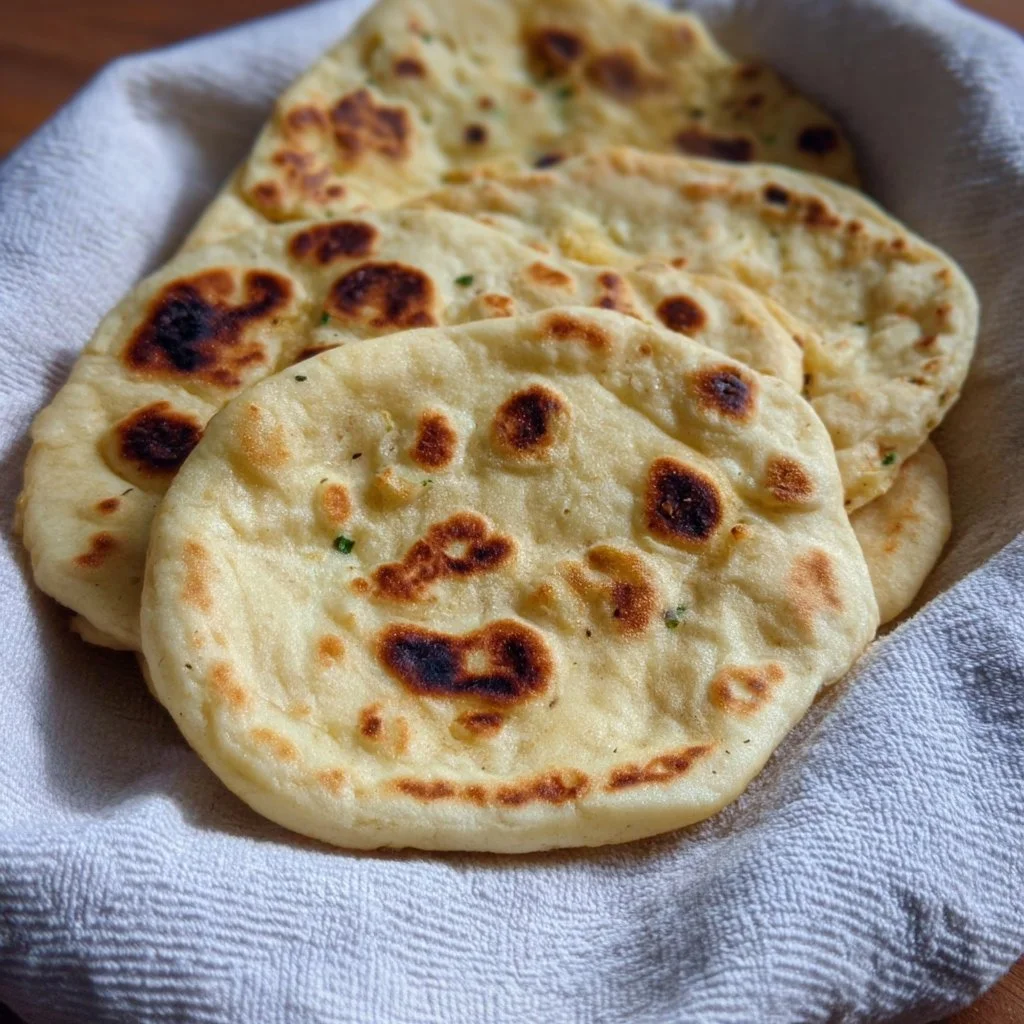
- Place a round onto the hot skillet. After 1–2 minutes you should see bubbles on the top and brown spots forming on the bottom. Flip and cook the other side 1–2 minutes more until puffed and browned.
- Transfer cooked naan to a plate and immediately brush all sides with melted butter. Stack and cover with foil to keep warm and soft.
- Repeat with the remaining dough, brushing each naan with butter as you go.

How to serve Sourdough Discard Naan
Best ways to enjoy it:
- Tear-and-dip: serve warm with hummus, tzatziki, or baba ganoush.
- With curries: classic partner to chicken tikka masala, chana masala, or dal.
- Sandwich-style: stuff with grilled veggies, paneer, or sliced roast chicken and a smear of yogurt sauce.
- Brunch: topped with scrambled eggs and herbs, or spread with butter and honey for a sweet twist.
Plating idea: stack 3–4 warm naans on a shallow basket or plate, brush with extra butter and sprinkle with flaky salt and chopped cilantro. Serve alongside small bowls of dips and pickles.
Storage and reheating tips
Keeping leftovers fresh:
- Short-term: store cooled naans in an airtight container or zip-top bag in the refrigerator for up to 3 days. Reheat in a hot skillet for about 30–60 seconds per side or in a 350°F (175°C) oven wrapped in foil for 5–7 minutes.
- Freezing: layer cooled naans with parchment between them, place in a freezer bag, and freeze up to 2 months. Reheat from frozen in a skillet over medium heat for a couple of minutes per side, or thaw then warm.
- Food safety: don’t leave cooked naan at room temperature more than 2 hours. Refrigerate promptly.
Pro chef tips
Helpful cooking tips:
- Very hot pan = quick blistering and puff. Give your skillet 3–5 minutes to get truly hot. Cast iron or carbon steel works best.
- Dough hydration: aim for a tacky-but-manageable dough. If it slaps your hands, dust lightly with flour. If it’s cracking, add a teaspoon of water.
- Rolling technique: roll from the center outward and rotate the dough to keep it even. Don’t press too thin—1/4 inch yields nice pockets.
- Keep naans soft: stacking and covering with foil traps steam and keeps them pliable. Brush each with butter immediately after cooking.
- For an extra blistered surface, finish briefly over a direct flame (gas stove) with tongs, but watch closely to avoid burning.
Creative twists
Recipe variations:
- Garlic- herb naan: mix 1–2 cloves minced garlic and 1 tablespoon chopped cilantro or parsley into melted butter and brush after cooking.
- Cheesy naan: sprinkle grated mozzarella or crumbled feta on the rolled dough before flipping; cover the pan to melt.
- Whole wheat or spelt: swap half the all-purpose flour for whole wheat and increase water by 1–2 tablespoons.
- Vegan: use dairy-free yogurt and coconut oil or vegan butter for brushing. Texture will be slightly different but still delicious.
- Sesame or nigella seeds: press seeds onto the rolled dough before cooking for a nutty finish.
Common questions
Q: Can I use active starter instead of discard?
A: Yes. Active starter will add a bit more yeast power and tang, but because the recipe relies on baking powder/soda for lift, results are similar. If your active starter is very bubbly, you could slightly reduce baking powder (not necessary).
Q: How long does prep and cook time take?
A: Active hands-on time is about 10–15 minutes. Rest 10 minutes. Cooking each naan takes 2–4 minutes. Plan 20–30 minutes total for a full batch.
Q: Can I bake these in the oven instead of skillet-cooking?
A: You can, but the quick high heat of a skillet gives the best blistering and char. If using an oven, preheat a baking stone or sheet to 500°F (260°C) and bake each naan 3–5 minutes, flipping once if needed.
Q: Is it safe to use refrigerated discard?
A: Absolutely. Refrigerated discard is fine; just stir it so it’s uniform before measuring. There’s no food safety issue if the discard looks and smells normal (no pink/orange hues or mold).
Q: Why both baking powder and baking soda?
A: Baking powder gives initial rise and lift, while a small amount of baking soda reacts with the mildly acidic discard and yogurt to create extra bubbling and softer crumb.
Conclusion
If you want more sourdough discard bread ideas or inspiration for flatbreads, these two resources offer similar quick naan approaches and helpful tips: Easy Sourdough Naan Flatbread Recipe – Little Spoon Farm and Easy Sourdough Discard Naan Recipe – Farmhouse on Boone. These make great companion reads for experimenting with flavors and techniques.

Sourdough Discard Naan
Ingredients
Dry Ingredients
- 1 1/2 cups all-purpose flour Use bread flour for a chewier texture.
- 1 teaspoon baking powder
- 3/4 teaspoon salt
- 1/4 teaspoon baking soda
Wet Ingredients
- 1/2 cup sourdough starter discard Unfed or refrigerated discard works fine.
- 1/4 cup whole milk Greek yogurt Adds tenderness; can use coconut yogurt for dairy-free option.
- 3 tablespoons water Plus a splash if dough seems dry.
- 2 tablespoons olive oil Can use neutral oil.
- 2 tablespoons butter, melted For brushing; clarify or use ghee for higher smoke point.
Instructions
Preparation
- In a large bowl, whisk together the flour, baking powder, salt, and baking soda.
- Add the sourdough discard, Greek yogurt, water, and olive oil. Stir with a spoon until it becomes hard to mix.
- Switch to your hands and knead the dough in the bowl for 2–3 minutes. The dough should be on the wetter side but not overly sticky.
- Divide the dough into 8 equal pieces. Shape each piece into a rough ball, then flatten into discs. Cover and let rest for 10 minutes.
- Heat a skillet or griddle over high heat until very hot. No oil is required on the pan.
Cooking
- On a lightly floured surface, roll each disc into a roughly 1/4-inch thick round.
- Place a round onto the hot skillet. Cook for 1–2 minutes until bubbles form. Flip and cook the other side for 1–2 minutes more.
- Transfer cooked naan to a plate and immediately brush all sides with melted butter. Stack and cover with foil to keep warm.
- Repeat with the remaining dough, brushing each naan with butter.