Bright, fresh, and satisfying — these shrimp spring rolls are the kind of recipe you’ll make again and again. They come together quickly, and the contrast of textures makes every bite exciting.
You can prep most components ahead, which makes them perfect for weeknight dinners or party platters. They’re naturally gluten-free and easy to customize.
If you love crunchy veggies, chilled shrimp, and a creamy peanut dip, this is a winner. Try swapping the herbs or filling for new flavor profiles.
Want a crisp rice-paper alternative? This take shows how to change the finish while keeping the core technique.
Why You’ll Love This Shrimp Spring Rolls
– Light and fresh but surprisingly filling.
– Quick assembly with make-ahead components.
– Naturally gluten-free and low in fat.
– Big flavor from herbs and a tangy peanut dip.
– Kid-friendly and portable for lunches.
– Easy to customize for dietary needs.
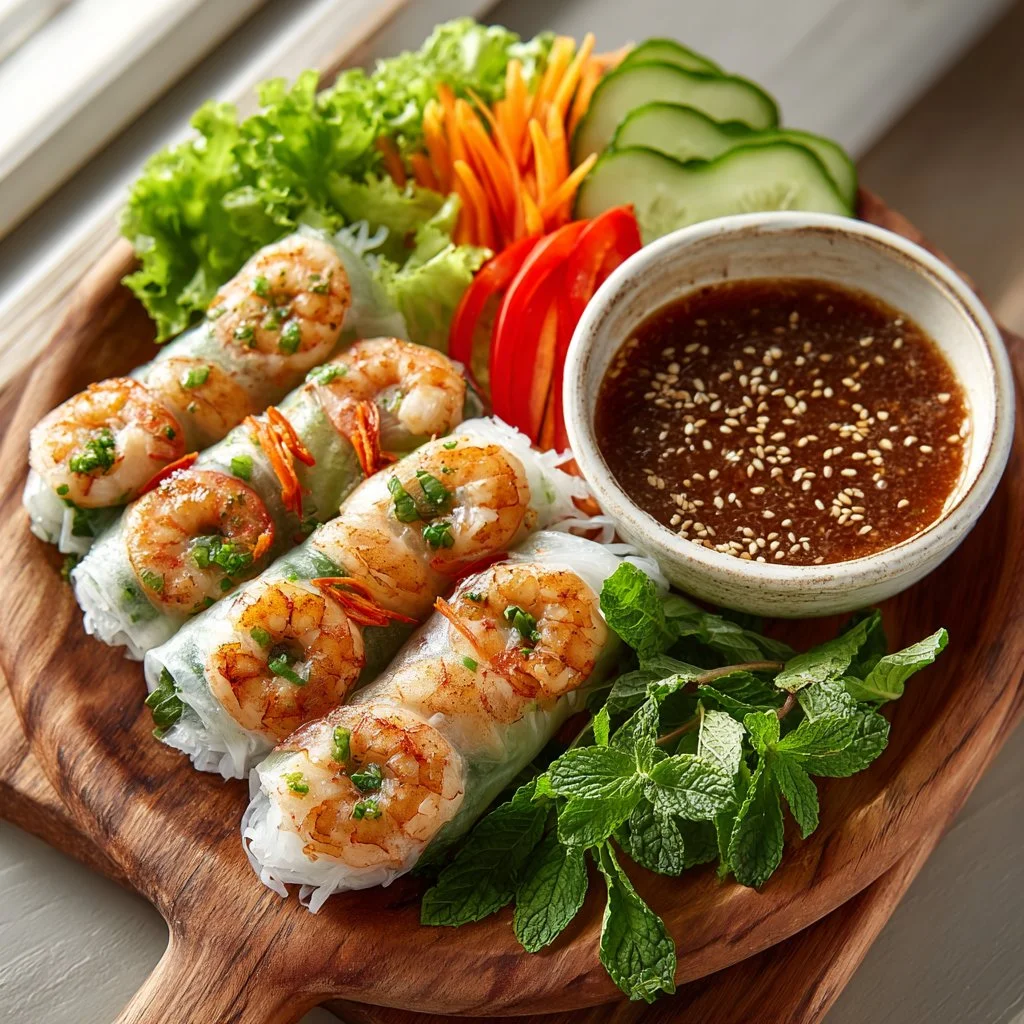
These Shrimp Spring Rolls balance cool, crunchy vegetables with tender shrimp and soft rice vermicelli. Each roll delivers layers: crisp lettuce and bell pepper, silky noodles, fragrant herbs, and a creamy peanut sauce that brightens the whole bite.
"A staple in our house now — bright, easy, and everyone makes their own perfect roll. 5/5!" — a delighted reader
Key Ingredients for Shrimp Spring Rolls
Rice paper wrappers — Rice paper is the structural element. Buy thin, round wrappers labeled for fresh rolls (not fried spring roll wrappers). If you substitute with lettuce leaves, expect a looser, more fragile roll that won’t hold as neatly.
Large cooked shrimp (peeled, deveined, halved) — Shrimp bring substance and a sweet, briny flavor. Choose pre-cooked shrimp that are firm and odor-free; avoid mushy frozen thawed shrimp. If using raw shrimp, cook briefly and cool; if substituting with tofu, press it well and marinate for more flavor.
Rice vermicelli noodles — These add soft bulk and contrast to crunchy veggies. Buy 1–2 mm thin rice vermicelli for the classic texture; overcooking makes them gummy. You can replace them with thin glass noodles or omit for a lower-carb roll, but expect less silkiness.
Fresh herbs (mint and cilantro) — Herbs are essential for the bright aromatic lift. Pick fragrant leaves without dark spots and use stems sparingly. If you swap herbs for basil or Thai basil, the roll will gain a sweeter, peppery note.
Full Ingredient List for Shrimp Spring Rolls
– 12 rice paper wrappers
– 12 large cooked shrimp, peeled, deveined, and sliced in half lengthwise
– 4 oz rice vermicelli noodles
– 1 large carrot, julienned
– 1 small cucumber, julienned
– 1 red bell pepper, thinly sliced
– 1/2 cup fresh mint leaves
– 1/2 cup fresh cilantro leaves
– 4 romaine lettuce leaves, cut into strips
– 1/2 cup peanut dipping sauce
Step-by-Step Instructions for Shrimp Spring Rolls
Step 1: Cook and cool the rice vermicelli for Shrimp Spring Rolls
Prepare rice vermicelli according to package instructions, usually a quick soak in boiling water until tender, then drain and rinse under cold water. Spread them out to cool so they don’t clump together.
Pro Tip: The noodles should feel silky and separate easily; if they stick, rinse longer under cold water until they loosen.
Step 2: Prep shrimp, vegetables, and herbs for Shrimp Spring Rolls
Slice your cooked shrimp in half lengthwise. Julienne the carrot and cucumber and thinly slice the red bell pepper. Lay out herbs and lettuce so everything is within reach for assembly.
Pro Tip: Look for even, thin vegetable strips; visually they should form an even colorful band when laid on the wrapper.
Step 3: Hydrate the rice paper wrappers for Shrimp Spring Rolls
Fill a large bowl with warm (not hot) water. Dip one rice paper wrapper into the water for about 5 seconds — it should become pliable but still slightly firm. Place it flat on a clean work surface.
Pro Tip: The wrapper should feel soft and slightly tacky but not floppy; if it wrinkles excessively, it sat too long in the water.
Step 4: Layer fillings on the wrapper for Shrimp Spring Rolls
Near the bottom third of the softened wrapper, layer a strip of romaine, a small nest of noodles, the julienned vegetables, herbs, and the shrimp halves (curved side up to show color). Keep the pile compact for easier rolling.
Pro Tip: Visually, the filling should span about 1/3 of the wrapper’s width and leave clear margins at the sides for folding.
Step 5: Fold and roll tightly for Shrimp Spring Rolls
Fold the lower edge up over the filling, then fold both sides inward. Roll tightly from the bottom up, keeping pressure to form a neat cylinder like a burrito. Seal the edge with a damp fingertip if needed.
Pro Tip: The finished roll should be snug with no gaping edges; you should see shrimp peeking along the seam if placed correctly.
Step 6: Repeat and store the finished Shrimp Spring Rolls
Repeat with remaining wrappers and fillings. Place finished rolls seam-side down on a platter and cover with a damp towel to prevent drying while you finish the batch.
Pro Tip: Rolls left uncovered will develop dry, white patches; covered rolls stay glossy and pliable.
Step 7: Serve Shrimp Spring Rolls with peanut dipping sauce
Serve immediately with peanut dipping sauce at room temperature. Offer extra herbs and lime wedges for guests who want to brighten their rolls.
Pro Tip: A good serving cue is a glossy peanut sauce and no condensation on the rolls; cold droplets mean they were stored too cold before serving.
Expert Tips for Shrimp Spring Rolls
– Keep fillings uniformly thin so rolls look tidy and roll cleanly; uneven thickness causes tearing.
– Use warm, not hot, water for rice paper to avoid making the wrapper brittle; if wrappers wrinkle, start with a new one.
– Chill shrimp briefly before assembly; cool shrimp pair better with crisp vegetables.
– For texture balance, include at least one crunchy element (cucumber, carrot, or lettuce).
– Prevent sticking by laying rolls seam-side down and covering with a damp cloth; use parchment between layers for make-ahead trays.
– Equipment tip: a wide shallow bowl for hydration and a damp kitchen towel are the only special tools you need.
– Temperature tip: serve rolls at cool room temperature; very cold rolls dull the aromatics, while warm rolls soften the wrapper.
– Common mistake: overfilling makes rolling impossible and leads to ruptured wrappers; visualize the wrapper as a 3-part cylinder and portion accordingly.
– For crisp finished edges, dry-toast rice paper briefly in a hot skillet if you prefer a crunchy variant — see a similar method in this crispy rice paper tutorial.
Storage & Freezing for Shrimp Spring Rolls
Fridge storage: Store assembled rolls in a single layer in a shallow airtight container with a damp paper towel on top. Consume within 24 hours for best texture; the wrapper slowly firms and becomes chewier over time.
Freezer storage: Rice paper does not freeze well when assembled; freezing causes texture breakdown. If you must freeze, store components separately — cooked shrimp and blanched vegetables in freezer bags for up to 1 month.
Thawing and reheating: Thaw shrimp or noodles in the fridge overnight. Reheat shrimp gently by steaming for a minute if needed before assembling; do not microwave assembled rolls, which makes wrappers gummy.
Best containers: Use shallow airtight containers or resealable bags with excess air pressed out. For party trays, place parchment between layers.
Variations & Substitutions for Shrimp Spring Rolls
Shrimp and avocado rolls — Add thin avocado slices and swap cilantro for basil. The avocado adds creaminess and richness, making the rolls more decadent and sushi-like.
Vegetarian tofu spring rolls — Replace shrimp with marinated, pressed, and pan-seared tofu strips. Expect a firmer, more neutral-flavored protein that benefits from a bold dipping sauce.
Spicy shrimp rolls with sriracha mayo — Mix sriracha into the peanut sauce or add a dab inside each roll. This ups the heat and adds a smoky-sweet element that pairs well with cooling herbs.
Citrus-herb spring rolls — Add orange segments or grapefruit supremes and extra mint. The citrus brightens the roll and cuts through the peanut sauce for a fresher mouthfeel.
Frequently Asked Questions About Shrimp Spring Rolls
Q1: How long do Shrimp Spring Rolls last in the fridge?
A1: Assembled rolls are best eaten the same day and will keep well for up to 24 hours in the fridge. Store them seam-side down in a shallow airtight container with a damp paper towel to maintain moisture. Beyond 24 hours the rice paper darkens and the texture degrades.
Q2: Can I use raw shrimp in Shrimp Spring Rolls?
A2: Yes — cook raw shrimp first by poaching or searing until opaque and firm, then cool completely before slicing and assembling. Raw shrimp must be fully cooked to 120–140°F for safety; quickly poaching in simmering water for 1–2 minutes is fast and preserves texture.
Q3: How do I prevent Shrimp Spring Rolls from tearing?
A3: Avoid over-hydrating the rice paper. Dip each wrapper briefly — it should soften but remain slightly firm. Also, keep fillings thin and compact; bulky piles create pressure points that lead to tears during rolling.
Q4: Can Shrimp Spring Rolls be made ahead for a party?
A4: Component prep can be done ahead: chop vegetables, cook noodles, and shell shrimp up to a day in advance. Assemble rolls up to 2 hours before serving and keep covered with a damp towel; assembling too far ahead risks soggy textures.
Q5: What are good dipping sauces for Shrimp Spring Rolls besides peanut?
A5: Light fish-sauce-based dips, hoisin-based dips, or a simple soy-lime-chili dip work beautifully. For a creamier option, blend Greek yogurt with lime, herbs, and a touch of chili for tang and richness. For inspiration pairing textures and flavors, check this shrimp-and-avocado spring salad guide: shrimp and avocado spring salad.
Final Thoughts on Shrimp Spring Rolls
If you enjoyed this recipe, please leave a star rating in the recipe card below and pin it to Pinterest for later. For more shrimp roll ideas, see this Shrimp Spring Rolls with Peanut Sauce – Eating Bird Food, a classic tutorial; this helpful video-backed guide to Fresh Vietnamese Spring Rolls (with video) – Healthy Nibbles; and another tested method at Shrimp Spring Rolls with Peanut Sauce – Simply Recipes.