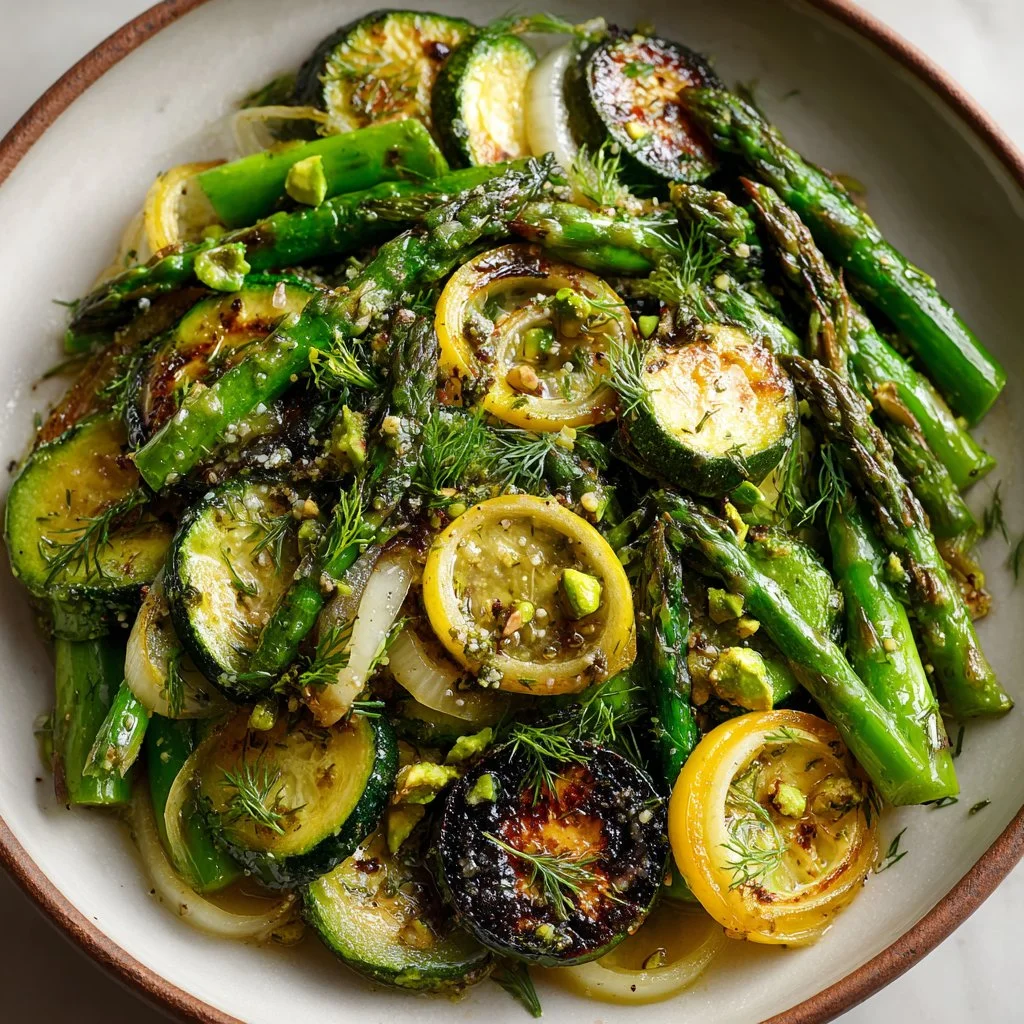
Bright, quick, and just a little indulgent—this Sautéed Spring Vegetable Salad brings garden-fresh vegetables to the weeknight table in under 20 minutes. It’s the sort of dish that looks like effort and tastes like spring.
The zucchini and asparagus get a quick sear, then are dressed in a bright lemon-honey vinaigrette and finished with salty feta and crunchy pistachios. Serve warm or at room temperature for a flexible side or light main.
If you like bright seasonal salads, this pairs beautifully with seafood or grain salads for a fuller meal. Try it alongside a simple shrimp pairing for a complete, spring-forward plate: shrimp and avocado spring salad.
Why You’ll Love This Sautéed Spring Vegetable Salad
- Fast to make: ready in about 20 minutes from prep to plate.
- Fresh flavor: lemon, dill, and honey brighten the vegetables without overpowering them.
- Textural contrast: tender-tender-crisp veg meets creamy feta and crunchy pistachios.
- Flexible serving: serve warm, room temperature, or chilled for leftovers.
- Healthy and satisfying: high in fiber and fresh vitamins, with healthy fats from olive and avocado oil.
- Crowd-friendly: easily scaled up for potlucks or dinner parties.
The taste is bright and herb-forward with a gentle sweetness from the honey that balances the lemon and Dijon. Texturally, the zucchini and asparagus are tender but retain a pleasing snap, while the feta adds creaminess and the pistachios deliver a crunchy, salty finish.
"Absolutely loved this—so simple yet so spring-forward. The pistachios were a revelation. Made it for a dinner party and everyone asked for the recipe!" ★★★★★
Key Ingredients for Sautéed Spring Vegetable Salad
Avocado oil
Avocado oil has a high smoke point, making it ideal for quick, hot sautéing without burning. Choose cold-pressed if you prefer a cleaner flavor, but refined avocado oil is fine for higher heat. If you substitute with olive oil, use a light or refined olive oil and lower the pan temperature to avoid a bitter, overheated taste.
Zucchini
Use medium zucchini that are firm with glossy skin and no soft spots. Slicing them ¾–1 inch thick helps prevent them from falling apart when sautéed and preserves a satisfying bite. If you swap for summer squash or yellow squash, expect a slightly sweeter flavor and similar texture; if using thinly sliced zucchini instead, cook for less time to avoid mushiness.
Asparagus
Trim woody ends and cut into 2-inch lengths so the spears cook evenly with the zucchini. Thinner spears cook faster and keep more snap; very thick spears may need a minute more in the pan or a light parboil. Substituting green beans or snap peas will change the mouthfeel—green beans are firmer and may need a touch more oil and heat.
Feta and Pistachios (paired)
Crumbled feta provides a tangy, creamy counterpoint to the warm vegetables and a salty finish that lifts the dressing. Use real sheep or sheep-goat feta for best texture; block feta crumbled by hand tastes cleaner than pre-crumbled. Salted pistachios add crunch and savory depth; if you must substitute, almonds or walnuts will work but will alter the flavor profile and salt balance.
Full Ingredient List for Sautéed Spring Vegetable Salad
- 2 tablespoons avocado oil
- 2 medium zucchini — remove ends and slice ¾–1 inch thick pieces
- 2 bundles asparagus — trim ends and slice into 2-inch long pieces
- Pinch kosher salt (to lightly season the vegetables)
- Few turns cracked black pepper (to taste)
- ⅓ cup crumbled feta
- ⅓ cup salted pistachios (lightly crushed)
- 2–4 tablespoons dill (fresh, roughly chopped)
- ¼ cup extra virgin olive oil
- 1 tablespoon lemon juice (fresh squeezed)
- 1 tablespoon white wine vinegar
- 1 tablespoon honey
- 1 teaspoon Dijon mustard
- Pinch kosher salt (to taste)
- Few turns cracked black pepper (to taste)
Step-by-Step Instructions for Sautéed Spring Vegetable Salad
Step 1: Prepare the Ingredients
Trim the zucchini ends and slice into ¾–1 inch rounds. Trim the asparagus and cut into 2-inch pieces so everything cooks at the same rate. Roughly chop the dill, lightly crush the pistachios with the flat side of a knife, and crumble the feta.
Pro Tip: The vegetables should look bright and feel firm; asparagus tips should be snap-firm and zucchini should not be waterlogged.
Step 2: Make the Dressing
Whisk together the extra virgin olive oil, lemon juice, white wine vinegar, honey, Dijon, and a pinch of kosher salt and cracked pepper. Taste and adjust—balance should be bright lemon, a whisper of honey sweetness, and a mustard-backed emulsion.
Pro Tip: The dressing should look glossy and slightly thickened; if it separates, whisk in a teaspoon of warm water to bring it back.
Step 3: Sauté the Vegetables
Heat 2 tablespoons avocado oil in a large skillet over medium-high heat. Add zucchini and asparagus in a single layer; sprinkle a pinch of kosher salt and a few turns of cracked pepper. Cook without disturbing for 2–3 minutes to get a good sear, then toss and cook for another 1–2 minutes until just tender-crisp. Remove from heat.
Pro Tip: Look for golden-brown edges and a bright, not dull, color; the vegetables should sizzle audibly when they hit the pan.
Step 4: Assemble
Transfer the warm vegetables to a serving bowl. Drizzle with the dressing and toss gently. Scatter crumbled feta, crushed pistachios, and chopped dill on top. Serve immediately or let cool to room temperature for a more composed salad.
Pro Tip: The finished plate should glisten with dressing; feta should sit slightly softened on warm veg and pistachios should remain crunchy.
Expert Tips for Sautéed Spring Vegetable Salad
- Use two pans if cooking for a crowd so vegetables don’t steam and overcrowd; the goal is a quick sear.
- Keep heat at medium-high; too low and vegetables wilt, too high and the outsides char before the centers are tender.
- Dry vegetables thoroughly after washing to ensure a proper sear rather than steaming.
- For texture control, slice zucchini thicker to retain bite or thinner for more tenderness; adjust cooking time by 30–60 seconds accordingly.
- If the dressing tastes flat, add a pinch more salt or a few drops of lemon to brighten it instantly.
- Use a heavy-bottomed skillet (cast iron or stainless steel) to get the best color and even heat distribution.
- Avoid over-crushing pistachios; larger pieces add better contrast and visual appeal.
- Common mistake: adding dressing while the pan is still smoking; let the pan cool slightly so oils and feta don’t break down or melt completely.
Storage & Freezing for Sautéed Spring Vegetable Salad
Fridge storage: Store leftovers in an airtight container for 3–4 days. For best texture, keep dressing separate and toss before serving to avoid sogginess. Use a shallow airtight container to cool the salad quickly and maintain color.
Freezer storage: This salad does not freeze well because the vegetables become mushy and feta changes texture. If you must, freeze just the sautéed vegetables (no dressing or cheese) in a vacuum-sealed bag for up to 1 month, but expect texture loss.
Thawing & reheating: Thaw frozen vegetables overnight in the refrigerator. Reheat gently in a skillet over low heat to revive some snap, then add fresh feta, pistachios, dill, and dressing. For refrigerated leftovers, bring to room temperature before serving or warm briefly in a skillet—avoid microwave reheating which makes zucchini rubbery.
Best containers: Glass airtight containers or BPA-free plastic with tight lids are ideal. Use silicone bags for freezing to reduce freezer burn.
Variations & Substitutions for Sautéed Spring Vegetable Salad
Add spring peas and mint: Stir in 1 cup shelled peas in the last 1 minute of sautéing and swap half the dill for chopped mint. The result is brighter and slightly sweeter with cool herbal notes.
Make it grain-forward: Toss the warm vegetables with 2 cups cooked farro or quinoa and reduce dressing by half to create a hearty main-course salad. Expect a more substantial, filling dish with similar flavor layers.
Swap feta for goat cheese: Use crumbled goat cheese for a tangier, creamier finish. Goat cheese melts more easily on warm veggies and yields a silkier mouthfeel.
Turn it into a baby greens salad: Serve the sautéed vegetables over a bed of peppery arugula or mixed greens and dress lightly. The warm veg wilts the greens slightly for a more composed, restaurant-style salad.
Frequently Asked Questions About Sautéed Spring Vegetable Salad
How long should I sauté zucchini and asparagus so they’re tender but not mushy?
Cook sliced zucchini and 2-inch asparagus pieces over medium-high heat for about 3–5 minutes total. Start with 2–3 minutes without stirring to develop color, then toss and finish for 1–2 minutes until bright and tender-crisp. Adjust time for thicker pieces.
Can I make this salad vegan or dairy-free?
Yes—omit the feta and add a sprinkle of toasted nutritional yeast or extra crushed pistachios for umami. You can also use a flaky sea salt finish and a teaspoon of miso dissolved into the dressing for savory depth.
Is this salad good served cold or only warm?
It’s versatile: serve warm for a comforting side, at room temperature for parties, or chilled for meal prep. If chilling, toss with dressing just before serving to preserve crunch and color.
How do I prevent the zucchini from releasing too much water?
Use thicker slices (¾–1 inch) and avoid overcrowding the pan so steam can escape. Dry the zucchini with kitchen towels and cook in batches if needed to maintain a hot surface contact.
What herbs pair best with the dressing and vegetables?
Fresh dill is classic here for its citrusy, anise-like brightness. Parsley, mint, or chives also work—parsley adds freshness, mint adds cooling lift, and chives bring gentle oniony notes.
Final Thoughts on Sautéed Spring Vegetable Salad
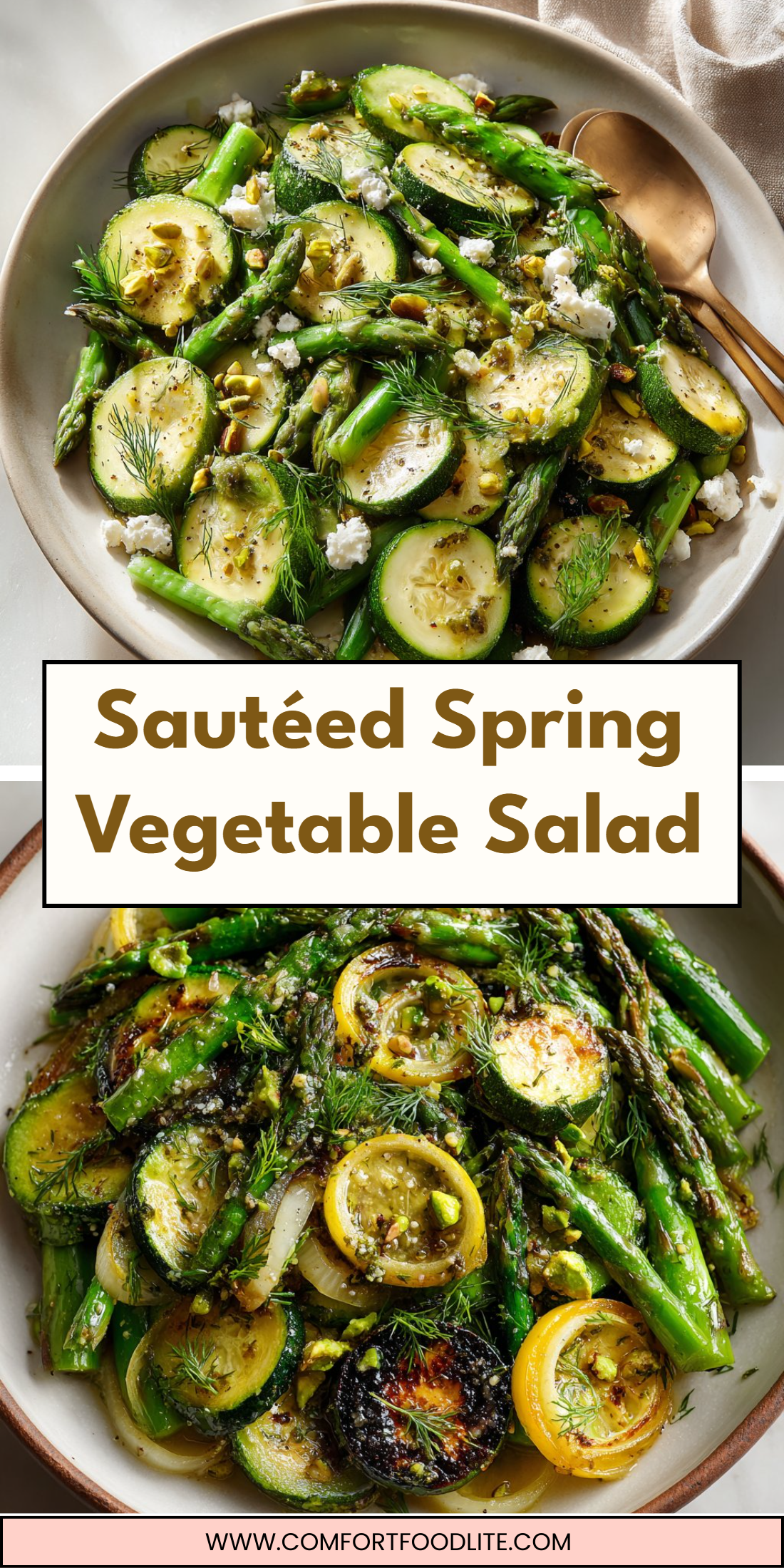
This Sautéed Spring Vegetable Salad is a quick, elegant way to celebrate seasonal produce with texture and bright flavor. Leave a star rating in the recipe card below and pin this to your boards if you loved it.
For another take on Sautéed Spring Vegetable Salad inspiration, see this savory version from Sautéed Spring Vegetable Salad – Healthyish Foods.
If you want more spring salad ideas similar to this recipe, check out this detailed Spring Vegetable Salad Recipe – The Mom 100.
For a different cooking technique and flavor profile, explore this Spring Vegetable Sauté – Epicurean-Global-Exchange.