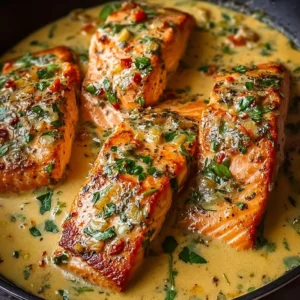
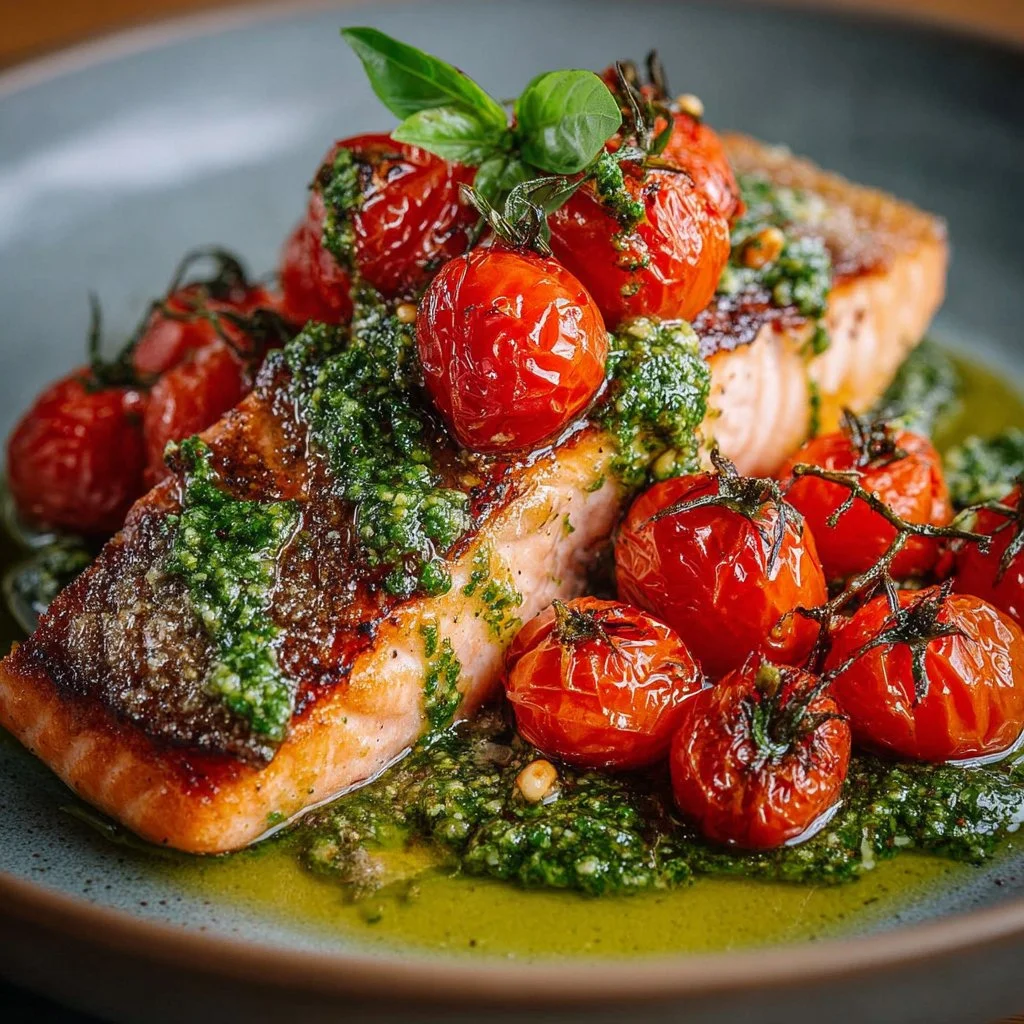
The first time I made this salmon with pesto and blistered tomatoes I thought I’d invited summer to dinner.
It’s fast, bright, and somehow effortless while still feeling special enough for guests.
The salty-crisp salmon skin, herbaceous pesto, and sweet burst tomatoes make an elegant plate with minimal fuss.
Why You’ll Love This Recipe
- Fast weeknight dinner that looks restaurant-level but cooks in under 25 minutes.
- Balanced flavors: savory, herbal, bright citrus, and caramelized sweetness.
- Texture contrast: crisp skin, flaky fish, creamy pesto, and juicy tomatoes.
- Flexible: works with frozen salmon, vegan pesto swaps, or different nuts.
The magic here is the contrast: crisp skin gives a satisfying snap, the flesh stays moist and tender, and the pesto adds an herb-heavy richness that doesn’t overpower. Blistered tomatoes keep their juices and become intensely sweet, so every bite has a pop of acidity to cut the oil and cheese in the pesto. Together the components make the plate sing without needing complicated technique.
"Made this for a Thursday night and my partner said it tasted like a summer restaurant — we’ll be repeating it every two weeks!" — Emma R., reader
Key Ingredients
Fresh basil leaves (2 cups, packed)
Basil is the backbone of classic pesto and using vibrant, freshly harvested leaves makes a huge difference. Look for basil that smells sweet and slightly peppery; if the stems are limp, the flavor will be muted.
Skin-on salmon fillets (4 fillets, about 6 oz each)
Leaving the skin on gives you that crisp, golden texture and protects the salmon flesh while cooking. Choose sustainably farmed or wild-caught depending on preference; look for bright, uniform color and firm flesh when buying.
Pine nuts (1/4 cup, lightly toasted)
Pine nuts provide a silky, buttery backbone to pesto and toasting brings out that rich flavor. If pine nuts are pricey or you worry about bitterness, substitute lightly toasted almonds or walnuts for a similar creaminess.
Cherry tomatoes (1 pint)
Cherry tomatoes blister quickly and concentrate their sugars when exposed to hot oil. Choose varieties labeled “cherry” or “grape” that are firm to the touch; they should pop when pressed lightly.
Full ingredient list:
- 4 skin-on salmon fillets (about 6 oz each)
- 1 pint cherry tomatoes
- 2 tbsp extra virgin olive oil (for cooking)
- Salt and freshly ground black pepper, to taste
- 2 cups fresh basil leaves, packed
- 1/4 cup pine nuts (lightly toasted)
- 2 cloves garlic
- 1/2 cup grated Parmesan cheese
- 1/3 cup extra virgin olive oil
- 1 tbsp fresh lemon juice
- Pinch of salt
- Fresh basil leaves (for garnish)
- Lemon wedges (for serving)
- Extra grated Parmesan cheese (for serving)
Step-by-Step Instructions
Step 1: Make the pesto
Combine the packed basil leaves, lightly toasted pine nuts, peeled garlic cloves, and grated Parmesan in a food processor.
Pulse a few times to break down the solids, then slowly drizzle in the 1/3 cup extra virgin olive oil while the machine runs until the mixture is smooth and vibrant.
Finish by stirring in the tablespoon of fresh lemon juice and a pinch of salt to brighten the flavors and balance the fat.
Pro Tip: Taste as you go; pesto should be bright and herb-forward with a little tang. If it tastes flat, add another teaspoon of lemon juice.
Step 2: Blister the tomatoes
Heat a skillet over medium-high heat and add a splash of extra virgin olive oil (about 2 tablespoons).
Add the cherry tomatoes in a single layer and resist constant stirring so they can char; let them cook until skins blacken in spots and juices run, two to five minutes depending on your pan.
Season lightly with salt and remove them to a bowl to stop cooking.
Pro Tip: You’ll know the tomatoes are done when they begin to split and sizzle loudly; that’s the sugar concentrating and caramelizing.
Step 3: Cook the salmon
Pat the salmon fillets very dry and season both sides with salt and freshly ground black pepper.
Heat a separate skillet over medium heat with a little olive oil. Place the fillets skin-side down and press gently for the first 15 seconds to prevent curling.
Cook until the skin is crisp and the fish is almost cooked through, then flip briefly to finish; salmon should still be moist in the center.
Pro Tip: Use a fish spatula to lift the fillet and check the skin; when it releases easily and is deep golden, it’s ready to flip.
Step 4: Plate and finish
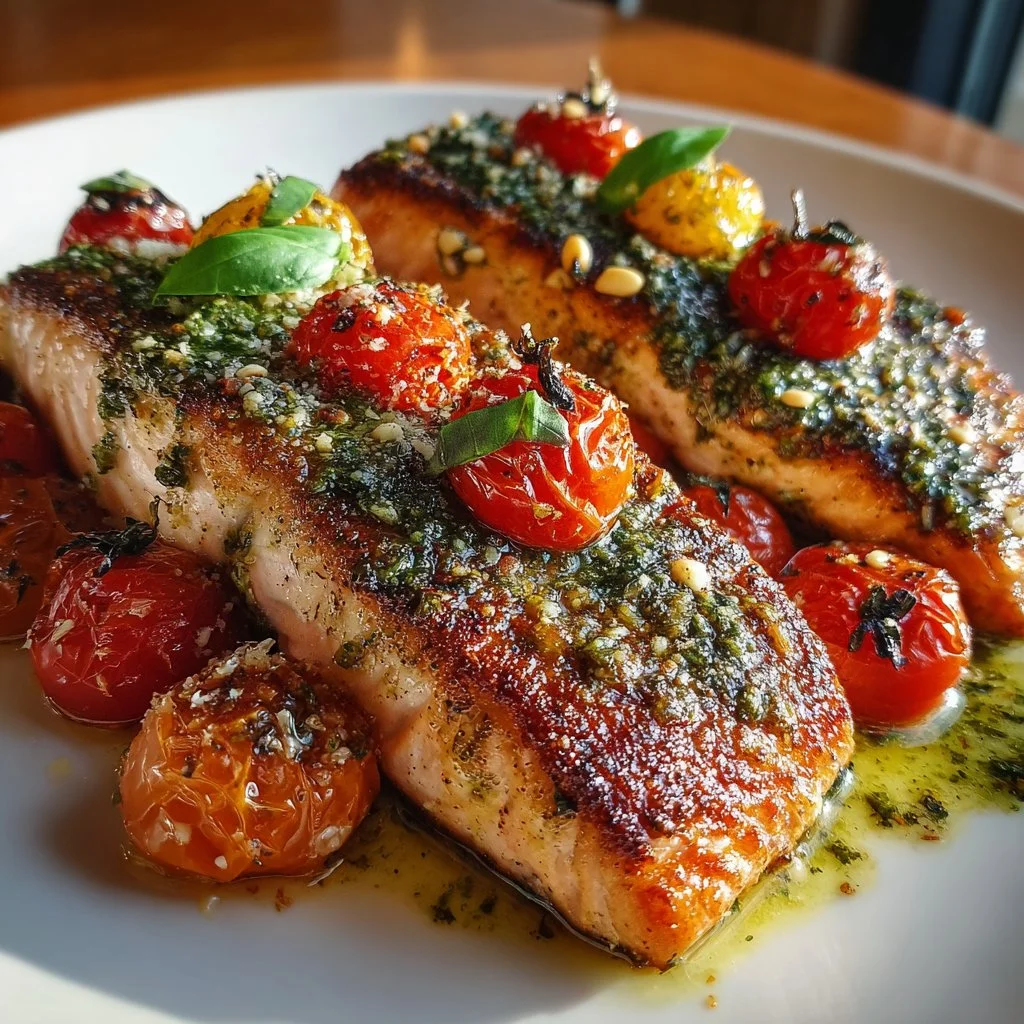
Spoon generous dollops of the pesto over each salmon fillet; the warmth from the fish will meld the pesto without wilting it.
Arrange the blistered tomatoes beside or over the salmon, garnish with extra basil leaves, lemon wedges, and a dusting of grated Parmesan if desired.
Serve immediately for best texture.
Pro Tip: Serve with lemon wedges so diners can add acidity to taste — a squeeze brightens the whole dish.
Expert Tips for Success
- Temperature control matters: use medium heat for salmon to crisp skin without burning. High heat can char the outside before the inside cooks, leaving a cold center.
- Dry fish is happy fish: pat salmon completely dry with paper towels before seasoning; moisture is the enemy of crisp skin.
- Toast nuts gently: pine nuts burn fast. Toast in a dry skillet over medium heat and watch closely until fragrant and lightly golden.
- Olive oil choice impacts flavor: use a fruity extra virgin olive oil in the pesto for depth, but a neutral high-smoke-point oil (or a light EVOO) for pan-searing so it won’t smoke.
- Make pesto ahead and keep it vibrant: store pesto with a thin film of olive oil on top in an airtight container to prevent oxidation and browning. It will keep 3–4 days in the fridge.
- Don’t overcrowd the pan when blistering tomatoes: give them space so steam escapes and they blister instead of steaming. Work in batches if necessary.
- Use residual heat to finish salmon: after flipping briefly, remove the pan from heat and let the carryover cook bring the salmon to perfect doneness without drying.
- Check doneness visually: salmon is done at about 125–130°F for medium-rare; it will firm up slightly as it rests. If you prefer well-done, cook to 140°F.
Storage & Freezing
Fridge storage — salmon: Cool leftover salmon completely, then wrap tightly in plastic wrap or place in an airtight container.
Use within 2 days for best texture; salmon tends to dry out on reheating if stored longer.
Fridge storage — pesto and tomatoes: Store pesto in an airtight jar with a thin layer of olive oil on top for 3–4 days. Blistered tomatoes keep well in a sealed container for 2–3 days and can be warmed gently.
Freezing pesto: Pesto freezes beautifully. Spoon into ice cube trays and freeze, then transfer cubes to a zip-top bag. This portioning makes thawing a single serving easy and prevents waste.
Pesto will keep in the freezer for up to 3 months; thaw in the fridge or stir frozen into warm pasta or sauces.
Freezing salmon: Cooked salmon can be frozen, but texture will be slightly softer after thawing. Wrap tightly in plastic and foil or vacuum-seal, then freeze up to 2 months. Thaw overnight in the fridge before reheating gently.
Reheating: Reheat salmon gently to avoid drying. Use a warm oven (275–300°F) on a baking sheet for 10–15 minutes until warmed through, or reheat briefly in a skillet with a splash of oil over low heat.
Rewarm blistered tomatoes in a skillet over low heat for a minute or two or microwave briefly. Pesto is best served cold or at room temperature; toss with warm pasta or spoon over warm fish just before serving.
Variations & Substitutions
Nut swap: Replace pine nuts with toasted walnuts or almonds if pine nuts are expensive or you prefer a bolder flavor. Walnuts lend earthiness, while almonds add a clean sweetness.
No-parmesan / dairy-free: Omit Parmesan and add nutritional yeast for a cheesy note. Increase pine nuts slightly for extra creaminess, and finish with a little more lemon for brightness.
Vegan option: Swap salmon for thick slices of roasted cauliflower steaks or halved portobello mushrooms, and use a vegan Parmesan or nutritional yeast in the pesto.
Alternate fish: This technique works beautifully with trout, arctic char, or halibut. Adjust cooking time slightly for thickness to avoid overcooking thinner fillets.
Frequently Asked Questions

Q: Can I use frozen salmon for this recipe?
A: Yes. Thaw frozen salmon overnight in the refrigerator before cooking. Pat it very dry after thawing to ensure the skin crisps; frozen fish tends to release more moisture so the drying step is crucial. If you’re starting from frozen and short on time, you can finish thicker fillets in a warm oven after searing to ensure even cooking.
Q: How do I keep pesto from turning brown?
A: Oxidation causes browning. Store pesto in an airtight jar and pour a thin layer of olive oil over the surface to seal out air. Refrigerate and use within 3–4 days, or freeze in cubes for long-term storage. When thawing, stir to reincorporate any separated oil.
Q: What’s the best way to get really crisp salmon skin?
A: Heat the pan until hot, but not smoking, and pat the salmon skin completely dry. Use a little oil in the pan and press the fillet skin-side down with a spatula for the first 15–30 seconds. Avoid moving the fish around; let the skin develop color and release naturally from the pan.
Q: Can I make the blistered tomatoes at the same time as the salmon?
A: Yes, but use two pans if you have them. Tomatoes blister quickly and need high heat, while salmon benefits from a controlled medium heat. Cooking them simultaneously in separate pans saves time and keeps both components at optimal temperatures.
Q: Is this recipe kid-friendly and freezer-friendly?
A: It’s family-friendly — kids often like the burst-sweet tomatoes and the mild salmon flavor. Pesto freezes well and can be portioned for quick weeknight meals. Cooked salmon freezes, but for best texture serve fresh when possible.
Final Thoughts
This salmon with pesto and blistered tomatoes feels like a little summer celebration on a plate and it’s easy enough for any weekday.
If this recipe becomes a weekly win for you, please leave a star rating in the recipe card below and pin the photo to Pinterest to save it for later.
Conclusion
For another trusted take on this pairing, see PureWow’s Salmon with Pesto and Blistered Tomatoes recipe for helpful plating ideas.
If you want a pared-back five-ingredient approach, check the technique and timing in The Kitchn’s Pesto Salmon with Burst Tomatoes recipe.

Salmon with Pesto and Blistered Tomatoes
Ingredients
Salmon and Tomatoes
- 4 fillets skin-on salmon fillets (about 6 oz each) Choose sustainably farmed or wild-caught.
- 1 pint cherry tomatoes Choose firm varieties that should pop when pressed lightly.
- 2 tablespoons extra virgin olive oil (for cooking) Use a neutral high-smoke-point oil for searing.
- Salt and freshly ground black pepper, to taste
Pesto Ingredients
- 2 cups fresh basil leaves, packed Look for vibrant, freshly harvested leaves.
- 1/4 cup pine nuts (lightly toasted) Substitute with toasted almonds or walnuts if preferred.
- 2 cloves garlic
- 1/2 cup grated Parmesan cheese Omit for dairy-free options.
- 1/3 cup extra virgin olive oil
- 1 tablespoon fresh lemon juice Adjust for brightness if needed.
- Pinch of salt
Serving Suggestions
- Fresh basil leaves (for garnish)
- Lemon wedges (for serving)
- Extra grated Parmesan cheese (for serving)
Instructions
Make the Pesto
- Combine packed basil leaves, lightly toasted pine nuts, peeled garlic cloves, and grated Parmesan in a food processor.
- Pulse a few times, then drizzle in olive oil until the mixture is smooth.
- Stir in lemon juice and a pinch of salt.
- Taste and adjust flavors as needed.
Blister the Tomatoes
- Heat a skillet over medium-high heat and add extra virgin olive oil.
- Add the cherry tomatoes in a single layer and cook until skins blacken, about 2-5 minutes.
- Season lightly with salt and remove to a bowl.
Cook the Salmon
- Pat the salmon fillets dry and season with salt and pepper.
- Heat another skillet over medium heat with olive oil and place the fillets skin-side down.
- Cook until skin is crisp and fish is nearly cooked through, then briefly flip to finish.
Plate and Finish
- Spoon pesto over salmon fillets, and arrange blistered tomatoes beside or over the salmon.
- Garnish with basil leaves, lemon wedges, and grated Parmesan.
- Serve immediately.