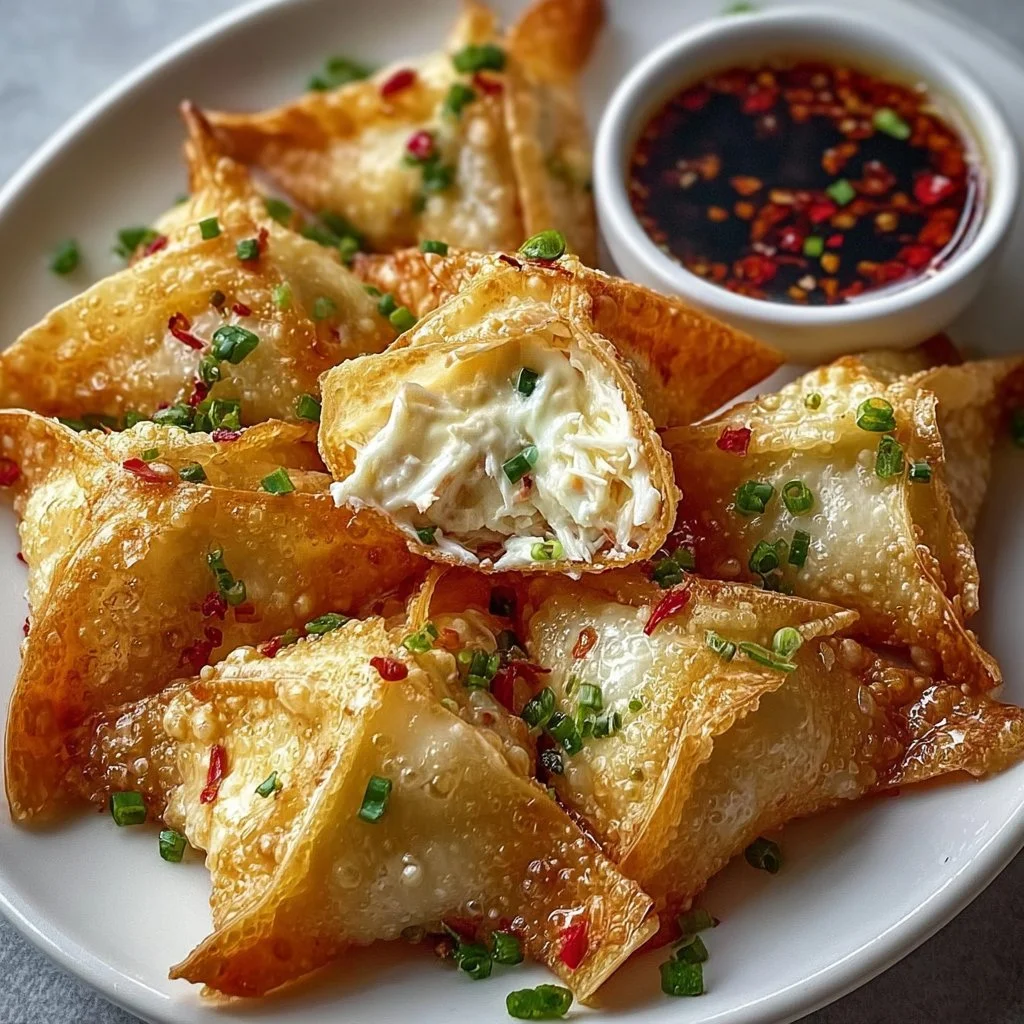
The first time I made these rice paper crab rangoons, I was chasing that crunch-to-creamy bite you only get at your favorite takeout joint.
They deliver that exact contrast — a shatteringly thin wrapper giving way to a warm, silky crab-cream center.
This version uses rice paper for a lighter, crisp shell and a straightforward filling that comes together in minutes.
They’re perfect for weeknight snacks, party platters, or an indulgent appetizer when you want something impressive but not fussy.
Make a double batch and you’ll be glad you did.
Why You’ll Love This Recipe
- Super crispy exterior with a pillowy, creamy interior.
- Fast assembly: no need to fuss with wonton wrappers.
- Adaptable filling — swap proteins or add heat easily.
- Crowd-pleaser for adults and kids alike.
The texture is the real star. The rice paper fries up into a translucent, paper-thin shell that crackles with the first bite. Inside, the cream cheese and shredded crab form a rich, savory custard that’s brightened by sliced green onion and a hit of umami from soy and Worcestershire. The contrast between the delicate crunch and the lush filling is what makes these irresistible.
"Five stars — I made these for game day and they vanished. Crispy, creamy, and so easy to make ahead." — Sarah, reader
Key Ingredients
Cream cheese (8 oz, softened)
Cream cheese is the base and texture builder for the filling. Use full-fat brick-style cream cheese for the silkiest results; it melts and blends into the crab without becoming grainy. If you need to speed things up, leave it at room temperature for 30–45 minutes or briefly microwave in 5‑second bursts until just softened.
Crab meat (6 oz, cooked and shredded)
Fresh lump crab is ideal for flavor and texture, but good-quality canned or pouch crab works fine and keeps the cost down. Drain canned crab well and pick through for shells. If using frozen lump, thaw fully in the fridge and pat dry so the filling isn’t watery.
Rice paper sheets (8 sheets)
Rice paper gives a light, ultra-crisp shell that’s different from a doughy wonton wrapper. Look for round, 8–9" rice papers labeled for spring rolls. Brands like Banh Trang or Three Ladies are reliable. Soak briefly — you want pliable but not sticky.
Soy sauce (1 tablespoon)
Soy brings savory depth and salt balance. Use regular soy sauce for a strong umami boost; if you prefer less sodium, use reduced-sodium soy and add a pinch more Worcestershire or a small squeeze of lime for brightness. Tamari is a good gluten-free swap.
Full ingredient list:
- 8 rice paper sheets
- 8 oz cream cheese, softened
- 6 oz crab meat, cooked and shredded
- 2 green onions, finely chopped
- 1 tablespoon soy sauce
- 1 tablespoon Worcestershire sauce
- 1 garlic clove, minced
- Oil for frying
Step-by-Step Instructions
Step 1: Make the crab filling
In a medium bowl, stir together the softened cream cheese, shredded crab, finely chopped green onions, soy sauce, Worcestershire sauce, and minced garlic.
Work the mixture until it’s homogeneous and you have a smooth, scoopable filling.
Pro Tip: If the crab is on the dry side, add a teaspoon of mayonnaise or a splash of milk to make the filling silkier. You’ll know it’s ready when a spoonful holds its shape without crumbling.
Step 2: Soak the rice paper
Fill a shallow bowl with warm water and briefly dip a rice paper sheet until it becomes pliable — usually 8–12 seconds. Lay it flat on a clean work surface.
Work one sheet at a time so the sheets don’t stick together or become too soft.
Pro Tip: Don’t over-soak. If the paper is sticky or tearing, it was in the water too long. It should still feel slightly dry to the touch but bend without cracking.
Step 3: Fill and fold the rangoons
Place about 1 tablespoon of filling in the center of the softened rice paper. Fold the bottom edge over the filling, then fold the sides in, and roll up tightly to seal. Use a dab of water on the final edge to glue it shut.
Repeat with remaining sheets and filling, spacing finished rangoons on a tray to avoid sticking.
Pro Tip: A tight roll prevents leaks during frying. If you prefer a wonky pleat look, fold with a little overlap and press seams firmly. If a seam opens while frying, remove and remake it — searing will not reliably seal a bad wrap.
Step 4: Fry until golden
Heat about 1/4 to 1/2 inch of oil in a frying pan over medium heat. When the oil shimmers and a small scrap of rice paper sizzles immediately, add a few rangoons without crowding. Fry 3–4 minutes per side until deeply golden and crisp.
Turn gently with tongs and transfer to a paper-towel-lined plate to drain.
Pro Tip: Maintain medium heat. If oil is too hot the exterior will burn before the filling warms through; too cool and the rangoons soak oil. Aim for roughly 325–350°F if using a thermometer.
Step 5: Serve hot
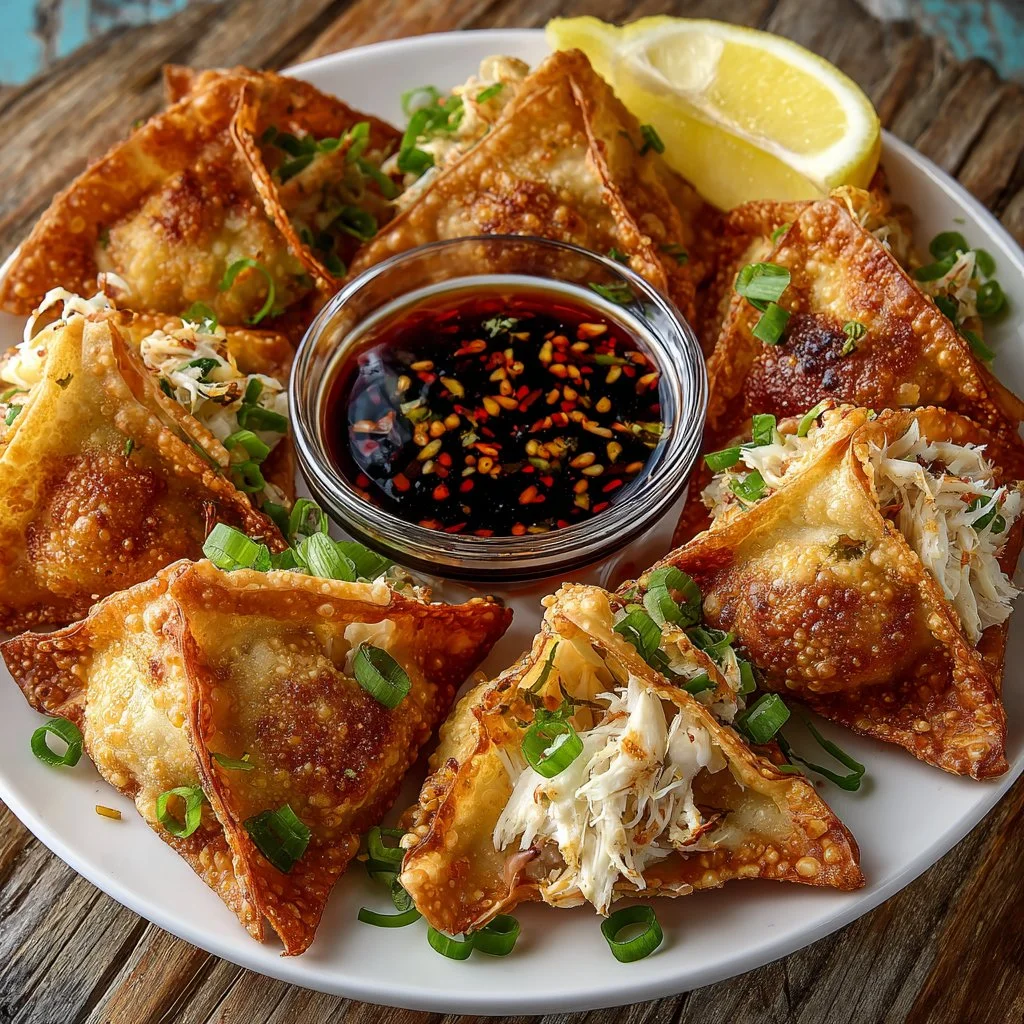
Serve immediately with your favorite dipping sauce—sweet chili, soy-sesame, or a tangy plum sauce pair beautifully. The shells are best eaten the moment they’re warm and crisp.
Leftovers will lose crunch quickly, so plan to serve right away.
Pro Tip: Keep fried rangoons warm in a single layer on a rack over a low oven (200°F) for up to 20 minutes without losing too much crunch.
Expert Tips for Success
- Temperature control matters: Heat oil to the correct temperature. Use a digital thermometer if possible; 325–350°F gives a golden shell without overcooking the filling. If you don’t have a thermometer, test with a small scrap of rice paper — it should sizzle and turn golden in about 20–30 seconds.
- Dry your crab well: Excess moisture in crab meat will make the filling runny and cause the rice paper to become soggy. Pat canned or thawed crab dry with paper towels and drain in a sieve for a few minutes.
- Work with one rice paper at a time: Rice papers stick together and soften quickly. Have your workstation prepped — filling spoon, damp towel, and a tray lined with parchment — to make assembly move smoothly.
- Tight rolling prevents leaks: Roll firmly but gently so you compress the filling into a compact log. Any air pockets will expand and cause bursts while frying. Seal edges with a fingertip dampened in water for a secure bond.
- Use a shallow fry method for control: You don’t need deep frying. A few tablespoons to a half-inch of oil in a skillet gives even crisping and is easier to manage than a deep fryer. Turn the rangoons with tongs to brown all sides evenly.
- Don’t overcrowd the pan: Overcrowding drops the oil temperature and yields greasy rangoons. Fry in batches and let oil return to temperature between batches.
- Keeping warm without sogginess: If you must hold them, use a wire rack over a baking sheet in a low oven (200°F). Avoid stacking on paper towels — stacked rangoons steam and lose crispness.
- Make-ahead prep: You can prepare and roll rangoons in advance and freeze them on a parchment-lined tray. Once frozen solid, store in a freezer bag and fry from frozen for 4–5 minutes per side. This preserves shape and reduces prep stress for entertaining.
- Swap oils if needed: Neutral oils with high smoke points — peanut, canola, or grapeseed — are best for frying. Olive oil imparts flavor and smokes earlier, so avoid it for this use.
- Watch the garlic: Mince the garlic very fine or use roasted garlic for a sweeter, less sharp profile. Fresh garlic is aromatic but can burn if over-skipped into hot oil; inside the filling it’s fine, but don’t add raw garlic to the oil.
Storage & Freezing
Fridge: Cool fried rangoons completely. Place them in a single layer in an airtight container with a paper towel between layers to absorb residual oil. Refrigerate for up to 2 days. Reheat in a 350°F oven for 6–8 minutes to recrisp.
Make-ahead (raw): Assemble rangoons and place them on a parchment-lined tray in a single layer. Freeze until solid, then transfer to a freezer-safe bag for up to 1 month. This is ideal for parties — fry directly from frozen and add 1–2 minutes per side.
Freezer (after frying): Fried rangoons don’t freeze as well because of oil saturation, but you can freeze them in a single layer for up to 2 weeks. Reheat in a hot oven (425°F) for 8–10 minutes to try to regain crunch; results will be inferior to frying from raw frozen.
Reheating: The best method to restore crispness is oven or air fryer. Preheat oven to 375–400°F and bake for 6–10 minutes, flipping once. An air fryer at 350°F for 4–6 minutes works well for small batches.
Variations & Substitutions
- Spicy Crab Rangoons: Add 1–2 teaspoons of Sriracha or chopped pickled jalapeño to the filling. Finish with a drizzle of honey for a sweet-spicy contrast.
- Vegetarian "Crab": Use finely chopped hearts of palm or artichoke hearts tossed with the cream cheese, a pinch of Old Bay, and a small amount of seaweed flakes for a briny note. It mimics the texture and flavor surprisingly well.
- Baked option: Brush assembled rangoons lightly with oil and bake at 400°F for 10–12 minutes, turning once. They won’t be as crisp as fried, but this reduces oil and makes cleanup easier.
- Lump crab upgrade: For a restaurant-style bite, fold in a few larger crab chunks after mixing the base so each rangoon has a noticeable piece of crab. Reserve some for garnish on plate.
Frequently Asked Questions
Q: Can I use wonton wrappers instead of rice paper?
A: Yes. Wonton wrappers are thicker and yield a chewier shell with a different texture and flavor profile. They fry beautifully and brown faster, so watch them closely. If using wonton wrappers, you can seal with a water-egg wash for a stronger bond.
Q: How do I prevent the filling from leaking during frying?
A: Make sure rice papers are sealed tightly with water and roll without trapped air. Don’t overfill; 1 tablespoon per 8–9" wrapper is a good guideline. Fry at the correct oil temperature so the wrapper sets quickly and doesn’t split from rapid expansion.
Q: Are rice paper crab rangoons gluten-free?
A: Rice paper itself is typically gluten-free, but be mindful of soy sauce which often contains wheat. Use tamari or a gluten-free soy sauce to keep the recipe fully gluten-free.
Q: Can I bake these instead of frying?
A: Yes. Brush with oil and bake at 400°F until golden, turning once. They’ll be lighter and less oily but won’t achieve the same ultra-crisp, paper-thin shatter of frying.
Q: What dipping sauces pair best with these rangoons?
A: Classic choices include sweet chili sauce, a soy-sesame dip, or plum sauce. For a creamy contrast try a wasabi-mayo or a lemony aioli to cut the richness.
Final Thoughts
These rice paper crab rangoons hit that perfect balance of crispy shell and luscious, savory filling with minimal fuss.
They’re an easy make-ahead appetizer that impresses at gatherings and tastes best fresh from the pan.
Please leave a star rating in the recipe card below if you try them, and pin this recipe to Pinterest for later.
Conclusion
If you want a grain-free, dairy-free take on rice paper crab rangoons, this Rice Paper Crab Rangoons (Gluten & Dairy Free) – Unbound Wellness post has thoughtful swaps and timing tips.
For low-carb or alternate-wrapping methods that still deliver crunch, see the helpful techniques in Crab Rangoons – Low Carb & Gluten Free – I Breathe I’m Hungry.
If you want two different gluten-free approaches and plating inspiration, check out Delicious Gluten-Free Crab Rangoon (Two Ways) – Real Food RN.

Rice Paper Crab Rangoons
Ingredients
Filling Ingredients
- 8 oz cream cheese, softened Use full-fat for the best texture.
- 6 oz crab meat, cooked and shredded Fresh lump crab is ideal, but canned also works.
- 2 pcs green onions, finely chopped
- 1 tbsp soy sauce Use tamari for gluten-free.
- 1 tbsp Worcestershire sauce
- 1 clove garlic, minced Mince finely to prevent burning.
Wrapping Ingredients
- 8 sheets rice paper Look for round, 8–9" rice papers.
- Oil for frying Use peanut, canola, or grapeseed oil.
Instructions
Filling Preparation
- In a medium bowl, stir together the softened cream cheese, shredded crab, finely chopped green onions, soy sauce, Worcestershire sauce, and minced garlic until homogeneous.
- If the filling is dry, add a teaspoon of mayonnaise or a splash of milk.
Soak the Rice Paper
- Fill a shallow bowl with warm water and dip a rice paper sheet until pliable, about 8–12 seconds.
- Lay it flat on a clean surface.
Assemble Rangoons
- Place about 1 tablespoon of filling in the center of the rice paper, fold the bottom edge over the filling, then the sides, and roll tightly to seal.
- Use a dab of water on the final edge to glue it shut.
Fry
- Heat about 1/4 to 1/2 inch of oil over medium heat.
- Fry the rangoons for 3–4 minutes per side until golden and crisp, turning gently with tongs.
Serve
- Serve hot with your favorite dipping sauces.