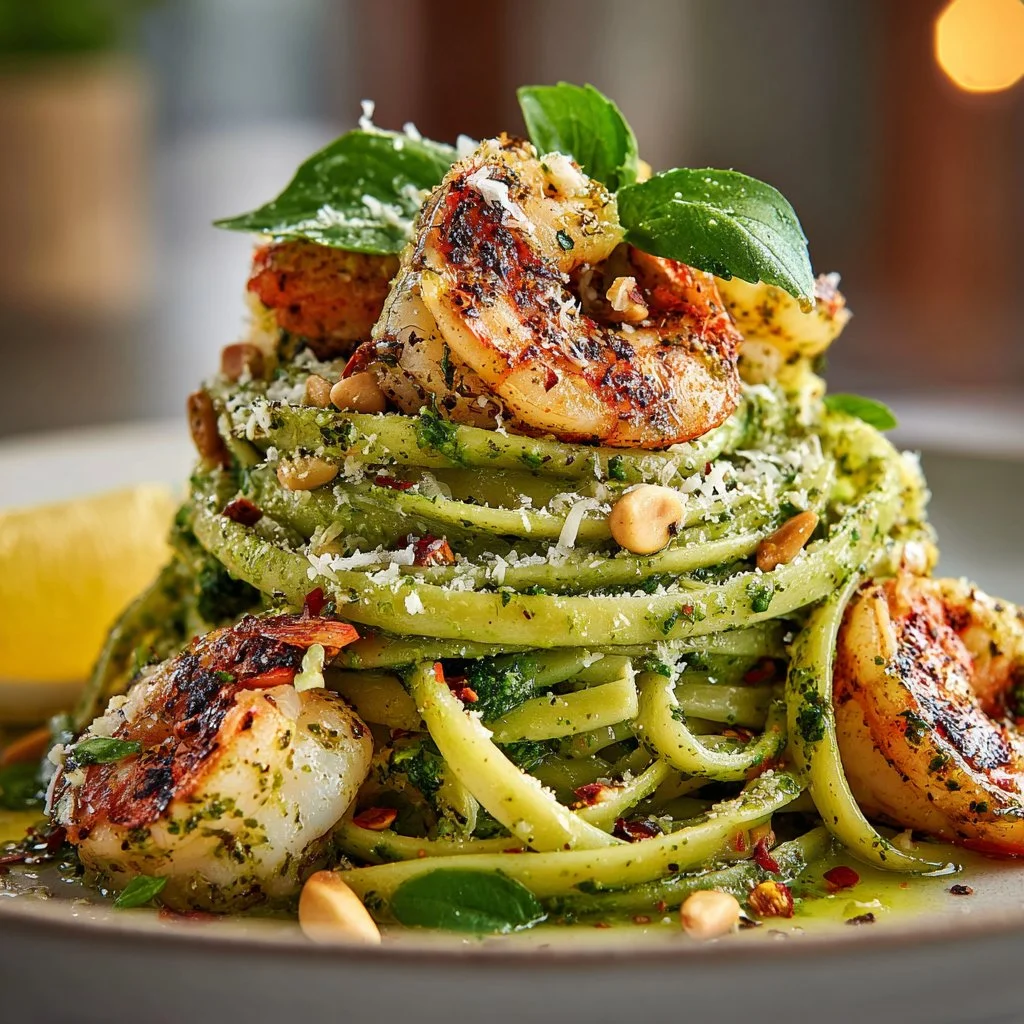
Bright, herby pesto meets charred, juicy shrimp stacked atop silky pasta — dinner suddenly looks restaurant-fancy with almost no fuss.
This dish is fast enough for weeknights and showy enough for guests.
You’ll get fresh basil, nutty Parmesan, and citrus-bright shrimp in every forkful.
Try a practice run with smaller portions to dial in timing before serving a crowd.
For a step-by-step plated version and plating inspiration, see this detailed plated recipe post for ideas.
Why You’ll Love This Pesto Pasta and Grilled Shrimp Stack
- Effortless restaurant-style presentation without complex techniques.
- Bright, fresh basil flavor balanced by rich Parmesan and pine nuts.
- Quick cook time — ready in about 20–30 minutes.
- Versatile: works with linguine, fettuccine, or spaghetti.
- Protein-forward dish that still feels light and summery.
- Easy to scale up for guests or serve family-style.
The taste is herbaceous and bright from basil and lemon, with a nutty, savory backbone from pine nuts and Parmesan.
Textures contrast: silky pesto-coated strands, firm charred shrimp, and crunchy toasted pine nuts on top.
The lemon zest and juice wake up the dish and cut the richness, making each bite layered and balanced.
“Five stars — simple pantry ingredients turned into something elegant. The shrimp came out perfectly charred and the pesto was bright and not greasy. Guests asked for the recipe!”
Key Ingredients for Pesto Pasta and Grilled Shrimp Stack
Fresh basil leaves
Basil is the soul of pesto. Choose bright, fragrant leaves with no dark spots.
If basil is bitter or limp, the pesto will taste flat; you can sub with baby spinach for color but the flavor will be milder.
Pine nuts
Pine nuts give pesto its silkiness and subtle sweetness.
Buy small quantities and store refrigerated to avoid rancidity.
If pine nuts are unavailable, toasted walnuts or almonds work, but the texture and flavor shift to a heavier, earthier note.
Parmesan cheese
Use freshly grated Parmigiano-Reggiano for umami and salty depth.
Pre-grated cheese often contains anti-caking agents and won’t melt as smoothly into the pesto.
Aged Pecorino Romano can be used for a sharper, saltier profile.
Shrimp, peeled and deveined
Choose medium-large shrimp with firm flesh and a mild smell.
Fresh or fully thawed frozen shrimp work; avoid shrimp with a strong ammonia odor.
If substituting, scallops or chicken will change cook times and texture but keep the charred grilling step for flavor.
Full Ingredient List for Pesto Pasta and Grilled Shrimp Stack
- Shrimp, peeled and deveined
- Pasta (linguine, fettuccine, or spaghetti)
- Fresh basil leaves
- Pine nuts
- Parmesan cheese
- Garlic cloves
- Olive oil
- Lemon juice and zest
- Salt and pepper
- Optional: red pepper flakes
- Optional: fresh herbs for garnish
Step-by-Step Instructions for Pesto Pasta and Grilled Shrimp Stack
Step 1: Prepare the pesto
Rinse and dry the basil leaves thoroughly to prevent a watery pesto.
In a food processor or blender, combine basil, pine nuts, peeled garlic cloves, grated Parmesan, a squeeze of lemon juice, a pinch of salt, and a drizzle of olive oil.
Process until the mixture is smooth but still slightly textured; scrape down the sides and taste for salt and brightness.
If the pesto seems too thick, add olive oil or a tablespoon of reserved pasta water to loosen it.
Pro Tip: The pesto should be vibrant green and glossy with visible flecks of basil and nuts; it should smell bright and garlicky but not raw.
Step 2: Cook the pasta
Bring a large pot of well-salted water to a rolling boil.
Add your chosen pasta and cook until al dente according to package directions, stirring occasionally to prevent sticking.
Reserve a cup of pasta water, then drain the pasta and immediately toss with enough pesto to coat every strand.
Use reserved pasta water a little at a time to create a silky emulsion that clings to the pasta.
Pro Tip: Tossed pasta should look glossy, not dry; a thin sheen of pesto and a few visible droplets of pasta water mean the texture is right.
Step 3: Marinate and grill the shrimp
Pat shrimp dry, then lightly toss with olive oil, crushed garlic, lemon zest, salt, and pepper.
Let sit for 5–10 minutes — just long enough to absorb flavor but not so long the citrus cooks the shrimp.
Preheat a grill or grill pan to high so you get immediate sear marks.
Grill shrimp 2–3 minutes per side until opaque, firm to the touch, and slightly charred at the edges.
Pro Tip: Properly cooked shrimp will curl into a gentle C shape and be opaque through the center; if they curl tightly into an O, they’re overcooked.
Step 4: Assemble the stack
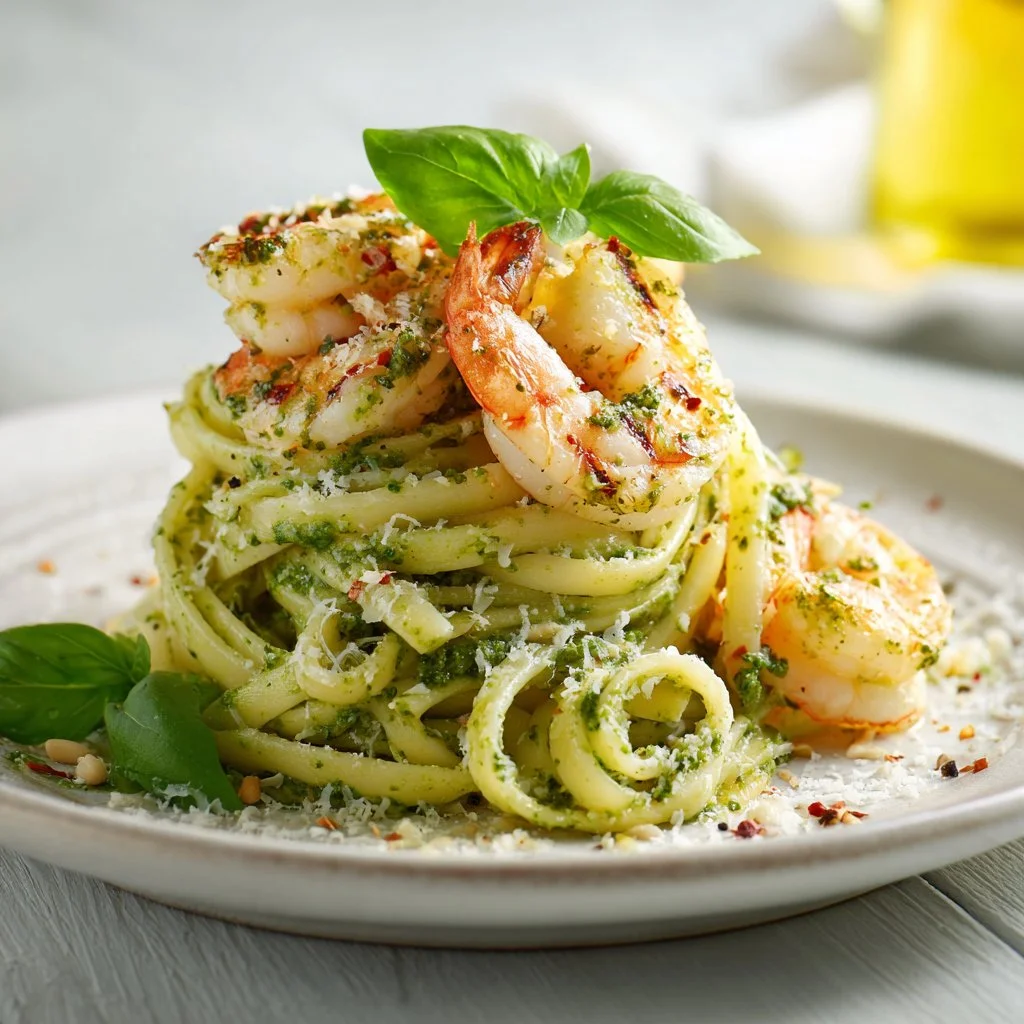
If using a ring mold, place it on your serving plate and layer a compact nest of pesto-coated pasta into the ring.
Top the pasta with a neat layer of grilled shrimp, finishing with shrimp arranged on top for height.
Garnish with toasted pine nuts, a drizzle of extra pesto, a sprinkle of fresh herbs, and lemon wedges on the side.
Pro Tip: The stack should hold its shape for plating; the top shrimp should gleam from olive oil and show grill marks for visual contrast.
Step 5: Serve immediately
Remove the ring mold carefully if used, revealing a tidy stack.
Serve at once while the shrimp are warm and the pesto is fresh.
Offer extra lemon wedges and red pepper flakes for guests who want more acidity or heat.
Pro Tip: The finished plate should steam gently and smell of lemon-basil; each forkful should include pasta, pesto, and a piece of shrimp.
Expert Tips for Pesto Pasta and Grilled Shrimp Stack
- Temperature tip: Grill shrimp on high heat for quick charring and to avoid overcooking the interior.
- Ingredient timing: Make the pesto just before tossing with pasta to keep its bright green color and fresh flavor.
- Texture troubleshooting: If pesto separates or is oily, whisk in a tablespoon of warm pasta water to re-emulsify.
- Equipment tip: Use a hot cast-iron or grill pan if you don’t have an outdoor grill; it gives excellent sear marks.
- Common mistake: Over-salting — taste pesto before adding extra salt because Parmesan is naturally salty.
- Presentation tip: Use a ring mold or ramekin to stack the pasta; otherwise twist pasta on a fork to create a tight nest.
- Shrimp doneness: Remove shrimp from the heat just as they turn opaque; residual heat will finish cooking.
- Make-ahead note: Pesto stores well; keep it airtight in the fridge for up to 3 days to speed weeknight assembly.
- Toast pine nuts briefly in a dry pan until golden for deeper flavor; watch them carefully because they burn fast.
Storage & Freezing for Pesto Pasta and Grilled Shrimp Stack
Fridge storage: Store leftover grilled shrimp and pesto-coated pasta separately in airtight containers.
Pasta tossed with pesto keeps in the fridge for 2–3 days.
Shrimp stored separately will stay good for up to 2 days.
Freezer storage: Pesto freezes well in ice cube trays for 2–3 months; transfer frozen cubes to a freezer bag.
Cooked shrimp and pesto-coated pasta do not freeze well because the texture degrades; avoid freezing the assembled stack.
Thawing & reheating: Thaw frozen pesto in the fridge overnight, then stir into freshly cooked pasta.
Reheat shrimp gently in a skillet over medium-low heat with a splash of olive oil to prevent rubberiness.
Reheat leftover pasta quickly in a pan with a little added water to restore silkiness.
Best containers: Use shallow, airtight containers for fridge storage.
For pesto freezing, use silicone ice cube trays and then a sturdy zip-top bag to prevent freezer burn.
Variations & Substitutions for Pesto Pasta and Grilled Shrimp Stack
Lemon-Garlic Butter Shrimp swap
Replace the olive oil marinade with a quick lemon-garlic-butter baste and pan-sear shrimp.
Result: richer, more indulgent shrimp with a buttery finish that complements the herbaceous pesto.
Nut-free pesto variation
Use toasted sunflower seeds or pumpkin seeds in place of pine nuts and add a touch more olive oil for creaminess.
Result: similar texture with a slightly earthier, less pine-forward taste that’s allergy-friendly.
Red pesto twist
Stir in roasted red peppers or use a store-bought red pesto to toss with the pasta.
Result: a sweeter, smokier profile that pairs beautifully with grilled shrimp and changes the dish’s color dramatically.
Protein swap: scallops or chicken
Substitute shrimp with seared scallops or thin-sliced grilled chicken for a different mouthfeel.
Result: scallops offer a delicate sweet bite; chicken makes the dish heartier and more filling.
Frequently Asked Questions About Pesto Pasta and Grilled Shrimp Stack
What pasta is best for Pesto Pasta and Grilled Shrimp Stack?
Choose long, flat pastas like linguine or fettuccine to hold the pesto on each strand.
Spaghetti also works and creates a slightly lighter mouthfeel.
The key is al dente cooking so the pasta holds up when stacked.
Can I make the pesto ahead for Pesto Pasta and Grilled Shrimp Stack?
Yes — pesto can be made 1–3 days ahead and stored airtight in the fridge.
Press a thin layer of olive oil on top to reduce oxidation and keep the vibrant green color.
For longer storage, freeze pesto in small portions for up to 3 months.
How do I prevent shrimp from becoming rubbery in Pesto Pasta and Grilled Shrimp Stack?
Use high heat and short cook times — 2–3 minutes per side depending on size.
Pat shrimp dry before seasoning to encourage browning.
Remove just as they turn opaque and curl into a relaxed C.
Is there a dairy-free Pesto Pasta and Grilled Shrimp Stack option?
Yes — omit Parmesan and add nutritional yeast or extra nuts for nuttiness.
Increase lemon and salt carefully to create balance without cheese.
Texture will be a touch less creamy but still flavorful.
How do I plate Pesto Pasta and Grilled Shrimp Stack like a pro?
Use a ring mold for a tight stack or twirl pasta on a large fork and slide onto the plate.
Place shrimp overlapping on top and finish with contrasting garnishes: toasted pine nuts, lemon zest, and a herb sprig.
Serve immediately to keep the shrimp warm and the pesto fresh.
Final Thoughts on Pesto Pasta and Grilled Shrimp Stack
If you enjoyed this recipe, please leave a star rating in the recipe card below and pin it to Pinterest for others.
For a bright variation inspired by roasted peppers, see Dreamy Red Pesto by Brooke Eliason, for community reactions check the Smash or Pass? Pesto Pasta and Grilled Shrimp Stack thread, and for grill tools and local inspo visit Marketplace Grill – Home.
Pesto Pasta and Grilled Shrimp Stack
Ingredients
For the Pesto
- 2 cups Fresh basil leaves Choose bright, fragrant leaves with no dark spots.
- 1/4 cup Pine nuts Store refrigerated to avoid rancidity; can substitute with toasted walnuts or almonds.
- 2 cloves Garlic cloves
- 1/2 cup Parmesan cheese Use freshly grated for better melting.
- 1/4 cup Olive oil
- 1 tablespoon Lemon juice Freshly squeezed.
- 1 pinch Salt
- 1 pinch Black pepper
For the Pasta and Shrimp
- 8 ounces Pasta (linguine, fettuccine, or spaghetti)
- 1 pound Shrimp, peeled and deveined Use medium-large shrimp.
- 1 tablespoon Lemon zest
- 1 tablespoon Olive oil for marinating
- Salt and pepper to taste Salt and pepper
- 1/4 teaspoon Red pepper flakes Optional, for garnish.
- 1/4 cup Fresh herbs for garnish Optional.
Instructions
Preparation of Pesto
- Rinse and dry the basil leaves thoroughly. In a food processor, combine basil, pine nuts, garlic, Parmesan, lemon juice, salt, and olive oil. Process until smooth but slightly textured.
- If too thick, add more olive oil or reserved pasta water to loosen it. The pesto should be vibrant green and glossy.
Cooking the Pasta
- Bring a large pot of salted water to a boil. Add pasta and cook until al dente, stirring occasionally. Reserve a cup of pasta water, then drain.
- Toss the pasta with enough pesto to coat. Use reserved pasta water to create a silky emulsion.
Grilling the Shrimp
- Pat shrimp dry and toss with olive oil, lemon zest, salt, and pepper. Let marinate for 5-10 minutes.
- Preheat grill to high heat and grill shrimp for 2-3 minutes per side until opaque and charred.
Assembling the Stack
- Using a ring mold, layer the pesto-coated pasta in a mound, top with grilled shrimp.
- Garnish with toasted pine nuts, extra pesto, fresh herbs, and serve immediately.