A warm spoonful of Pastina Italian Penicillin feels like a small, restorative hug in a bowl. It’s humble, quick, and exactly what the body asks for after a long day or a season of colds.
This recipe uses tiny pastina and simple aromatics so the broth and pasta sing together. You’ll get comfort without fuss and results that scale easily for one or a crowd.
If you love small-pasta soups, you might also enjoy the classic Italian Penicillin soup in a different style that inspired this one: classic Italian Penicillin soup.
Why You’ll Love This Pastina Italian Penicillin
- Fast: ready in about 20 minutes from start to finish.
- Gentle: easy on the throat and stomach.
- Nourishing: broth, vegetables, and tiny pasta make a complete, soothing bowl.
- Versatile: swap broth, herbs, or add protein in minutes.
- Kid-friendly: tiny pasta is easy for little ones and picky eaters.
- Make-ahead friendly: stores well in the fridge for quick reheats.
- Budget-wise: pantry staples create impressive comfort food.
This Pastina Italian Penicillin is bright and savory, with a silky broth that clings to each tiny piece of pasta. The soft pastina melts slightly into the liquid, giving a gentle body while still allowing the vegetables and herbs to provide pops of texture and aroma.
“Five stars — My daughter called it ‘sunshine soup.’ I made it when she had a cold and we both felt better after one bowl. So simple, so perfect.” — Rachel, home cook
Key Ingredients for Pastina Italian Penicillin
Onion: Onion builds the base savory flavor. Choose yellow or sweet onions that are firm and dry; avoid ones with soft spots. If you substitute shallots, expect a milder, slightly sweeter base that still works well.
Garlic: Garlic adds aromatic depth and a faint pungency that rounds the broth. Use fresh garlic cloves and mince finely so the flavor disperses; pre-minced jarred garlic is milder but acceptable. If you omit garlic, add a pinch more oregano and a squeeze of lemon at the end to brighten the broth.
Broth (chicken or vegetable, 4 cups): The broth is the backbone of the soup; its quality determines the final flavor. Use a low-sodium, high-quality broth so you control salt; homemade broth is ideal. If you substitute water, boost seasoning and add a bay leaf or a splash of white wine for complexity.
Pastina (1 cup): Pastina is tiny, quick-cooking pasta that gives a comforting, silky body to the soup. Buy good-quality pastina made from 100% durum wheat for firmness and flavor; cheaper brands can turn mushy if overcooked. If you must substitute, orzo or small ditalini work but shift the texture and cooking time.
Full Ingredient List for Pastina Italian Penicillin
- 1 cup pastina (tiny pasta)
- 4 cups chicken or vegetable broth
- 1 onion, chopped
- 2 cloves garlic, minced
- 2 carrots, diced
- 2 celery stalks, diced
- 1 tablespoon olive oil
- 1 teaspoon dried oregano
- 1 teaspoon dried thyme
- Salt and pepper to taste
- Fresh parsley, chopped (for garnish)
Step-by-Step Instructions for Pastina Italian Penicillin
Step 1: Heat the olive oil and soften the aromatics
In a large pot, warm 1 tablespoon of olive oil over medium heat. Add the chopped onion, minced garlic, diced carrots, and diced celery, stirring to coat them evenly in the oil.
Pro Tip: The vegetables should look glossy and slightly translucent around the edges; the onions will smell sweet and softened, not brown.
Step 2: Add the broth and bring to a simmer
Pour in the 4 cups of chicken or vegetable broth and increase heat just until it reaches a gentle boil. Scrape any browned bits from the pot to dissolve flavor into the liquid.
Pro Tip: You’ll see small bubbles and steam rising; the broth should be clear, not cloudy, when you stir — a gentle rolling simmer is the goal.
Step 3: Stir in pastina and herbs, then cook briefly
Add 1 cup of pastina, 1 teaspoon dried oregano, 1 teaspoon dried thyme, and salt and pepper to taste. Reduce heat and simmer, stirring occasionally, until the pastina is tender — about 5–7 minutes.
Pro Tip: Watch the surface: the tiny pasta will bob and swell; it should appear plump and the broth will thicken slightly from released starch.
Step 4: Taste and adjust seasoning, then remove from heat
Sample the broth and adjust salt and pepper as needed. When the pastina reaches the desired tenderness, remove the pot from the heat so the pasta doesn’t overcook in residual heat.
Pro Tip: The smell should be herb-forward and savory; if it smells flat, a tiny pinch more salt or a squeeze of lemon will brighten it.
Step 5: Serve hot with fresh parsley garnish
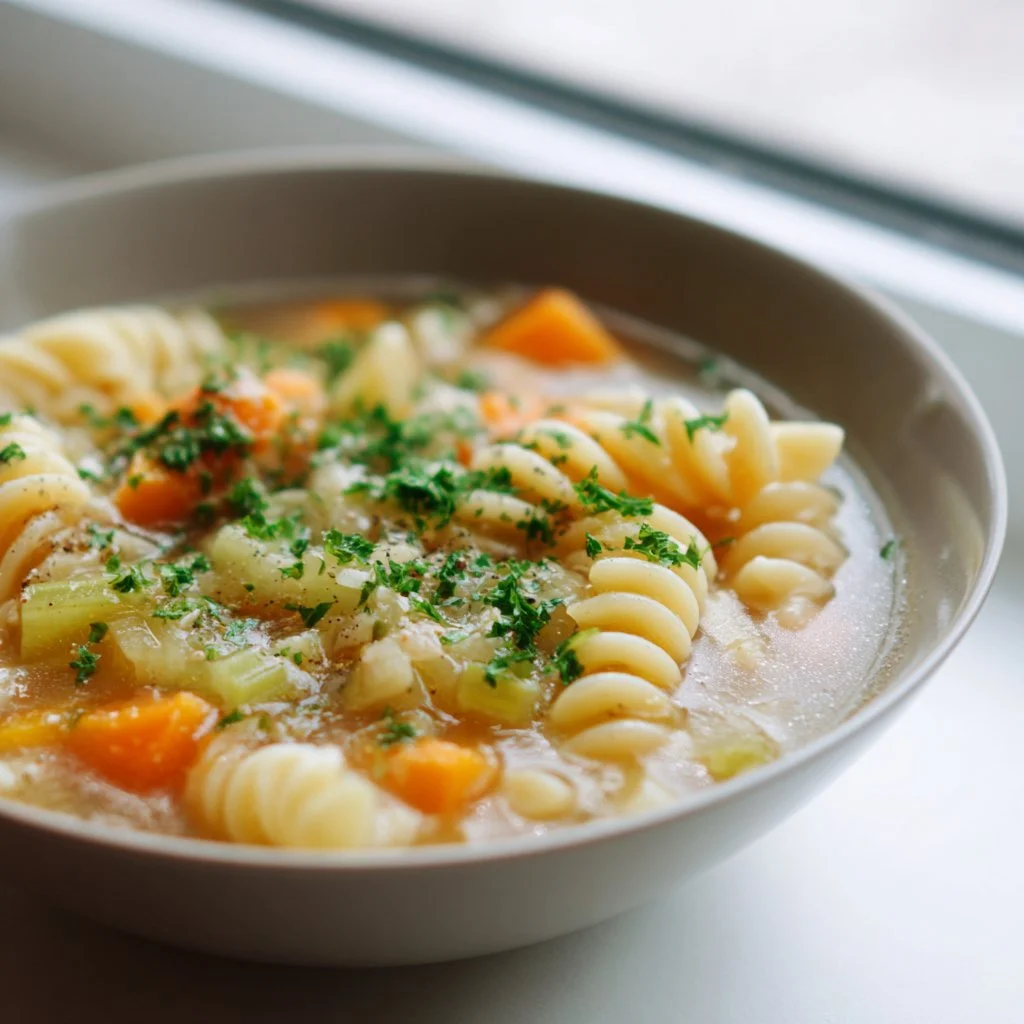
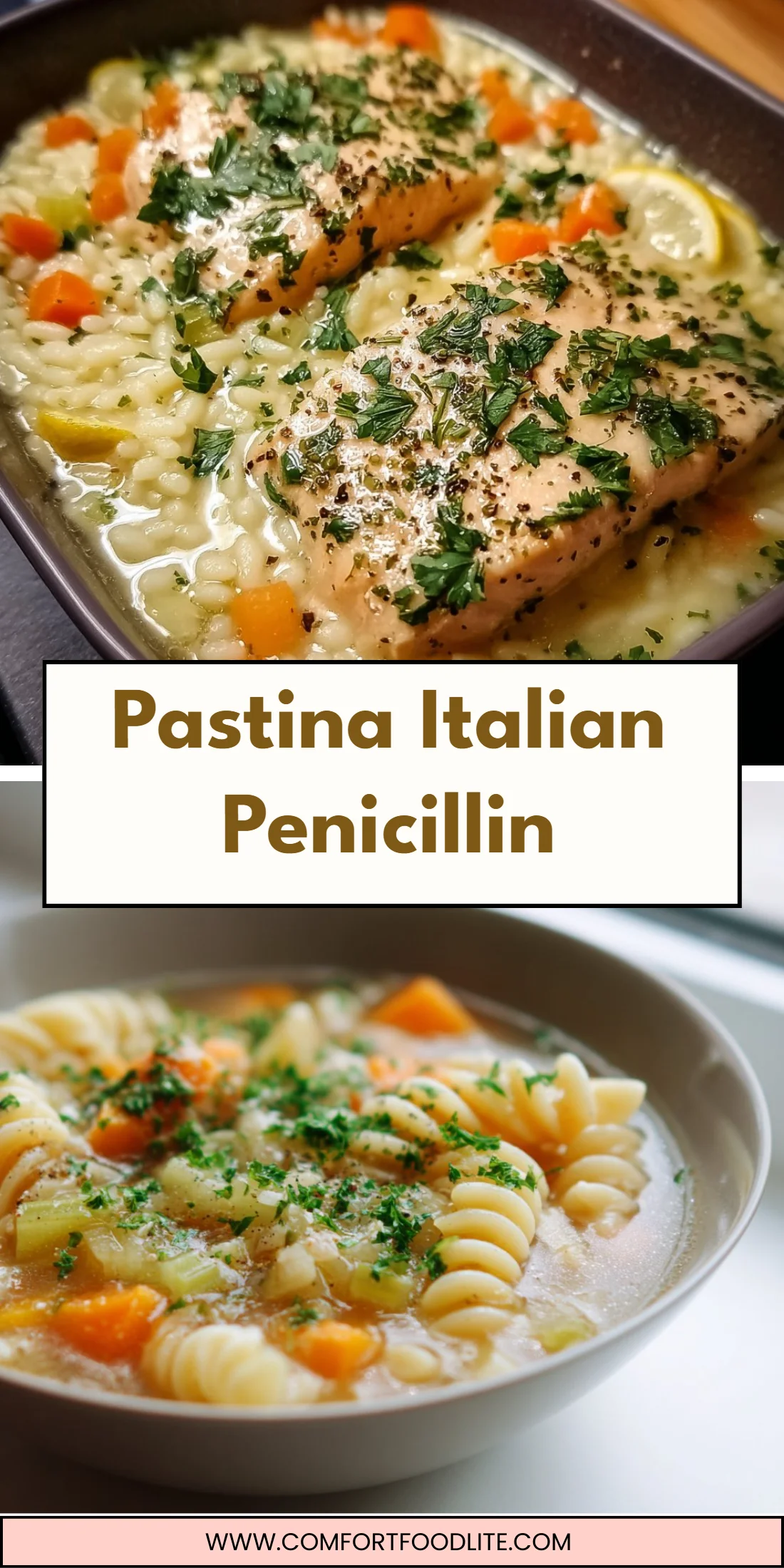
Ladle the soup into bowls and scatter chopped fresh parsley on top for color and a fresh lift. Serve immediately while the texture is at its soft, soothing best.
Pro Tip: The finished bowl should show distinct vegetable pieces and plump, separate pastina floating in a glossy broth; not a uniform mush.
Pro Tip: If you want an alternate method for a richer finish, check a related technique for an alternate Pastina Italian Penicillin approach here: an alternate Pastina Italian Penicillin method.
Expert Tips for Pastina Italian Penicillin
- Temperature tip: Keep the initial sauté at medium heat to soften vegetables gently without browning; browning will shift flavor toward caramelized notes that change the soup’s delicate profile.
- Simmering tip: Cook pastina at a gentle simmer rather than a vigorous boil to avoid broken pasta and cloudy broth.
- Texture troubleshooting: If the soup becomes too thick after resting, thin with a splash of hot broth or water before reheating to restore spoonable consistency.
- Equipment tip: Use a heavy-bottomed pot to distribute heat evenly and prevent hotspots that can scorch the vegetables.
- Pasta timing: Add pastina last; it cooks in 5–7 minutes and will continue to soften off-heat, so plan to serve promptly to keep a pleasant bite.
- Salt control: Use low-sodium broth and finish with salt to avoid over-salting; taste multiple times during cooking.
- Common mistake: Overcooking pastina — cook until just tender because tiny pasta quickly goes from perfect to soft mush.
- Garnish tip: Add chopped parsley off-heat for a fresh, green lift; avoid adding delicate herbs during simmering as they will fade.
Storage & Freezing for Pastina Italian Penicillin
Fridge storage: Cool to room temperature within two hours and transfer to an airtight container. Store in the refrigerator up to 3–4 days.
Freezer storage: For best results, freeze the broth and vegetables separately from the pastina. Freeze the broth mixture in a leakproof container or heavy-duty freezer bag for up to 3 months. Freeze pastina in a separate container for up to 1 month to preserve texture.
Thawing: Thaw frozen broth overnight in the fridge, or gently in a pot over low heat. If frozen in a bag, submerge the sealed bag in cold water for faster thawing.
Reheating: Reheat slowly over low to medium heat and add a splash of water or broth if the soup is too thick. Bring to a gentle simmer and stir frequently to prevent sticking. Use oven-safe or microwave-safe containers; glass or BPA-free plastic works well.
Variations & Substitutions for Pastina Italian Penicillin
Lemon-Garlic Boost: Add a tablespoon of lemon juice and a teaspoon of lemon zest at the end. This brightens the broth and cuts richness, making the soup feel lighter and more aromatic.
Creamy Pastina: Stir in 1/4 cup of heavy cream or half-and-half at the end and heat gently. The result is a silky, richer broth that clings to the pastina like a light chowder.
Chicken-and-Herb Protein: Add shredded cooked chicken in the last two minutes of reheating for a protein-rich bowl. The chicken warms through without drying, turning the soup into a more substantial meal.
Vegetable-Forward Version: Increase carrots and celery, add diced zucchini or spinach near the end, and use vegetable broth. The soup becomes brighter and more vegetarian-friendly with added greens and texture.
Frequently Asked Questions About Pastina Italian Penicillin
Q: How long does pastina take to cook in soup?
A: Pastina cooks very quickly — typically 5–7 minutes in simmering broth. Start timing once the pot returns to a simmer after you add the pasta. Check at five minutes for tenderness; remember residual heat will continue to soften the pasta after you remove it from the heat.
Q: Can I make this soup gluten-free?
A: Yes. Use a gluten-free small pasta substitute made from rice, corn, or quinoa in place of pastina and confirm your broth is gluten-free. Note that gluten-free pastas often have a different texture and may require slightly different cooking times, so test a small spoonful early.
Q: How can I prevent the soup from getting mushy after refrigeration?
A: To avoid mushy texture, store the cooked pastina separately from the broth when possible. If combined before refrigeration, the pastina will continue to absorb liquid and soften; reheating with extra hot broth or water helps restore a spoonable consistency.
Q: Is there a way to make the broth more flavorful without adding salt?
A: Boost umami with a splash of low-sodium soy sauce or fish sauce (in very small amounts), a piece of Parmigiano-Reggiano rind simmered in the pot, or an extra bay leaf and longer gentle simmer to concentrate flavors. Freshly cracked black pepper and herbs also add perception of flavor without sodium.
Q: What’s the best way to scale this recipe up for a crowd?
A: Multiply ingredients proportionally and use a wide, heavy-bottomed pot to maintain even heat. Add pastina in batches or hold it out and add just before serving so it doesn’t overcook while waiting for guests. For large batches, consider cooking pastina separately and adding ladles of hot broth to bowls to serve.
Final Thoughts on Pastina Italian Penicillin
This Pastina Italian Penicillin is comfort in a bowl — fast, forgiving, and deeply satisfying. If you tried this recipe, please leave a star rating in the recipe card below and pin it to Pinterest for later.

Pastina Italian Penicillin
Ingredients
Main Ingredients
- 1 cup pastina (tiny pasta) Use good-quality pastina made from 100% durum wheat.
- 4 cups chicken or vegetable broth Choose low-sodium high-quality broth for better control.
- 1 onion, chopped Use yellow or sweet onions.
- 2 cloves garlic, minced Fresh garlic adds aromatic depth.
- 2 carrots, diced
- 2 stalks celery, diced
- 1 tablespoon olive oil For sautéing the aromatics.
- 1 teaspoon dried oregano
- 1 teaspoon dried thyme
- Salt and pepper to taste
- Fresh parsley, chopped (for garnish) Add for color and flavor.
Instructions
Preparation
- Heat the olive oil in a large pot over medium heat. Add the chopped onion, minced garlic, diced carrots, and diced celery, stirring to coat them evenly in the oil.
- Pour in the chicken or vegetable broth and increase heat until it reaches a gentle boil.
- Add pastina, oregano, thyme, and salt and pepper to taste. Reduce heat and simmer until the pastina is tender, about 5–7 minutes.
- Taste and adjust seasoning if needed before removing from heat.
- Serve hot, garnished with chopped fresh parsley.