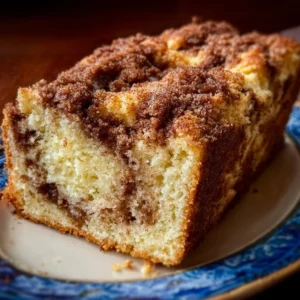

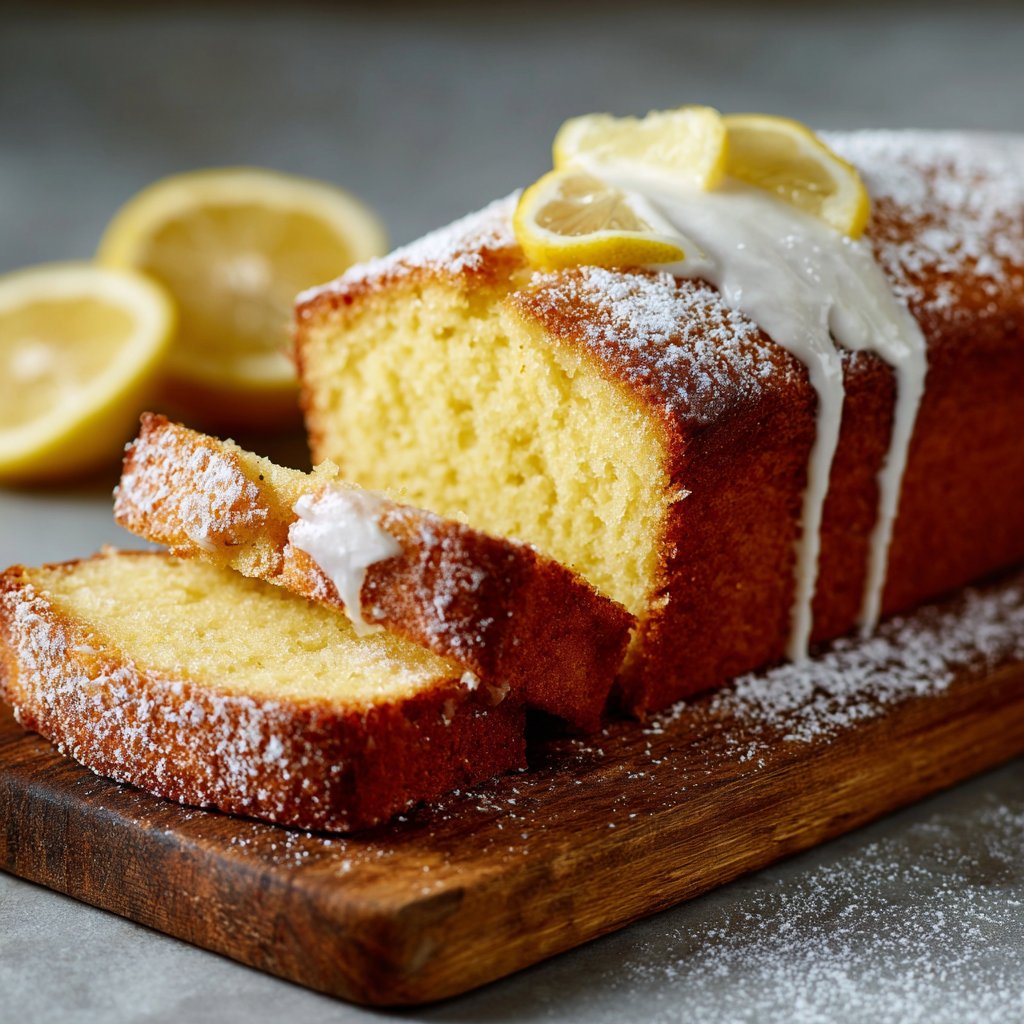
I make this Meyer lemon pound cake whenever spring citrus comes into season — the aroma alone wakes up the kitchen. It’s a dense, buttery loaf brightened by fresh Meyer lemon zest and a tangy lemon-sugar syrup plus a silky glaze. This cake is a great make-ahead treat for brunch, a light dessert after a heavy meal, or a gift when you want something homemade that still feels special.
What makes this recipe special
Meyer lemons are sweeter and less acidic than regular lemons, so their delicate floral flavor pairs beautifully with the rich, buttery crumb of a pound cake. This recipe layers citrus in three places — zest in the batter, a lemon-sugar syrup brushed on the warm cake, and a confectioners’ sugar glaze — so every slice tastes bright without losing the classic, tender density of a pound cake. It’s simple enough for a weeknight bake, but elegant enough for holidays.
“Tender, buttery, and perfumed with Meyer lemon — everyone begged for seconds. A perfect balance of rich cake and bright citrus.”
How this recipe comes together
Step-by-step overview
- Cream room-temperature butter with most of the granulated sugar until light and fluffy.
- Add beaten, room-temperature eggs one at a time so the batter emulsifies.
- Fold in dry ingredients (flour, baking powder, salt) alternately with sour cream plus lemon juice and zest for moisture and lift.
- Bake in a prepared loaf pan until a skewer comes out clean.
- While the cake is hot, brush it with a simple lemon-sugar syrup so the interior stays moist and citrusy.
- Finish with a quick confectioners’ sugar glaze for sheen and extra tang.
This gives you an expectation of texture and timing before you start: plan about 20–25 minutes prep and roughly 55–70 minutes baking, depending on pan and oven.
What you’ll need
- 1 3/4 cups (230 g) all-purpose flour
- 1/2 teaspoon baking powder
- 1/2 teaspoon salt
- 1/4 cup (60 g) sour cream (sub: full-fat Greek yogurt)
- 1 1/2 tablespoons Meyer lemon juice (plus more below)
- 1 1/2 tablespoons Meyer lemon zest
- 1 cup (250 g) plus 2 additional tablespoons granulated sugar
- 1 cup (227 g) unsalted butter, 2 sticks, at room temperature
- 5 large eggs, at room temperature, beaten
- 1/4 cup (50 g) granulated sugar (for the lemon syrup)
- 1/4 cup (60 ml) Meyer lemon juice (for the syrup)
- 1/2 cup (65 g) confectioners’ sugar, sifted (for the glaze)
- 1 tablespoon Meyer lemon juice (for the glaze)
Notes/substitutions
- Butter: don’t substitute margarine — it changes texture and flavor. For a lighter crumb, use European-style butter if available.
- Sour cream: adds tenderness and tang; Greek yogurt works in a pinch.
- Meyer lemons: if unavailable, use regular lemon but reduce juice slightly and add 1 teaspoon of sugar to the glaze to balance acidity.
Step-by-step instructions
To make the cake:
- Preheat the oven to 325°F (163°C). Grease a 9×5-inch loaf pan and line with parchment, leaving an overhang for easy removal.
- Whisk together the flour, baking powder, and salt in a bowl; set aside.
- In a large bowl, beat the room-temperature butter with 1 cup (250 g) granulated sugar + the extra 2 tablespoons until pale and fluffy, about 3–5 minutes. A stand mixer or hand mixer works well.
- Add the beaten eggs gradually, about a tablespoon at a time at first, scraping the bowl between additions. This prevents curdling and keeps the batter smooth.
- Mix in the sour cream, 1 1/2 tablespoons Meyer lemon juice, and the 1 1/2 tablespoons zest until combined.
- Fold the dry ingredients into the wet in two additions, mixing gently until just combined. Do not overmix — stop when you no longer see streaks of flour.
- Scrape the batter into the prepared pan and smooth the top. Tap once on the counter to release large air pockets.
- Bake 55–70 minutes, until the top is golden and a toothpick inserted into the center comes out with a few moist crumbs (not wet batter). If the top browns too fast, tent loosely with foil for the last 15 minutes.
- Let the cake cool in the pan for 10–15 minutes before transferring to a rack.
To make the glaze/syrup:
- While the cake bakes, combine 1/4 cup (50 g) granulated sugar and 1/4 cup (60 ml) Meyer lemon juice in a small saucepan. Warm gently until the sugar dissolves; cool slightly. (This is the syrup you’ll brush on the warm cake.)
- Combine the sifted 1/2 cup (65 g) confectioners’ sugar with 1 tablespoon Meyer lemon juice in a small bowl. Whisk until smooth; add a teaspoon of water if too thick. Set aside.
- As soon as the cake comes out of the oven, poke a few holes in the top with a skewer and brush the warm cake with the lemon-sugar syrup so it soaks in.
- Once the cake is fully cooled, drizzle the lemon confectioners’ glaze over the top. Let set 15–20 minutes before slicing.
Best ways to enjoy it
- Serve slightly warm with a dollop of whipped cream or mascarpone for brunch.
- Pair a thin slice with Earl Grey or Darjeeling tea to complement the citrus.
- For dessert, top with fresh berries (strawberries or raspberries) and a sprig of mint.
- For a grown-up twist, serve a slice with a spoonful of limoncello or a citrus-forward cocktail.
How to store & freeze
- Room temperature: Wrapped tightly or stored in an airtight container, the cake keeps well at room temperature for up to 3 days. Keep it away from direct sunlight.
- Refrigerator: If you prefer chilled cake or it’s glazed, refrigerate up to 7 days in an airtight container. Bring to room temperature before serving for the best texture.
- Freezing: Slice first for easy thawing. Wrap slices individually in plastic wrap, then foil, and freeze up to 3 months. Thaw overnight in the fridge or at room temp for a few hours.
Food safety note: do not leave the cake out longer than two hours in hot, humid conditions to avoid spoilage.
Pro chef tips
- Room-temperature ingredients: Bring eggs and butter to room temperature for a cohesive, airy batter. Cold eggs can cause the batter to split.
- Emulsify the eggs: Add eggs slowly to the creamed butter to avoid curdling. If curdling happens, a tablespoon of flour will often rescue the batter.
- Don’t overmix: Overworking the batter develops gluten and makes the cake dense and tough. Fold with a spatula for the last few stirs.
- Syrup timing: Brushing syrup on while the cake is hot lets it penetrate for moistness. The glaze should be added only after the cake is cool to prevent it from melting away.
- Test for doneness: Use a toothpick and look for moist crumbs. If it’s still wet batter, continue baking and check every 5–8 minutes.
Creative twists
- Lavender-Meyer Lemon: Add 1/2 teaspoon dried culinary lavender to the sugar when creaming for a floral note.
- Lemon-Blueberry: Fold in 3/4 cup fresh or frozen blueberries (tossed in a tablespoon flour) into the batter before baking.
- Almond-Lemon: Replace 1/4 cup of the flour with finely ground almond meal and add 1/2 teaspoon almond extract.
- Vegan/GF swap: For gluten-free, use a 1:1 GF flour blend and add 1/4 teaspoon xanthan gum if not included. For vegan, use plant-based butter, a flax “egg” equivalent to 5 eggs (not recommended without further recipe testing — texture will change), and a nondairy sour cream substitute.
Your questions answered
Q: Can I use regular lemons instead of Meyer lemons?
A: Yes. Regular lemons are more acidic and brighter. Reduce the juice slightly or add a pinch of sugar to the glaze to balance the tartness. Meyer lemons give a sweeter, more floral result.
Q: How long does the cake need to cool before glazing?
A: Brush the syrup on while the cake is still warm, but wait until it’s fully cool before adding the confectioners’ glaze (about 45–60 minutes) so the glaze holds and doesn’t slide off.
Q: Can I make this recipe in bundt pans or mini loaves?
A: Yes. For a bundt, bake at the same temp but expect 55–75 minutes depending on size; check doneness early. Mini loaves will need 25–35 minutes. Adjust times and always use the toothpick test.
Q: Is it okay to freeze the whole cake?
A: You can, but it’s better to slice and wrap portions for faster thawing and less risk of freezer burn. Freeze up to 3 months.
Q: Why does my pound cake sometimes sink in the middle?
A: Common causes are underbaking, opening the oven too early, or too much leavening. Make sure ingredients are measured accurately and the oven temperature is stable.
Conclusion
If you want more variations and detailed photos to follow along, check this Meyer Lemon Pound Cake recipe on Just One Cookbook and this citrus-forward take at Crisp and Crumble. Both are great references if you’d like visual steps or additional flavor ideas.

Meyer Lemon Pound Cake
Ingredients
For the cake
- 1 3/4 cups 1 3/4 cups (230 g) all-purpose flour
- 1/2 teaspoon 1/2 teaspoon baking powder
- 1/2 teaspoon 1/2 teaspoon salt
- 1/4 cup 1/4 cup (60 g) sour cream sub: full-fat Greek yogurt
- 1 1/2 tablespoons 1 1/2 tablespoons Meyer lemon juice plus more below
- 1 1/2 tablespoons 1 1/2 tablespoons Meyer lemon zest
- 1 cup 1 cup (250 g) plus 2 additional tablespoons granulated sugar
- 1 cup 1 cup (227 g) unsalted butter 2 sticks, at room temperature
- 5 large 5 large eggs, at room temperature, beaten
For the lemon syrup
- 1/4 cup 1/4 cup (50 g) granulated sugar for the lemon syrup
- 1/4 cup 1/4 cup (60 ml) Meyer lemon juice for the syrup
For the glaze
- 1/2 cup 1/2 cup (65 g) confectioners’ sugar, sifted for the glaze
- 1 tablespoon 1 tablespoon Meyer lemon juice for the glaze
Instructions
Preparation
- Preheat the oven to 325°F (163°C). Grease a 9×5-inch loaf pan and line with parchment, leaving an overhang for easy removal.
- Whisk together the flour, baking powder, and salt in a bowl; set aside.
- In a large bowl, beat the room-temperature butter with 1 cup (250 g) granulated sugar and the extra 2 tablespoons until pale and fluffy, about 3–5 minutes.
- Gradually add the beaten eggs, about a tablespoon at a time at first, scraping the bowl between additions.
- Mix in the sour cream, 1 1/2 tablespoons Meyer lemon juice, and the 1 1/2 tablespoons zest until combined.
- Fold the dry ingredients into the wet in two additions until just combined. Do not overmix.
- Scrape the batter into the prepared pan and smooth the top. Tap once on the counter to release large air pockets.
- Bake for 55–70 minutes, until the top is golden and a toothpick inserted into the center comes out with a few moist crumbs.
Making the syrup and glaze
- While the cake bakes, combine 1/4 cup (50 g) granulated sugar and 1/4 cup (60 ml) Meyer lemon juice in a small saucepan. Warm gently until the sugar dissolves; cool slightly.
- Combine the sifted 1/2 cup (65 g) confectioners’ sugar with 1 tablespoon Meyer lemon juice in a small bowl. Whisk until smooth, adding a teaspoon of water if too thick.
- As soon as the cake comes out of the oven, poke a few holes in the top and brush with the lemon-sugar syrup.
- Once the cake is fully cooled, drizzle the lemon confectioners’ glaze over the top and let set for 15–20 minutes before slicing.