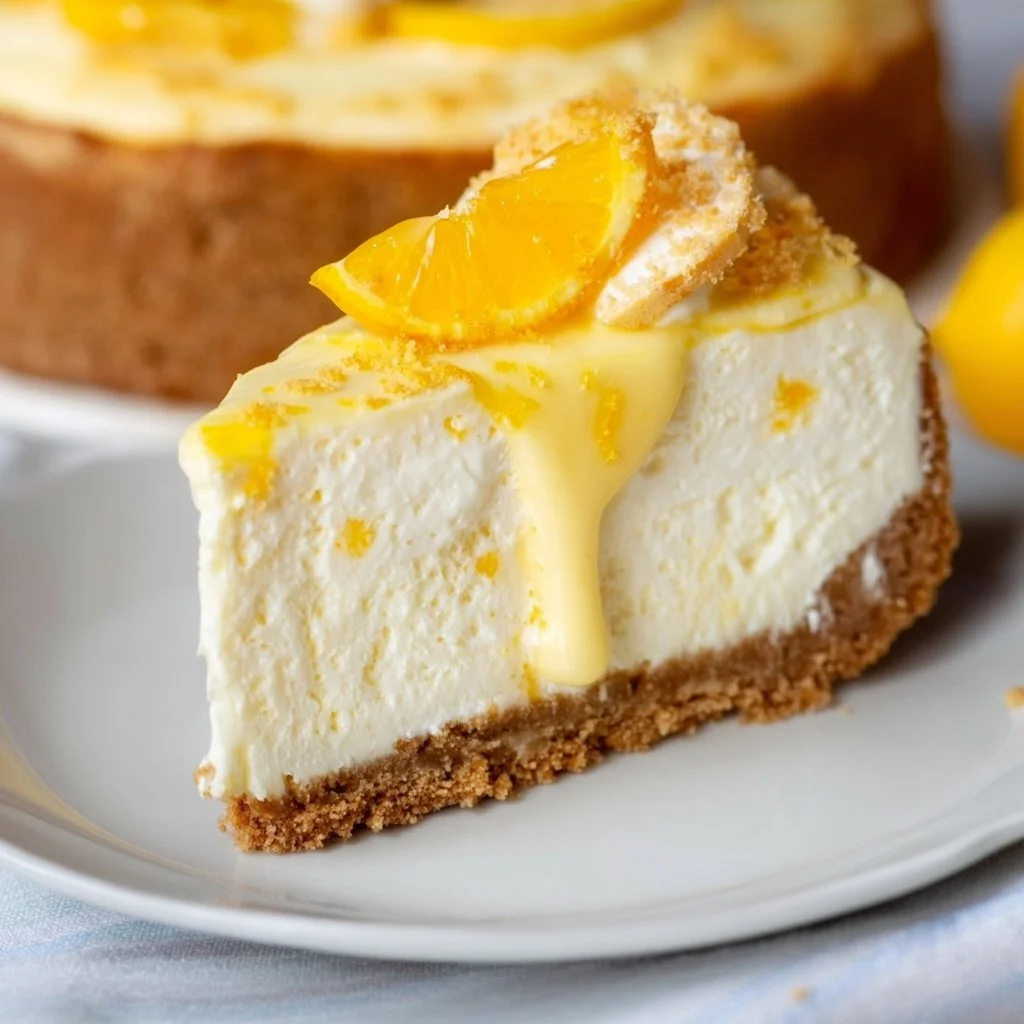
I first made this Meyer lemon cheesecake for a spring brunch when our lemon tree was overflowing. The result: a silky, tangy cheesecake with a bright, glossy lemon curd that cuts through the richness. It’s special because the floral, less-acidic Meyer lemons amplify the cream cheese without overwhelming it—perfect for holidays, dinner parties, or any time you want a show-stopping citrus dessert.
Why you’ll love this dish
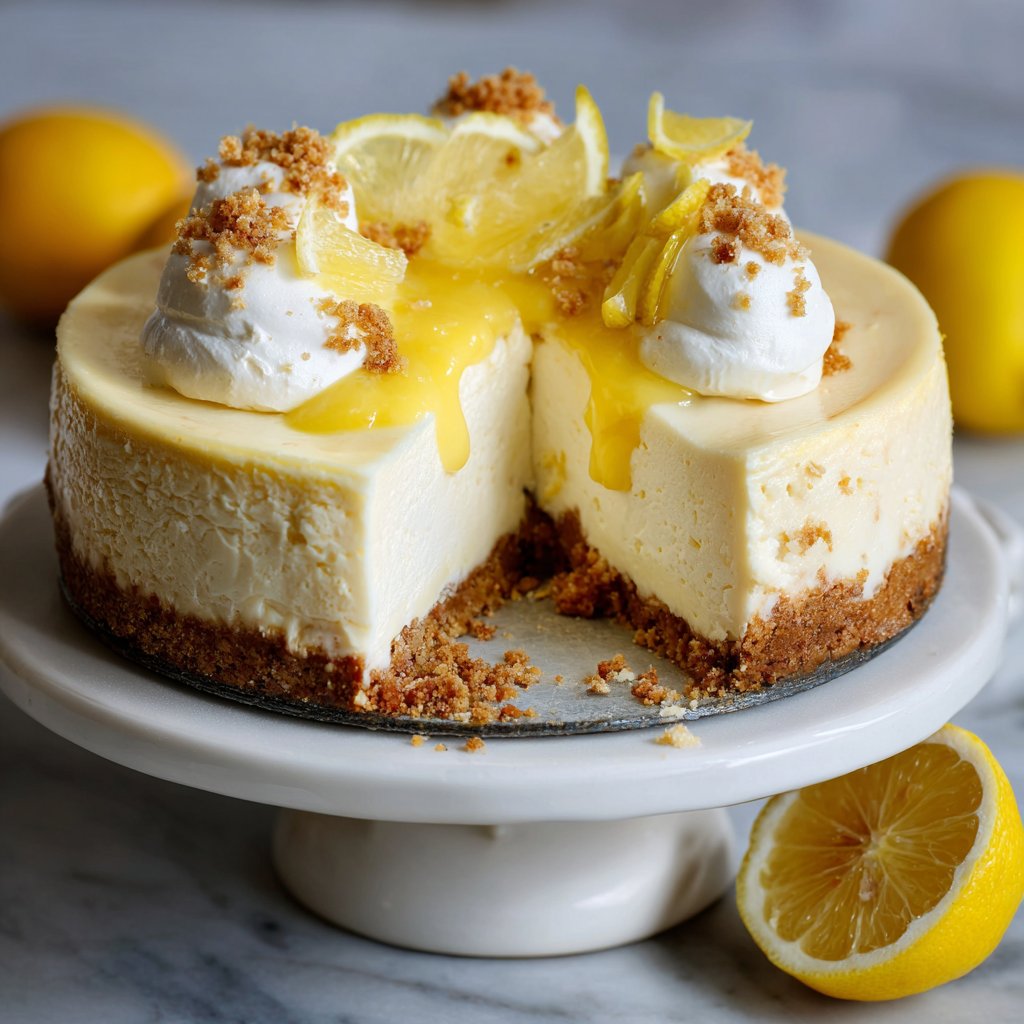
This cheesecake balances decadence and brightness. The graham cracker crust gives a buttery, slightly sweet base. The filling is dense and smooth thanks to room-temperature cream cheese and a touch of cornstarch for stability. Topping it with a creamy Meyer lemon curd adds fresh citrus aroma and a glossy finish.
- Great for spring brunches, Mother’s Day, and holiday desserts.
- Makes a beautiful centerpiece that’s easier than a layered cake.
- The lemon curd can double as toast topping or a backup spread if guests arrive early.
“A perfect balance of rich and bright — guests kept coming back for another slice. The curd makes it feel elegant without extra fuss.” — a quick review from my weekend tasting
How this recipe comes together
Step-by-step overview:
- Press and prebake a simple graham crust.
- Beat a smooth, stabilized cream cheese filling and bake until just set.
- Make a silky Meyer lemon curd separately and cool.
- Chill the cheesecake, then spread or swirl the curd on top before serving.
This sequence keeps textures distinct: crisp crust, custardy center, and glossy curd.
What you’ll need
- 1.5 cups graham cracker crumbs (or 150 g crushed graham crackers) — substitute digestive biscuits or gluten-free crackers.
- 6 Tablespoons melted butter — use salted or unsalted (reduce added salt if using salted).
- Butter for coating the pan (or nonstick spray).
- 2 pounds cream cheese, softened (about 900 g).
- 1 cup granulated sugar.
- 1 Tablespoon cornstarch (helps set the filling).
- 1/4 teaspoon salt.
- 1/2 cup sour cream (adds tang and silkiness).
- 1/4 cup lemon juice (from about 2 Meyer lemons).
- Zest of 2 lemons (for filling).
- 1 teaspoon pure vanilla extract.
- 4 eggs, room temperature.
For the Meyer lemon curd:
- Zest of 3 lemons.
- 1 cup lemon juice (freshly squeezed; about 6–8 Meyer lemons depending on size).
- 1/2 cup granulated sugar.
- 4 whole eggs.
- 4 egg yolks (extra richness).
- 8 Tablespoons unsalted butter (1 stick), cut into pieces.
- Pinch of salt (to taste).
Notes: Use room-temperature eggs and cream cheese for a lump-free filling. If Meyer lemons aren’t available, regular lemons work but the flavor is sharper.
Step-by-step instructions
Cheesecake crust and filling:
- Preheat the oven to 325°F (163°C). Butter a 9-inch springform pan and line the bottom with parchment.
- Combine graham cracker crumbs and melted butter in a bowl. Press evenly into the pan bottom. Chill 10 minutes, then bake 8–10 minutes until set. Cool slightly.
- Beat the softened cream cheese until smooth and lump-free. Scrape the bowl.
- Add sugar, cornstarch, and salt. Beat until incorporated.
- Mix in sour cream, lemon juice, lemon zest (from 2), and vanilla. Keep the mixer low to avoid adding air.
- Add eggs one at a time, mixing gently until just combined. Overbeating introduces air and can cause cracks.
- Pour filling into the crust and smooth the top. Place the springform pan in a shallow roasting pan. Optional: pour hot water into the roasting pan halfway up the springform sides for a water bath—this reduces cracking.
- Bake 50–65 minutes. The edges should be set; the center will still have a slight wobble.
- Turn off the oven, crack the door, and let the cheesecake sit inside 30 minutes to cool gently. Remove and cool to room temperature. Chill at least 4 hours, preferably overnight.
Meyer lemon curd:
- In a medium saucepan, combine lemon juice, lemon zest, and sugar. Warm over low heat until sugar dissolves.
- In a separate bowl, whisk whole eggs and extra yolks until combined. Temper the eggs by slowly whisking a ladle of warm lemon mixture into the eggs. Then whisk the egg mixture back into the saucepan.
- Cook over low-medium heat, stirring constantly, until the curd thickens and reaches about 170–175°F (77–80°C). It should coat the back of a spoon. Do not boil.
- Remove from heat and whisk in butter pieces until fully incorporated and glossy. Season with a pinch of salt. Strain through a fine sieve if you want an ultra-smooth curd. Cool to room temperature, then chill.
Finishing:
- When cheesecake is fully chilled, spread a thin layer of curd over the top or spoon and gently swirl for a marbled effect. Refrigerate until the curd is set.
- Run a thin knife around the springform edge before releasing to get clean sides. Slice with a hot, dry knife for neat pieces.
Best ways to enjoy it
- Serve slices with a dollop of lightly sweetened whipped cream and fresh berries.
- Light dusting of powdered sugar and a sprig of mint makes it photo-ready.
- Pair with sparkling wine or a late-harvest Riesling for a dessert course. For a casual pairing, serve with strong coffee or Earl Grey tea—the bergamot complements Meyer lemon.
- For a buffet, offer the lemon curd on the side so guests can add more if they like extra tang.
Storage and reheating tips
- Refrigerator: Store cheesecake covered for up to 4 days. Keep the curd-topped surface protected with a cake dome or plastic wrap placed carefully (avoid touching the curd).
- Lemon curd: Keeps in an airtight jar in the fridge for 1–2 weeks.
- Freezing: Wrap the cheesecake (whole or in slices) tightly in plastic wrap and then foil. Freeze up to 2 months. Thaw overnight in the fridge. Do not refreeze after thawing.
- Reheating: Enjoy cheesecake cold. If you prefer slightly warmer curd, spoon a small amount of room-temperature curd on top before serving. Avoid microwaving slices—texture suffers.
Pro chef tips
- Bring ingredients to room temperature: cream cheese and eggs blend smoothly and reduce lumps.
- Use cornstarch to stabilize the filling and get clean slices.
- Don’t overmix once eggs are added—stop when streaks disappear.
- Bake gently: a water bath cuts down on cracks and creates an even bake. If you skip the bath, still place the pan on a preheated baking sheet for steadier heat.
- Cool gradually: sudden temperature shifts cause cracks. Let the oven cool with the cheesecake inside for 20–30 minutes after baking.
- For an ultra-smooth curd, strain it and cool it quickly in an ice bath before refrigerating.
Creative twists
- Gluten-free crust: use gluten-free graham crumbs.
- Shortbread crust: swap graham crumbs for crushed shortbread for richer flavor.
- Berry swirl: fold warm raspberry or blueberry compote into the curd before topping for a marbled look.
- Lighter version: swap half the cream cheese for mascarpone for a silkier, lighter mouthfeel.
- Vegan: use dairy-free cream cheese alternatives, a flax-egg stabilizer, and a vegan butter cookie crust; note texture will differ.
Your questions answered
Q: Can I use regular lemons instead of Meyer lemons?
A: Yes. Regular lemons are more acidic and bright; you might want to reduce lemon juice slightly or add a bit more sugar in the curd to balance the tartness.
Q: How long does the cheesecake need to chill before serving?
A: At least 4 hours is recommended; overnight chilling yields the best texture and clean slices.
Q: Can I make the lemon curd ahead of time?
A: Absolutely. It keeps 1–2 weeks in the fridge. Make it ahead to save time on the day you serve the cheesecake.
Q: What if my cheesecake cracks?
A: Cracks don’t affect taste. Cover with curd, whipped cream, or freeze the cheesecake briefly and smooth the top. For next time, try a water bath and avoid overbaking.
Q: Is it safe to use raw eggs in the curd?
A: The curd is cooked to around 170–175°F (77–80°C), which pasteurizes the eggs and thickens the mixture. If you’re serving immunocompromised guests, consult their dietary needs—fully cooked custards are safest.
Conclusion
If you want inspiration for other ways to feature Meyer lemons, check out this take on Meyer Lemon Cheesecake Bars with Lemon Curd Swirl | Love and …, or compare techniques in this classic version at Meyer Lemon Cheesecake. These posts offer complementary approaches and plating ideas to expand on the recipe here.

Meyer Lemon Cheesecake
Ingredients
For the crust
- 1.5 cups graham cracker crumbs or 150 g crushed graham crackers; can substitute with digestive biscuits or gluten-free crackers.
- 6 Tablespoons melted butter use salted or unsalted (reduce added salt if using salted).
- Butter for coating the pan or nonstick spray.
For the cheesecake filling
- 2 pounds cream cheese, softened about 900 g.
- 1 cup granulated sugar
- 1 Tablespoon cornstarch helps set the filling.
- 1/4 teaspoon salt
- 1/2 cup sour cream adds tang and silkiness.
- 1/4 cup lemon juice from about 2 Meyer lemons.
- 1 teaspoon pure vanilla extract
- 4 eggs room temperature
For the Meyer lemon curd
- 1 cup lemon juice freshly squeezed; about 6–8 Meyer lemons depending on size.
- 1/2 cup granulated sugar
- 8 Tablespoons unsalted butter 1 stick, cut into pieces.
- Pinch of salt to taste.
Instructions
Cheesecake crust and filling
- Preheat the oven to 325°F (163°C). Butter a 9-inch springform pan and line the bottom with parchment.
- Combine graham cracker crumbs and melted butter in a bowl. Press evenly into the pan bottom. Chill for 10 minutes, then bake for 8–10 minutes until set. Cool slightly.
- Beat the softened cream cheese until smooth and lump-free. Scrape the bowl.
- Add sugar, cornstarch, and salt. Beat until incorporated.
- Mix in sour cream, lemon juice, lemon zest (from 2), and vanilla. Keep the mixer low to avoid adding air.
- Add eggs one at a time, mixing gently until just combined. Overbeating introduces air and can cause cracks.
- Pour filling into the crust and smooth the top. Place the springform pan in a shallow roasting pan. Optional: pour hot water into the roasting pan halfway up the springform sides for a water bath—this reduces cracking.
- Bake for 50–65 minutes. The edges should be set; the center will still have a slight wobble.
- Turn off the oven, crack the door, and let the cheesecake sit inside for 30 minutes to cool gently. Remove and cool to room temperature. Chill for at least 4 hours, preferably overnight.
Meyer lemon curd
- In a medium saucepan, combine lemon juice, lemon zest, and sugar. Warm over low heat until sugar dissolves.
- In a separate bowl, whisk whole eggs and extra yolks until combined. Temper the eggs by slowly whisking a ladle of warm lemon mixture into the eggs. Then whisk the egg mixture back into the saucepan.
- Cook over low-medium heat, stirring constantly, until the curd thickens and reaches about 170–175°F (77–80°C). It should coat the back of a spoon. Do not boil.
- Remove from heat and whisk in butter pieces until fully incorporated and glossy. Season with a pinch of salt. Strain through a fine sieve if you want an ultra-smooth curd. Cool to room temperature, then chill.
Finishing
- When cheesecake is fully chilled, spread a thin layer of curd over the top or spoon and gently swirl for a marbled effect. Refrigerate until the curd is set.
- Run a thin knife around the springform edge before releasing to get clean sides. Slice with a hot, dry knife for neat pieces.