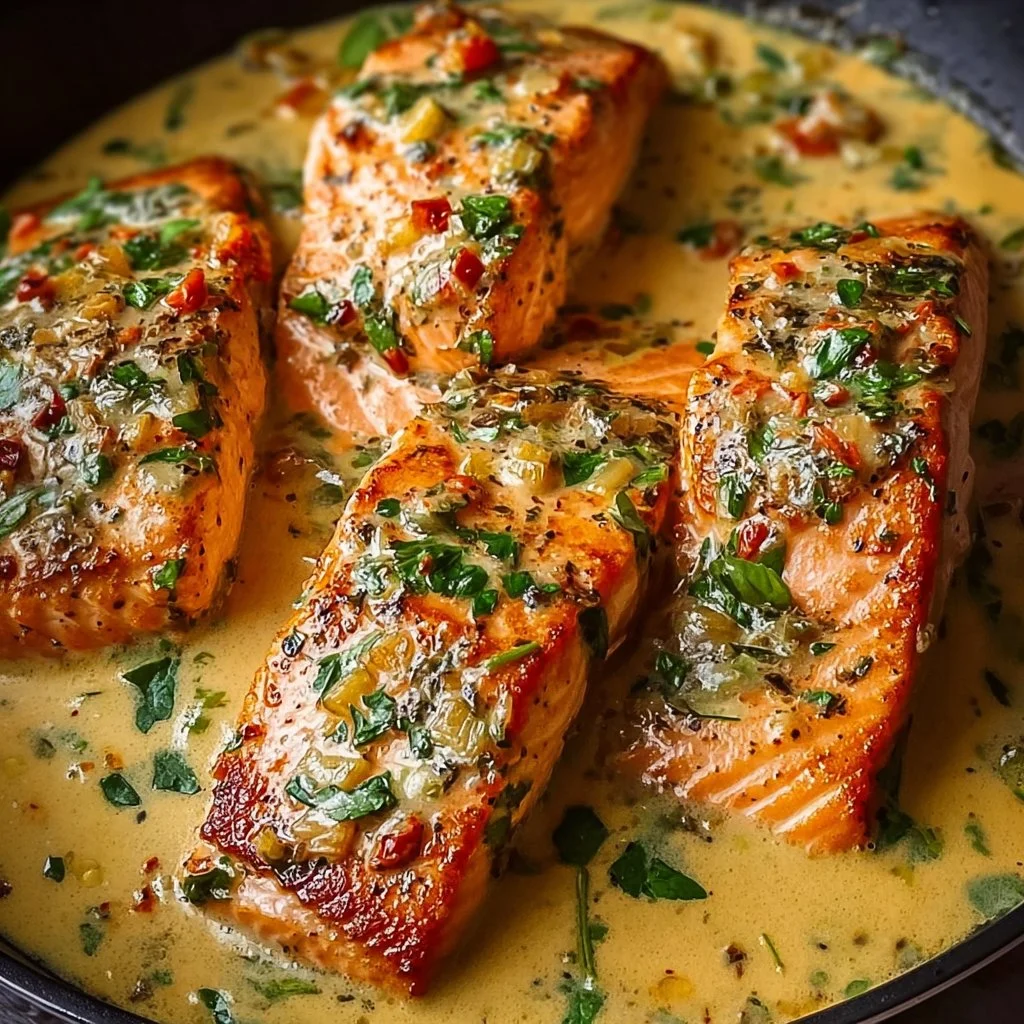
I made this Marry Me Salmon on a hectic weeknight and it felt like pretending we were dining out at home: buttery, garlicky, and silky cream sauce that basically asks for a forkful of crusty bread. It’s an elegant, fast salmon dinner that elevates simple fillets into something worth saving for company — but easy enough for a Tuesday.
Why you’ll love this dish
This recipe turns ordinary salmon into a silky, flavor-forward plate in under 30 minutes. The cream and butter create a velvety sauce that clings to the fish, and a hint of Dijon and Italian seasoning adds just enough tang and herbiness to make every bite interesting. It’s perfect for date nights, family dinners when you want something a little special, or when you want a restaurant-style meal without a lot of fuss.
“Rich, garlicky, and surprisingly simple — the sauce is addicting and the salmon stays tender every time.” — a regular at my dinner table
Quick wins: it’s fast (30 minutes start to finish), pantry-friendly (Dijon and Italian seasoning do heavy lifting), and very forgiving: slightly undercooked salmon is still good here because the creamy sauce keeps it moist.
How this recipe comes together
Step-by-step overview:
- Warm butter in an oven-safe skillet and sauté garlic to release aroma.
- Make a quick cream sauce with heavy cream, chicken broth, Dijon, and Italian seasoning; reduce a few minutes.
- Nestle salmon fillets into the sauce, spoon some on top, and bake until just cooked through.
- Finish with fresh parsley and serve.
This short process keeps active hands to a minimum and gives you a rich sauce that doubles as a dip for sides.
Gather these items
- 4 salmon fillets (about 6 oz each), skin-on or skinless
- 2 tablespoons unsalted butter
- 3 cloves garlic, minced
- 1 cup heavy cream
- 1/4 cup chicken broth (or use fish or vegetable broth for pescatarian/vegetarian)
- 1 teaspoon Dijon mustard
- 1/2 teaspoon Italian seasoning
- Salt and freshly ground black pepper, to taste
- Fresh parsley, chopped, for garnish
Notes/substitutions:
- Heavy cream: swap for half-and-half plus a tablespoon of cornstarch if you want a lighter but still creamy sauce; coconut cream works for dairy-free but flavor will change.
- Chicken broth: vegetable or fish stock works well and keeps it pescatarian.
- Dijon: whole-grain mustard or a teaspoon of lemon juice + pinch of sugar can add brightness if you’re out of Dijon.
Directions to follow
- Preheat your oven to 400°F (200°C).
- Pat the salmon dry and season lightly with salt and pepper.
- Heat an oven-safe skillet over medium heat and melt the butter.
- Add the minced garlic and sauté for 30–45 seconds until fragrant — don’t let it brown.
- Pour in the heavy cream and chicken broth, then stir in the Dijon mustard and Italian seasoning.
- Bring the sauce to a gentle simmer and let it reduce for 2–3 minutes so it thickens slightly.
- Place the salmon fillets into the skillet, skin-side down (if they have skin). Spoon some of the sauce over the tops.
- Transfer the skillet to the preheated oven and bake 12–15 minutes, depending on thickness, until the salmon flakes easily with a fork or reaches your desired doneness.
- Remove from oven, spoon extra sauce over fillets, and garnish with chopped parsley before serving.

What to serve it with
Best ways to enjoy it:
- Starchy sides: garlic mashed potatoes, lemon-herb rice, or buttery new potatoes soak up the sauce beautifully.
- Vegetables: roast asparagus, sautéed green beans, or a simple arugula salad for peppery contrast.
- Breads: crusty baguette or sourdough to mop up the cream sauce.
- Wine pairing: a crisp Sauvignon Blanc or an unoaked Chardonnay complements the richness.
For plating, spoon a generous pool of sauce on the plate, place the salmon on top, and scatter parsley and a thin lemon slice for color and brightness.
Keeping leftovers fresh
Storage and reheating tips:
- Refrigerate leftovers in an airtight container within 2 hours of cooking. Use within 3 days.
- Reheat gently: warm in a 300°F oven for 8–10 minutes or reheat on the stovetop over low heat until warmed through. Cover the skillet to prevent drying out.
- Freezing: you can freeze cooked salmon in the sauce for up to 2 months. Thaw overnight in the refrigerator before reheating. Note: texture may change slightly after freezing.
- Food safety: reheat leftovers to at least 165°F (74°C) before serving.
Pro chef tips
- Pat salmon dry: removing surface moisture helps you get better browning and prevents the sauce from diluting.
- Room temperature fish: let fillets sit 10–15 minutes before cooking for even cooking.
- Don’t overcook: salmon continues to cook a bit after you remove it from the oven; pulling it at 125–130°F gives a tender, slightly pink center. The USDA recommends 145°F for complete doneness — choose based on your preference and any vulnerable diners (pregnant people, elderly, immunocompromised should follow 145°F).
- Control sauce thickness: simmer a little longer for a thicker sauce, or add a teaspoon of cornstarch slurry (1 tsp cornstarch + 1 tbsp cold water) if you need it to cling more.
- Add quick color: sear the salmon for 1–2 minutes skin-side down before adding the sauce if you want a crisp edge and deeper flavor.
Creative twists
- Sun-dried tomato and basil: fold in chopped sun-dried tomatoes and fresh basil for a Mediterranean turn.
- Spicy version: add 1/4 teaspoon red pepper flakes or a drizzle of harissa for heat.
- Parmesan cream: stir in 1/4 cup grated Parmesan into the sauce for a nuttier depth.
- Lighter swap: use half-and-half and reduce to concentrate flavor; finish with a squeeze of lemon to brighten.
- Herb-forward: replace Italian seasoning with dill and lemon zest for a classic salmon pairing.
FAQ
Q: Can I use frozen salmon?
A: Yes — thaw completely in the fridge overnight and pat dry before cooking. Cooking from frozen will increase cooking time and can make the sauce watery, so thawing is recommended for best texture.
Q: How do I know when the salmon is done?
A: The fish should flake easily with a fork and feel slightly firm. For precise doneness, use an instant-read thermometer: 125–130°F for medium-rare, 145°F for fully cooked per USDA guidance. Remember it will carryover cook a bit after coming out of the oven.
Q: Can I make this dairy-free?
A: Replace heavy cream with full-fat coconut milk or a dairy-free cream alternative. The flavor profile will shift (coconut notes), so consider adding extra Dijon and lemon to balance richness.
Q: Can I scale the recipe up or down?
A: Yes. Keep sauce ratios similar — for each additional 2 fillets, add roughly 1/2 cup cream and 2–3 tablespoons broth and adjust seasoning. Use a larger oven-safe pan to ensure even cooking.
Q: Is the dish freezer-friendly?
A: Cooked salmon in sauce can be frozen in an airtight container for up to 2 months. Thaw overnight in the refrigerator and reheat gently to avoid overcooking.
Conclusion
If you want another take or inspiration for variations, check out the recipe inspiration from The Recipe Critic and a different spin at Moribyan’s Marry Me Salmon. Both pages offer helpful photos and tweaks that pair nicely with the method above.
The Recipe Critic version of Marry Me Salmon | Moribyan’s Marry Me Salmon

Marry Me Salmon
Ingredients
For the Salmon
- 4 pieces salmon fillets (about 6 oz each) can be skin-on or skinless
- 2 tablespoons unsalted butter for cooking
- 3 cloves garlic, minced adds flavor to the sauce
- 1 cup heavy cream for the creamy sauce
- 1/4 cup chicken broth or use fish or vegetable broth for pescatarian/vegetarian
- 1 teaspoon Dijon mustard adds tang to the sauce
- 1/2 teaspoon Italian seasoning for added herbs
- Salt and freshly ground black pepper, to taste
- Fresh parsley, chopped, for garnish for finishing the dish
Instructions
Preparation
- Preheat your oven to 400°F (200°C).
- Pat the salmon dry and season lightly with salt and pepper.
- Heat an oven-safe skillet over medium heat and melt the butter.
- Add the minced garlic and sauté for 30–45 seconds until fragrant — don’t let it brown.
Cooking
- Pour in the heavy cream and chicken broth, then stir in the Dijon mustard and Italian seasoning.
- Bring the sauce to a gentle simmer and let it reduce for 2–3 minutes so it thickens slightly.
- Place the salmon fillets into the skillet, skin-side down (if they have skin). Spoon some of the sauce over the tops.
- Transfer the skillet to the preheated oven and bake for 12–15 minutes, depending on thickness, until the salmon flakes easily with a fork or reaches your desired doneness.
- Remove from oven, spoon extra sauce over fillets, and garnish with chopped parsley before serving.