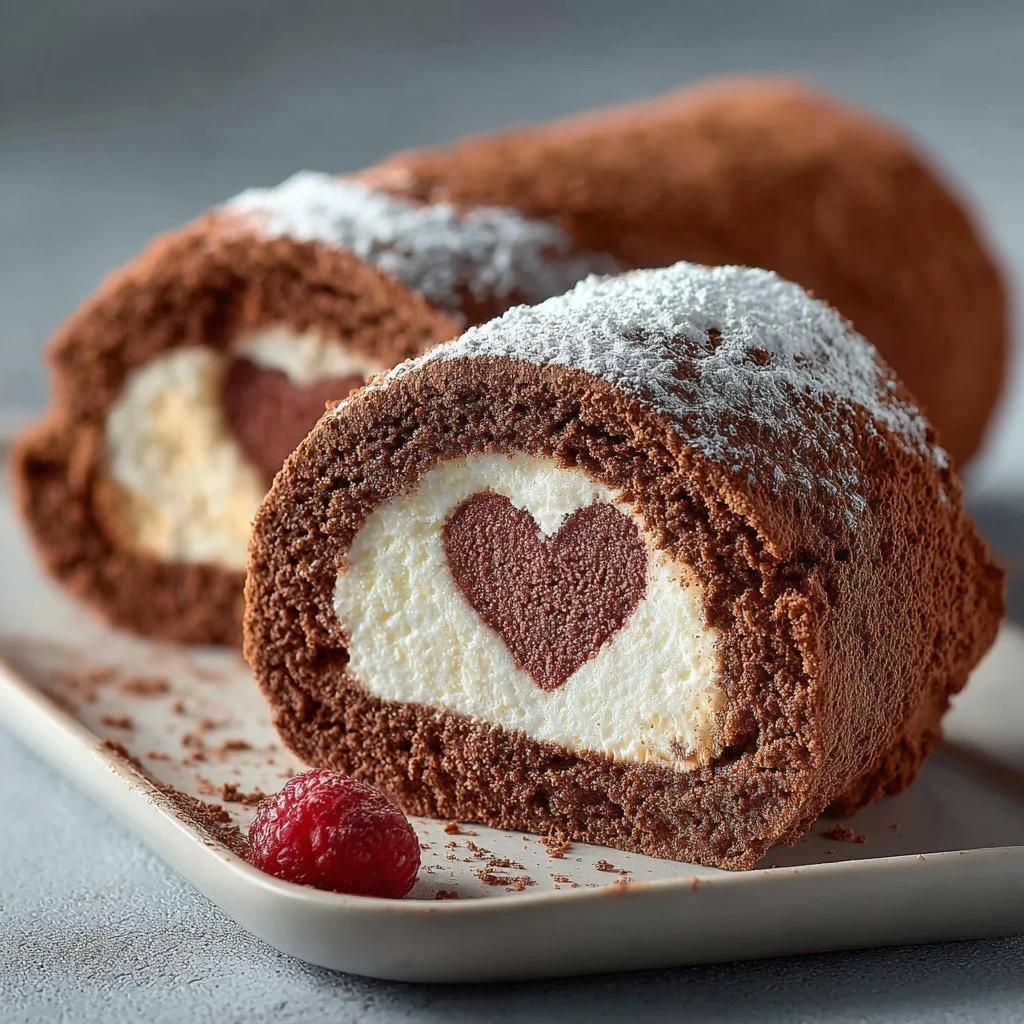
The first time I made this hearts roll cake, I thought the heart pattern would be a disaster.
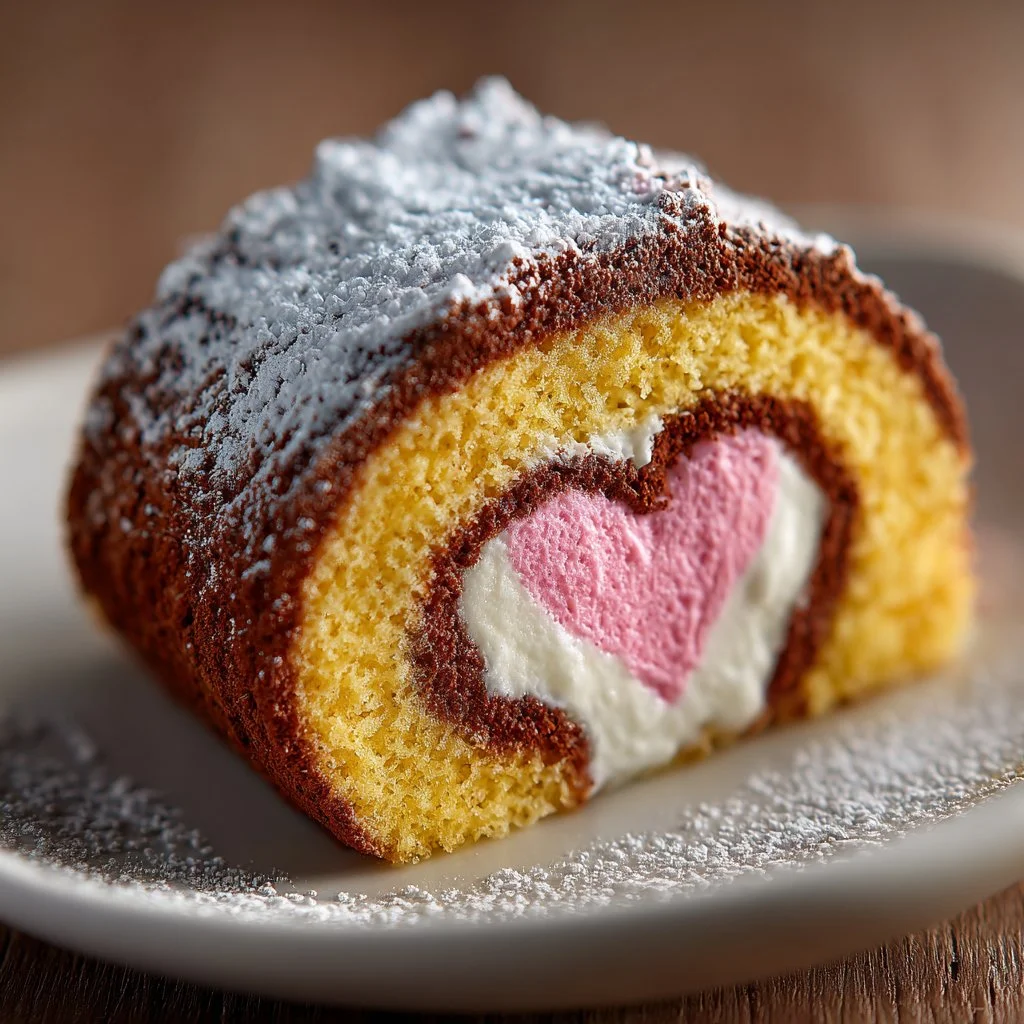
It turned out perfectly — a thin, tender red sponge wrapped around a silky buttercream that tastes like Valentine’s Day on a plate.
This recipe is dramatic but surprisingly approachable, and it holds up for gifting or a small dinner party.
Why You’ll Love This Recipe
– Show-stopping heart pattern without complicated piping.
– A light, flexible sponge that rolls cleanly with no cracking.
– Classic buttercream filling that’s rich but not cloying.
– Perfect scale for two to six servings and easy to scale up.
The cake texture is soft and springy because the sponge is mostly egg-based and baked thin; that lets it bend without breaking and soak up flavor from the buttercream. The taste balances a faint cocoa note in the red patterned batter with a rich, vanilla-forward buttercream, so each slice feels celebratory without being overly sweet.
“Made this for Valentine’s and everyone asked for the recipe — the heart pattern is magical and the cake stayed moist for days. 5 stars!” — Megan, reader
Key Ingredients
Eggs (4 large)
Eggs are the structure and lift in this roll cake. Use large, room-temperature eggs for maximum volume when you whisk them; cold eggs whip less effectively, which can make the sponge dense.
Cake flour (120 g / 1 cup)
Cake flour gives the sponge a tender crumb because it has a lower protein content than all-purpose flour. If you don’t have cake flour, make your own by replacing 2 tbsp of each cup of all-purpose with cornstarch, but the store-bought option (like King Arthur or Bob’s Red Mill cake flour) is worth it for a fragile roll.
Unsalted butter (2 cups total; 1 cup for batter, 1 cup for frosting)
Butter is flavor and mouthfeel. Use high-fat, high-quality butter (European-style if you can) for the frosting and an unsalted stick in the batter so you can control the salt level. Room-temperature butter creams smoother and yields a glossy frosting.
Granulated sugar (46 tbsp ≈ 2 7/8 cups)
Yes, this recipe lists 46 tablespoons — that’s intentional for balance between sponge sweetness and the buttercream. Use regular granulated sugar for the sponge so it dissolves well during whipping. If you prefer slight refinement, Sucanat or caster sugar can be used in the sponge (but stick to granulated in frosting).
Full ingredient list
- 4 large eggs
- 120 g 1 cup cake flour
- 2/3 cup all-purpose flour
- 3/4 tsp baking powder
- 1/2 tsp baking soda
- 3 tbsp cocoa powder (unsweetened)
- 1 tsp red food coloring
- 46 tbsp granulated sugar (yes, 46 tbsp = approx. 2 7/8 cups)
- 1/2 cup powdered sugar
- 5/8 tsp salt
- 2 tsp vanilla extract
- 3 tbsp vegetable oil
- 1 tsp white vinegar
- 2 cups butter (1 cup for batter, 1 cup for frosting)
- 2 tbsp buttermilk
- 2 cups whole milk
Step-by-Step Instructions
Step 1: Prepare the Heart Batter
Separate a small portion of the batter base and color it intensely with the red food coloring; fold in the cocoa powder for contrast.
Pipe or spread the red batter into heart shapes on a lined jelly-roll pan, using a heart template under the parchment if you want precision.
Pro Tip: Use a disposable piping bag with a small round tip for clean hearts; tap the pan gently to release air bubbles. You’ll know the hearts are ready for the next layer when they appear set but not fully dry to the touch.
Step 2: Make the Sponge Cake
Whip the eggs with a portion of sugar until tripled in volume and pale in color; this is the leavening backbone of the roll.
Gently fold in sifted cake flour and a little vegetable oil, then spread the batter evenly over the hearts, covering them without disturbing the pattern.
Pro Tip: Use an offset spatula and a ruler or bench scraper to level the batter for an even bake. The batter will look glossy and ribbon when you lift the whisk — that’s the sign of proper aeration.
Step 3: Bake and Roll
Bake at a moderate temperature until the sponge springs back lightly; avoid over-baking or it will become brittle.
Turn the hot cake onto a clean towel dusted with powdered sugar; roll the cake with the towel while still warm and let it cool fully rolled to set the curve.
Pro Tip: If the cake feels hot and tight when rolling, let it cool just 3–5 minutes; rolling warm sets the cake’s memory and prevents cracking later. When you unroll to fill, the cake should bend easily without snapping.
Step 4: Make the Filling
Beat room-temperature butter with powdered sugar and vanilla until very smooth; add buttermilk to thin and whole milk only if you need to reach spreadable consistency.
Unroll the cooled sponge, spread an even layer of buttercream, and re-roll gently without the towel. Chill briefly to set the filling, then frost the outside if desired.
Pro Tip: For an ultra-smooth finish, chill the rolled cake for 20 minutes before final crumb-coating, and use an offset spatula to smooth the final layer.
Expert Tips for Success
– Temperature control matters: keep eggs and butter at room temperature for easier aeration and smoother buttercream. Cold ingredients slow emulsification and change texture.
– Whipping eggs properly: beat eggs with sugar until the mixture forms ribbons that fall slowly from the whisk; that stage gives the sponge its lift and flexibility. Under-whipped eggs lead to dense cake, over-whipped can collapse.
– Gentle folding technique: always use a rubber spatula and a light hand when incorporating flour into whipped eggs. Cut through the center, scoop the batter from the bottom, and fold over — repeat until just combined. Overmixing develops gluten and ruins tenderness.
– Choosing pans and lining: use a rimmed jelly-roll pan (about 10×15 inches) for even edges. Line with parchment and trim to fit snugly so the batter spreads evenly and the hearts align without pooling.
– Color saturation: add red food coloring sparingly and judge by depth. Gel colors deliver vivid hue with less liquid than liquid dyes. If you want a deeper red without excess dye flavor, combine gel color with a touch of beet powder.
– Avoid over-baking: bake just until the sponge springs back. If it’s slightly under-baked, it can still be rolled and will finish setting as it cools; over-baked sponge cracks and becomes hard to roll.
– Cooling and rolling timing: roll warm (with towel) to set shape, then unroll when completely cool for filling. Rolling warm again with filling will help achieve a sleek seam without creases.
– Buttercream consistency: for the filling, aim for a spreadable but firm buttercream. If it’s too soft, chill briefly; if too stiff, add a splash of milk or buttermilk. Using powdered sugar fresh from a sealed bag gives a smoother finish.
– Equipment shortcuts: if you don’t own a piping bag for hearts, use a zip-top bag with a corner snipped off and work over a printed template under the parchment. A silicone mat also works well for transfer.
– Taste test as you go: when you add cocoa to the red batter or vanilla to the frosting, taste small amounts. You can dial up cocoa for richer contrast or add a pinch more salt to the frosting to balance sweetness.
Storage & Freezing
Fridge: Wrap the rolled cake tightly in plastic wrap and place in an airtight container.
Keep refrigerated for up to 4 days; the buttercream will firm and flavor will meld, improving sliceability.
To freeze short-term: wrap the cake in plastic wrap, then in foil, and freeze flat.
Freeze for up to 1 month for best texture. Thaw in the refrigerator overnight to avoid condensation diluting the frosting.
To freeze individual slices: freeze on a tray until solid, then stack with parchment between slices and store in a sealed bag.
Reheat slices at room temperature for 30–60 minutes before serving, or warm gently in a 275°F/135°C oven for 6–8 minutes loosely tented in foil for a just-baked feel.
Avoid microwaving: reheating in the microwave makes buttercream greasy and sponge chewy.
If you need a quick thaw, leave wrapped at room temperature for 1–2 hours, then unwrapped for 10 minutes before serving.
Variations & Substitutions
Strawberry version: replace 1/2 cup of whole milk with pureed strawberries and reduce water content slightly; add strawberry extract to the buttercream.
Chocolate lovers: increase cocoa in the patterned batter and add a chocolate ganache thin layer before frosting for a deeper chocolate hit.
Dairy-free swap: use plant-based butter sticks designed for baking and full-fat oat or almond milk; check brands for baking-fat percentage to mimic mouthfeel.
Lower-sugar option: reduce granulated sugar in sponge by 10–15% and use a half powdered sugar/half erythritol blend in frosting, but keep sugar in the sponge enough for structure.
Frequently Asked Questions
Q: How do I make perfect hearts every time?
A: Use a printed heart template under the parchment and pipe a relatively thick red batter for the pattern so it holds during the second pour. Chill the hearts for a few minutes if your kitchen is warm to prevent spreading.
Q: My roll cracked — how can I prevent that?
A: Cracking is almost always from over-baked or under-aerated sponge. Ensure eggs are beaten to ribbons and bake just until the sponge springs back. Roll warm with a towel immediately to set the curve and avoid a cold, rigid sponge.
Q: Can I make the sponge ahead of time?
A: Yes. Bake and roll warm into the towel, then cool fully wrapped and refrigerated overnight. Unroll the next day, fill, and re-roll. This actually makes assembly less stressful.
Q: How do I get a thinner, more delicate pattern?
A: Use a thinner piping tip and a slightly runnier red batter, but be careful — too runny and the hearts will blur when you pour the main sponge. Practice on a small sheet first to dial in consistency.
Q: Can I use natural food coloring?
A: Yes, beet powder or concentrated freeze-dried strawberry powder can add red hue. They’ll be less vivid than synthetic gels and may slightly alter flavor, so adjust other flavors accordingly.
Final Thoughts
This hearts roll cake is a baker’s little showpiece: dramatic, tender, and surprisingly forgiving.
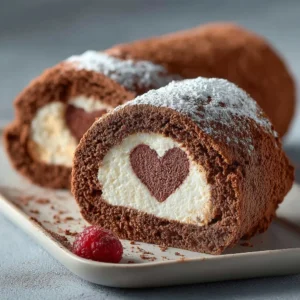
Make it for a small Valentine’s gathering or a romantic dinner, and enjoy the “wow” moment when you slice through the hearts.
Conclusion
For more inspiration on seasonal confections and creative roll cakes, check the Valentine’s dessert roundup at Valentine’s Day Desserts – ZoëBakes.
If you want a different approach to a patterned roll, see the technique used in the Strawberry Roll Cake (Valentine’s Heart Pattern!) – Tara Teaspoon for additional ideas.
Please leave a star rating in the recipe card below and pin this to Pinterest if you loved it.
Hearts Roll Cake
Ingredients
For the Heart Batter
- 4 large eggs Use room-temperature eggs for maximum volume.
- 120 g cake flour Lower protein content gives a tender crumb.
- 2/3 cup all-purpose flour Add to the sponge for balance.
- 3/4 tsp baking powder
- 1/2 tsp baking soda
- 3 tbsp cocoa powder (unsweetened)
- 1 tsp red food coloring
- 46 tbsp granulated sugar About 2 7/8 cups, for balance between sponge and buttercream.
- 1/2 cup powdered sugar For the filling.
- 5/8 tsp salt
- 2 tsp vanilla extract
- 3 tbsp vegetable oil
- 1 tsp white vinegar
For the Buttercream Filling
- 2 cups butter 1 cup for batter, 1 cup for frosting; use room temperature.
- 2 tbsp buttermilk Adjust for buttercream consistency.
- 2 cups whole milk
Instructions
Preparation of Heart Batter
- Separate a small portion of the batter base and color it intensely with red food coloring; fold in cocoa powder for contrast.
- Pipe or spread the red batter into heart shapes on a lined jelly-roll pan with or without a template.
- Use a disposable piping bag with a small round tip for clean hearts and tap the pan gently to release air bubbles.
Making the Sponge Cake
- Whip the eggs with some of the sugar until tripled in volume and pale.
- Gently fold in sifted cake flour and vegetable oil, then spread batter evenly over the hearts.
Baking and Rolling
- Bake until the sponge springs back lightly.
- Turn the hot cake onto a clean towel dusted with powdered sugar and roll while still warm.
Making the Filling
- Beat butter with powdered sugar and vanilla until smooth; add buttermilk to thin.
- Unroll the cooled sponge, spread an even layer of buttercream, and re-roll gently.