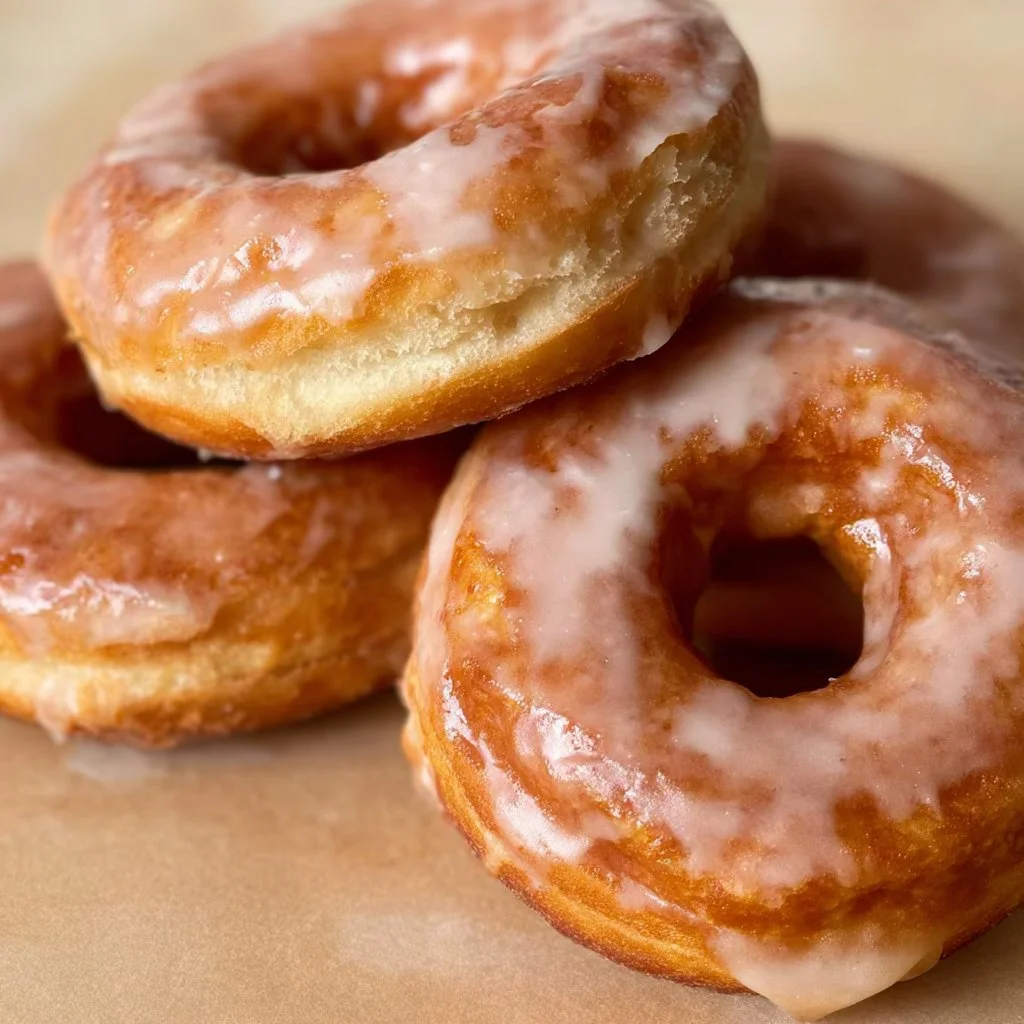
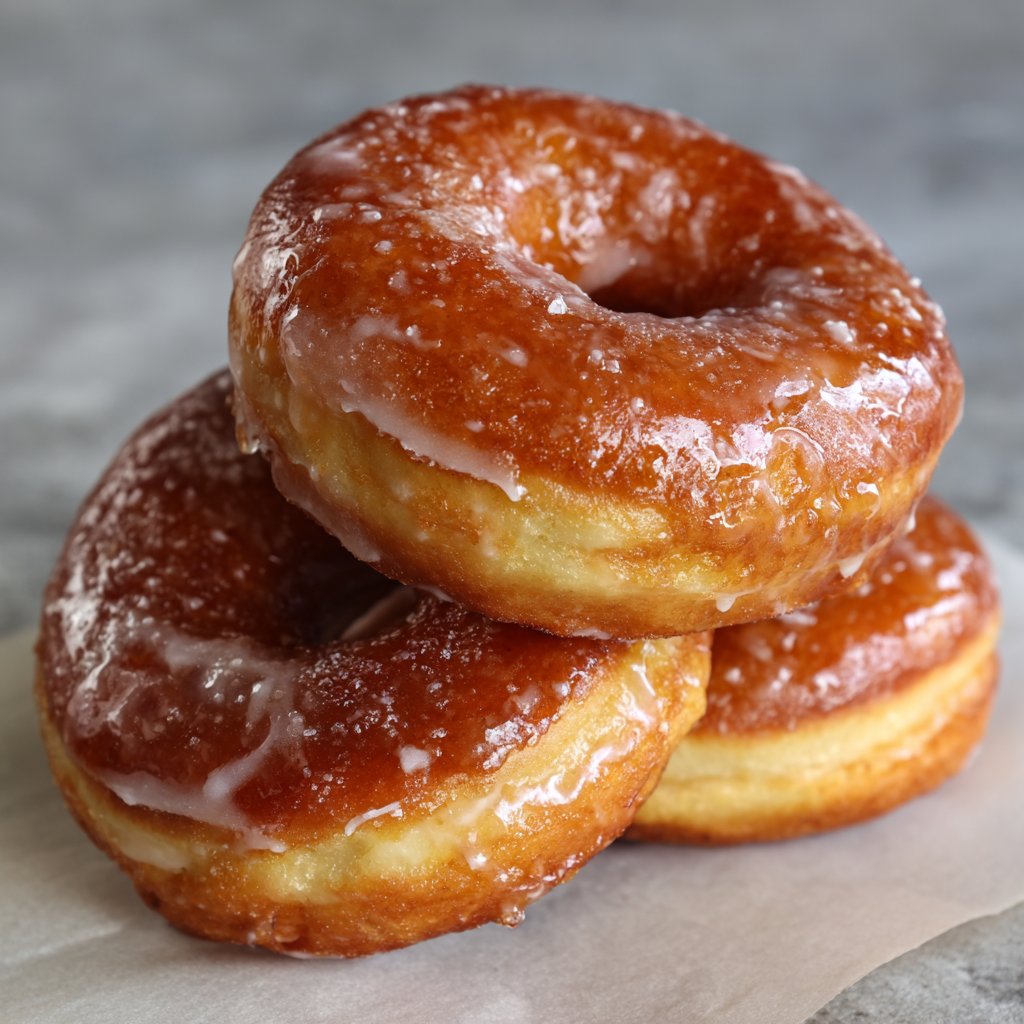
I learned to make glazed sourdough donuts on a sleepy Sunday, when the starter was active and the house smelled like warm bread and butter. These donuts use an active 100% hydration sourdough starter as the sole leavener, producing a tender crumb with a mild tang and deep flavor you won’t get from instant yeast alone. They’re perfect for weekend brunches, coffee runs, or anytime you want a slightly sophisticated treat that’s still homey and comforting.
Why you’ll love this dish
This recipe blends two beloved baking worlds: the complex flavor of sourdough and the pure comfort of a glazed donut. By using a mature 100% hydration starter, you get subtle tang, improved texture, and a more flavorful donut that stays interesting bite after bite. It’s an excellent way to use an active starter — no discard waste here.
- Great for brunch, weekend baking, or gifting.
- Uses pantry-friendly ingredients and one starter as the leavener.
- Flexible: you can fry for classic texture or bake for a lighter version.
“These donuts were the single best reason to get up early on Saturday—crispy edges, pillowy centers, and the most addictive glaze.” — home baker review
Step-by-step overview
Before you dive in, here’s the process at a glance so you know what to expect:
- Mix the wet and dry ingredients to form a soft dough.
- Strengthen with folds or a short knead to develop gluten.
- Let the dough bulk ferment until puffy (time varies with starter activity).
- Roll to about 1/2-inch thickness and cut donut shapes.
- Proof a second time until noticeably puffed.
- Either bake until lightly golden or fry in coconut oil until golden brown.
- Dip in a simple powdered sugar glaze while still slightly warm.
What you’ll need
- 1 cup 100% hydration sourdough starter (250 g) — active and bubbly. If your starter is cooler or less active, give it a feed 4–8 hours before baking.
- 1/2 cup whole milk (115 g) — room temperature. Can substitute with buttermilk for tang or plant milk for dairy-free baked version (affects richness).
- 1 large egg — for structure and richness; use egg replacer in vegan swaps.
- 1/4 cup raw cane sugar (55 g) — you can use granulated sugar instead.
- 1/4 cup melted unsalted butter (50 g) — salted is okay if you reduce added salt. For vegan, use coconut oil or margarine.
- 1 tsp vanilla (3 g) — adds depth to the glaze and dough.
- 1 tsp salt (4 g) — balances sweetness.
- 2 1/4 cups organic bread flour (290 g) — gives chew and structure. All-purpose can be used but donuts may be slightly softer.
- 2 cups powdered sugar — for the glaze.
- 1/4 cup whole milk — to thin the glaze. Use more or less for desired consistency.
- 1–3 cups coconut oil — for frying. Refined coconut oil has a higher smoke point and milder flavor; use neutral oil if you prefer.
Notes: Weigh ingredients where possible for consistent results. The recipe assumes an active starter (bubbly and at peak).
Directions to follow
-
Mix the Dough:
- In a large bowl, whisk the sourdough starter, 1/2 cup room-temperature milk, egg, raw cane sugar, melted butter, and vanilla until combined.
- Add the salt and 2 1/4 cups bread flour. Stir with a wooden spoon or dough hook until a shaggy dough forms.
-
Strengthen the Dough:
- Turn the dough onto a lightly floured surface and knead 4–6 minutes until smooth and slightly elastic. Alternatively, use a stand mixer with the dough hook on medium-low for 3–4 minutes. The dough should hold together and pass a gentle windowpane test if you want to be precise.
-
Bulk Rise:
- Place the dough in a lightly oiled bowl, cover, and let it rise at room temperature until noticeably puffy and slightly risen — typically 3–6 hours depending on starter strength and room temperature. Cooler kitchens will take longer. Option: refrigerate overnight for a slower, more developed flavor; bring back to room temp before shaping.
-
Roll and Cut:
- Lightly flour a work surface and roll the dough to about 1/2-inch thickness (12 mm). Use a 3-inch donut cutter or a 3-inch round cutter plus a 1-inch cutter for the center. Re-roll scraps once or twice for more donuts.
-
Second Rise:
- Place cut donuts and holes on a parchment-lined tray, cover lightly with plastic or a kitchen towel, and proof until puffy and slightly jiggly — about 45–90 minutes. They should spring back slowly when touched.
-
Instructions for Baked Sourdough Donuts:
- Preheat oven to 350°F (175°C). Brush tops lightly with melted butter or milk for a golden finish.
- Bake donuts for 10–14 minutes, until set and just beginning to brown on the edges. Cool slightly before glazing.
-
Instructions for Fried Sourdough Donuts:
- Heat 1–3 cups coconut oil in a heavy-bottomed skillet or Dutch oven to 350°F (175°C). Use a thermometer for accuracy.
- Fry 2–3 donuts at a time (do not overcrowd) for about 1–1.5 minutes per side, flipping once, until golden brown. Transfer to a wire rack set over paper towels to drain. Fry donut holes for 45–60 seconds per side.
- Important: Maintain oil temperature. If it drops, donuts absorb oil; if it’s too hot, the exterior will burn before the center cooks.
-
Glaze:
- Whisk 2 cups powdered sugar with 1/4 cup milk and 1 tsp vanilla (optional) until smooth. Add milk a tablespoon at a time to reach a glossy, dip-friendly consistency.
- Dip warm donuts into glaze, let excess drip off, then place back on a rack to set. For a thicker coating, dip twice after the first layer sets.
Best ways to enjoy it
- Serve warm the same day for the best texture. Pair with black coffee, espresso, or a creamy latte.
- For brunch, plate with fresh berries and a dollop of crème fraîche or yogurt.
- Make a donut sandwich: split, smear with pastry cream, and top with glaze for an indulgent treat.
- Pack a few for a picnic—keep them in a single layer to prevent glazing from sticking.
Storage and reheating tips
- Room temperature: Store glazed donuts in an airtight container at room temp for up to 48 hours. After that they begin to stale.
- Refrigerator: You can refrigerate for 3–4 days, but refrigeration may make them slightly firmer. Bring to room temperature or warm briefly before serving.
- Freezing: Freeze unglazed donuts wrapped tightly in plastic and foil for up to 1 month. Thaw, then glaze after warming. Glazed donuts can be frozen, but the glaze may change texture on thawing.
- Reheating: Warm in a 300°F (150°C) oven for 5–8 minutes, or microwave for 10–12 seconds for a quick warm-up. Avoid overheating.
Pro chef tips
- Use a scale. Weighing flour and starter gives far more reliable results than cups.
- Keep the starter active. Feed 4–8 hours before using if it’s sluggish.
- Control oil temperature with a thermometer. That’s the single biggest factor for even frying.
- Don’t overproof. Overproofed donuts collapse when fried/baked. Look for a slow spring back.
- Refined coconut oil is a safer frying choice (higher smoke point) if you’re concerned about flavor or heat.
Creative twists
- Chocolate-glazed: Add 2–3 tbsp cocoa powder to the powdered sugar glaze and thin with milk.
- Citrus glaze: Add 1–2 tsp lemon or orange zest and 1 tbsp juice to the glaze for brightness.
- Cinnamon-sugar: Skip the glaze and toss warm donuts in cinnamon-sugar for a classic twist.
- Whole grain: Replace 1 cup bread flour with whole wheat for a nuttier profile; add an extra tablespoon of milk if dough feels stiff.
- Vegan version: Use plant milk, replace butter with coconut oil, and swap the egg for a flax “egg” (1 tbsp ground flax + 3 tbsp water).
Common questions
Q: Can I use sourdough discard for this recipe?
A: Yes, but discard is less active. Expect longer bulk and second rises. For more reliable lift, use a recently fed, bubbly starter.
Q: What’s the ideal oil to fry these in?
A: Refined coconut oil works and matches the recipe, but neutral oils with high smoke points (peanut, vegetable, or canola) are safe alternatives. Keep oil at 350°F (175°C).
Q: Why are my donuts dense?
A: Common causes: underproofed dough (not risen enough), heavy starter (not active), or overmixing after shaping. Make sure the dough puffs up in both bulk and second rises.
Q: Can I make these ahead?
A: Yes. You can refrigerate shaped donuts overnight (covered) and fry/bake the next morning. This gives a little extra flavor depth from slow fermentation.
Q: Are these safe to eat the next day?
A: Yes, within 48–72 hours if stored properly. For best texture, reheat briefly before serving.
Conclusion
If you want another reference or inspiration for glazed sourdough donuts, check this detailed version from Glazed Sourdough Donuts – Made in Motherhood. For a whole-grain and coconut-oil take on sourdough doughnuts, see Sourdough Donuts With Vanilla Glaze – Farmhouse on Boone.

Glazed Sourdough Donuts
Ingredients
Dough Ingredients
- 1 cup 100% hydration sourdough starter (250 g) active and bubbly. If starter is cooler, feed 4–8 hours before baking.
- 1/2 cup whole milk (115 g) room temperature. Can substitute with buttermilk for tang or plant milk for dairy-free.
- 1 large egg for structure and richness; use egg replacer for vegan.
- 1/4 cup raw cane sugar (55 g) granulated sugar can be used instead.
- 1/4 cup melted unsalted butter (50 g) use coconut oil for vegan.
- 1 tsp vanilla (3 g) adds depth to the glaze and dough.
- 1 tsp salt (4 g) balances sweetness.
- 2 1/4 cups organic bread flour (290 g) all-purpose can be used but may be slightly softer.
Glaze Ingredients
- 2 cups powdered sugar for the glaze.
- 1/4 cup whole milk to thin the glaze.
Frying Ingredients
- 1–3 cups coconut oil for frying.
Instructions
Mix the Dough
- In a large bowl, whisk the sourdough starter, 1/2 cup room-temperature milk, egg, raw cane sugar, melted butter, and vanilla until combined.
- Add the salt and 2 1/4 cups bread flour. Stir with a wooden spoon or dough hook until a shaggy dough forms.
Strengthen the Dough
- Turn the dough onto a lightly floured surface and knead 4–6 minutes until smooth and slightly elastic.
Bulk Rise
- Place the dough in a lightly oiled bowl, cover, and let it rise at room temperature until puffy and slightly risen — typically 3–6 hours depending on starter strength.
Roll and Cut
- Lightly flour a work surface and roll the dough to about 1/2-inch thickness. Use a 3-inch donut cutter to cut shapes.
Second Rise
- Place cut donuts on a parchment-lined tray, cover, and proof until puffy and slightly jiggly — about 45–90 minutes.
Fry the Donuts
- Heat coconut oil in a skillet to 350°F (175°C). Fry donuts for about 1–1.5 minutes per side until golden brown.
Glaze
- Whisk together the powdered sugar and milk until smooth. Dip warm donuts into the glaze and let excess drip off.