The first time I made this Garlic Parmesan Focaccia I was aiming for something simple and impressive for guests.
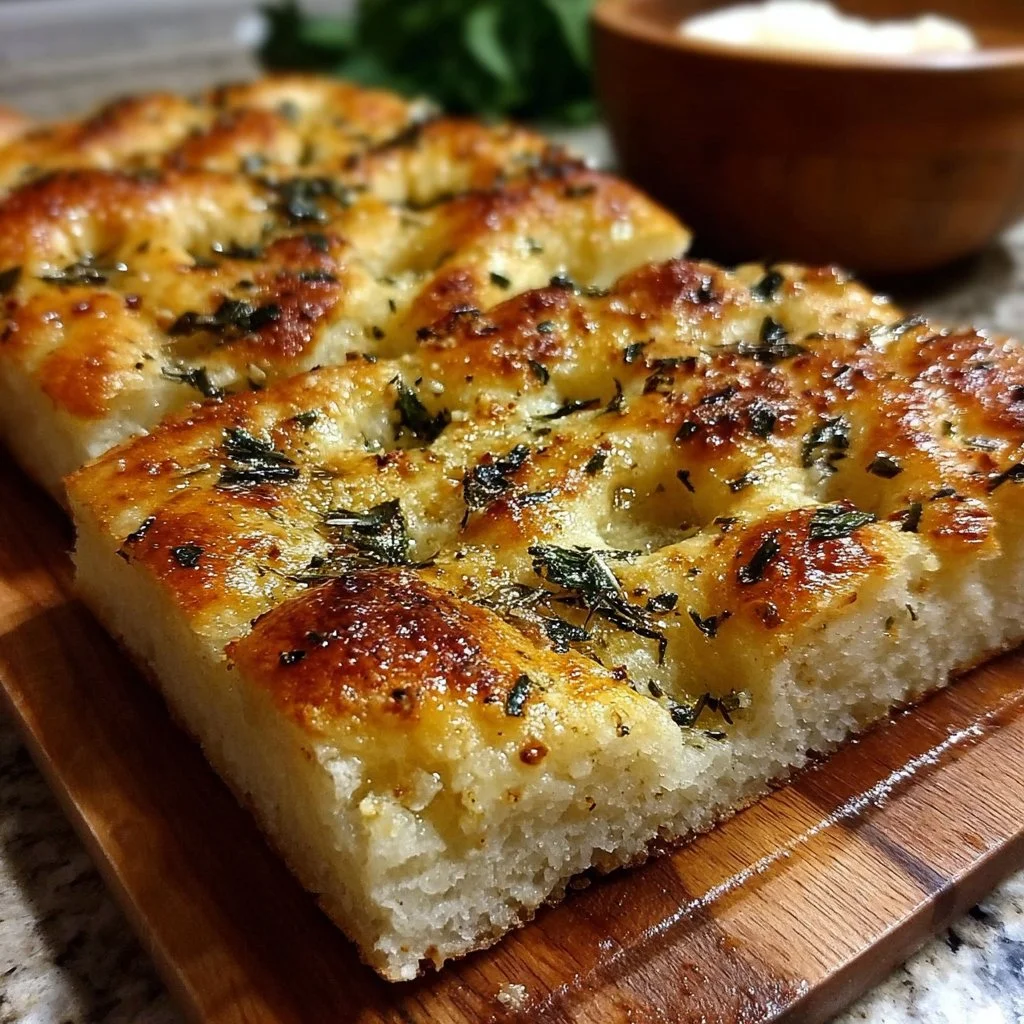
It hit the mark: crisp golden edges, pillowy interior, and garlic-parmesan pockets in every bite.
This recipe is forgiving for new bakers and adaptable enough for busy weeknights.
It’s a winner because it uses pantry staples and gives bakery-level flavor with minimal fuss.
You can scale it, top it however you like, and still get that tender crumb with a chewy crust.
Read on for why it works, ingredient science, step-by-step technique, and troubleshooting tips.
Why You’ll Love This Recipe
- Fast hands-on time and big flavor payoff.
- Uses simple pantry ingredients you probably already have.
- Flexible toppings — swap herbs or cheese to suit your mood.
- Great as a side, sandwich base, or afternoon snack.
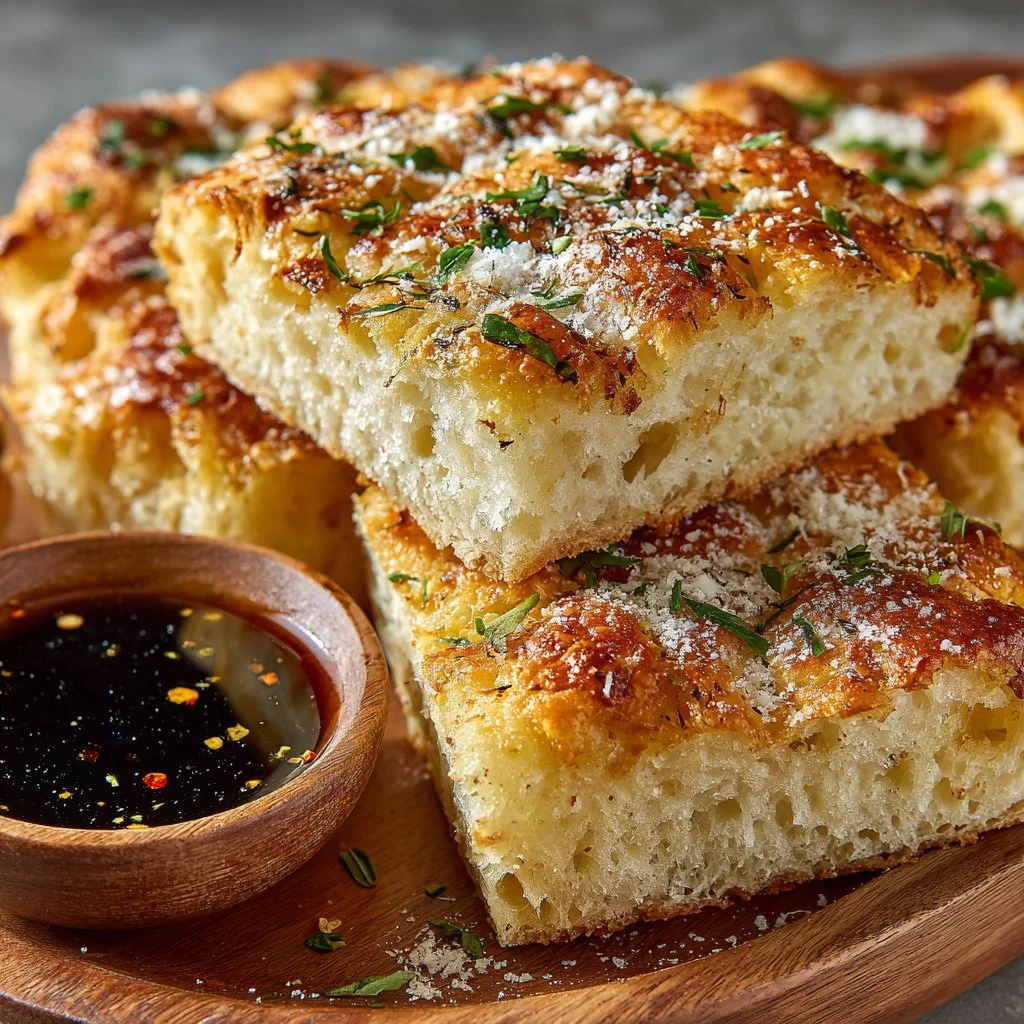
This focaccia bakes up with a glossy, olive-oil rich crust and deep little dimples that trap garlic and oil.
The interior is open and tender without being gummy.
Parmesan adds savory umami and a slight salt-crisp on top.
The contrast between the crunchy edges and soft center is what makes this recipe feel special every time.
“5 stars — I made this for dinner and everyone went back for seconds. Simple ingredients, incredible aroma, and the texture was spot on.” — Reader M.
Key Ingredients
Olive oil
Olive oil is the backbone of focaccia flavor and texture. It keeps the crumb tender and helps the crust crisp and brown. Use a fruity extra-virgin olive oil for topping and a neutral or mid-grade oil for the dough if you want a cleaner flavor.
Active dry yeast
Active dry yeast gives reliable rise and flavor. Proofing it in warm water with a pinch of sugar wakes it up and ensures a predictable rise. If you prefer, instant yeast can be mixed straight into the flour — reduce proofing time slightly.
All-purpose flour
All-purpose flour is ideal here for a balance of structure and tenderness. It has enough protein to hold gas for rise without making the bread chewy. For more extensibility and a slightly airier crumb, you can substitute half the flour with bread flour.
Parmesan cheese
Freshly grated Parmesan melts and browns to a nutty, salty finish. Pre-grated powders don’t brown the same way and can be dustier in texture. If you like a stronger savory hit, combine Parmesan with a little Pecorino Romano.
Full ingredient list
- 2 cups all-purpose flour
- 1 cup warm water
- 2 teaspoons active dry yeast
- 1 teaspoon sugar
- 1 teaspoon salt
- 2 tablespoons olive oil (for dough)
- 3 cloves garlic, minced
- 1/2 cup grated Parmesan cheese
- Fresh herbs (like rosemary or thyme) for topping
- Extra olive oil for drizzling
Step-by-Step Instructions
Step 1: Proof the yeast
In a small bowl, stir the warm water with the sugar and active dry yeast.
Let it sit undisturbed for about 5 minutes until foamy.
Pro Tip: Water should be warm but not hot — around 100–110°F (38–43°C). Too hot and you can kill the yeast; too cold and it won’t activate.
Step 2: Mix the dry ingredients
In a large mixing bowl, combine the flour and salt.
Give it a quick stir to distribute the salt evenly.
Pro Tip: Use your hand or a whisk to aerate the flour a little; this helps with a lighter dough.
Step 3: Combine dough
Pour the foamy yeast mixture and the 2 tablespoons of olive oil into the flour.
Mix with a spoon until you form a shaggy dough.
Pro Tip: The dough will be slightly sticky — that’s okay. If it feels bone dry, add a teaspoon of water at a time until it comes together.
Step 4: Knead briefly
Turn the dough out onto a lightly floured surface and knead for about 5 minutes until smooth.
You’re aiming for elasticity and a slightly satiny surface.
Pro Tip: For a quicker route, do 4 minutes by hand or 3–4 minutes in a stand mixer with the dough hook on low.
Step 5: First rise
Place the dough in a greased bowl, turning it once so the top is lightly coated.
Cover the bowl and let it rise for about 1 hour, or until doubled in size.
Pro Tip: A warm, draft-free spot (like an oven with the light on) speeds this up. It’s ready when a gentle poke leaves an indentation.
Step 6: Preheat and shape
Preheat your oven to 425°F (220°C).
Punch the dough down gently and spread it out on a greased baking pan. Use your fingertips to press it into a roughly 9×13-inch rectangle or pan size of choice.
Pro Tip: Don’t stretch too much — let the dough relax. If it springs back, rest it for 5 minutes and try again.
Step 7: Dimple and top
Use your fingers to create deep dimples all over the surface.
Sprinkle the minced garlic, grated Parmesan, and fresh herbs evenly over the dough, then drizzle generously with olive oil.
Pro Tip: Press some garlic into the dimples so it bakes into the pockets and doesn’t just char on top.
Step 8: Bake
Bake the focaccia for 20–25 minutes, until the crust is deep golden brown and the cheese has browned in places.
Remove from the oven and let it cool slightly before cutting.
Pro Tip: The bottom should sound hollow when tapped; that’s a good cue the interior is fully baked.
Expert Tips for Success
- Temperature control matters: Aim for dough temperature around 75–78°F (24–26°C) after mixing. If your kitchen is cold, extend the first rise or use a slightly warmer water temperature for proofing the yeast.
- Measure flour correctly: Spoon flour into the measuring cup and level it with a knife. Overpacked flour tightens the crumb and yields a denser focaccia. If your dough feels heavy, allow a slightly longer rise.
- Use your eyes and touch over the clock: Yeast behavior varies with humidity and temperature. The dough is ready for shaping when it has nearly doubled and leaves an indentation when poked.
- Oil is your friend: Don’t skimp on the olive oil. A thin pool of oil beneath the dough during baking encourages a crispy bottom, while drizzling on top adds gloss and flavor.
- Garlic placement prevents burning: Mince garlic finely and press it into the dimples. This gives roasted garlic flavor without the burnt bite that sits exposed on the surface.
- Cheese timing and type: Freshly grated Parmesan gives superior browning and texture. If you want a cheesier top, add half the Parmesan midway through baking and finish with the rest to avoid over-browning.
- Pan choice: A heavy sheet pan gives more even browning than a thin rimmed sheet. If using a cast-iron skillet, reduce baking time by a few minutes and watch the edges closely.
- Hydration tweak for texture: This recipe is moderate hydration. For a more open crumb, increase water by 1–2 tablespoons; for a tighter crumb, reduce slightly. Adjust kneading accordingly.
- Rest between shaping and baking: After you shape and top, letting the dough rest 10–15 minutes at room temperature can relax gluten and make dimpling easier to keep.
- Make-ahead strategy: You can do the first rise in the fridge overnight for deeper flavor. Bring back to room temperature for 30–60 minutes before shaping.
Storage & Freezing
Short-term storage — counter
Store focaccia at room temperature, wrapped in a clean towel or in an airtight container, for up to 2 days.
This keeps the crust from becoming soggy while preserving tenderness.
Fridge storage
To refrigerate, wrap the focaccia tightly in plastic wrap or place slices in an airtight container.
Keeps well for up to 5 days, though the crust will soften; reheat to crisp.
Freezer storage
Freeze whole or sliced focaccia in an airtight freezer bag, removing as much air as possible.
It will keep for up to 3 months. For best results, flash-freeze on a tray before bagging to avoid squashing toppings.
Reheating for freshness
Reheat slices on a baking sheet at 375°F (190°C) for 8–12 minutes until warmed and the crust crisps.
For frozen slices, thaw at room temperature for 20–30 minutes, or reheat from frozen adding a few extra minutes.
Microwaving is faster but will make the crust soft; use an oven or toaster oven when possible.
Variations & Substitutions
Herbed butter focaccia
Swap some of the olive oil on top with melted herbed butter (garlic and parsley mixed in) for a richer finish.
Rosemary-lemon focaccia
Add lemon zest to the dough and top with rosemary and coarse sea salt for a bright aromatic twist.
Vegan/cheese-free option
Omit Parmesan and increase the olive oil by a tablespoon; add a sprinkle of nutritional yeast for umami if you want a cheesy note.
Whole-wheat swap
Replace up to half the all-purpose flour with whole-wheat flour. Expect a denser crumb and slightly nuttier flavor; increase water by a tablespoon or two to compensate.
Frequently Asked Questions
Q: Can I use instant yeast instead of active dry yeast?
A: Yes. Instant yeast can be mixed directly with the dry ingredients without proofing. Use the same amount and reduce the initial rise time slightly because instant yeast acts faster. If you prefer to proof for flavor verification, dissolve it in warm water — it won’t hurt.
Q: How do I prevent burnt garlic on top of the focaccia?
A: Mince the garlic finely and press it into the dimples. This keeps it moist and protected so it roasts rather than burns. You can also scatter some garlic under the dough or mix a little into the olive oil used for drizzling.
Q: Why is my focaccia dense instead of airy?
A: Common causes are too much flour, underproofing, or over-kneading. Measure flour accurately, allow the dough to double in a warm place, and knead until smooth but not overly tight. Also check yeast freshness — old yeast yields weak rise.
Q: Can I make smaller individual focaccias or rolls?
A: Absolutely. Divide the dough into smaller portions and shape them on a baking sheet. Reduce baking time slightly for smaller pieces and watch for golden color and a hollow sound on the bottom.
Q: Is there a preferred pan for focaccia?
A: A rimmed sheet pan or a cast-iron skillet works best. Heavy pans promote even browning. For a chewier crust, use a darker pan; for a lighter crust, use a lighter-colored, heavy sheet.
Final Thoughts
This Garlic Parmesan Focaccia is an easy, rewarding loaf that works as a showstopper or a weeknight side.
Make it your own with herb choices, extra cheese, or an overnight fridge rise for deeper flavor.
Please leave a star rating in the recipe card below if you try this, and pin it to Pinterest to save for later.
Conclusion
If you want to compare technique or see a different riff on this bread, check out Oh Sweet Basil’s Garlic Parmesan Focaccia Bread Recipe for another home-cook perspective.
For a step-by-step photo tutorial and a slightly different ingredient ratio, see Garlic Parmesan Focaccia Bread at Heather’s Homemade Kitchen.
Garlic Parmesan Focaccia
Ingredients
Dough ingredients
- 2 cups all-purpose flour For a lighter texture, substitute half with bread flour.
- 1 cup warm water Temperature should be around 100–110°F (38–43°C).
- 2 teaspoons active dry yeast Can substitute with instant yeast.
- 1 teaspoon sugar Helps in proofing the yeast.
- 1 teaspoon salt
- 2 tablespoons olive oil (for dough) Use a fruity extra-virgin olive oil.
- 3 cloves garlic, minced Press into dimples to avoid burning.
Topping ingredients
- 1/2 cup grated Parmesan cheese Freshly grated preferred for better browning.
- Fresh herbs (like rosemary or thyme) For topping, swap as per taste.
- Extra olive oil for drizzling Adds richness and flavor.
Instructions
Preparation
- Proof the yeast by stirring warm water with sugar and active dry yeast. Let sit for about 5 minutes until foamy.
- In a large mixing bowl, combine flour and salt. Stir to distribute salt evenly.
- Pour the foamy yeast mixture and 2 tablespoons of olive oil into the flour. Mix until shaggy.
- Turn dough onto a lightly floured surface and knead for about 5 minutes until smooth.
- Place dough in a greased bowl, cover, and let rise for about 1 hour, or until doubled in size.
- Preheat your oven to 425°F (220°C) and punch dough down gently.
Baking
- Spread dough on a greased baking pan, pressing into desired shape.
- Create dimples with fingers. Top with minced garlic, grated Parmesan, and herbs. Drizzle generously with olive oil.
- Bake for 20–25 minutes until deep golden brown. Allow to cool slightly before cutting.