
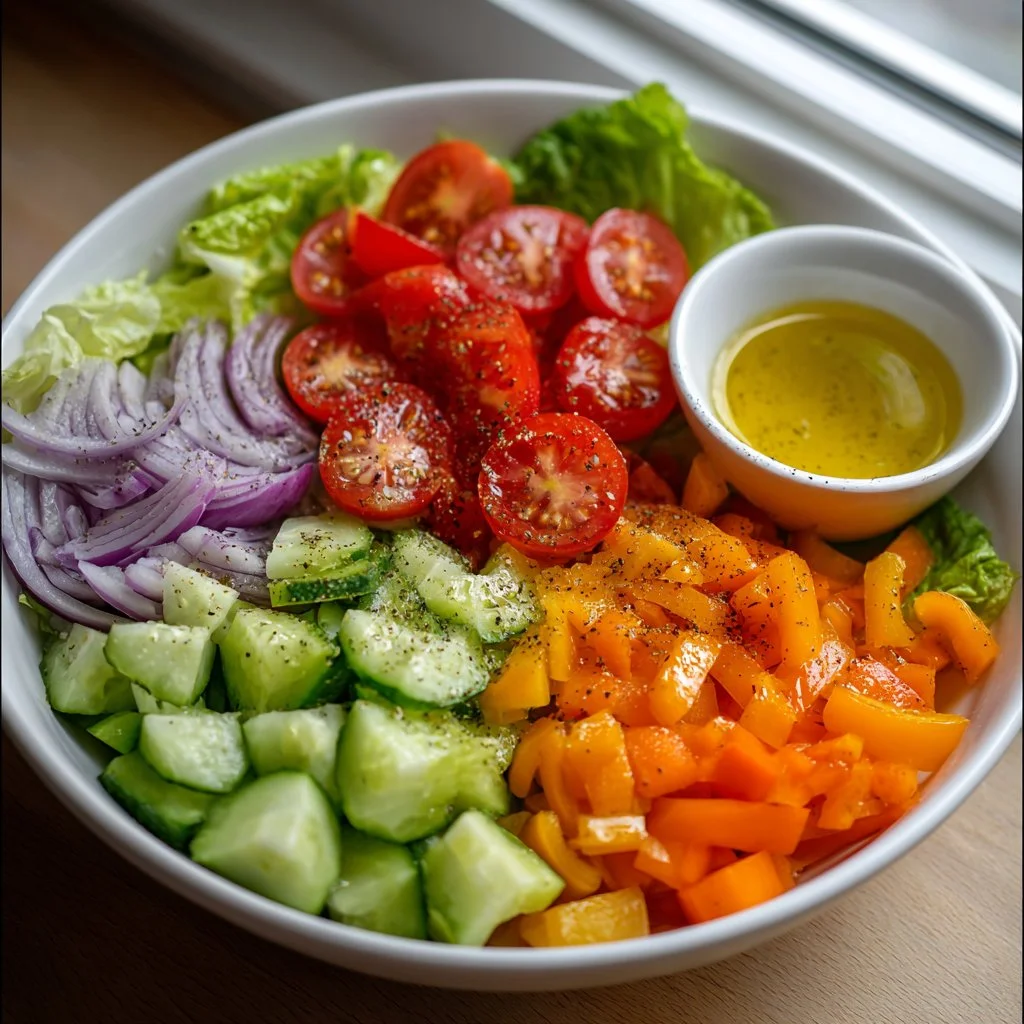
A bright, crisp garden salad is the easiest way to make vegetables sing on the plate.
It’s fresh, fast, and endlessly adaptable for weeknights or entertaining.
This recipe leans on high-quality raw ingredients and a simple lemon-olive oil dressing to let produce shine.
Keep your prep minimal and your flavors bright.
In a few minutes you’ll have a versatile side that complements proteins, sandwiches, and warm mains.
If you like exploring salads, you might enjoy a round-up of creative fruit-forward salads for inspiration: 10 delicious fig recipes from salads to desserts.
Why You’ll Love This Garden Salad
– Simple pantry dressing that elevates every bite.
– Crisp textures from fresh vegetables with bright citrus.
– Ready in under 15 minutes.
– Extremely customizable for season and mood.
– Low-calorie, nutrient-dense side dish.
– Pairs with almost any main course.
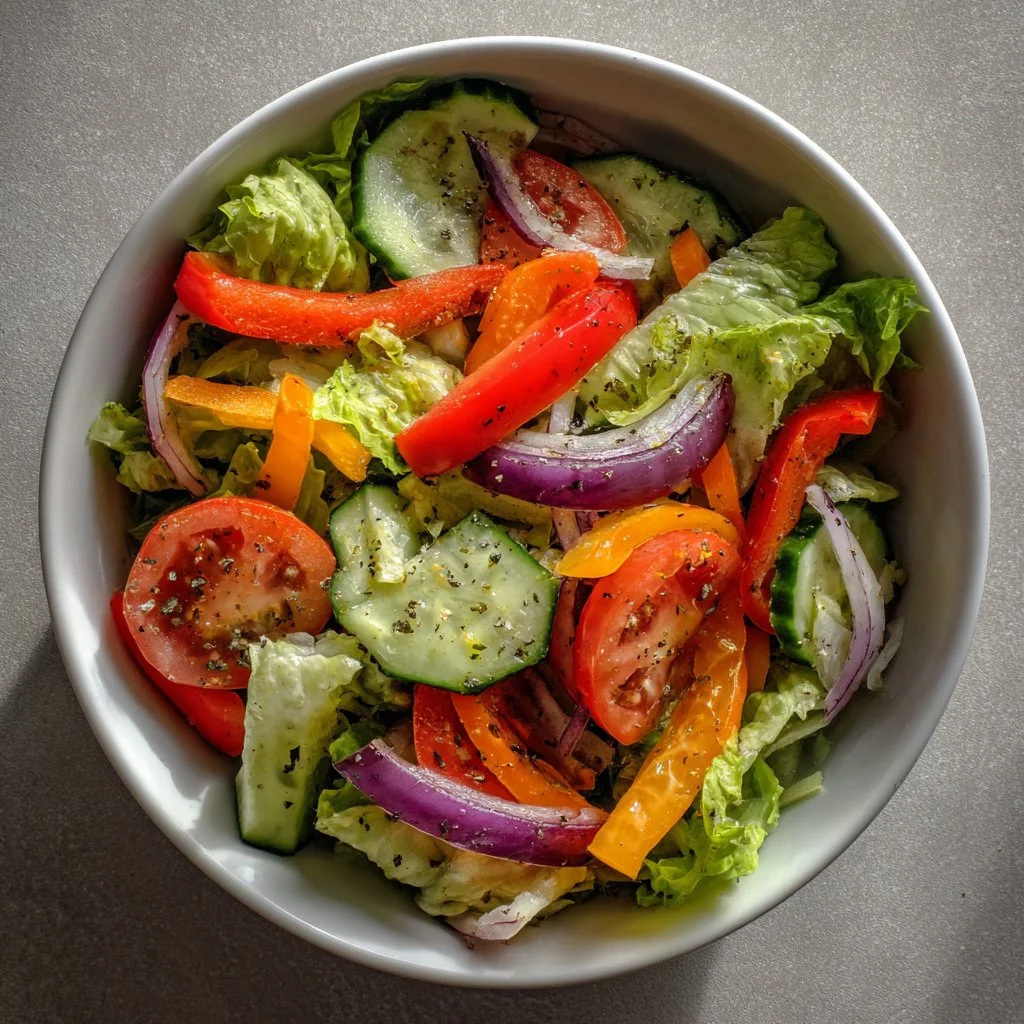
This Garden Salad balances crunchy lettuce and cucumbers with juicy tomatoes and crisp bell peppers, while thin ribbons of carrot and a whisper of red onion add sweetness and bite. The lemon-olive oil dressing brightens flavors without overpowering them, leaving a clean, refreshing finish on the palate.
Five stars — “I make this Garden Salad weekly. It’s my go-to side and the dressing is perfect every time. Refreshing and so easy!”
Key Ingredients for Garden Salad
Lettuce: Choose crisp romaine, butter, or a mix of baby lettuces for structure and crunch. High-quality lettuce should be firm, brightly colored, and free from slimy edges; if you substitute with kale, massage it first to soften the leaves and reduce bitterness.
Tomatoes: Use ripe, fragrant tomatoes — cherry or vine tomatoes add concentrated sweetness and fewer seeds; plum tomatoes work if finely diced. If you use canned tomatoes, drain thoroughly and expect a softer, less structured salad.
Cucumbers: Seedless or English cucumbers give a clean, watery crunch without bitterness. Look for firm, glossy skin and avoid soft spots; swapping in pickled cucumbers will add salt and tang and change the salad’s profile dramatically (good if you want acidity). For pairing ideas with cucumbers, see this cucumber salad recipe for texture contrasts: air-fryer bang-bang salmon with cucumber salad.
Olive oil & Lemon juice: High-quality extra virgin olive oil and freshly squeezed lemon juice form the backbone of the dressing. The oil adds silk and mouthfeel while lemon brings acidity to lift flavors; substituting vinegar will change the aroma and the way flavors pop, while using bottled lemon juice will give a flatter, less vibrant acidity.
Full Ingredient List for Garden Salad
– Lettuce
– Tomatoes
– Cucumbers
– Bell peppers
– Carrots
– Red onion
– Olive oil
– Lemon juice
– Salt
– Pepper
Step-by-Step Instructions for Garden Salad
Step 1: Chop all the fresh vegetables into bite-sized pieces.
Start by rinsing and drying all produce thoroughly to prevent a soggy salad. Cut lettuce into sturdy ribbons or bite-sized pieces, halve cherry tomatoes, slice cucumbers into rounds or half-moons, chop bell peppers into thin strips, shave carrots into matchsticks, and thinly slice red onion.
Pro Tip: The salad should look colorful and evenly sized; bite-sized pieces mean no one needs to cut at the table.
Step 2: In a large bowl, combine the lettuce, tomatoes, cucumbers, bell peppers, carrots, and red onion.
Add ingredients to the bowl in layers: lettuce first so it can float on top of the dressing later, then firmer vegetables, ending with delicate tomatoes. Toss gently by hand or with salad tongs to keep fragile pieces intact.
Pro Tip: Visually you want a rainbow of color across the bowl; you should see distinct colors and shapes, not a single mash.
Step 3: In a small bowl, whisk together the olive oil, lemon juice, salt, and pepper to make the dressing.
Whisk briskly until the emulsion is slightly thickened and cohesive; taste and adjust salt and lemon to balance brightness and oil. This simple vinaigrette will cling to leaves without weighing them down.
Pro Tip: The dressing should be pale and glossy — no oil separated on top.
Step 4: Drizzle the dressing over the salad and toss gently to combine.
Add the dressing sparingly at first, then toss and add more if needed; you want an even coating that highlights textures. Toss until the leaves glisten but are not drenched.
Pro Tip: The salad should look lightly glossy without pooling dressing at the bottom of the bowl.
Step 5: Serve immediately or chill in the fridge for a refreshing side dish.
Serve at once for maximum crispness, or chill uncovered for 15–20 minutes for a crisper, cooler experience. If you must store, keep dressing separate and toss before serving.
Pro Tip: Served immediately, the salad will be vibrant and crunchy; after chilling, flavors meld and the aroma of lemon becomes more pronounced.
Expert Tips for Garden Salad
– Temperature tips: Serve the salad cold from the fridge for the best crunch. Letting the vegetables sit at room temperature for longer than 15 minutes softens textures and dulls flavor.
– Texture troubleshooting: If the salad becomes soggy, it’s usually from wet greens or overdressing; dry leaves thoroughly with a salad spinner and dress right before serving.
– Equipment tips: A good chef’s knife and a salad spinner make prep faster and cleaner. Use a large bowl to toss without bruising delicate ingredients.
– Knife technique: Uniform pieces ensure even dressing distribution and comfortable bites; practice thin, even slicing for cucumbers and peppers.
– Common mistakes: Overdressing is the biggest error — start small and add more. Another mistake is using low-quality oil or bottled citrus; fresh ingredients matter.
– Balancing flavor: Taste as you go; a pinch more salt or a squeeze more lemon can rescue a flat-tasting salad.
– Visual cues: Aim for a variety of colors and shapes — tiny cubes, ribbons, and rounds create visual interest and textural contrast.
– Timing for guests: If serving for a crowd, prep vegetables ahead and keep them chilled; dress and toss minutes before serving to maintain crunch.
Storage & Freezing for Garden Salad
Fridge storage: Store undressed salad in an airtight container for up to 3 days. Place a paper towel over the salad to absorb excess moisture and keep leaves crisp.
Dressing: Keep the dressing in a separate jar in the fridge for up to 1 week; shake before using to recombine.
Freezer storage: Freezing raw salad is not recommended; vegetables with high water content will become limp and watery when thawed. If you must freeze components, freeze blanched carrots separately for up to 3 months.
Thawing: Thaw frozen carrots in the fridge and pat dry before adding to a tossed salad — texture will be softer.
Reheating: This salad is not designed for reheating; if you add protein that’s cooked, reheat that component separately and serve warm atop chilled greens.
Variations & Substitutions for Garden Salad
Mediterranean Garden Salad: Add chopped kalamata olives, crumbled feta, and a sprinkle of oregano. Swap lemon juice for red wine vinegar and you’ll get briny, savory layers that pair well with grilled meats.
Crunchy Asian Garden Salad: Replace olive oil with toasted sesame oil, add shredded cabbage and a splash of rice vinegar, and finish with sesame seeds. The result is nutty and crisp with a tangy finish.
Protein-Boosted Garden Salad: Stir in flaked canned tuna or sliced avocado and a boiled egg for heartier bites. This changes the salad into a light lunch; see a great tuna-avocado pairing technique here: how to combine avocado and tuna.
Roasted Veggie Garden Salad: Roast bell peppers and carrots until caramelized, then toss with fresh lettuce and dressing. The roasted components add sweetness and depth while maintaining the fresh crunch of raw greens.
Frequently Asked Questions About Garden Salad
Q: How do I keep lettuce from getting soggy?
A: Dry lettuce completely in a salad spinner and store it in an airtight container layered with paper towels to absorb moisture. Dress right before serving, and serve chilled. This preserves crunch for up to 3 days for many lettuce varieties.
Q: Can I make the dressing ahead of time?
A: Yes. Make the lemon-olive oil dressing up to a week ahead and store it in the refrigerator in a sealed jar. Bring it to room temperature and shake well before using to re-emulsify the oil and lemon.
Q: What are good substitutions if I don’t have lemon?
A: Use white wine vinegar or apple cider vinegar as a substitute; start with half the vinegar you’d use for lemon and adjust to taste, because vinegar can be more acidic. Fresh citrus zest can also add aroma when lemon is missing.
Q: Can I add grains or beans to make this a main course?
A: Absolutely. Add cooked quinoa, farro, or chickpeas for fiber and protein; these ingredients soak up dressing so toss just before serving to keep the salad balanced. For a grain-forward method and texture ideas, see a quinoa salad example here: asparagus chickpea quinoa salad.
Q: How do I adjust this salad for picky eaters?
A: Keep components separate on a serving board so guests can assemble their own plates; offer dressing on the side and provide optional add-ins like cheese, nuts, or seeds. Also, thinly slice strong-flavored items like red onion or serve them on the side to reduce intensity.
Final Thoughts on Garden Salad
This Garden Salad is quick, flexible, and a reliable way to make vegetables the star of the meal.
If this recipe saved your weeknight dinner, please leave a star rating in the recipe card below and pin it to your Pinterest board.
For more recipe inspiration and a similar take on a classic garden salad, try this detailed version from RecipeTin Eats: The Garden Salad – RecipeTin Eats.
If you want another simple classic with slightly different dressing ratios, this Simple Garden Salad Recipe breaks down small technique tips: Simple Garden Salad Recipe.
For a clean-eating spin and ingredient swaps, see this Fresh Garden Salad guide that focuses on flavor balance: Fresh Garden Salad – Feel Good Foodie.
Garden Salad
Ingredients
Fresh Vegetables
- 1 head Lettuce Crisp romaine, butter, or a mix of baby lettuces.
- 1 cup Tomatoes Cherry or vine tomatoes preferred for sweetness.
- 1 medium Cucumber Seedless or English cucumbers recommended.
- 1 medium Bell pepper Any color, chopped.
- 1 medium Carrot Shaved into matchsticks.
- 1 small Red onion Thinly sliced.
Dressing
- 3 tablespoons Olive oil High-quality extra virgin olive oil.
- 2 tablespoons Lemon juice Freshly squeezed.
- 1 teaspoon Salt To taste.
- 1/2 teaspoon Pepper To taste.
Instructions
Preparation
- Chop all the fresh vegetables into bite-sized pieces.
- In a large bowl, combine the lettuce, tomatoes, cucumbers, bell peppers, carrots, and red onion.
Dressing
- In a small bowl, whisk together the olive oil, lemon juice, salt, and pepper.
Assembly
- Drizzle the dressing over the salad and toss gently to combine.
- Serve immediately or chill in the fridge for a refreshing side dish.