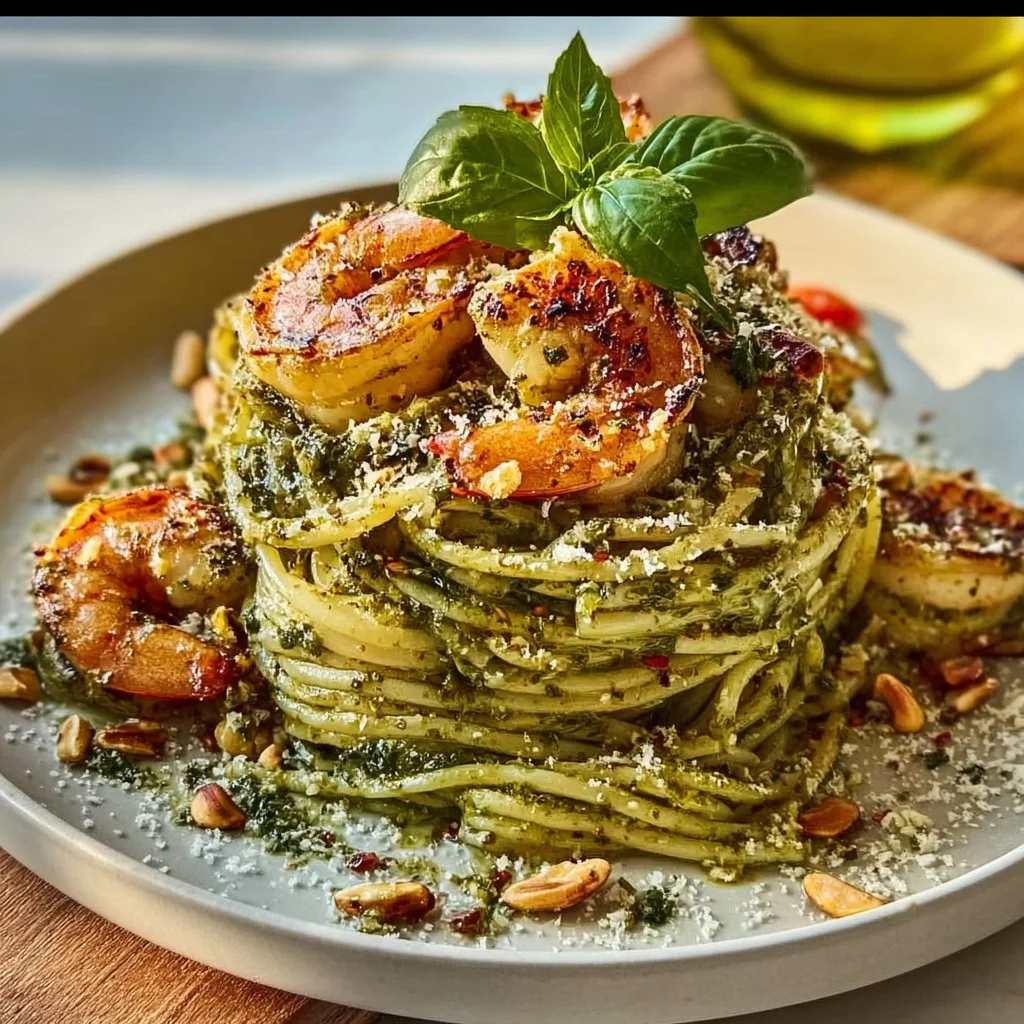
Bright basil perfume, charred shrimp edges, and slippery ribbons of pasta come together in less time than you think. This pesto pasta and grilled shrimp stack is an easy way to lift a weeknight into a celebration.
Simple ingredients make the dish sing, and the plating—a neat stack of pasta crowned with grilled shrimp—looks restaurant-ready. You’ll get herb brightness, nutty richness, and a clean lemon finish in every bite.
If you like seafood-forward dinners, you might also enjoy this surf-and-turf inspiration for richer occasions: filet mignon with shrimp and lobster cream sauce.
Why You’ll Love This Elevate Dinner with Pesto Pasta and Grilled Shrimp Stack
– Fast weeknight dinner that looks gourmet.
– Bright herbal flavor with a creamy texture.
– High-protein option with minimal fuss.
– Flexible: easy to make vegan or nut-free.
– Great make-ahead pesto for multiple meals.
– Food-styling impact: stackable, camera-friendly plating.
This dish balances bright, herbaceous pesto with the smoky, slightly sweet profile of grilled shrimp; the pasta carries sauce evenly so each forkful offers silky, nutty, lemony notes with a touch of heat if you add red pepper flakes. Texturally, the toasted pine nuts and charred shrimp provide contrast to the tender pasta and creamy sauce.
"Five stars — the pesto was vibrant and the shrimp had perfect char. Guests thought I’d spent hours." — A happy reader
Key Ingredients for Elevate Dinner with Pesto Pasta and Grilled Shrimp Stack
Basil leaves (2 cups): Fresh basil is the foundation of classic pesto. Choose bright, unblemished leaves with strong aroma; smaller leaves often have better flavor. If you substitute with spinach or arugula, the pesto will be milder and lose some of the signature basil perfume.
Olive oil, high-quality extra virgin (1/2 cup): Good olive oil brings fruitiness and helps emulsify the pesto into a silky sauce. Buy a robust, peppery extra virgin and store it away from light. If you substitute with a lighter oil, the sauce may taste flat and separate more easily.
Parmesan cheese (1/2 cup): Parmesan adds savory depth and umami that balance the basil and nuts. Use a real Parmigiano-Reggiano or high-quality aged Parmesan for the best nutty, crystalline bite. For a vegan option, nutritional yeast works but gives a different texture and less salty tang.
Shrimp (1 lb, 16–20 count): Medium–large shrimp provide meaty texture and grill well without drying quickly. Buy fresh or properly thawed frozen shrimp; look for firm flesh and a clean smell. If you use scallops or chicken, the cooking times and smoke flavor will change significantly.
Full Ingredient List for Elevate Dinner with Pesto Pasta and Grilled Shrimp Stack
– 2 cups Fresh Basil Leaves
– 1/4 cup Pine Nuts (Can substitute with walnuts or almonds)
– 2 cloves Garlic Cloves
– 1/2 cup Parmesan Cheese (Use nutritional yeast for a vegan option)
– 1/2 cup Olive Oil (High-quality extra virgin)
– 1 tbsp Lemon Juice
– 1 tsp Lemon Zest
– to taste Salt
– to taste Pepper
– 1 lb Shrimp (Medium to large (16-20 count per pound))
– 8 oz Pasta (Linguine, fettuccine, or spaghetti)
– 1/2 tsp Red Pepper Flakes (Optional, for added spice)
– 2 tbsp Fresh Herbs
– 2 tbsp Toasted Pine Nuts
Step-by-Step Instructions for Elevate Dinner with Pesto Pasta and Grilled Shrimp Stack
Step 1: Prep the basil pesto
Rinse and dry the basil thoroughly to avoid water diluting the pesto. In a food processor combine basil, pine nuts, garlic, Parmesan, lemon zest, and lemon juice. Pulse while streaming in olive oil until the mixture emulsifies into a smooth, slightly coarse sauce; taste and season with salt and pepper.
Pro Tip: The pesto should glisten and cling to a spoon, with visible flecks of basil and nuts.
Step 2: Toast pine nuts and finish pesto
Toast the pine nuts in a dry skillet over medium heat until fragrant and golden, about 2–3 minutes, shaking the pan constantly. Stir half the toasted nuts into the pesto for texture and reserve the rest for garnish.
Pro Tip: Toasted pine nuts should be light golden and smell warm and nutty, not bitter.
Step 3: Cook the pasta
Bring a large pot of salted water to a rolling boil and add pasta. Cook until just shy of al dente—usually 1–2 minutes less than the package recommends. Reserve about 1 cup of pasta water before draining.
Pro Tip: The pasta should be pliable but with a slight bite; a short taste test will confirm readiness.
Step 4: Marinate and season shrimp
Pat shrimp dry and toss with olive oil, salt, pepper, and optional red pepper flakes and lemon zest. Let sit for 10 minutes while the grill or pan heats so seasoning adheres and flavors develop.
Pro Tip: Shrimp should look glossy and slightly tacky from oil before hitting the grill.
Step 5: Grill the shrimp
Preheat grill or grill pan to high. Cook shrimp 2–3 minutes per side until opaque with a light char and firm to the touch. Remove promptly to avoid overcooking.
Pro Tip: Shrimp should curve into a loose C-shape and feel springy; overcooked shrimp become tight and rubbery.
Step 6: Toss pasta with pesto
Return drained pasta to the pot over low heat. Add several tablespoons of pesto and a splash of reserved pasta water, tossing until the sauce evenly coats the noodles. Adjust consistency with more water or pesto.
Pro Tip: The sauce should coat the pasta smoothly; if it looks greasy, add more reserved water and toss to emulsify.
Step 7: Stack and garnish
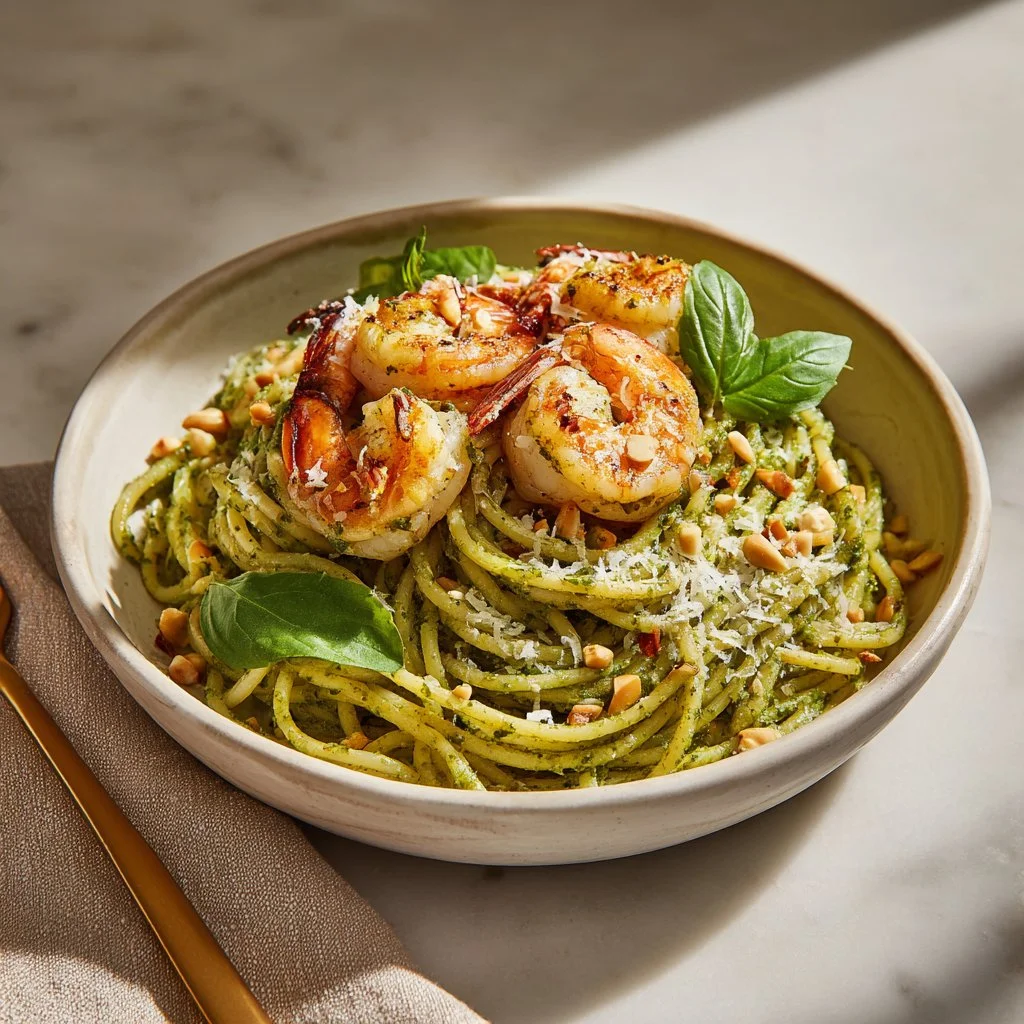
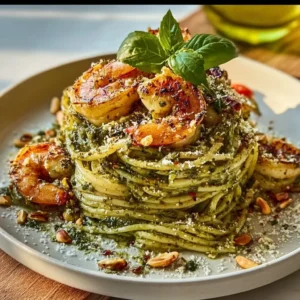
Use a ring mold or fork to mound pasta into neat stacks on plates. Top each stack with 3–4 grilled shrimp, sprinkle with toasted pine nuts and fresh herbs, and finish with a drizzle of olive oil and extra lemon zest.
Pro Tip: A neatly stacked pasta tower keeps the plate tidy and shows off the shrimp char and pesto vibrancy.
Expert Tips for Elevate Dinner with Pesto Pasta and Grilled Shrimp Stack
– Temperature tip: Grill shrimp over high heat for quick sear; aim for a grill surface around 450°F–500°F so shrimp char without drying.
– Texture troubleshooting: If pasta clumps, add a few tablespoons of reserved pasta water and toss vigorously to rehydrate the starches.
– Equipment tip: A food processor makes silky pesto quickly; if using a blender, pulse slowly to avoid overheating herbs.
– Common mistake: Don’t over-blend pesto—overprocessing turns it green but pasty; stop when you still see small bits.
– Shrimp timing tip: Shrimp cook fast; set a timer for 2 minutes per side and watch for color change to opaque.
– Sauce balance tip: If pesto tastes too bitter, add a teaspoon of lemon juice or a pinch of sugar to round it out.
– Make-ahead tip: Pesto keeps in the fridge up to 5 days; press a thin film of olive oil over the surface to prevent browning.
– Plating tip: Warm plates prevent the sauce from congealing and keep textures pleasing for longer.
Storage & Freezing for Elevate Dinner with Pesto Pasta and Grilled Shrimp Stack
Fridge storage: Store leftover pesto in an airtight container with a thin layer of olive oil on top; it will keep 4–5 days. Keep grilled shrimp and pasta separate in airtight containers; combined, they’ll stay fresh for up to 2 days.
Freezer storage: Freeze pesto in ice cube trays, then transfer cubes to a freezer bag for up to 6 months. Cooked shrimp and pasta do not freeze well together; shrimp can be frozen raw (peeled and deveined) for up to 3 months in a sealed bag.
Thawing and reheating: Thaw shrimp in the refrigerator overnight. Reheat pasta gently in a skillet with a splash of water, stirring until warmed; add shrimp at the end just to warm through to avoid toughness. Use microwave reheating sparingly—cover and heat in short bursts, stirring between intervals.
Containers and times: Use glass airtight containers or heavy-duty freezer bags; label with dates. Refrigerator: pesto 5 days, cooked shrimp 2 days, pasta 2 days. Freezer: pesto 6 months, raw shrimp 3 months.
Variations & Substitutions for Elevate Dinner with Pesto Pasta and Grilled Shrimp Stack
Vegetarian swap: Omit shrimp and add roasted cherry tomatoes and grilled zucchini; the result is a lighter, garden-forward stack with the same bright pesto backbone. Use pan-seared halloumi for added chew and salty contrast.
Vegan version: Replace Parmesan with 1/4 cup nutritional yeast and use toasted walnuts instead of pine nuts; finished with extra lemon for brightness. The dish will be slightly less creamy but still deeply flavorful and satisfying.
Nut-free option: Substitute toasted sunflower seeds or pumpkin seeds for pine nuts; the pesto will be nuttier in a different way but remain rich and textured. Toast the seeds to amplify their flavor and prevent a raw aftertaste.
Protein swap: Use scallops or thin chicken breast cutlets instead of shrimp; scallops give a sweet, tender bite while chicken brings a heartier mouthfeel. Adjust cooking times—scallops sear 1–2 minutes per side; chicken needs longer and should be cooked to 165°F.
Frequently Asked Questions About Elevate Dinner with Pesto Pasta and Grilled Shrimp Stack
What kind of basil is best for pesto and why?
Genovese basil is ideal because it has large, aromatic leaves with a balanced sweet and peppery profile that yields the classic pesto flavor. Look for bright green leaves without brown spots; younger leaves are more tender and flavorful. If Genovese isn’t available, sweet basil varieties work well.
Can I make pesto without a food processor?
Yes. You can finely mince basil, garlic, and nuts by hand and whisk in olive oil and grated Parmesan for a rustic pesto. This requires more effort but gives you control over texture and prevents overprocessing the herbs.
How do I prevent shrimp from being rubbery?
Rubbery shrimp are overcooked. Use medium-high heat and cook shrimp 2–3 minutes per side depending on size, removing them when they turn opaque and curl into a loose C-shape. Let them rest briefly off heat; they will finish cooking from residual heat.
Is it okay to toss hot pasta directly with pesto?
Tossing hot pasta with pesto helps the sauce coat noodles, but avoid boiling-hot pasta that can cook the basil and dull its color and flavor. Aim to toss when pasta is warm, using reserved pasta water to adjust the emulsion and maintain bright green color.
How can I make this dish ahead for entertaining?
Make the pesto up to 3 days ahead and store it covered with oil in the fridge. Grill shrimp just before serving for peak texture, keeping everything else prepped. Reheat pasta gently with water in a skillet and assemble into stacks right before plating for best presentation.
Final Thoughts on Elevate Dinner with Pesto Pasta and Grilled Shrimp Stack
This recipe gives you restaurant-style presentation with approachable techniques and pantry-friendly ingredients. Please leave a star rating in the recipe card below and pin this to Pinterest so others can find the stackable, weeknight-to-winner dinner idea.
Pesto Pasta and Grilled Shrimp Stack
Ingredients
For the Pesto
- 2 cups Fresh Basil Leaves Choose bright, unblemished leaves with strong aroma.
- 1/4 cup Pine Nuts Can substitute with walnuts or almonds.
- 2 cloves Garlic Cloves
- 1/2 cup Parmesan Cheese Use nutritional yeast for a vegan option.
- 1/2 cup Olive Oil High-quality extra virgin.
- 1 tbsp Lemon Juice
- 1 tsp Lemon Zest
- to taste Salt
- to taste Pepper
For the Dish
- 1 lb Shrimp Medium to large (16-20 count per pound).
- 8 oz Pasta Linguine, fettuccine, or spaghetti.
- 1/2 tsp Red Pepper Flakes Optional, for added spice.
- 2 tbsp Fresh Herbs
- 2 tbsp Toasted Pine Nuts For garnish.
Instructions
Preparation
- Rinse and dry the basil thoroughly to avoid water diluting the pesto. In a food processor, combine basil, pine nuts, garlic, Parmesan, lemon zest, and lemon juice. Pulse while streaming in olive oil until the mixture emulsifies into a smooth, slightly coarse sauce; taste and season with salt and pepper.
- Toast the pine nuts in a dry skillet over medium heat until fragrant and golden, about 2–3 minutes, shaking the pan constantly. Stir half the toasted nuts into the pesto for texture and reserve the rest for garnish.
- Bring a large pot of salted water to a rolling boil and add pasta. Cook until just shy of al dente—usually 1–2 minutes less than the package recommends. Reserve about 1 cup of pasta water before draining.
Cooking Shrimp
- Pat shrimp dry and toss with olive oil, salt, pepper, and optional red pepper flakes and lemon zest. Let sit for 10 minutes while the grill or pan heats.
- Preheat grill or grill pan to high. Cook shrimp 2–3 minutes per side until opaque with a light char and firm to the touch.
Combining and Serving
- Return drained pasta to the pot over low heat. Add several tablespoons of pesto and a splash of reserved pasta water, tossing until the sauce evenly coats the noodles. Adjust consistency with more water or pesto.
- Use a ring mold or fork to mound pasta into neat stacks on plates. Top each stack with 3–4 grilled shrimp, sprinkle with toasted pine nuts and fresh herbs, and finish with a drizzle of olive oil and extra lemon zest.