
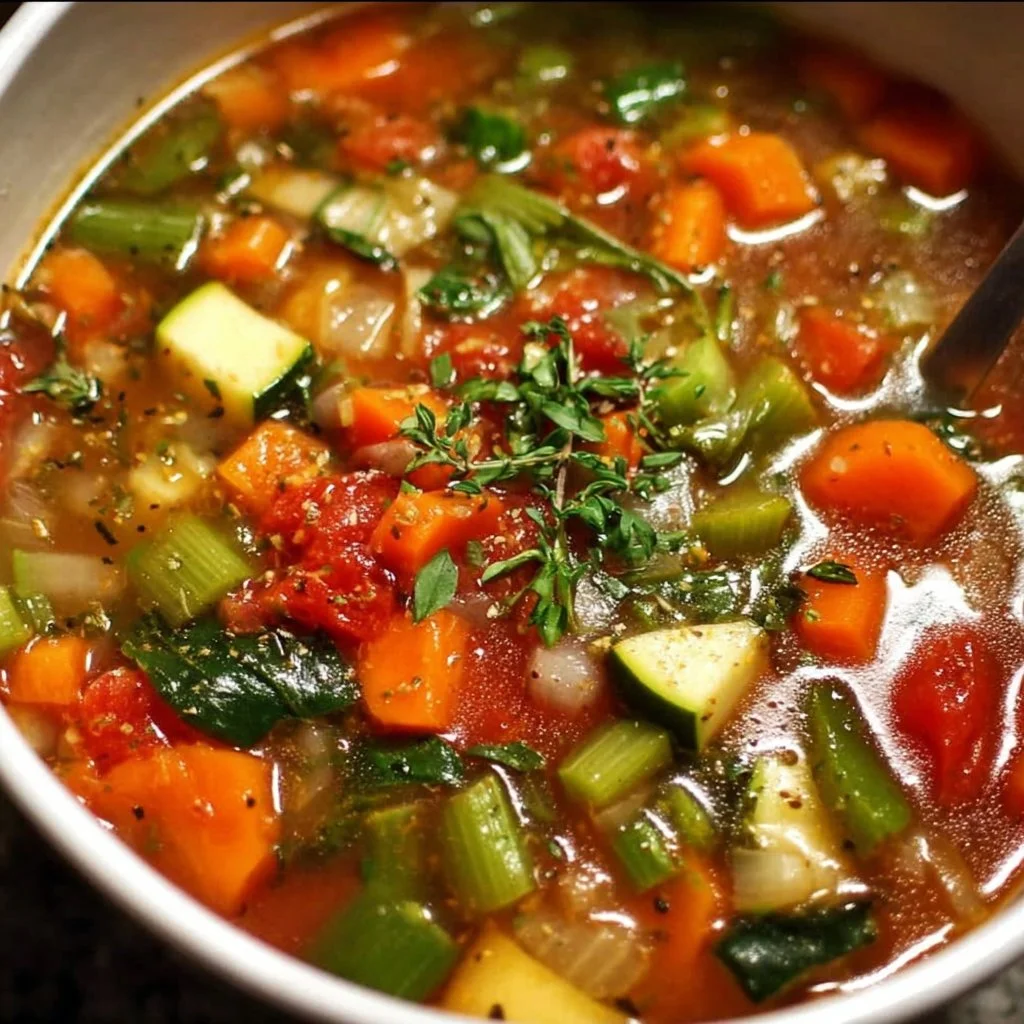
The first time I made this soup, I was trying to use up a sad-looking bunch of carrots and a lone zucchini.
It turned into a pot of cozy, bright-flavored comfort that disappeared by dinner.
This Easy Vegetable Soup is forgiving, fast, and endlessly adaptable — the kind of recipe you reach for on weeknights or when feeding a crowd.
It’s a winner because it balances quick prep with deep, homey flavor without needing stock from scratch or hours on the stove.
You’ll love how the vegetables keep a slight bite while the broth tastes layered and fresh.
Why You’ll Love This Recipe
- Ready in about 40 minutes from start to finish.
- Uses pantry staples and flexible vegetables.
- Vegetarian and easily vegan, gluten-free, and nut-free.
- Low-effort but high-comfort; perfect for leftovers and batch cooking.
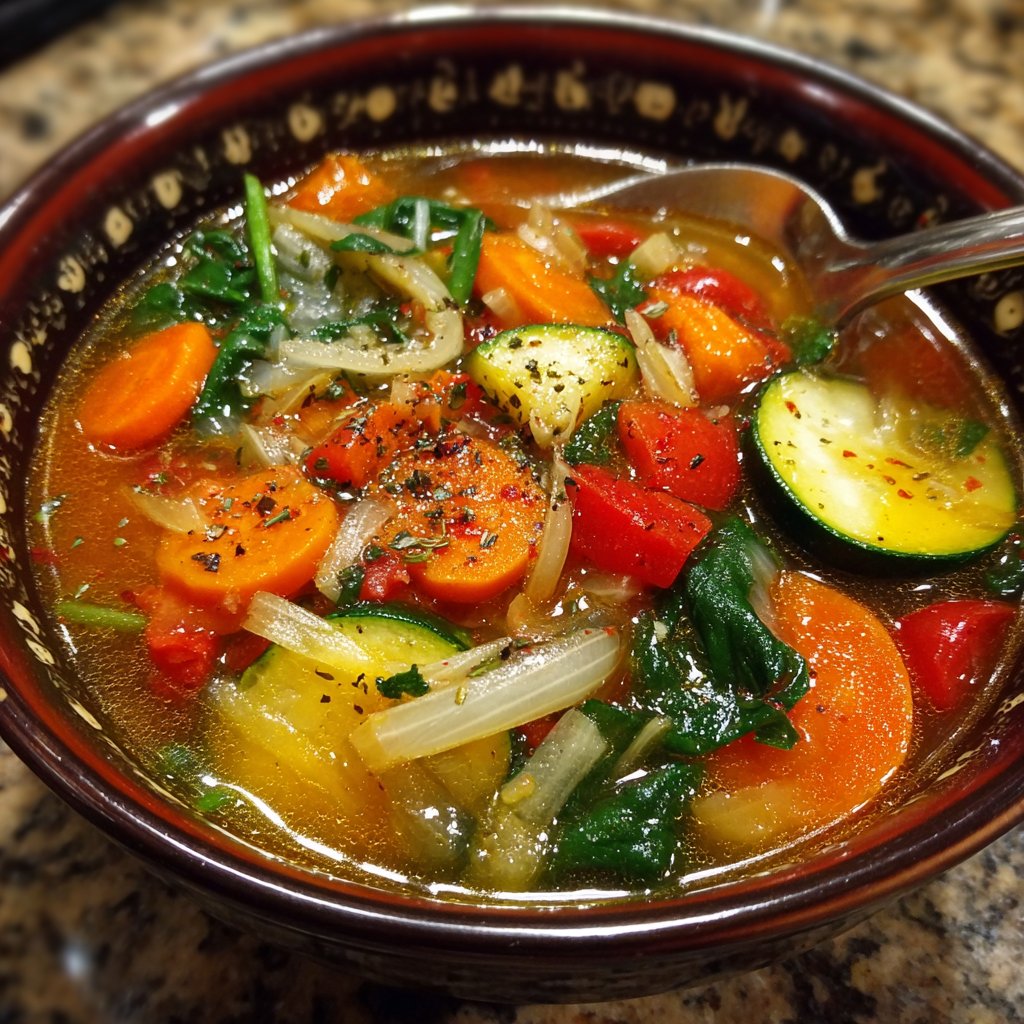
The texture is a gentle medley: tender carrots and celery for body, zucchini and bell pepper for a soft bite, and optional spinach or kale folded in at the end for leafy freshness.
The broth carries a bright tomato note with herbal warmth from thyme and basil, finishing with a touch of olive oil that keeps the mouthfeel smooth rather than watery.
“Five stars — this is my go-to soup when I want something nutritious and fuss-free. The flavors are simple but comforting.” — Maria, reader
Key Ingredients
Olive oil
Olive oil is your flavor foundation here. I use good-quality extra virgin olive oil for sautéing; it adds fruitiness that small amounts of butter can’t replicate in a vegan batch. Avoid heavily flavored or rancid oils — a clean, mid-priced EVOO works best.
Onion (diced) and garlic (minced)
Onion and garlic are the aromatic backbone. Use yellow or sweet onions for a rounded base; cook them gently until translucent so they release sweetness without burning. Fresh garlic adds a bright pop, so add it after the onion softens to prevent bitterness.
Vegetable broth (4 cups)
The broth determines how rich the soup tastes. I prefer low-sodium vegetable broth so I can control the seasoning, or concentrated vegetable bouillon dissolved in water if you want a pantry-friendly option. Quality matters: a broth with vegetable depth (carrot, celery, mushroom notes) will make a simple soup taste like you cooked it longer.
Canned diced tomatoes
Canned diced tomatoes bring acidity, body, and a touch of sweetness. San Marzano-style canned tomatoes or a reputable store brand produce consistent results and a clean tomato flavor. If you prefer a chunkier texture, look for "fire-roasted" for extra smokiness.
Ingredients (full list)
- 2 tablespoons olive oil
- 1 onion, diced
- 2 cloves garlic, minced
- 3 carrots, sliced
- 2 celery stalks, sliced
- 1 bell pepper, diced
- 1 zucchini, diced
- 4 cups vegetable broth
- 1 can diced tomatoes
- 1 teaspoon thyme
- 1 teaspoon basil
- Salt and pepper to taste
- 2 cups spinach or kale (optional)
Step-by-Step Instructions
Step 1: Heat the oil
In a large pot, warm 2 tablespoons of olive oil over medium heat until it shimmers.
This step builds a hot surface to gently sauté the aromatics and develop flavor.
Pro Tip: The oil is ready when it moves easily in the pan and you can smell a faint fruity note. If it smokes, lower the heat.
Step 2: Sauté onion and garlic
Add the diced onion, stirring to coat in the oil, and cook until it softens and becomes translucent.
Add the minced garlic and sauté for about 30–60 seconds until fragrant, stirring constantly to prevent burning.
Pro Tip: Don’t let the garlic brown; you want it fragrant and sweet, not bitter. If the onion starts to brown too fast, reduce heat.
Step 3: Add heartier vegetables
Stir in the sliced carrots, sliced celery, and diced bell pepper.
Cook these together for about 5 minutes, stirring occasionally, so they begin to soften and release their natural sugars.
Pro Tip: You’ll know they’re ready for the next step when the carrots begin to lose their hard center and the bell pepper looks glossy.
Step 4: Build the broth
Stir in the diced zucchini, 4 cups of vegetable broth, the can of diced tomatoes, 1 teaspoon thyme, and 1 teaspoon basil.
Season with salt and pepper to taste, then bring the pot to a gentle boil.
Pro Tip: Taste early and adjust seasoning; tomatoes can vary in acidity and may need a pinch of sugar or more salt to balance.
Step 5: Simmer gently
Once boiling, reduce the heat and let the soup simmer for 20–30 minutes with the lid slightly ajar.
This allows the flavors to meld while keeping the vegetables intact rather than turning mushy.
Pro Tip: Simmer on low so bubbles gently rise; aggressive boiling will break down texture and reduce clarity in the broth.
Step 6: Finish with greens
If using spinach or kale, stir it into the pot during the last 5 minutes of cooking so it wilts but stays bright.
Taste and adjust salt and pepper, then remove from heat.
Pro Tip: For kale, strip thick stems and chop leaves finely so they soften in the short time; spinach wilts almost instantly.
Step 7: Serve
Ladle the soup into bowls and serve hot.
A drizzle of olive oil or a squeeze of lemon brightens the final bowl if desired.
Pro Tip: Freshly cracked black pepper on top amplifies aroma and rounds the flavors.
Expert Tips for Success
- Use low-sodium broth so you can control saltiness. If you only have full-salt broth, reduce added salt at first and adjust after simmering.
- Sweat the onions slowly over medium or medium-low heat to coax out natural sweetness; rushing with high heat will burn them and add bitterness.
- If your tomatoes are very acidic, stir in a pinch of sugar or a half teaspoon of grated carrot for balance. A splash of balsamic vinegar at the end can add complexity too.
- For deeper flavor without meat, add a diced mushroom or a tablespoon of miso dissolved in a little hot water to the broth — it adds umami without altering the recipe’s simplicity.
- Slice vegetables uniformly so they cook at the same rate. Matchstick or coin slices for carrots and celery give even texture.
- If you want a thicker mouthfeel, blend one cup of the soup and stir it back in to create body while keeping chunks. Use an immersion blender or transfer a portion to a countertop blender and return it to the pot.
- Cook on the lower end of the simmer time for crisper veg and the upper end for softer, stew-like texture. Personal preference dictates the finish.
- Use a heavy-bottomed pot for even heat distribution; thin pots can scorch the bottom during extended simmering.
- If you plan to freeze, undercook the vegetables slightly to avoid mushy thawed leftovers; you can finish reheating and soften them later.
Storage & Freezing
Fridge storage: Cool the soup to room temperature for no more than two hours, then transfer to airtight containers.
Keep refrigerated for up to 4 days for best texture and flavor.
Freezing: For longer storage, cool fully, then freeze in airtight, freezer-safe containers or heavy-duty freezer bags.
Leave about an inch of headspace in rigid containers as the liquid will expand. Freeze for up to 3 months.
Reheating from fridge: Warm gently on the stovetop over medium-low heat, stirring occasionally.
If the soup tastes flat after refrigeration, brighten it with a splash of lemon juice, a drizzle of olive oil, or a pinch of sea salt.
Reheating from frozen: Thaw overnight in the fridge if possible.
If reheating from frozen, simmer slowly in a pot on low heat until fully thawed and heated through; stirring prevents hot spots. Adjust seasoning before serving.
Tips for maintaining texture: Add delicate greens and any quick-cooking pasta or grains at the time of serving rather than before freezing.
If you want to freeze portions with pasta, pack pasta separately and combine when reheating.
Variations & Substitutions
Mediterranean boost: Add a handful of chopped olives and a tablespoon of capers toward the end for briny tang.
Finish with a squeeze of lemon and a sprinkle of chopped parsley.
Hearty minestrone-style: Stir in a cup of cooked cannellini beans and 1/2 cup small pasta (like ditalini) during the last 10 minutes of simmering.
This makes the soup a desk-friendly one-pot meal with added protein.
Spicy twist: Add 1/4–1/2 teaspoon red pepper flakes when you sauté the onions or a diced jalapeño with the bell pepper.
Sautéing the pepper helps mellow heat and infuses the broth.
Creamy version: Stir in 1/2 cup of coconut milk or a splash of heavy cream at the end for a creamy finish.
Coconut milk keeps it dairy-free and adds a silky mouthfeel.
Frequently Asked Questions
Q: Can I make this soup in a slow cooker?
A: Yes. Sauté the onion and garlic first on the stovetop for better flavor, then add all ingredients (except delicate greens) to the slow cooker. Cook on low for 4–6 hours or high for 2–3 hours. Add spinach or kale in the last 15 minutes.
Q: How can I make this soup more filling without meat?
A: Add cooked beans (cannellini, chickpeas, or lentils), diced potatoes, or cooked whole grains like farro or barley. Stir them in during the last 10 minutes to heat through.
Q: Is it okay to use frozen vegetables?
A: Frozen vegetables work well, especially if you’re short on fresh produce. Add frozen items a little later in the cook time to avoid overcooking; they often need less time to soften.
Q: How do I prevent the soup from tasting bland the next day?
A: Refrigerated soups often need brightening. Add a splash of acid (lemon juice or vinegar), a drizzle of good olive oil, or a pinch of sea salt when reheating to revive the flavors.
Q: Can I blend this soup to make it smooth?
A: Absolutely. Use an immersion blender right in the pot or transfer portions to a countertop blender. Blend to your preferred consistency; you can leave some chunks for texture.
Final Thoughts
This Easy Vegetable Soup is practical, forgiving, and a reliable weeknight supper or make-ahead lunch.
It rewards small attention to aromatics and seasoning, and it scales easily for meal prep or guests.
Please leave a star rating in the recipe card below if you try it, and pin this to Pinterest to save for later.
Conclusion
For a variation with precise ingredient ratios and step visuals, check this take on an Easy Vegetable Soup Recipe – NatashasKitchen.com.
If you want a vegan-focused version that emphasizes whole-food swaps, visit Simple Vegetable Soup – Brand New Vegan.
For a down-to-earth, ingredient-forward bowl with useful tips, see Easy Vegetable Soup – Downshiftology.
And for a straightforward, family-friendly iteration and make-ahead notes, consult Easy Vegetable Soup Recipe – Yummy Healthy Easy.

Easy Vegetable Soup
Ingredients
Base ingredients
- 2 tablespoons olive oil Extra virgin olive oil is preferred for flavor.
- 1 medium onion, diced Use yellow or sweet onions for sweetness.
- 2 cloves garlic, minced Add after the onion is translucent to avoid bitterness.
Vegetable ingredients
- 3 large carrots, sliced
- 2 stalks celery, sliced
- 1 medium bell pepper, diced
- 1 medium zucchini, diced
- 2 cups spinach or kale (optional) Add during the last minutes of cooking.
Broth and seasonings
- 4 cups vegetable broth Low-sodium preferred.
- 1 can diced tomatoes San Marzano-style recommended for best results.
- 1 teaspoon thyme
- 1 teaspoon basil
- to taste salt and pepper
Instructions
Preparation
- In a large pot, warm 2 tablespoons of olive oil over medium heat until it shimmers.
- Add the diced onion and cook until it softens and becomes translucent.
- Add the minced garlic and sauté for about 30–60 seconds until fragrant.
- Stir in the sliced carrots, sliced celery, and diced bell pepper. Cook these together for about 5 minutes.
Cooking
- Stir in the diced zucchini, vegetable broth, diced tomatoes, thyme, and basil. Season with salt and pepper to taste, then bring the pot to a gentle boil.
- Once boiling, reduce the heat and let the soup simmer for 20–30 minutes with the lid slightly ajar.
- If using spinach or kale, stir it into the pot during the last 5 minutes of cooking.
- Taste and adjust seasoning, then remove from heat.
Serving
- Ladle the soup into bowls and serve hot. Optionally, drizzle with olive oil or lemon juice before serving.