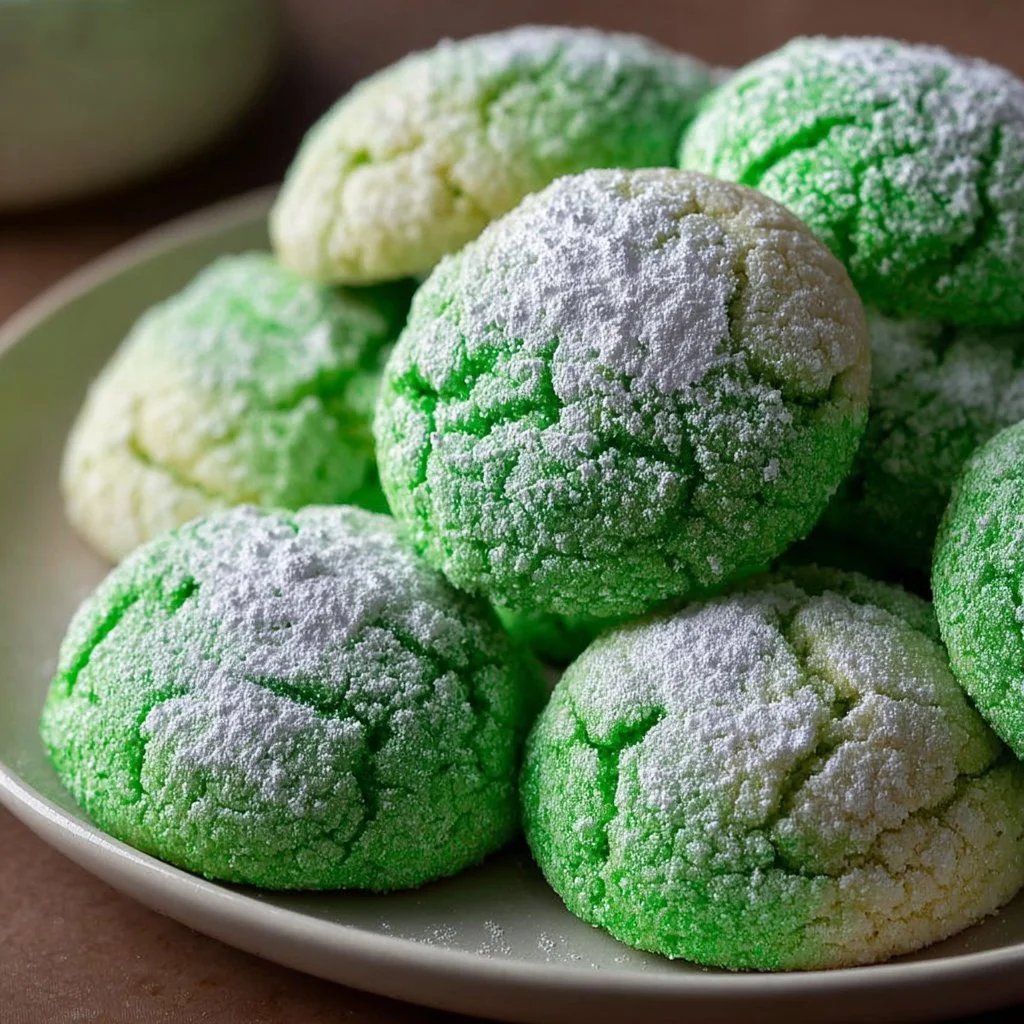
Bright, festive, and shockingly simple — these green crinkle cookies are the fastest way to bring St. Patrick’s Day flair to your kitchen.
You’ll only need a boxed cake mix plus a few pantry staples to get chewy, crackled cookies that pop with color.
Make them with kids, for a classroom treat, or to turn a last-minute craving into a holiday hit.
If you love fast cookie recipes, try my spin on red velvet blossom cookies for another easy celebration bake.
Why You’ll Love This Easy St. Patrick’s Day Cookies
– Ready in under 30 minutes of hands-on time.
– Uses a single boxed cake mix, so no measuring flour.
– Bright Kelly green color with minimal food coloring.
– Soft, cakey interior with a delicate crackled top.
– Double-sugar coating gives a pretty satin sheen and subtle crunch.
– Kid-friendly decorating and a forgiving dough for beginner bakers.
These cookies are tender like a cake but small and hand-held like a cookie. The outside is slightly crisp from the powdered-sugar wrap, while the interior stays moist and pillowy thanks to the cake mix and oil. The tiny cracks on top make them look homemade even when you’re short on time.
★★★★★ “So easy and so cute — my kids insisted we make them again the next day. Perfect soft center and the green is amazing!” — A happy reader
Key Ingredients for Easy St. Patrick’s Day Cookies
White cake mix
The boxed white cake mix is the structure and sweetness base. Choose a good-quality brand with real vanilla flavor if possible; a cheap mix can taste flat. If you swap it for yellow or chocolate, flavor and color shift—chocolate will mute the green, while yellow will yield a warmer hue.
Large eggs
Eggs bind the dough and add moisture and lift. Using large eggs keeps the dough the right consistency; smaller eggs can make the dough too dry and crumbly, while extra-large eggs might produce a slightly flatter cookie. For egg-free swaps, try a commercial egg replacer or 3 tablespoons of aquafaba per egg, but texture will be a touch denser.
Vegetable oil
Oil keeps these cookies tender and helps them spread slightly for those characteristic crinkled tops. Use neutral-flavored vegetable oil or light canola oil for best results. Substituting melted butter gives more flavor but will change spread and may brown the edges faster.
Kelly green gel food coloring
Gel food coloring produces vivid color without adding liquid. A little gel goes a long way, so add dropwise until you reach the shade you want. Liquid food coloring will thin the dough and may require extra chilling to prevent over-spread.
Full Ingredient List for Easy St. Patrick’s Day Cookies
– 1 box (15.25 oz) white cake mix
– 2 large eggs
– 1/3 cup vegetable oil
– 1/4 teaspoon Kelly green gel food coloring
– 3 tablespoons granulated sugar
– 6 tablespoons powdered sugar
Step-by-Step Instructions for Easy St. Patrick’s Day Cookies
Step 1: Mix the cake mix, eggs, and vegetable oil in a large mixing bowl until the dough is sticky.
Combine the boxed cake mix, 2 large eggs, and 1/3 cup vegetable oil in a roomy bowl. Stir with a wooden spoon or a handheld mixer on low until you have a uniform sticky dough with no dry streaks.
Pro Tip: The dough should cling to the spoon and form into a soft mass — not dry crumbs.
Step 2: Add the Kelly green gel food coloring and mix until evenly combined.
Drop in the 1/4 teaspoon of Kelly green gel and fold it through until the color is distributed. Scrape the bowl once so no streaks remain and the dough is a consistent, vibrant green.
Pro Tip: Aim for a uniform emerald shade; if you see marbling, keep mixing until the color is even.
Step 3: Cover and chill the dough for 30 minutes.
Cover the bowl with plastic wrap and chill for half an hour to firm the dough and make it easier to scoop. Chilling also helps control spread during baking for that crackled top.
Pro Tip: The dough should feel slightly firmer to the touch and not overly greasy when pressed.
Step 4: Preheat the oven to 350°F and line a baking sheet with parchment paper.
While the dough chills, set your oven to 350°F (177°C). Line a rimmed baking sheet with parchment for an even bake and easy cleanup.
Pro Tip: The oven should read an accurate 350°F; if your oven runs hot, reduce heat by 10–15°F.
Step 5: Prepare two bowls: one with granulated sugar and another with powdered sugar.
Place 3 tablespoons granulated sugar in one shallow bowl and 6 tablespoons powdered sugar in another. These two coatings create the signature crackle and pale finish.
Pro Tip: Use separate bowls so the powdered sugar stays light and dry for a smooth outer coating.
Step 6: Scoop the dough with a tablespoon-sized cookie scoop and roll into balls.
Scoop tablespoon-sized portions for a consistent bake. Roll each portion between your palms into a neat ball before coating.
Pro Tip: Balls should be smooth and slightly tacky, about 1 inch in diameter.
Step 7: Roll each dough ball first in granulated sugar, then in powdered sugar until fully coated.
Coat each ball in granulated sugar, tapping off excess, then roll in powdered sugar until fully coated and white on the surface.
Pro Tip: The double coating should hide the green beneath; if green shows through, add a light second dusting of powdered sugar.
Step 8: Place the coated dough balls on the prepared sheet, spacing 2 inches apart.
Arrange the balls at least 2 inches apart to allow spreading. Leave room for the cookies to flatten and crack without touching.
Pro Tip: The tops should be rounded and fully coated in powdered sugar before baking.
Step 9: Bake for 9–12 minutes until cookies are spread and tops are crackled.
Bake at 350°F for 9–12 minutes. Look for spread edges, set bottoms, and crackled, matte tops. Avoid overbaking to keep them soft.
Pro Tip: Cookies are done when centers are just set but still spring back slightly; they’ll continue setting off the heat.
Step 10: Cool on the baking sheet for 5 minutes, then transfer to a wire rack to cool completely.
Let the cookies rest on the sheet for about 5 minutes so they firm up, then move them to a wire rack to cool fully and keep crisp edges.
Pro Tip: Tops should remain crackled and pale; if they steam on the hot sheet, move them sooner.
Step 11: Store in an airtight container at room temperature for up to 5 days.
Once cooled, layer cookies with parchment in an airtight container. Keep at room temperature away from direct sunlight.
Pro Tip: Cookies should feel tender and slightly springy; if they turn dense, they were stored too tightly while warm.
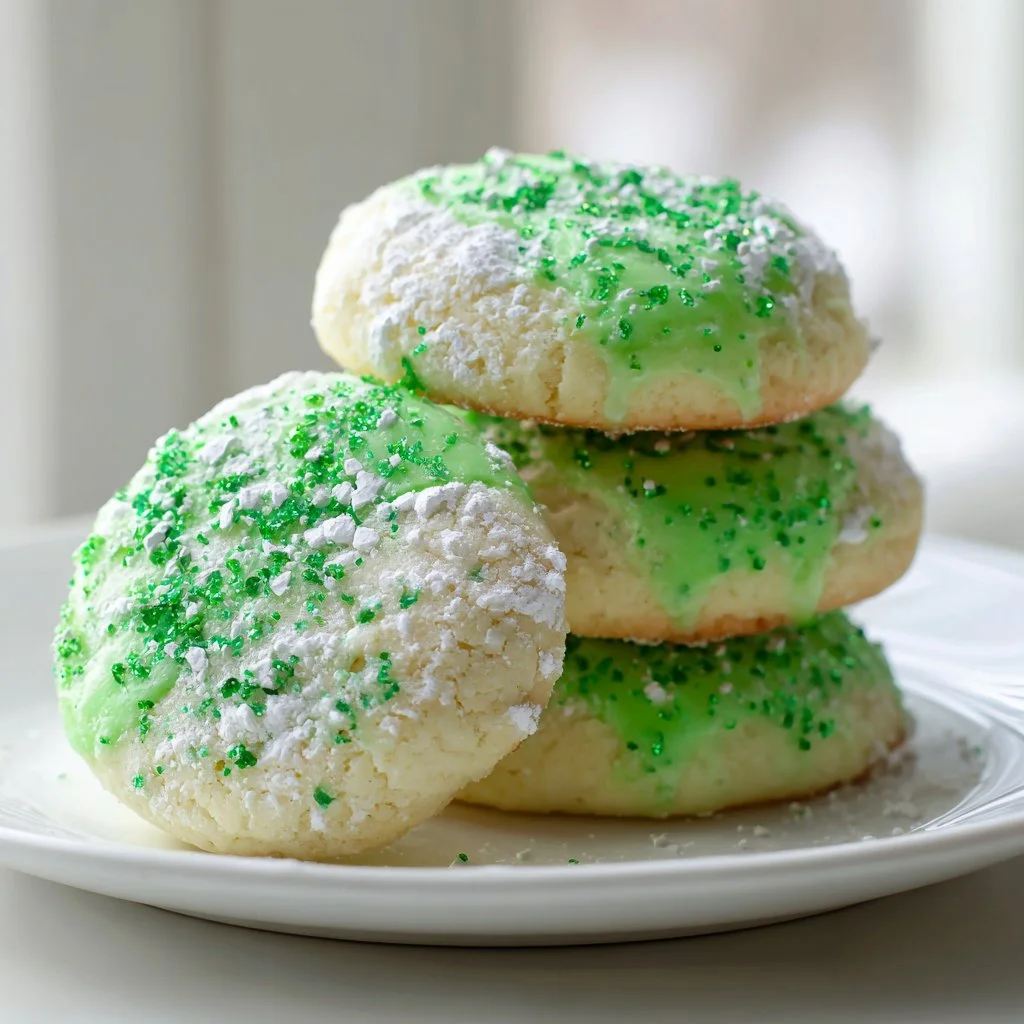
Expert Tips for Easy St. Patrick’s Day Cookies
– Use a reliable oven thermometer to maintain 350°F; uneven heat causes odd spread.
– If cookies are too cakey, reduce egg to 1 large egg and add 1–2 tablespoons oil to restore spread.
– For lighter cracks, chill dough longer; for deeper cracks, bake at the higher end of the time range.
– Use a small cookie scoop for consistent size and even baking across the batch.
– Swap vegetable oil for melted butter for richer flavor, but lower baking time by 1–2 minutes.
– Overmixing develops gluten and yields tougher cookies; mix just until combined.
– Use gel coloring to avoid thinning the dough and uneven color patches; a toothpick helps control the amount.
– Common mistake: skipping the granulated sugar step — it gives an initial crunch and helps powdered sugar adhere.
Incorporate these techniques into your workflow for dependable results, and try pairing them with other holiday treats like Valentine’s cookie ideas for seasonal baking marathons.
Storage & Freezing for Easy St. Patrick’s Day Cookies
Room temperature: Store finished cookies in an airtight container at room temperature for up to 5 days. Use parchment between layers to prevent sticking.
Fridge: Refrigeration isn’t necessary and can dry them out; only refrigerate if your kitchen is hot and humid — wrap airtight and consume within 7 days.
Freezer: Freeze single layers on a sheet until solid, then transfer to a freezer-safe container or zip-top bag for up to 3 months.
Thawing: Thaw at room temperature for 30–60 minutes in the container to avoid condensation on the powdered-sugar tops.
Reheating: Warm in a 300°F oven for 4–6 minutes to refresh the exterior crispness; cool slightly before serving.
Variations & Substitutions for Easy St. Patrick’s Day Cookies
Mint-chocolate twist
Stir in 1/2 cup mini chocolate chips and swap Kelly green for a pale mint color. The chips add pleasant texture and a minty-chocolate vibe; reduce baking time by a minute to preserve softness.
Lemon zest sparkle
Add 1 teaspoon lemon zest to the dough and use a yellow-green tint for a citrusy brightness. Zest cuts sweetness and makes cookies taste fresher and lighter.
Cream cheese glaze finish
After cooling, drizzle a simple cream cheese glaze (2 tbsp cream cheese, 1/2 cup powdered sugar, splash milk) for a tangy topping. The glaze adds richness and will give a glossy finish in lieu of the double-sugar look.
Gluten-free option
Use a gluten-free white cake mix labeled for 1:1 substitution. Watch dough hydration — GF mixes sometimes need a touch more oil or a 5–10 minute extra chill for stability; texture will be slightly more crumbly but still tasty.
Frequently Asked Questions About Easy St. Patrick’s Day Cookies
Q: Can I make these without eggs?
A: Yes—use 3 tablespoons aquafaba (chickpea liquid) or a commercial egg replacer per egg. Texture will be slightly denser and less cake-like, so chill the dough longer and expect a more cookie-like chew.
Q: Why are my cookies flat and oily?
A: Flat, oily cookies often mean too much liquid or a warm dough. Reduce a tablespoon of oil next time and chill the dough for 30–60 minutes before scooping. Also check oven temperature and baking time.
Q: How do I get a deeper green without altering texture?
A: Use concentrated gel or paste food coloring, adding a tiny bit at a time. Avoid liquid colorings which thin the dough; if you need more vibrancy, add a pinch of cocoa powder to shift hue without liquidity.
Q: Can I freeze the dough balls before baking?
A: Yes, freeze scooped and coated dough balls on a tray until firm, then bag them. Add 1–2 extra minutes to the bake time when baking from frozen and watch for color loss due to longer bake.
Q: My powdered sugar coating melted during baking. How do I prevent that?
A: Excess moisture on the surface causes powdered sugar to melt. Ensure dough balls are well-chilled, roll first in granulated sugar, and use fresh powdered sugar. Bake immediately after coating to lock in the crackled appearance.

Final Thoughts on Easy St. Patrick’s Day Cookies
These Easy St. Patrick’s Day Cookies are a no-fuss, festive treat that deliver soft centers and pretty crackled tops with minimal effort. Leave a star rating in the recipe card below and pin this to Pinterest for your holiday baking board.
For a shamrock-shaped variation and extra inspiration, check out a shamrock cookie idea from Sally’s Baking Addiction.
If you want a similar boxed-mix shortcut with decorating tips, see the helpful guide at Cookie Dough and Oven Mitt’s Easy St. Patrick’s Day Cookies.
For family-friendly decorating ideas and step photos, compare this method with Scattered Thoughts of a Crafty Mom’s easy version.
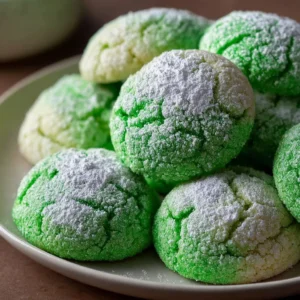
Easy St. Patrick's Day Cookies
Ingredients
Cookie Ingredients
- 1 box 15.25 oz white cake mix Choose a good-quality brand with real vanilla flavor.
- 2 large eggs Using large eggs keeps the dough the right consistency.
- 1/3 cup vegetable oil Use neutral-flavored vegetable oil or light canola oil for best results.
- 1/4 teaspoon Kelly green gel food coloring A little gel goes a long way, add dropwise until desired shade.
- 3 tablespoons granulated sugar For initial crunch and helps powdered sugar adhere.
- 6 tablespoons powdered sugar Use powdered sugar for the outer coating.
Instructions
Preparation
- Mix the cake mix, eggs, and vegetable oil in a large mixing bowl until the dough is sticky.
- Add the Kelly green gel food coloring and mix until evenly combined.
- Cover and chill the dough for 30 minutes.
- Preheat the oven to 350°F and line a baking sheet with parchment paper.
- Prepare two bowls: one with granulated sugar and another with powdered sugar.
- Scoop the dough with a tablespoon-sized cookie scoop and roll into balls.
- Roll each dough ball first in granulated sugar, then in powdered sugar until fully coated.
- Place the coated dough balls on the prepared sheet, spacing 2 inches apart.
Baking
- Bake for 9–12 minutes until cookies are spread and tops are crackled.
- Cool on the baking sheet for 5 minutes, then transfer to a wire rack to cool completely.
- Store in an airtight container at room temperature for up to 5 days.