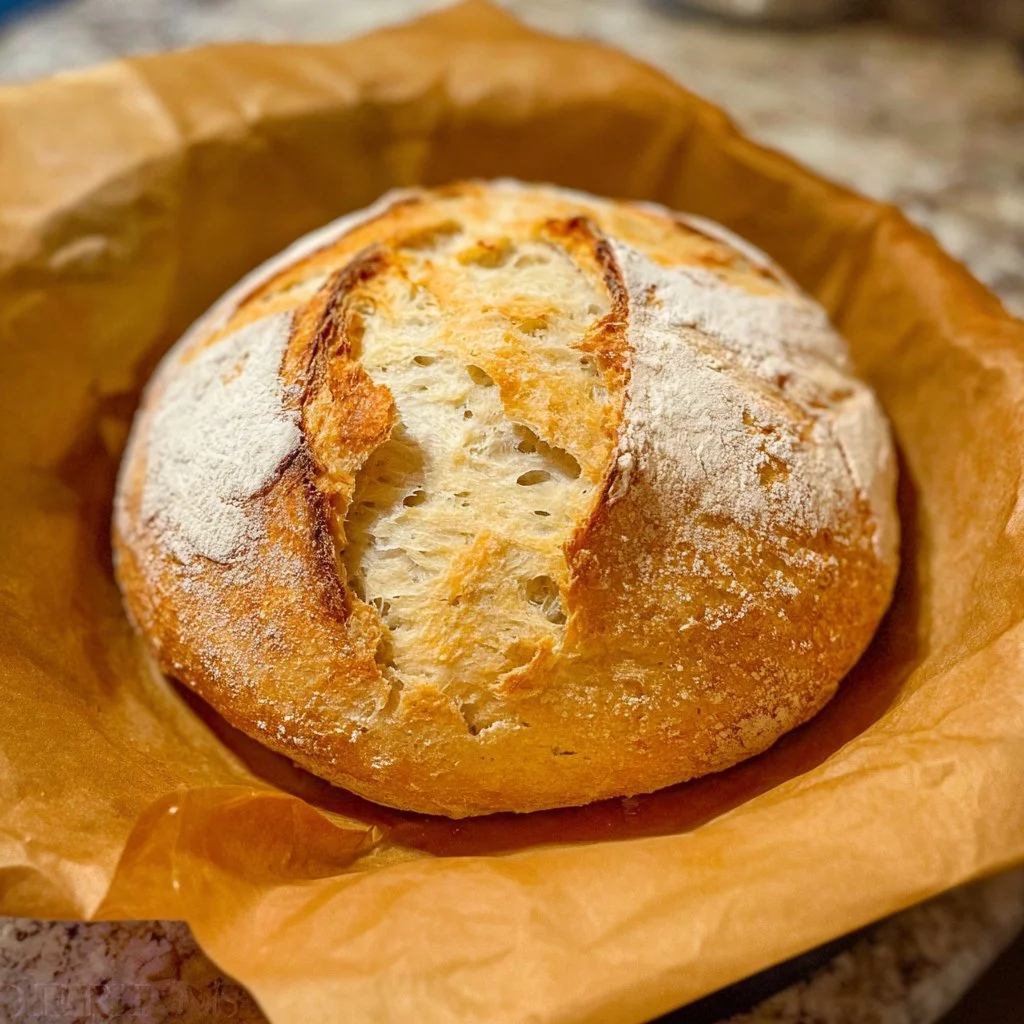
I have a soft spot for recipes that rescue something destined for the bin — and this Easy Sourdough Discard Bread is one of those little kitchen miracles. It turns a cup of sourdough discard into a rustic, no-fuss loaf with a crisp crust and tender crumb. Whether you want a quick weekend bake, a way to use discard, or a reliable no-knead bread to impress guests, this recipe delivers with minimal effort.
Why you’ll love this dish
This loaf is fast, forgiving, and deeply satisfying. Using a cup of sourdough discard adds flavor and helps reduce waste. The tiny amount of instant yeast gives reliable rise without long, technical dough handling. Because it’s a no-knead, Dutch‑oven bake, you get bakery-style crust and oven spring with very little hands-on time. It’s perfect for weeknight dinners, sandwiches for lunch the next day, or a cozy brunch centerpiece.
“I tossed my discard into this dough and ended up with a crusty, flavorful loaf that tasted like a bakery — no kneading, no fuss. My whole family loved it.” — home baker review
How this recipe comes together
A quick overview to set expectations:
- Mix the discard, flour, salt, sugar, instant yeast, and water into a sticky dough.
- Let it rest at room temperature for 4–24 hours (longer = tangier).
- Preheat a Dutch oven to 450°F (232°C), transfer the dough on parchment, and bake covered for 30 minutes.
- Finish uncovered for 15–20 minutes until golden and the internal temperature reaches around 200–210°F (93–99°C).
This process gives you a hands-off bulk ferment and a professional crust from the hot Dutch oven.
What you’ll need
- 1 cup sourdough discard (active or unfed — both work)
- 1 1/2 cups all-purpose flour
- 1 teaspoon salt
- 1/2 teaspoon sugar
- 1/2 cup water (start here; add a tablespoon or two more if dough feels very stiff)
- 1/2 teaspoon instant yeast
Notes and substitutions:
- Whole wheat: swap up to 1/3 of the flour for whole wheat, but add a splash more water.
- No instant yeast? Use active dry yeast (bloom in warm water first) but expect slightly different timing.
- For gluten-free: this recipe isn’t directly transferable; try a tested gluten-free discard-bread formula instead.
Step-by-step instructions
- Combine the ingredients: In a large bowl, add the sourdough discard, flour, salt, sugar, instant yeast, and water. Mix with a spoon or your hand until a sticky, shaggy dough forms.
- Cover and ferment: Cover the bowl with plastic wrap or a kitchen towel. Leave it at room temperature for 4 to 24 hours. Shorter time = milder flavor; longer time = more tang.
- Preheat the oven: When the dough has visibly risen and looks a bit aerated, preheat your oven to 450°F (232°C). Place a Dutch oven (with lid) inside the oven to heat for 30 minutes.
- Transfer the dough: Dust a piece of parchment paper with a little flour. Gently scrape the dough onto the parchment. Shape loosely into a round — no tight shaping needed.
- Bake covered: Use the parchment to lift the dough and lower it into the hot Dutch oven. Cover and bake for 30 minutes.
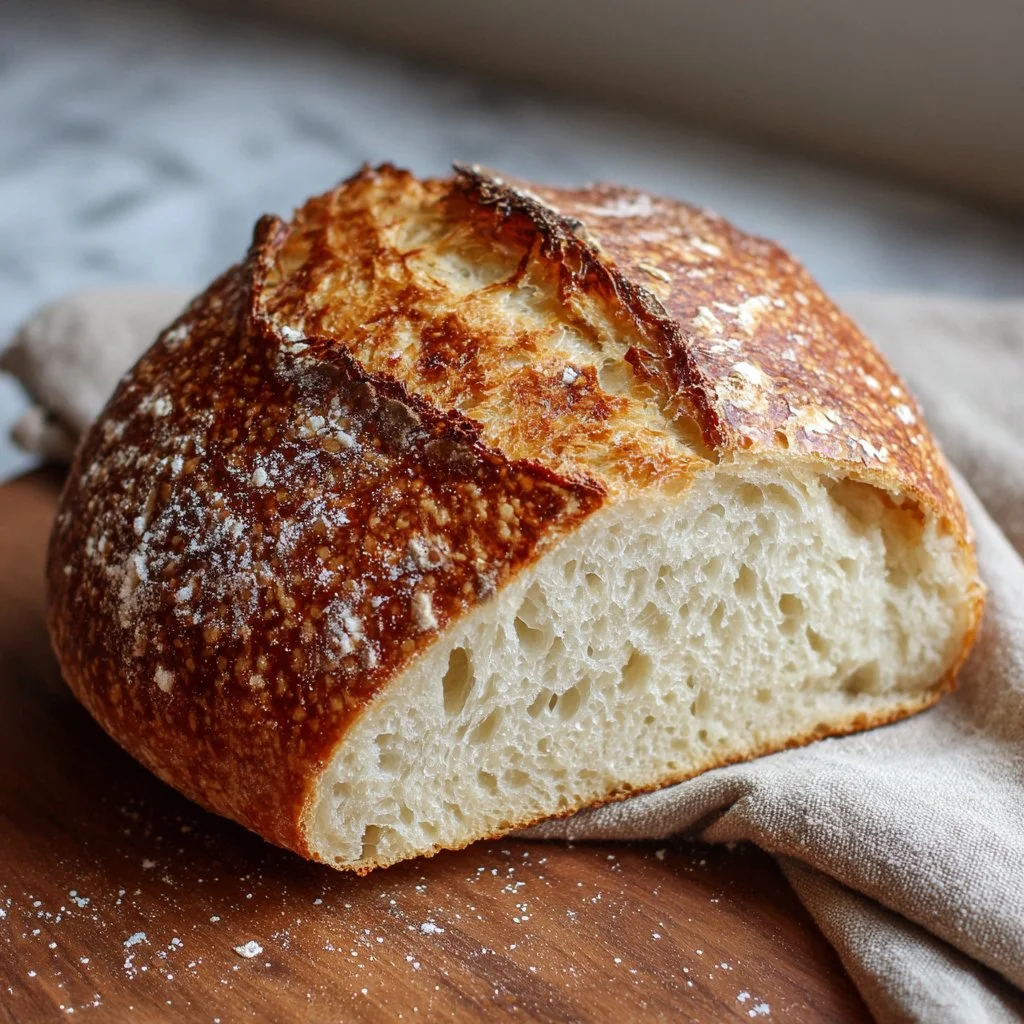
- Finish uncovered: Remove the lid and bake another 15–20 minutes, until the crust is deep golden brown and the loaf sounds hollow when tapped. For best accuracy, the internal temperature should be about 200–210°F (93–99°C).
- Cool before slicing: Remove the loaf and cool on a rack for at least 1 hour. Cooling completes the crumb set and prevents gummy slices.
Best ways to enjoy it
- Slice thick and serve warm with cultured butter and flaky sea salt for a simple treat.
- Make hearty sandwiches: roast‑beef and horseradish or tomato, basil, and mozzarella both work beautifully.
- Turn into bruschetta: toast slices, rub with garlic, drizzle olive oil, and top with tomatoes.
- Serve with soups and stews — the crust is perfect for dipping and soaking up broths.
Storage and reheating tips
- Room temperature: Store in a paper bag or wrapped loosely in a clean tea towel for 1–2 days to preserve the crust. Avoid airtight plastic at room temp, which softens crust.
- Refrigerator: Not recommended for fresh bread (it dries faster), but you can refrigerate slices if you’ll toast them soon.
- Freezing: Slice and freeze in an airtight bag for up to 3 months. Toast or warm directly from frozen.
- Reheating: For a revived crust, heat the whole loaf at 350°F (175°C) for 8–12 minutes. For slices, toast or warm in a skillet with a touch of butter.
Helpful cooking tips
- Hydration: Dough should be sticky but manageable. Add 1 tablespoon water at a time if it feels dry.
- Flour your hands lightly when handling sticky dough to avoid tearing the surface.
- Safety with the Dutch oven: Use heavy oven mitts when placing or removing the hot pot. Lower the parchment gently to avoid steam burns.
- Score the top: A quick slash with a sharp blade before baking can control expansion and look pretty.
- If you want a darker, shinier crust, brush with a little water or milk before removing the lid for the final bake minutes.
- Internal temperature: Use an instant-read thermometer — 200–210°F (93–99°C) signals a fully baked loaf.
Recipe variations
- Garlic-Herb: Fold in 1–2 teaspoons minced garlic and 1 tablespoon chopped rosemary or thyme.
- Olive and Parmesan: Add 1/3 cup chopped olives and 1/4 cup grated Parmesan for a savory twist.
- Seeded crust: Brush the loaf with water and press sesame, poppy, or mixed seeds on top before baking uncovered.
- Sweet discard loaf: Replace sugar with 1–2 tablespoons honey and add 1/4 cup raisins or chopped dried figs for a slightly sweet bread.
- Lower-salt version: Reduce salt to 1/2 teaspoon, but flavor and crust will be slightly affected.
Common questions
Q: My discard is very sour. Will that ruin the bread?
A: No. The instant yeast helps the dough rise despite acidity. If your discard is extremely sour, use the shorter 4–6 hour rest to keep tang moderate.
Q: Can I skip the instant yeast and rely only on the discard?
A: You can, but you’ll need a strong, active sourdough starter and much longer fermentation (often 8–24+ hours) and possibly a warm spot to get good rise. The yeast in this recipe ensures consistent results.
Q: How do I know when the loaf is fully baked?
A: The loaf should be deeply golden and sound hollow when tapped. A thermometer reading of 200–210°F (93–99°C) in the center is a reliable indicator.
Q: Can I use a different pot if I don’t have a Dutch oven?
A: Yes. Use any heavy, oven-proof pot with a tight-fitting lid. A pizza stone plus an oven-safe bowl for steam can also work.
Q: Is it safe to eat if I leave it on the counter overnight?
A: Yes — properly baked bread stored at room temperature for 1–2 days is safe. Follow storage tips to maintain quality and avoid mold.
Conclusion
If you want a hands-off, reliable loaf that makes excellent use of sourdough discard, try this recipe and tweak the rest time to match your preferred tanginess. For a similar no-knead approach with step-by-step photos, see this helpful guide: Sourdough Discard Bread (No-Knead!) – Lynn’s Way of Life. For another approachable take and extra tips from a different home-baker perspective, check out The Easiest Sourdough Discard Bread You’ll Ever Make! – Pantry Mama.
Enjoy the baking — and the crumbs you’ll happily sweep up afterward.
Easy Sourdough Discard Bread
Ingredients
Main Ingredients
- 1 cup sourdough discard (active or unfed)
- 1.5 cups all-purpose flour
- 1 teaspoon salt
- 0.5 teaspoon sugar
- 0.5 cups water (add more if needed) Add a tablespoon or two more if dough feels very stiff
- 0.5 teaspoon instant yeast Or use active dry yeast (bloom in warm water first)
Instructions
Preparation
- In a large bowl, combine the sourdough discard, flour, salt, sugar, instant yeast, and water.
- Mix with a spoon or your hand until a sticky, shaggy dough forms.
- Cover the bowl with plastic wrap or a kitchen towel and let it ferment at room temperature for 4 to 24 hours.
Baking
- Preheat the oven to 450°F (232°C) with a Dutch oven (with lid) inside for 30 minutes.
- Dust a piece of parchment paper with flour. Gently scrape the dough onto the parchment and shape loosely into a round.
- Use the parchment to lift the dough and lower it into the hot Dutch oven. Cover and bake for 30 minutes.
- Remove the lid and bake uncovered for another 15–20 minutes until deep golden brown.
- Remove the loaf and cool on a rack for at least 1 hour before slicing.