
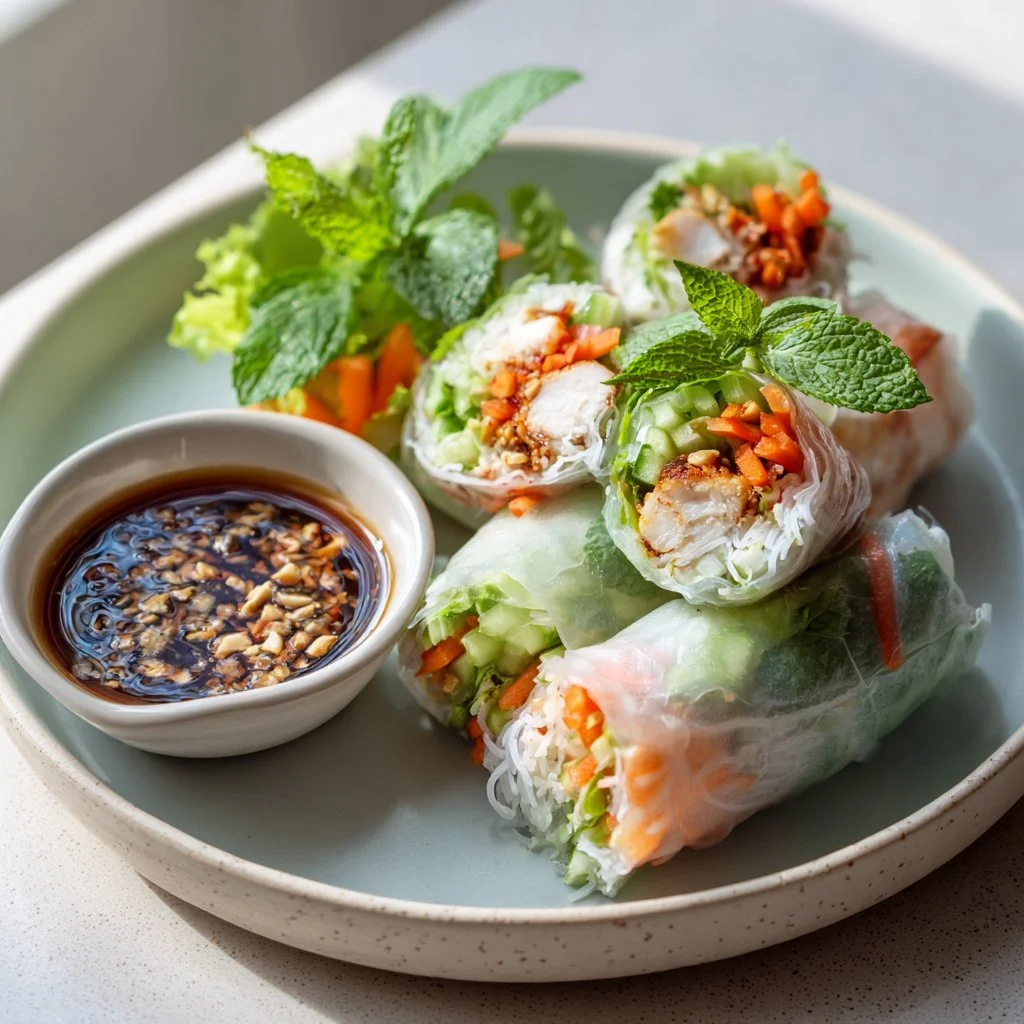
The first time I made these crispy rice paper spring rolls I was hooked by how light they felt and how crunchy they stayed even after sitting for a little while.
They’re deceptively simple to assemble yet feel special enough for guests or a speedy weeknight dinner.
This version focuses on fresh vegetables, aromatic herbs, and whatever protein you love — all wrapped in a rice paper shell that crisps up beautifully when handled correctly.
If you want a low-carb, gluten-free appetizer that travels well to potlucks, this recipe is a winner.
It’s also adaptable: swap proteins, change up herbs, or play with dipping sauces to make a new flavor every time.
If you like crispy, portable snacks, try this air fryer zucchini gluten-free crispy snack for another crunchy option.
Why You’ll Love This Recipe
- Light but satisfying: rice paper gives crunch without heaviness.
- Fast assembly: most of the time is prep — rolling is quick once you get the hang of it.
- Customizable: swap proteins and herbs to suit diets and seasons.
- Party-friendly: make ahead the components and roll to order for freshness.
- Kid-friendly: mild flavors and fun to dip.
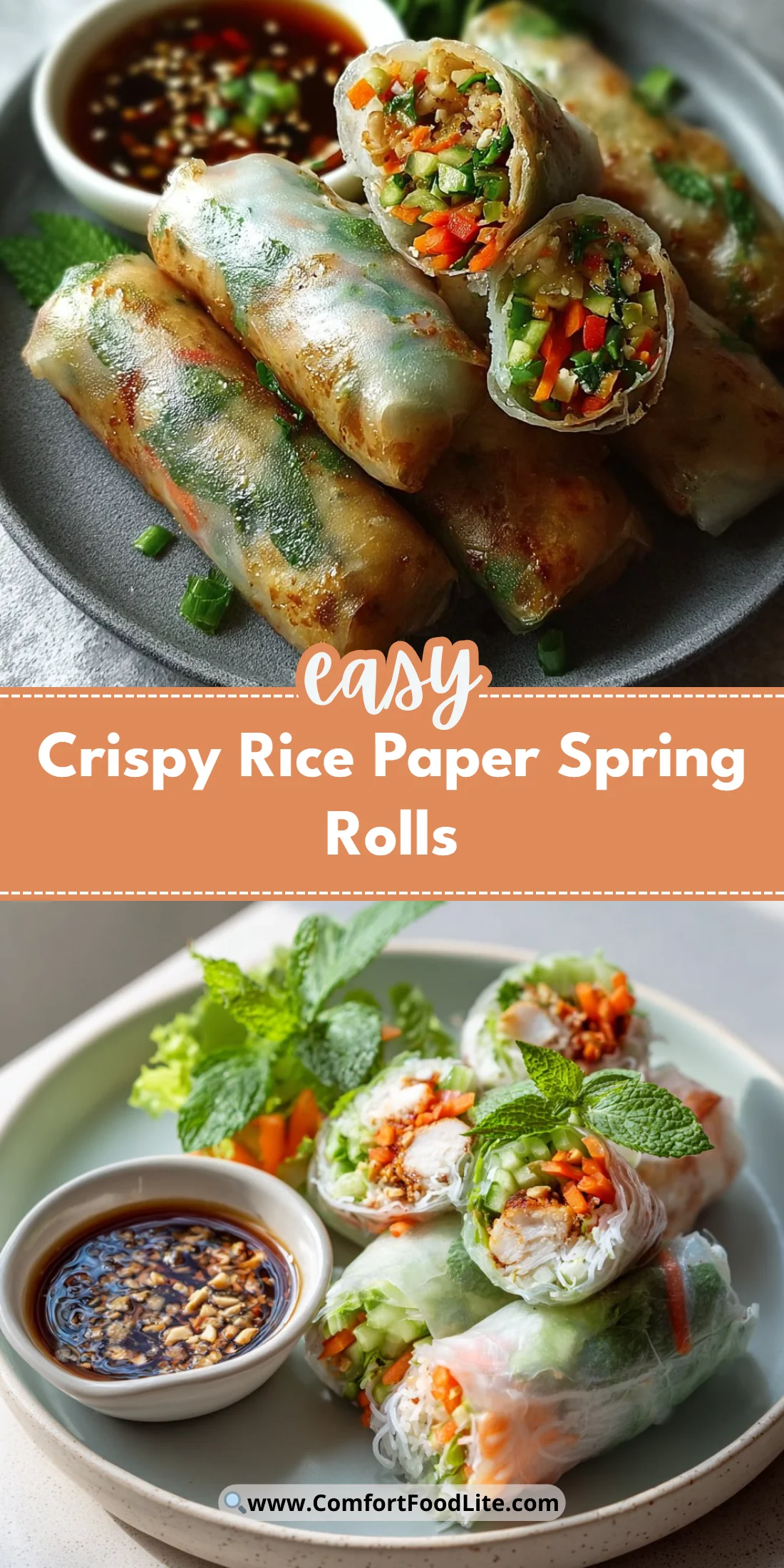
The texture is the magic here. The rice paper wrapper blisters and tightens when crisped or left slightly dry, providing a delicate snap.
Inside, the raw vegetables give fresh crunch and brightness while herbs add aromatic lift.
Cooked shrimp, chicken, or tofu contribute substance and mouthfeel without weighing the roll down.
Together you get a contrast of crisp exterior, juicy veg, and tender protein in a single bite.
"I made these for a weekend picnic and everyone went back for seconds. Crisp, fresh, and easy to adapt — a new favorite." — 5★ reader review
Key Ingredients
Rice paper wrappers
Rice paper is the foundation; choose thin round wrappers labeled for spring rolls.
Brands vary in elasticity — look for wrappers that are translucent and flexible when wet.
If you plan to pan-sear or air-fry, slightly thicker wrappers hold filling better and crisp more evenly.
Fresh vegetables (carrots, cucumber, bell peppers)
Firm, high-water-content veggies add crunch and hydration.
Julienne them finely so they roll neatly without tearing the wrapper.
If you want an added crunchy garnish, crisped shallots or store-bought crispy onions are great — see this air fryer crispy onions recipe for a low-fat method.
Fresh herbs (mint, cilantro, basil)
Herbs brighten the roll and cut through any richness in the protein or sauce.
Use plenty — a single leaf changes the profile significantly.
Mint pairs wonderfully with shrimp; Thai basil echoes chili/peanut sauces.
Protein of your choice (shrimp, chicken, tofu)
Cook your protein simply so it complements, not competes with, fresh flavors.
Thin slices or small pieces roll more easily and distribute flavor evenly.
For a crisped-texture finish, firm tofu that’s pressed and pan-fried works exceptionally well.
Full ingredient list:
- Rice paper wrappers
- Fresh vegetables (carrots, cucumber, bell peppers)
- Fresh herbs (mint, cilantro, basil)
- Protein of your choice (shrimp, chicken, tofu)
- Dipping sauce (hoisin, peanut, or soy sauce)
Step-by-Step Instructions
Step 1: Prep everything
Cut vegetables and herbs into thin, even strips so they roll cleanly.
Cook your chosen protein — grill, poach, or pan-sear — then slice into bite-sized pieces.
Lay everything out on a large board for an assembly line.
Pro tip: Arrange fillings from mild to bold so you can choose flavor balance per roll. You’ll know you’re ready when all ingredients are within arm’s reach.
Step 2: Soften the rice paper
Fill a shallow dish with warm water — not boiling — and dip one rice paper wrapper until it just softens, about 10–15 seconds.
Lift gently and let excess water drip off; the paper should be pliable, not mushy.
Pro tip: Too long in water makes tears more likely. You’ll know it’s ready when the wrapper feels flexible but still slightly stiff in the center.
Step 3: Build the roll
Lay the softened wrapper on a clean, lightly damp surface.
Place a small mound of vegetables, a few herb leaves, and protein near the edge closest to you.
Keep the filling compact and centered horizontally to avoid bulging.
Pro tip: Use small, neat piles — less is more. If the filling pokes at the wrapper edges, remove a bit before rolling.
Step 4: Fold and roll tightly
Fold the two sides over the filling like an envelope, then roll away from you, keeping tension to form a snug cylinder.
Seal the final seam by brushing a little water on it; the wrapper will stick.
Pro tip: A tight roll maintains crunch and prevents slipping. If a seam lifts, a dab of water seals it instantly.
Step 5: Repeat and rest
Continue softening wrappers and rolling until you’ve used all your filling.
If not serving immediately, place rolls seam-side down on a tray lined with a slightly damp towel to prevent drying.
Pro tip: Don’t stack rolls directly; lay them in a single layer to keep shapes intact and avoid sogginess.
Step 6: Serve with dipping sauce
Arrange rolls on a platter with bowls of hoisin, peanut, or soy-based sauces.
Encourage dipping — that’s where much of the flavor boost comes.
Pro tip: For party service, offer two sauces: a sweet-savory and a spicy option to satisfy different tastes.
Expert Tips for Success
- Temperature control matters: Keep the dipping water warm, not hot. Too-cold water makes wrappers stiff; water that’s too hot dissolves them. Aim for warm-to-the-touch water (about 100–110°F / 38–43°C) for consistent results.
- Knife skills save time: A good mandoline or sharp chef’s knife makes quick, even juliennes. Even sizes mean predictable texture and easier rolling.
- Press tofu well: If using tofu, press it for at least 15–30 minutes to remove excess moisture. Pressed tofu fries and seasons better and won’t make rolls soggy.
- Build an assembly line: One person softens wrappers, another arranges fillings, and a third rolls. This speeds production and keeps wrappers from drying out. If you’re solo, work in small batches.
- Avoid overfilling: Overstuffing tears rice paper and makes rolling messy. Think of each roll as a neat 4–5 inch cylinder; less bulk gives a better eating experience.
- Crispy finish options: If you want extra crunch, give assembled rolls a quick sear in a nonstick skillet with a little oil, or air-fry at 375°F (190°C) for 3–6 minutes until blistered. For inspiration on rice paper crisping techniques, see this low-fat crispy onions method which applies similar air-fryer logic.
- Herb layering technique: Place herbs closest to the wrapper so their oils infuse the rice paper as it rests. This prevents herbs from mixing into fillings and keeps visible pockets of green that look beautiful on the plate.
- Troubleshooting tears: If a wrapper tears, patch it with a piece of another softened wrapper and press to seal. It won’t be perfect, but it will hold.
Storage & Freezing
Fridge storage (short term):
Store assembled rolls in an airtight container lined with a damp paper towel to maintain moisture without making them soggy.
Place rolls seam-side down in a single layer and use within 24 hours for best texture.
Make-ahead components:
You can prepare vegetables, herbs, and cooked protein up to 2 days ahead.
Keep components separately refrigerated in sealed containers to retain crispness and herb freshness.
Freezer storage (not recommended for raw-filled rolls):
Raw-filled rice paper rolls don’t freeze well because ice crystals break the wrapper on thawing.
If you want freezer-friendly options, flash-freeze cooked fillings (like seasoned chicken or tofu), then thaw and assemble fresh for the best texture.
Reheating (for crisped rolls):
If you’ve pan-seared or air-fried the rolls and want to reheat, use an oven or air-fryer at 350°F (175°C) for 3–5 minutes until warmed and re-crisped.
Avoid microwaves — they make rice paper rubbery.
Reheating (for fresh, non-crisped rolls):
Fresh rolls are best served cold or at room temperature. If chilled, remove from fridge 10–15 minutes before serving to take the chill off and revive herb aroma.
Variations & Substitutions
Vietnamese-style cha gio (fried) twist:
Fill with seasoned ground pork or shrimp and pan-fry or deep-fry until golden.
This creates a snack similar to classic cha gio but wrapped in rice paper for a lighter shell.
Vegetarian/vegan swap:
Replace shrimp or chicken with marinated and pan-fried tempeh or extra-firm tofu.
Add hoisin-peanut sauce for richness and a sprinkle of toasted sesame seeds for crunch.
Low-carb or high-protein option:
Use more protein and fewer rice noodles/veg to shift macros. For a high-protein template, see this quick protein-friendly roll inspiration—the method for layering high-protein fillings translates well to savory rolls.
Spicy-sweet flavor boost:
Add thinly sliced mango, pickled carrots, or a drizzle of chili-lime dressing to create sweet-heat contrast.
Swap cilantro for Thai basil to complement the sweet elements.
Frequently Asked Questions
Q: Can I make rice paper spring rolls ahead of time?
A: Yes, you can prep fillings up to 48 hours ahead. Assembled rolls are best eaten within 24 hours. Store them seam-side down in a single layer with a damp paper towel to keep wrappers from drying. If you plan to crisp them later, assemble fresh and cook right before serving for best texture.
Q: Why did my rice paper tear when I soaked it?
A: Tearing usually means the wrapper was submerged too long or the water was too hot. Use warm water and dip for 10–15 seconds; the wrapper should be pliable but not gooey. If your workspace is too wet, excess moisture can create weak spots; dry hands and a lightly damp surface help.
Q: How do I keep the rolls from getting soggy?
A: Keep wet ingredients minimal and separate wetter items (like cucumber) by patting them dry before assembly. Press some of the moisture out with paper towels. Store with a damp — not soaking — paper towel to maintain pliability without causing sogginess.
Q: Can I pan-fry or air-fry these rolls for extra crunch?
A: Absolutely. Lightly brush with oil and air-fry at 375°F (190°C) for 3–6 minutes or pan-sear on medium-high until blistered and golden. Watch closely; they crisp quickly. If using frying, use a neutral oil and drain on paper towels.
Q: What dipping sauce pairs best?
A: Peanut sauce and hoisin-based sauces are classic. Soy-based or vinegar-chili blends work for lighter profiles. Offer one savory and one spicy-sweet option so guests can choose.
Final Thoughts
These crispy rice paper spring rolls are simple, adaptable, and reliably impressive.
Make fillings ahead, roll to order, and offer a couple of dipping sauces for maximum impact.
If you enjoyed this recipe, please leave a star rating in the recipe card below and pin it to Pinterest for later.
Conclusion
If you want to explore crisping rice paper in a dumpling style, try this rice paper dumplings recipe for a pan-sear or air-fry method that complements this roll technique.
For a classic deep-fried Vietnamese take, see this Vietnamese fried spring rolls (cha gio) for inspiration on flavors and fillings.
For a high-protein, low-carb approach using similar crisping logic, check out this high-protein crispy rice paper rolls guide.
Crispy Rice Paper Spring Rolls
Ingredients
For the Spring Rolls
- 10 pieces Rice paper wrappers Choose thin round wrappers labeled for spring rolls.
- 2 cups Fresh vegetables (julienned carrots, cucumber, bell peppers) High-water-content veggies for crunch.
- 1 cup Fresh herbs (mint, cilantro, basil) Use plenty for flavor.
- 1 cup Protein of your choice (shrimp, chicken, tofu) Cooked and cut into bite-sized pieces.
For the Dipping Sauce
- 1/4 cup Hoisin sauce Or substitute with peanut or soy sauce.
Instructions
Preparation
- Cut vegetables and herbs into thin, even strips.
- Cook your chosen protein (grill, poach, or pan-sear) and slice into bite-sized pieces.
- Lay everything out on a large board for an assembly line.
Rolling the Spring Rolls
- Fill a shallow dish with warm water and dip one rice paper wrapper until it just softens, about 10–15 seconds.
- Lay the softened wrapper on a clean, lightly damp surface.
- Place a small mound of vegetables, a few herb leaves, and protein near the edge closest to you.
- Fold the two sides over the filling like an envelope, then roll away from you to form a snug cylinder.
- Seal the final seam by brushing a little water on it.
- Repeat until all filling is used.
Serving
- Arrange rolls on a platter with bowls of hoisin, peanut, or soy-based sauces.
- Encourage dipping for added flavor.