
The first time I made these crispy rice paper spring rolls, I underestimated how addictive the crunch would be.
They look delicate, but once you bite in you get that satisfying shatter followed by bright, herb-forward filling.
They’re fast, customizable, and perfect for feeding a crowd or packing into lunch boxes.
What makes this recipe a winner is the contrast — paper-thin, crackling exterior and a cool, crisp interior.
You can make them endlessly different by swapping proteins and sauces.
Best of all, they feel light and fresh while still being wildly snackable.
Why You’ll Love This Recipe
- Quick to make with minimal equipment.
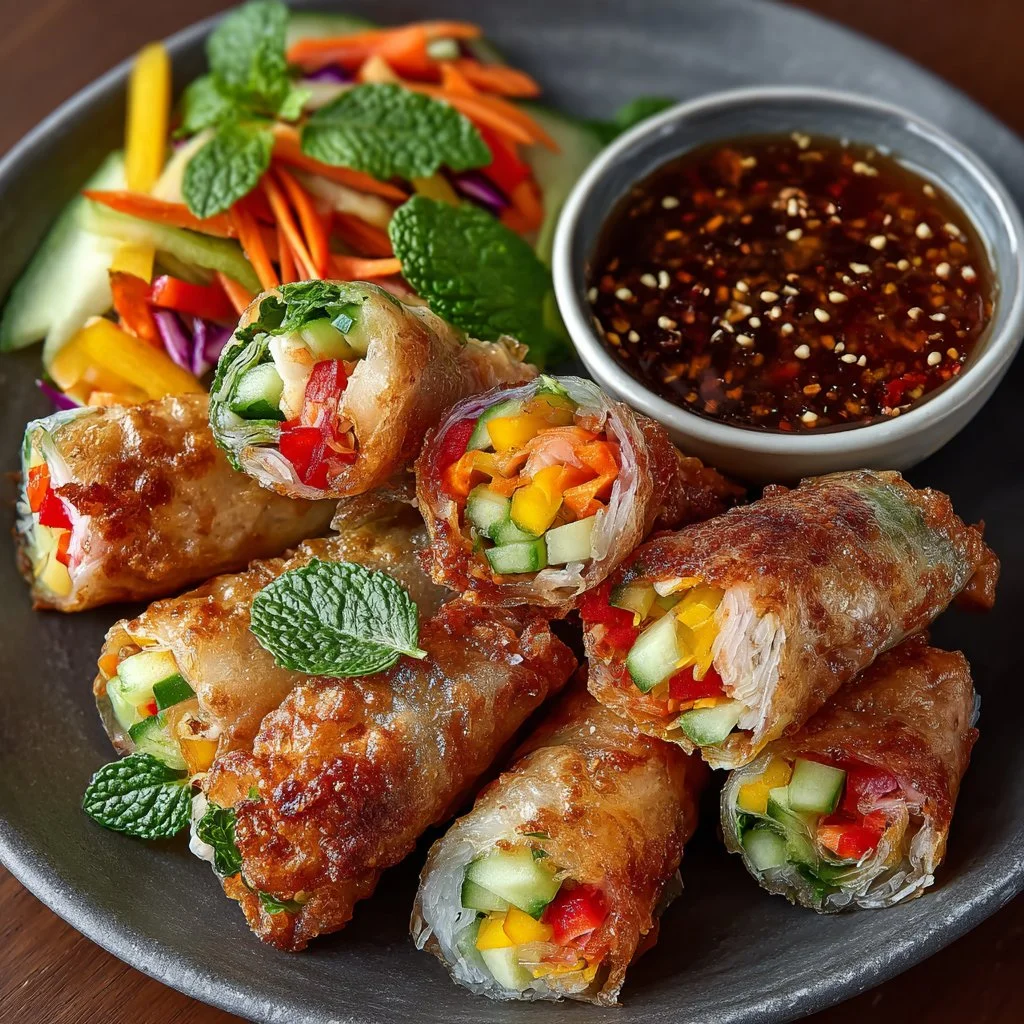
- Visually impressive: colorful fillings peek through translucent wrappers.
- Flexible for diets: easily made vegan, low-carb, or protein-forward.
- Great for parties, meal prep, or hands-on family cooking.
The texture is the star here: rice paper becomes unexpectedly crisp when handled right, offering a delicate shatter like a thin cracker.
Inside, the vegetables remain cool and crunchy while fresh herbs cut through with bright, green notes.
The protein adds heft and savory mouthfeel, and the dipping sauce ties all the contrasts together so every bite feels balanced and immediate.
"Five stars — these were the hit of our dinner party. Crunchy, fresh, and endlessly adaptable. Will make again!" — Reader Emily R.
Key Ingredients
Rice paper wrappers
Rice paper is the backbone of this recipe. Use quality round wrappers intended for fresh rolls; thinner ones will crisp most evenly. Brands like Banh Ph?u (or reputable grocery store brands) are widely available and give a translucent finish that shows off the filling.
Assorted colorful vegetables (bell peppers, carrots, cucumber)
The vegetables provide both color and crunch. Choose firm, crisp produce and slice them into matchsticks so they pack neatly without releasing too much moisture. Use orange carrots and red/yellow peppers for color contrast.
Fresh herbs (mint, cilantro)
Herbs are essential for aromatic lift. Mint gives a cooling bite while cilantro brings citrusy, slightly soapy notes that pair beautifully with peanut or hoisin sauces. Add them directly next to the protein in the roll so each bite has herb presence.
Protein of your choice (shrimp, chicken, or tofu)
Protein adds substance. Cook shrimp until just opaque and slice; roast or poach chicken breast for tenderness; press and pan-sear firm tofu for texture. Cooling the protein before assembly prevents soggy rice paper.
Full ingredient list:
- Rice paper wrappers
- Bell peppers (assorted colors)
- Carrots
- Cucumber
- Fresh mint
- Fresh cilantro
- Shrimp, cooked chicken, or firm tofu
- Hoisin sauce, peanut sauce, or vinaigrette for dipping
Step-by-Step Instructions
Step 1: Prepare the vegetables
Julienne or thinly slice the bell peppers, carrots, and cucumber into matchstick-sized pieces.
Aim for uniform thickness so the roll assembles evenly and looks tidy.
Pro Tip: Use a mandoline or a sharp chef’s knife for neat, uniform matchsticks; you’ll notice cleaner bites and faster rolling.
Step 2: Cook and cool the protein
Cook your chosen protein: poach or roast chicken, quickly sauté shrimp until opaque, or press and pan-sear tofu until golden.
Slice into thin strips and let them cool completely before using.
Pro Tip: Cooling prevents steam inside the roll that can soften the wrapper; lay protein on a wire rack to cool faster.
Step 3: Soften the rice paper
Fill a large shallow bowl with warm water. Dip one rice paper wrapper into the water for about 10–15 seconds until it becomes pliable but not overly soft.
Pull it out and lay it flat on a damp, clean towel or nonstick surface.
Pro Tip: Don’t soak more than 15 seconds; over-softened wrappers tear easily and become gummy when fried/crisped.
Step 4: Layer the fillings
Place a thin line of filling across the lower third of the wrapper, beginning with herbs next to the protein so herbs sit close to the bite.
Add vegetables on top in a compact line — not piled high — to keep the roll tight.
Pro Tip: Visual cue — leave a two-finger-width margin on each side and across the top to allow folding and tension when rolling.
Step 5: Fold and roll tightly
Fold the left and right edges over the filling, then roll from the bottom toward the top, keeping firm but gentle tension to avoid tearing.
The goal is a snug cylinder with the seam on the bottom to prevent unrolling.
Pro Tip: If the wrapper resists, dampen the exposed edge lightly with water to seal. You’ll know it’s sealed when the seam adheres and the roll holds shape when lifted.
Step 6: Repeat and serve
Repeat the process with remaining ingredients. Serve immediately with your chosen dipping sauce, or place on a paper towel-lined tray to keep crisp.
Pro Tip: Serve within an hour for best texture; if storing briefly in the fridge, place rolls seam-side down to reduce unspooling.
Expert Tips for Success
- Temperature control matters: Use warm (not hot) water to soften wrappers. Hot water turns rice paper limp quickly and makes handling messy, while cold water won’t soften it enough. Aim for water you’d comfortably dip your hand into.
- Keep components dry: Pat vegetables and proteins dry before assembling. Excess moisture is the fastest route to soggy wrappers and limp texture. A clean kitchen towel or paper towels make this step quick.
- Knife skills equal speed: Even, matchstick-sized vegetables create consistent bites and make rolling quicker. A sharp knife or mandoline pays dividends in appearance and texture.
- Work assembly-line style: Lay out fillings in bowls and set up a dipping station. Once you get the rhythm, you can produce many rolls with minimal effort. This also minimizes wrapper over-soak.
- Avoid overfilling: It’s tempting to cram in more, but overfilling causes tearing and uneven sealing. Use a modest amount per roll; the savory dip will amplify flavor.
- Seal smartly: When the rice paper is slightly tacky, press the seam for a few seconds to set. If a seam won’t stick, a tiny dab of water along the edge will glue it.
- For extra crunch: After rolling, place the rolls seam-side down on a baking sheet under a broiler for 30–60 seconds to dry the exterior, or shallow-fry quickly in neutral oil until puffed and golden. Watch closely — rice paper browns fast.
- Make-ahead strategy: Pre-slice everything and keep components separated. Assemble just before serving. If you must store assembled rolls, wrap them individually in parchment and consume within 24 hours.
- Sauce pairing rule of thumb: Rich, nutty sauces like peanut or hoisin pair best with earthy proteins and fried versions; light vinaigrettes work well with raw vegetable-heavy or seafood rolls.
- Equipment tip: A wide, shallow bowl for the warm water and a damp clean towel for your work surface are your only must-haves. A mandoline and a wire rack are optional but speed things up.
Storage & Freezing
Fridge storage (short-term): Store assembled rolls in the refrigerator for up to 24 hours.
Place them seam-side down in a single layer on a tray lined with damp paper towels and cover loosely with plastic wrap.
Avoid stacking to prevent crushing and sogginess.
Fridge storage (components): For longer prep life, store fillings separately.
Julienned vegetables keep 3–4 days in an airtight container with a dry paper towel to absorb moisture.
Cooked proteins can be refrigerated 3–4 days when stored in airtight containers.
Freezing (not recommended for assembled fresh rolls): Assembled fresh rolls do not freeze well — ice crystals will ruin texture.
Instead, freeze cooked proteins (shrimp, chicken) or blanched vegetables separately in airtight freezer bags for up to 3 months.
Thaw overnight in the refrigerator and pat dry before assembling.
Reheating properly: If you’ve crisped rolls (lightly fried or broiled) and want to reheat, use a hot oven or toaster oven at 350°F (175°C) for 5–8 minutes until warmed and crisped.
Do not microwave, as it will make the wrapper chewy.
If rolls are fresh and uncrisped, serve cold or at room temperature with dipping sauce.
Variations & Substitutions
Crispy fried version: After rolling, shallow-fry in 1/4 inch of vegetable oil until puffy and golden. Drain on paper towels and serve hot with sweet chili or hoisin.
Vegan/plant-based: Use pan-seared tofu or marinated tempeh as the protein, and swap peanut sauce for a vegan hoisin or miso vinaigrette.
Low-carb twist: Replace rice paper with large blanched lettuce leaves for a lighter wrap that still highlights fresh fillings.
Mediterranean fusion: Use grilled halloumi or marinated artichoke hearts with basil and roasted red pepper, and dip in a lemon-garlic vinaigrette.
Frequently Asked Questions
Q: Can I make rice paper spring rolls ahead of time?
A: Yes, but with caveats. Prep and store components up to 24–72 hours ahead depending on the ingredient. Assemble rolls no more than 24 hours before serving for best texture. If you must store assembled rolls, keep them in a single layer, seam-side down, on a tray with a damp paper towel and cover lightly. Expect some loss of crispness after refrigeration.
Q: How can I get the rice paper extra crispy?
A: Drying or quick frying are the two main methods. Briefly broil or use a toaster oven to remove surface moisture, or shallow-fry in neutral oil for 20–40 seconds per side until puffed and golden. Don’t over-fry; rice paper burns quickly. A light spray of oil before baking or broiling can help even crisping.
Q: What’s the best dipping sauce for these rolls?
A: It depends on the protein and whether you want richness or brightness. Peanut and hoisin sauces are rich and savory — perfect with tofu, chicken, or fried rolls. A light vinaigrette or nuoc cham (Vietnamese fish-sauce-based dressing) brightens shrimp and vegetable-forward rolls. Match the sauce intensity to the roll’s filling.
Q: Can I fry rice paper without them tearing?
A: Yes, if they are rolled tightly and dry on the surface. Make sure the seam is well-sealed before frying. Heat oil to medium-high and fry in a single layer without overcrowding. Use a slotted spoon to gently turn; listen for a steady sizzle. If a roll splits, the issue is usually overstuffing or a wrapper that was too thin or too wet.
Q: Are rice paper spring rolls gluten-free?
A: Traditional rice paper wrappers are gluten-free, but always check the packaging for cross-contamination or added wheat. Also inspect your sauces — hoisin often contains wheat, whereas simple peanut sauce or vinegary dressings can be made gluten-free with tamari or gluten-free hoisin.
Final Thoughts
These crispy rice paper spring rolls are one of those recipes I keep returning to because they’re fast, endlessly adaptable, and always impressive.
They’re a perfect weeknight dinner, party appetizer, or meal-prep upgrade when you plan components ahead.
Please leave a star rating in the recipe card below and pin this to Pinterest if you loved it.
Conclusion
For inspiration on alternative crisping methods and flavor ideas, check this guide to Rice Paper Dumplings (crispy rice paper wraps) | I Heart Umami®, which shows playful ways to use rice paper beyond rolls.
If you want a protein-forward, low-carb take to try alongside this recipe, this variation for (High Protein) Crispy Rice Paper Rolls – BRIGHT MOMENT CO. is a helpful resource.
For classic fried spring roll technique and Vietnamese-style guidance that complements the crisping tips above, see Easy Vietnamese Fried Spring Rolls – Cha Gio | Wandercooks.
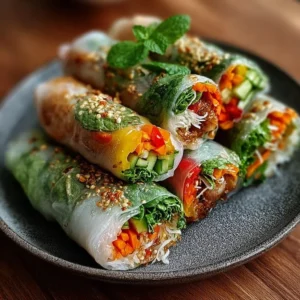
Crispy Rice Paper Spring Rolls
Ingredients
For the spring rolls
- 12 pieces Rice paper wrappers Use quality round wrappers intended for fresh rolls.
- 2 cups Assorted colorful vegetables (bell peppers, carrots, cucumber) Julienne or thinly slice into matchsticks.
- 1/2 cup Fresh mint For aromatic lift.
- 1/2 cup Fresh cilantro Add next to protein for flavor.
- 1 cup Cooked protein (shrimp, chicken, or tofu) Prepare and cool before assembling.
For dipping sauces
- 1/4 cup Hoisin sauce Pairs well with all fillings.
- 1/4 cup Peanut sauce Rich and nutty flavors.
- 1/4 cup Vinaigrette Light dressing option.
Instructions
Preparation
- Julienne or thinly slice the bell peppers, carrots, and cucumber into matchstick-sized pieces.
- Cook your chosen protein: poach or roast chicken, quickly sauté shrimp until opaque, or press and pan-sear tofu until golden.
- Let the cooked protein cool completely before using.
Assembling the Rolls
- Fill a large shallow bowl with warm water. Dip one rice paper wrapper into the water for about 10–15 seconds until pliable.
- Lay the softened wrapper flat on a damp, clean towel or nonstick surface.
- Place a thin line of herbs next to the protein, followed by a compact line of vegetables across the lower third of the wrapper.
- Fold the left and right edges over the filling, then roll from the bottom towards the top, keeping the roll snug.
Serving
- Repeat the process with remaining ingredients. Serve immediately with your chosen dipping sauce.
- For best texture, serve within an hour, or lay on a paper towel-lined tray.