
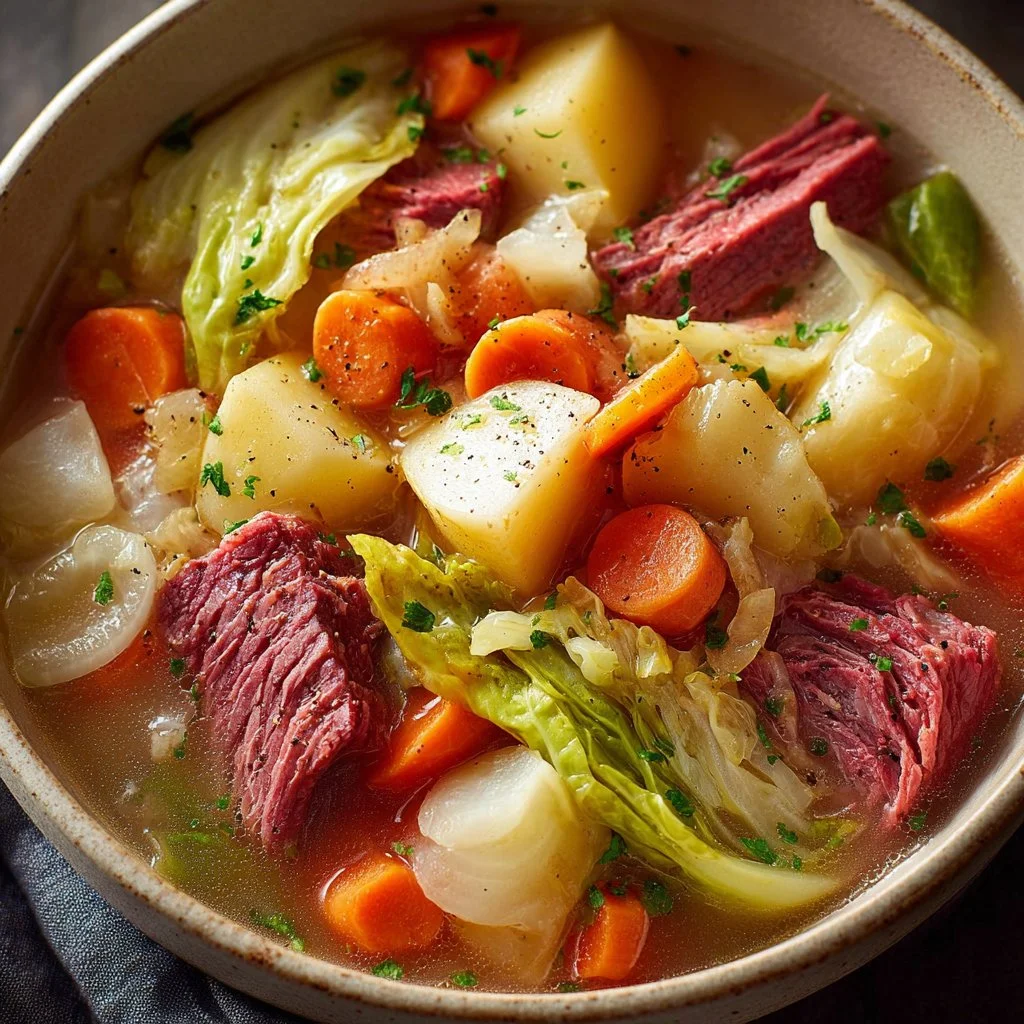
Warm, savory, and comfort-food simple — this Corned Beef and Cabbage Stew is the kind of pot-cooked meal that makes a house feel like home.
It’s designed for busy cooks who want a one-pot solution with hearty results.
Short hands-on time, long simmering flavor, and vegetables that hold up make this a weeknight or weekend favorite.
If you’re carving out space for a full-flavored dinner, this stew delivers deep beefiness and tender vegetables without fuss.
Pairing it with a lighter side or an easy pantry dish makes for a complete meal and keeps flavors balanced.
If you like hearty cabbage dishes, try this Chinese ground beef and cabbage stir-fry for a quick contrast on another night.
Why You’ll Love This Corned Beef and Cabbage Stew
– One-pot comfort with layered flavors.
– Uses budget-friendly pantry staples.
– Hands-off braising builds deep beef flavor.
– Veggies stay tender without turning mushy.
– Versatile for leftovers and freezing.
– Easy to scale up for guests.
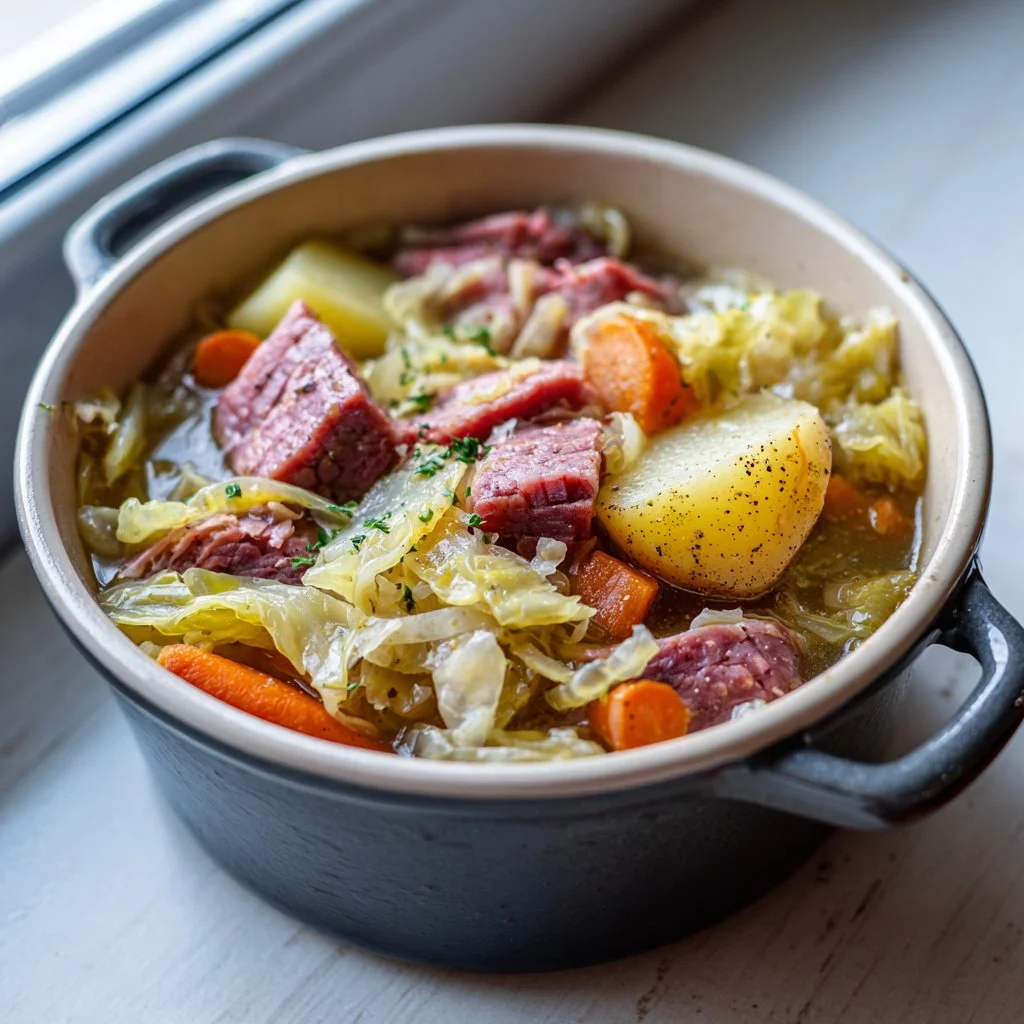
This stew balances salty, savory corned beef with sweet-cooked cabbage and earthy potatoes. The broth reduces slightly as it simmers, concentrating flavor while keeping the meat moist. Texture is a mix of fork-tender beef slices and chunky, melt-in-your-mouth root vegetables.
"Five stars — the best corned beef stew I’ve made. The beef stayed juicy, the cabbage tasted sweet, and my family went back for seconds." — A satisfied reader
Key Ingredients for Corned Beef and Cabbage Stew
Corned beef
Corned beef is the backbone of this stew; the curing spices and salt bring depth that plain roast beef won’t replicate. Buy a leaner brisket point if you want less fat, or a fattier cut if you prefer mouth-coating richness. If you substitute pastrami or cooked roast beef, expect less briny spice and adjust salt in the broth.
Green cabbage (4 cups chopped)
Cabbage adds sweetness and body as it breaks down slightly during simmering. Choose a crisp head without brown spots and slice into even chunks so it cooks uniformly. Substituting savoy or napa cabbage will change texture — savoy is silkier, napa is milder — but both will work fine.
Potatoes (4 large, cubed)
Potatoes thicken the broth slightly and add a comforting starchiness. Use starchy or all-purpose potatoes like Russets or Yukon Golds for fluffy interiors that don’t disintegrate too quickly. If you swap in sweet potatoes, the stew becomes sweeter and the texture becomes softer; reduce simmer time to prevent mush.
Beef broth (4 cups)
A good beef broth lifts the corned beef without masking its cure flavors. Use low-sodium broth to control salt, especially since corned beef can be salty. If you must substitute chicken broth, the stew will be lighter; add a splash of Worcestershire or soy for added umami.
Full Ingredient List for Corned Beef and Cabbage Stew
– 4 cups chopped cabbage
– 1 pound corned beef
– 4 large potatoes, cubed
– 2 carrots, sliced
– 1 onion, chopped
– 4 cups beef broth
– 1 teaspoon black pepper
– 1 tablespoon mustard
Step-by-Step Instructions for Corned Beef and Cabbage Stew
Step 1: Combine broth, corned beef, and onions in a large pot
Place the corned beef in a heavy-bottomed pot and pour in 4 cups of beef broth until the meat is mostly submerged. Add the chopped onion around the meat so it releases sweetness into the cooking liquid.
Pro Tip: The broth should just cover the meat with onions floating near the surface; you should hear a gentle simmer when it first heats.
Step 2: Bring to a boil, then reduce and simmer for 1 hour
Turn heat to high and bring the pot to a gentle boil. Lower immediately to a simmer, cover, and allow the beef to braise for about 60 minutes so connective tissue breaks down.
Pro Tip: Look for tiny bubbles breaking at the edge of the pot and a fragrant steam of beef and onion when you lift the lid slightly.
Step 3: Add potatoes, carrots, and cabbage
After an hour, nestle the cubed potatoes, sliced carrots, and chopped cabbage into the pot around the beef so everything cooks in the same braising liquid. Distribute veggies evenly to ensure consistent doneness.
Pro Tip: Visually, the pot should show the vegetables mostly submerged and the cabbage starting to wilt at the edges after a few minutes.
Step 4: Season with pepper and mustard
Stir in 1 teaspoon black pepper and 1 tablespoon mustard, whisking briefly to distribute seasonings into the broth. Taste a spoonful of broth before adding extra salt; corned beef can push salt levels high.
Pro Tip: The broth should smell tangy and peppery; small mustard flecks may float but will blend as it simmers.
Step 5: Cook for an additional 30 minutes until vegetables are tender
Cover and simmer for another 30 minutes, or until the potatoes and carrots are fork-tender and the cabbage is softened but still holds some shape.
Pro Tip: A fork should pierce potatoes with slight resistance and cabbage leaves should fold easily without falling apart.
Step 6: Slice the corned beef and serve with vegetables
Transfer the corned beef to a cutting board and slice against the grain into even pieces. Arrange meat and vegetables on a platter, ladle some broth over everything to keep it juicy, and serve hot.
Pro Tip: The sliced meat should be moist and glossy; if it looks dry, spoon extra broth over it before serving.
Expert Tips for Corned Beef and Cabbage Stew
– Keep simmer temperatures low; rapid boiling tightens meat fibers and can make corned beef tough.
– If vegetables overcook, remove them with a slotted spoon and keep warm while the beef finishes.
– Use a heavy-bottomed pot or Dutch oven to distribute heat evenly and prevent scorching.
– For clearer broth, skim foam after the first 10–15 minutes of simmering.
– If the stew tastes too salty, add a peeled potato and simmer 10–15 minutes to absorb excess salt, then discard the potato.
– To test tenderness, insert a fork into the corned beef; it should yield easily but not fall apart.
– For shreddable meat, extend braising until the connective tissue breaks down and the meat pulls apart with minimal resistance.
– Avoid adding acid (like vinegar) until the end; it can firm vegetable cellulose and slow tenderness.
– If you want a quicker weeknight version, reduce the braise time and finish in a pressure cooker following manufacturer guidelines and adjusting liquid.
While this is a braised stew at heart, you can serve it with lighter sides; for a crisp counterpoint try a stir-fry like beef and broccoli stir-fry on a different night to vary textures.
Storage & Freezing for Corned Beef and Cabbage Stew
Refrigerator: Cool the stew within two hours and store in airtight containers for up to 4 days. Use shallow containers to speed chilling and avoid bacterial growth.
Freezer: Portion into freezer-safe jars or heavy-duty freezer bags and remove excess air. Freeze for up to 3 months. Label with date and contents.
Thawing: Thaw overnight in the refrigerator for best texture. For faster thawing, submerge sealed bags in cold water, changing water every 30 minutes.
Reheating: Reheat gently on the stove over low heat until steaming, stirring occasionally. If frozen in a glass jar, thaw first to avoid thermal shock. Add a splash of beef broth when reheating if the stew seems dry.
Variations & Substitutions for Corned Beef and Cabbage Stew
– Guinness-Style Corned Beef Stew: Replace 1 cup of beef broth with 1 cup of Guinness or another dark beer and add a bay leaf. The beer deepens the stew’s caramel notes and adds a subtle bitterness that balances the salt.
– Slow-Cooker Corned Beef and Cabbage Stew: Brown the corned beef briefly, then transfer to a slow cooker with all ingredients and cook on low for 6–8 hours. This yields very tender meat and hands-off convenience; see slow-cooker adjustments for liquid levels.
– Mustard and Horseradish Boost: Stir in 1–2 teaspoons prepared horseradish with the mustard for a sharper, piquant finish. It brightens the broth and pairs well with robust cabbage.
– Root-Vegetable Upgrade: Add parsnips and turnips with the carrots for a sweeter, earthier profile. These root swaps hold texture similarly to potatoes and add complexity without losing the original stew character.
Frequently Asked Questions About Corned Beef and Cabbage Stew
Q: How long should I simmer corned beef so it stays tender?
A: Simmering for about 1 hour before adding vegetables, then another 30 minutes with vegetables, is a reliable baseline for a 1-pound piece. Larger cuts may need 90–120 minutes total; test by piercing the meat with a fork. It should yield easily but remain sliceable.
Q: Is corned beef already cooked or does it need long cooking?
A: Corned beef is cured, not fully cooked; it benefits from slow braising to break down collagen. Quick heating will make it chewy, so low, moist heat for an hour or more is recommended.
Q: Can I make this stew in a slow cooker or Instant Pot?
A: Yes. For a slow cooker, braise on low for 6–8 hours. In an Instant Pot, use the meat/stew setting and cook under high pressure for 60–75 minutes followed by natural release. Adjust liquid minimally to avoid scorching.
Q: My cabbage turned to mush — how can I prevent that?
A: Add cabbage later in the cooking process and avoid over-stirring. Cut larger wedges rather than finely shredding, and simmer just until tender, typically 20–30 minutes after adding.
Q: What’s the best way to reduce salt if my stew is too salty?
A: Add unsalted potatoes or a peeled raw potato to absorb salt; simmer 10–15 minutes and remove the absorbing potato. Diluting with unsalted broth or water also helps, but may thin flavor, so rebalance with a squeeze of lemon or a teaspoon of mustard.
Final Thoughts on Corned Beef and Cabbage Stew
This Corned Beef and Cabbage Stew is forgiving, flavorful, and perfect for batch cooking.
Give it a try, and don’t forget to leave a star rating in the recipe card below or pin it to Pinterest for later.
Conclusion
For an alternate take on this classic, the Barefeet In The Kitchen version gives helpful serving notes in their Corned Beef and Cabbage Soup.
If you prefer a slow-cooker method, see the adjustments and timing at The Recipe Critic’s Slow Cooker Corned Beef and Cabbage Stew.
For additional flavor ideas and plating inspiration, Sumptuous Spoonfuls offers a lovely take in their Corned Beef & Cabbage Stew.
Corned Beef and Cabbage Stew
Ingredients
Main Ingredients
- 1 pound corned beef Choose lean brisket point for less fat.
- 4 cups green cabbage, chopped Select a crisp head without brown spots.
- 4 large potatoes, cubed Use starchy potatoes like Russets or Yukon Golds.
- 2 large carrots, sliced Adds sweetness and texture.
- 1 medium onion, chopped Releases sweetness into the stew.
- 4 cups beef broth Use low-sodium for better control of salt.
- 1 teaspoon black pepper Adjust to taste.
- 1 tablespoon mustard Whisk into broth for flavor.
Instructions
Preparation
- Combine broth, corned beef, and onions in a large pot.
- Bring to a boil, then reduce and simmer for 1 hour.
- Add potatoes, carrots, and cabbage.
- Season with pepper and mustard.
- Cook for an additional 30 minutes until vegetables are tender.
- Slice the corned beef and serve with vegetables.