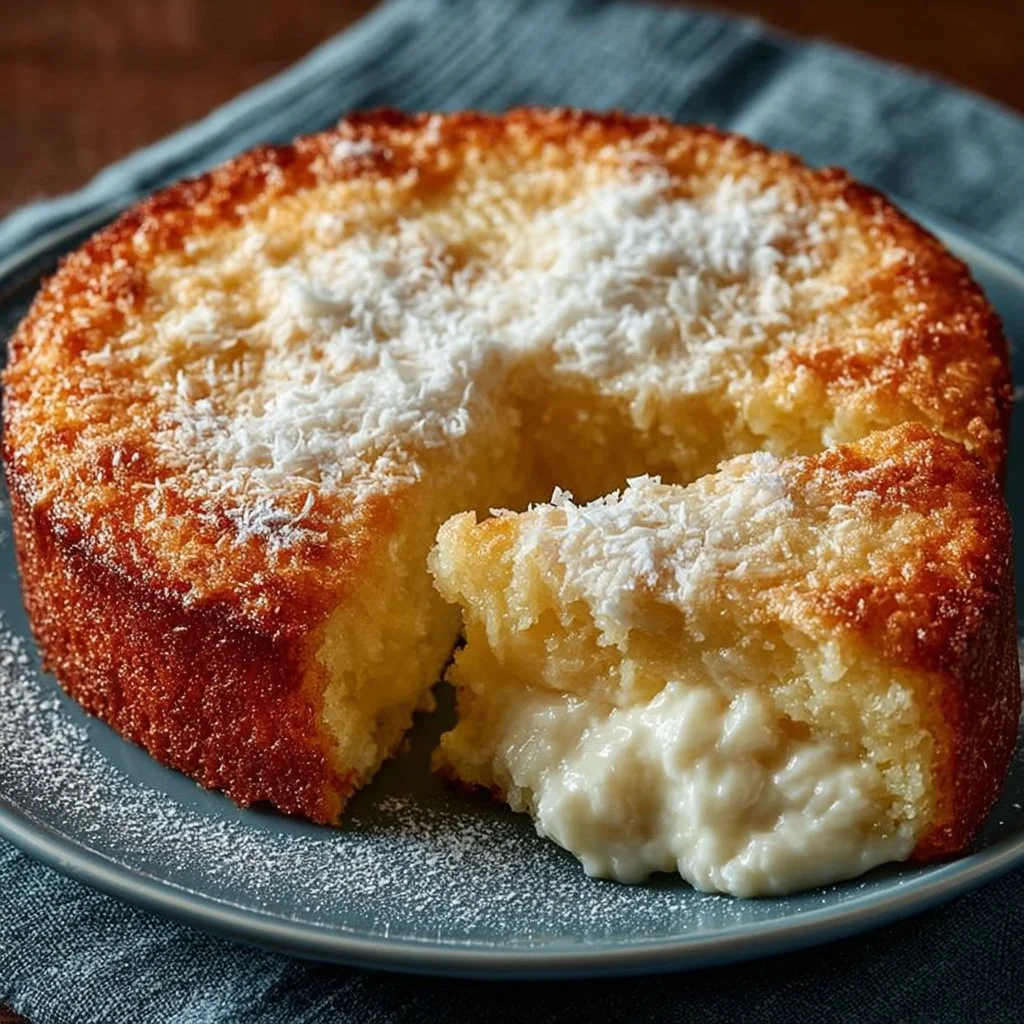
The first time I made this coconut milk cake, the kitchen smelled like a tropical bakery and my skeptical partner asked for a second slice before we’d finished dinner.
It’s an easy, one-layer cake that feels special without fuss.
The coconut milk keeps the crumb tender and adds a subtle, genuine coconut flavor that doesn’t overwhelm.
This recipe is a winner for weeknight baking, potlucks, or when you want a light dessert that pairs well with coffee or fresh fruit.
It’s forgiving, quick to pull together, and the simple coconut frosting is barely sweet — just right.
Why You’ll Love This Recipe
- Light, tender crumb that stays moist for days.
- Simple pantry ingredients with a tropical twist.
- One 9-inch pan; quick bake time and easy cleanup.
- Frosting is thin and fresh, not cloying, letting coconut shine.
The cake is tender but not flimsy; it holds its shape while remaining soft and slightly springy. The coconut milk enriches the batter for subtle coconut notes and a fine crumb, while the butter and eggs give structure and richness. The powdered-sugar frosting with coconut flakes adds a bright, slightly chewy contrast that keeps each bite interesting.
"Five stars — best simple coconut cake I’ve ever made. Moist, not too sweet, and so easy. My family couldn’t stop asking for more!" — Jenna R., reader
Key Ingredients
Coconut milk — This is the soul of the recipe. Use full‑fat canned coconut milk for the creamiest texture and the most coconut flavor. If your can separates, shake well and use the liquid; a richer brand (e.g., Chaokoh, Aroy-D) will deepen the flavor.
Unsalted butter — Butter provides richness and helps the cake brown evenly. Soften it to room temperature (not melted) for proper creaming with the sugar; quality matters — a European‑style butter will give a slightly more tender crumb and better flavor.
Large eggs — Eggs are the main leavening partner and give structure and lift. Use room‑temperature eggs so they emulsify with the butter and coconut milk, creating a smoother batter and a more even rise.
All-purpose flour — This gives structure without being too dense. Spoon and level your flour when measuring to avoid packing, or weigh for precision; King Arthur or other unbleached flours produce consistent results.
Full list of ingredients:
- 1 ½ cups all-purpose flour
- 1 cup granulated sugar
- 1 cup coconut milk
- ½ cup unsalted butter, softened
- 3 large eggs
- 2 teaspoons baking powder
- 1 teaspoon vanilla extract
- ¼ teaspoon salt
For the frosting:
- 1 cup powdered sugar
- ¼ cup unsweetened coconut flakes
- 2 tablespoons coconut milk
Step-by-Step Instructions
Step 1: Preheat and prep the pan
Preheat your oven to 350°F (175°C). Grease a 9-inch round cake pan thoroughly and lightly dust with flour or line the bottom with parchment for an easy release.
Pro Tip: Run a knife around the edges after 10 minutes of cooling to prevent sticking.
Step 2: Cream butter and sugar
In a large bowl, beat the softened butter and granulated sugar until light and fluffy. This step incorporates air, which helps the cake rise and keeps the crumb tender.
Pro Tip: You’ll know it’s ready when the mixture looks paler and when you lift the beaters, the batter falls slowly in ribbons.
Step 3: Add eggs
Add the eggs one at a time, mixing well after each addition so each egg is fully incorporated before adding the next. This creates a stable emulsion that traps air for lift.
Pro Tip: Scrape the bowl between eggs to keep everything evenly mixed.
Step 4: Add wet flavorings
Stir in the coconut milk and vanilla extract until combined. Use room-temperature coconut milk if possible so the batter doesn’t seize or become lumpy.
Pro Tip: For extra coconut aroma, reserve a tablespoon of coconut milk to brush on the cake after baking.
Step 5: Mix dry ingredients
In another bowl, whisk together the flour, baking powder, and salt until evenly distributed. Whisking prevents clumps of baking powder and ensures a uniform rise.
Pro Tip: Sifting isn’t necessary but whisking well helps the baking powder integrate.
Step 6: Combine wet and dry
Gradually add the dry ingredients to the wet mixture, mixing until just combined. Avoid overmixing to keep the cake light; a few streaks of flour are easier to finish folding than to fix a tough cake.
Pro Tip: Use a rubber spatula for the final folds to avoid deflating the batter.
Step 7: Bake
Pour the batter into the prepared cake pan and smooth the top. Bake for 25–30 minutes or until a toothpick inserted in the center comes out clean. The top should be golden and spring back lightly to the touch.
Pro Tip: Rotate the pan halfway through if your oven has hot spots; start checking at 22 minutes to avoid overbaking.
Step 8: Cool and frost
Let the cake cool in the pan for 10 minutes before transferring it to a wire rack to cool completely. For the frosting, mix the powdered sugar, coconut milk, and coconut flakes until smooth. Spread the frosting over the cooled cake and sprinkle additional coconut flakes on top if desired.
Pro Tip: If the frosting is too thin, add a little more powdered sugar; if too thick, add a few drops of coconut milk.
Step 9: Serve
Slice and serve the cake to enjoy your tropical delight. Store leftovers properly to maintain moisture.
Pro Tip: A thin slice goes a long way — the coconut flavor is concentrated and satisfying.

Expert Tips for Success
- Room temperature ingredients: Bring eggs, butter, and coconut milk to room temperature before you start. This helps ingredients emulsify smoothly and yields a more uniform crumb.
- Measure precisely: Weighing flour and coconut milk gives consistent results. If you must use cups, spoon the flour into the cup and level it — never scoop directly with the measuring cup.
- Don’t overmix after adding flour: Overworking the batter develops gluten and creates a dense cake. Fold until you barely see streaks of flour.
- Test for doneness visually and with a toothpick: A clean toothpick plus a lightly golden top and slight spring equals baked through. If a few moist crumbs cling, that’s fine — better than a dried cake.
- Oven calibration: If your oven runs hot, reduce temperature by 10–15°F and check earlier. An inexpensive oven thermometer is one of the best investments for consistent baking.
- Coconut milk selection: If you want a lighter cake, you can use a lower-fat coconut milk, but expect a slightly less rich crumb. Shake canned coconut milk well to reincorporate solids and liquid.
- Frosting texture control: Powdered sugar hydrates quickly. Add coconut milk in tiny increments to reach desired thickness, and mix just until smooth to avoid a gluey finish.
- Toasted coconut for texture: Toast the coconut flakes on a sheet pan at 325°F for 3–5 minutes until fragrant for a crunchy contrast; watch closely — it browns fast.
- Pan size matters: Stick to the 9-inch round pan. Using a much larger pan will thin the batter and alter bake time and texture. If using a smaller pan, increase bake time and check frequently.
Storage & Freezing
Fridge: Store the frosted cake in an airtight cake container or cover with plastic wrap. It will keep well for 3–4 days. Chilling firms the frosting and makes slicing cleaner.
If the cake is unfrosted, wrap it tightly with plastic wrap and refrigerate for up to 5 days.
Freezer: To freeze unfrosted layers, wrap the cooled cake tightly in plastic wrap and then in foil. Place in a freezer-safe bag and freeze for up to 3 months. Thaw in the refrigerator overnight before frosting.
For a frosted cake, freeze on a tray until the frosting is firm (about 1–2 hours), then wrap gently in plastic and foil. This prevents frosting smudging and keeps flavors intact.
Reheating: For a warm slice, microwave individual slices for 10–15 seconds or warm in a 300°F oven for 5–8 minutes covered loosely with foil. If refrigerated, allow slices to come to room temperature for 20–30 minutes before serving for best texture.
Revive slightly dried cake by brushing with a tablespoon of coconut milk before reheating.
Variations & Substitutions
Lime or lemon twist: Add 1–2 teaspoons of lime or lemon zest to the batter for a bright citrus note that complements coconut. A light drizzle of lime glaze over the frosting amps freshness.
Coconut-cream version: Fold ½ cup sweetened shredded coconut into the batter and use whipped coconut cream for frosting to make it richer and more textured. Toast flakes for garnish.
Gluten-free swap: Replace all-purpose flour with a 1-to-1 gluten-free baking blend and add ¼ teaspoon xanthan gum if your blend lacks it. Be mindful of moisture — you may need an extra tablespoon of coconut milk.
Dairy-free option: Use vegan butter or coconut oil (solid, slightly cooled) instead of unsalted butter and ensure your powdered sugar is bone‑char free. Coconut oil gives a slightly different texture but strong coconut flavor.
Frequently Asked Questions
Q: Can I use light coconut milk instead of full-fat?
A: Yes, you can. Light coconut milk reduces fat and richness, which will yield a slightly less tender crumb. Increase the butter by a tablespoon if you want to compensate for the lost richness.
Q: Why did my cake sink in the middle?
A: Common causes are underbaking, opening the oven early, too much leavening, or overmixing after adding flour. Check oven temperature, follow the mixing instructions closely, and test for doneness with a toothpick.
Q: How do I prevent the frosting from sliding off?
A: Make sure the cake is completely cool before frosting. If the frosting is too thin, add more powdered sugar a tablespoon at a time. Chilling the cake briefly to firm up the surface also helps.
Q: Can I double the recipe for a layer cake?
A: Yes, double the ingredients and split into two 9-inch pans or use larger pans. Bake time will vary; check for doneness early and expect slightly longer bake times for deeper pans.
Q: Can I make this as cupcakes?
A: Yes. Fill muffin tins two-thirds full and bake at 350°F for 15–20 minutes, checking with a toothpick. Adjust frosting quantity accordingly — one batch will frost about 12–14 cupcakes.
Final Thoughts
This coconut milk cake is one of those recipes that feels fancy but is effortless.
If you make it, please leave a star rating in the recipe card below and pin it to Pinterest so others can find this easy tropical treat.
Conclusion
For a variation and another home cook’s take, see the Coconut Coconut Milk Cake Recipe which offers helpful notes.
If you want an alternate moist coconut cake technique, check out Moist Coconut Cake – Cakes by MK for inspiration and tips.
Coconut Milk Cake
Ingredients
Cake Ingredients
- 1.5 cups all-purpose flour Spoon and level for accurate measurement.
- 1 cup granulated sugar
- 1 cup coconut milk Full-fat canned coconut milk for best texture.
- 0.5 cups unsalted butter, softened Bring to room temperature.
- 3 large eggs Use room-temperature eggs for better emulsification.
- 2 teaspoons baking powder
- 1 teaspoon vanilla extract
- 0.25 teaspoon salt
Frosting Ingredients
- 1 cup powdered sugar
- 0.25 cups unsweetened coconut flakes For topping, if desired.
- 2 tablespoons coconut milk
Instructions
Preparation
- Preheat your oven to 350°F (175°C). Grease a 9-inch round cake pan thoroughly and lightly dust with flour or line the bottom with parchment for easy release.
- In a large bowl, beat the softened butter and granulated sugar until light and fluffy, incorporating air for a tender crumb.
- Add the eggs one at a time, mixing well after each addition.
- Stir in the coconut milk and vanilla extract until combined.
- In another bowl, whisk together the flour, baking powder, and salt.
- Gradually add the dry ingredients to the wet mixture, mixing until just combined.
Baking
- Pour the batter into the prepared cake pan and smooth the top.
- Bake for 25–30 minutes or until a toothpick inserted in the center comes out clean.
- Let the cake cool in the pan for 10 minutes before transferring it to a wire rack to cool completely.
Frosting and Serving
- For the frosting, mix the powdered sugar, coconut milk, and coconut flakes until smooth.
- Spread the frosting over the cooled cake and sprinkle additional coconut flakes on top, if desired.
- Slice and serve the cake, enjoying your tropical delight.