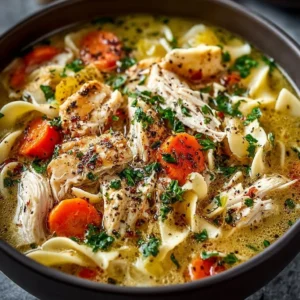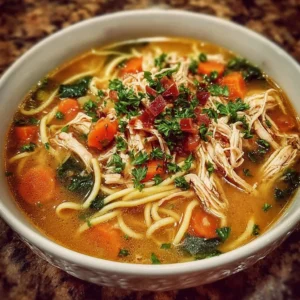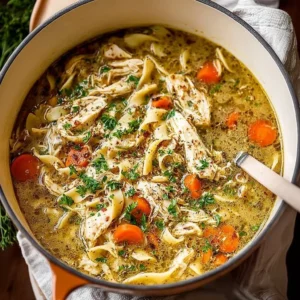
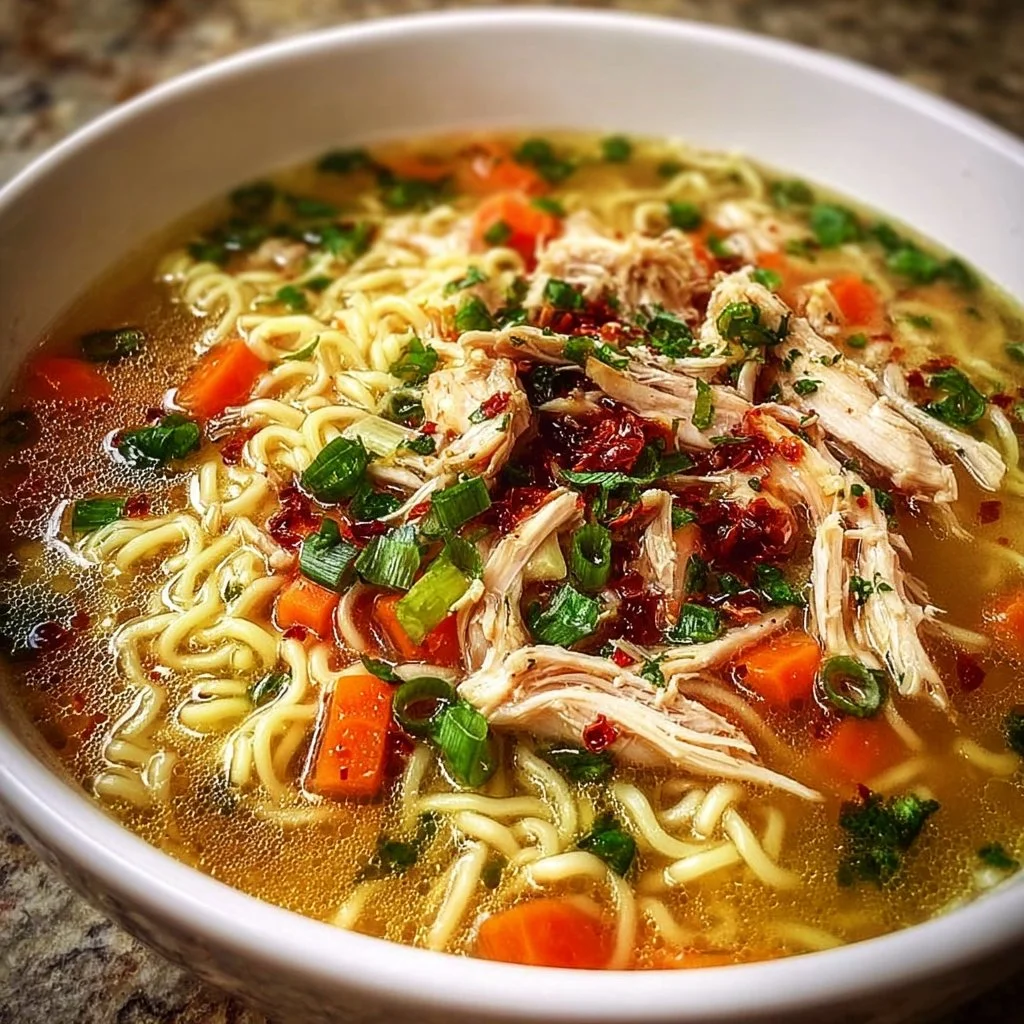
The first time I made this soup I thought I’d simply be warming up leftovers.
Instead, I ended up writing the recipe on a napkin and making it every week for a month.
It’s fast, forgiving, and somehow both bright and deeply comforting at the same time.
This version leans into fresh ginger and garlic for a lively broth while shredded chicken and egg noodles make it satisfyingly hearty.
It’s a weeknight staple that doubles as the best cold-weather pick-me-up.
Why You’ll Love This Recipe
- Fast to assemble and on the table in about 25–30 minutes if the chicken is pre-cooked.
- Bright ginger and garlicky aromatics cut through the richness, so it never tastes heavy.
- Egg noodles give the soup a tender, slurpable texture that kids and adults both enjoy.
- Flexible: easy to make with leftover chicken or rotisserie for zero fuss.
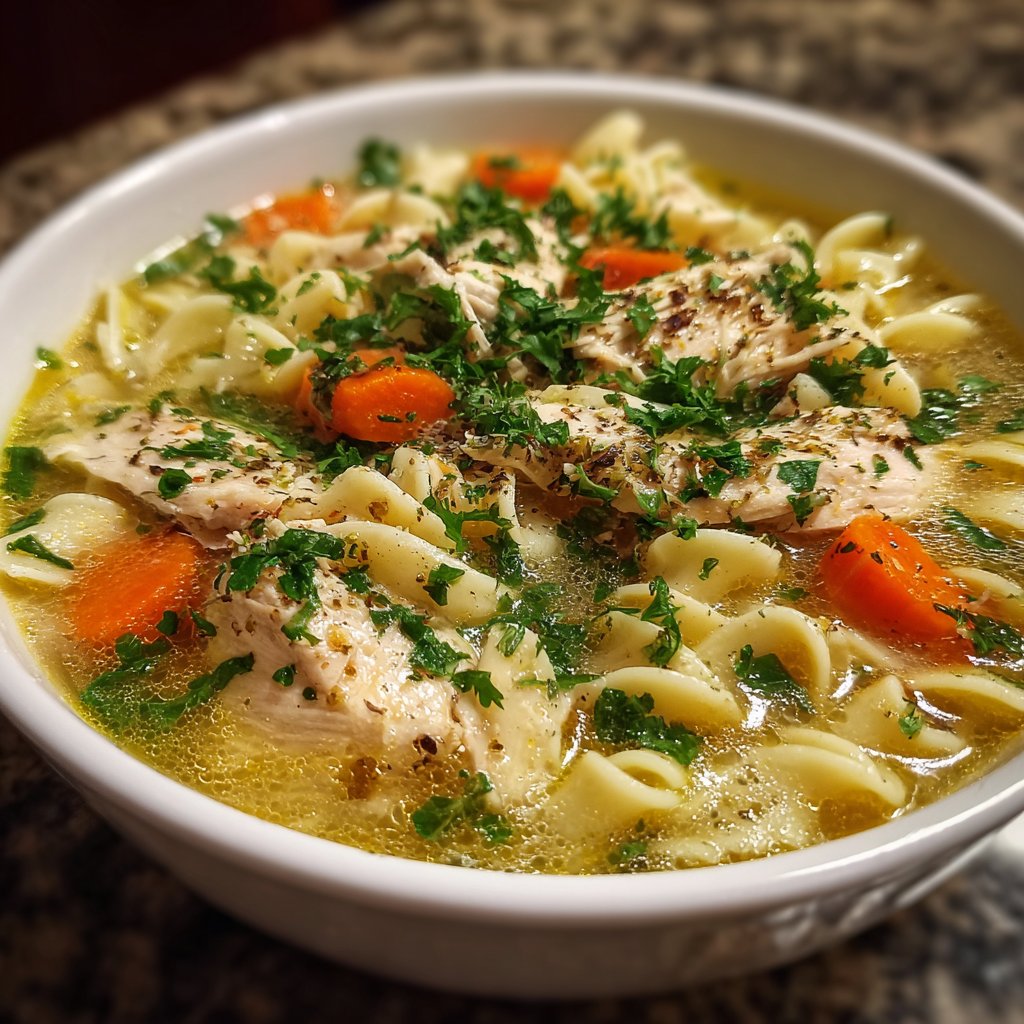
The texture balances delicate broth with toothsome noodles and tender shreds of chicken.
Carrots add a slight sweetness and a little bite, while soy sauce deepens the savory base.
The ginger gives a warm citrus-like lift and a faint heat that plays well against the mellow chicken broth.
“My family demolished this on the first try — the ginger gives it a restaurant-quality brightness. Five stars!” — Reader: Anna B.
Key Ingredients
Fresh ginger (2 tablespoons, minced) is the aromatic backbone here.
Use young ginger if you can find it; it’s less fibrous and more fragrant.
Grating or mincing releases volatile oils that make the broth sing.
Garlic (4 cloves, minced) adds rounded savory depth.
Sauté it gently with onion so it softens without burning; burned garlic becomes bitter.
I prefer large, meaty cloves for flavor economy.
Egg noodles (200g) create the soup’s soul — that springy, slurpable chew.
Fresh egg noodles cook quickly and have a slightly richer mouthfeel than dried ones.
If you use dried, drop them in a little earlier and watch the package timing.
Chicken broth (4 cups) determines the stock quality.
Use a good low-sodium chicken broth or homemade stock to control salt and richness.
If using store-bought, I like brands that list bones or roasted chicken for a deeper flavor.
Full ingredient list:
- 2 chicken breasts, cooked and shredded
- 4 cups chicken broth
- 200g egg noodles
- 2 tablespoons fresh ginger, minced
- 4 cloves garlic, minced
- 2 carrots, sliced
- 1 onion, chopped
- 2 tablespoons soy sauce
- Salt and pepper to taste
- Fresh parsley or green onions for garnish
Step-by-Step Instructions
Step 1: Sweat the aromatics
Heat a drizzle of oil in a large pot over medium heat.
Add the chopped onion, minced garlic, and minced ginger.
Cook, stirring often, until the onion is translucent and the mixture smells fragrant, about 3–4 minutes.
Pro Tip: You’ll know it’s ready when the pot smells bright and toasty but you don’t see any brown bits.
If anything starts to brown, lower the heat and stir more frequently.
Step 2: Add the carrots
Toss in the sliced carrots and cook for another 2–3 minutes.
This softens them just enough to take on flavor but keeps a little texture.
Pro Tip: Slice carrots on the thin side so they become tender in the short simmer without going mushy.
Step 3: Build the broth
Pour in the chicken broth and bring everything up to a gentle simmer.
Taste for seasoning and add a splash of soy sauce for umami depth.
Pro Tip: Use low-sodium broth so you can control salt with the soy sauce and finish-seasoning later.
Step 4: Cook the noodles
Add the egg noodles and follow package timing, usually 4–6 minutes for fresh noodles.
Stir occasionally to prevent sticking and to check doneness regularly.
Pro Tip: Stop cooking the noodles just before perfect if you plan to refrigerate leftovers; they will continue to soften in hot broth.
Step 5: Finish with chicken and seasoning
Stir in the shredded chicken and warm through for a minute or two.
Adjust soy sauce, salt, and pepper to taste.
Pro Tip: Add a final splash of warm broth to loosen the soup if it feels concentrated.
A teaspoon of lemon juice brightens the flavors if the soup tastes flat.
Step 6: Garnish and serve
Ladle the soup into bowls and top with chopped parsley or sliced green onions.
Serve immediately while piping hot.
Pro Tip: Fresh green herbs added at the end keep their color and pop; add a few sprigs to each bowl rather than stirring them into the pot.
Expert Tips for Success
- Use warm chicken: Shredded chicken straight from the cooler is fine, but gently warming it in the broth keeps the meat tender. Cold chicken added to hot broth can stiffen.
- Choose your noodles wisely: Fresh egg noodles are forgiving and quick, while dried versions need a few extra minutes. If you expect leftovers, slightly undercook noodles so they don’t become gluey overnight.
- Control sodium: Because soy sauce and broth are both salty sources, use low-sodium broth and adjust with the soy sauce at the end. This gives you more control and reduces the risk of over-salting.
- Oil temperature matters: Keep the oil at medium heat when sautéing garlic and ginger. Too hot and they burn; too cool and they won’t render their flavor. The goal is a fragrant, glossy aromatics base.
- Layer umami: If you want more depth, add a teaspoon of fish sauce or a splash of mushroom soy in place of part of the regular soy sauce. Use sparingly — these add a savory lift without tasting fishy when used correctly.
- Keep texture in mind for leftovers: If you plan to refrigerate or freeze, cook noodles separately and add them when reheating. This prevents them from soaking up all the broth and getting mushy.
- Equipment shortcut: A wide, shallow stockpot or Dutch oven gives more surface area for aromatics to bloom than a tall narrow pot. If you have a large skillet with a lid, you can simmer in that too for faster heat-up.
- Taste as you go: Start with less soy sauce and add in increments. The final season should be balanced between salty, savory, and bright ginger notes. A squeeze of lemon at the end will lift a flat soup instantly.
- Texture checks: Noodles should be tender but still springy; carrots should have a slight bite; chicken should be warm and juicy, not dry. Aim for contrast in each spoonful.
- Make it heartier: Stir in a handful of baby spinach or bok choy at the end for color and nutrition. They’ll wilt in seconds and boost the meal without complicated prep.
Storage & Freezing
Fridge: Cool the soup quickly by transferring to shallow containers.
Seal and refrigerate for up to 3–4 days.
If you’ve added the noodles to the pot, keep in mind they will continue to soften in the cold broth.
For best texture when planning leftovers beyond one meal, store noodles separately.
Freezer: Freeze the soup without noodles for up to 3 months.
Use freezer-safe containers or heavy-duty zip-top bags; leave headspace for expansion.
To reheat from frozen, thaw overnight in the fridge or simmer gently from frozen in a pot.
Add fresh or reheated cooked noodles at the end so they don’t overcook in the freezer-thawed broth.
Reheating: Warm gently over medium-low heat, stirring occasionally.
If the broth tastes muted after refrigeration, a splash of hot water or a teaspoon of soy sauce will revive it, and a squeeze of lemon brightens the finish.
Variations & Substitutions
Ginger-forward boost: Increase ginger to 3 tablespoons and add a thin slice of lemongrass while simmering for a Southeast Asian twist.
Finish with a few cilantro leaves instead of parsley for brightness.
Gluten-free swap: Use rice noodles or gluten-free egg-style noodles.
Cook them separately and add to bowls when serving to maintain texture.
Vegetarian version: Replace chicken with firm tofu cubes and use vegetable broth.
Sauté garlic and ginger a bit longer to build extra depth; add a splash of soy sauce and a teaspoon of miso paste dissolved in warm broth for richness.
Spicy kick: Stir in a teaspoon of chili garlic sauce or a few slices of fresh chilies when you add the broth.
This gives an immediate heat that pairs beautifully with the ginger.
Frequently Asked Questions
Q: Can I use raw chicken breasts instead of pre-cooked?
A: Yes. If starting with raw chicken, add the breasts to the simmering broth after Step 3 and poach for 10–12 minutes until they reach 165°F (74°C). Remove, shred, and return to the pot. This method adds extra chicken flavor to the stock.
Q: How do I prevent the noodles from getting mushy in leftovers?
A: Cook noodles separately and store them in their own container. Reheat the broth and add noodles only when serving. If noodles were cooked in the soup, reheat gently and expect some textural softening.
Q: Can I use ginger paste or jarred minced garlic?
A: Yes in a pinch. Use about 1 teaspoon of ginger paste per tablespoon of fresh ginger and 1/2 teaspoon jarred garlic per fresh clove, but fresh always tastes brighter. Taste as you go and adjust since jarred products can be more concentrated.
Q: Is this soup suitable for meal prep?
A: Absolutely. Store the components separately when possible (broth/chicken/carrots in one container, noodles in another). Assemble or warm in minutes when ready to eat. This keeps noodles from absorbing all the broth and preserves texture.
Q: How can I make the broth more flavorful without making it longer?
A: Use a quality, roasted chicken broth or add a small knob of grated ginger while simmering for a stronger aroma. A teaspoon of miso paste or fish sauce (use sparingly) also intensifies umami quickly without long simmering.
Final Thoughts
This Classic Ginger Garlic Chicken Noodle Soup is simple, forgiving, and reliably delicious.
It’s a great template — tweak the aromatics and proteins to match what you have on hand.
Please leave a star rating in the recipe card below if you tried this, and pin this recipe to Pinterest for later.
Conclusion
If you want a gluten-free spin that swaps in rice noodles, check out Ginger Chicken Noodle Soup (Gluten Free!) for ideas and timing.
For another take that leans into the ginger-garlic profile with different proportions, here’s a useful comparison: Ginger Garlic Chicken Noodle Soup – Elle Gourmet.
If you’d like a deeper-dive on rich, comforting chicken broths and technique notes, I recommend reading The Best Chicken Soup You’ll Ever Eat | Ambitious Kitchen.
And for a lemon-tinged variation that brightens the profile even more, see Lemon Ginger Chicken Noodle Soup – Our Balanced Bowl.
Classic Ginger Garlic Chicken Noodle Soup
Ingredients
For the soup base
- 4 cups chicken broth Use low-sodium for better control over salt.
- 2 tablespoons fresh ginger, minced Use young ginger for best flavor.
- 4 cloves garlic, minced Use large, meaty cloves.
- 2 carrots sliced Slice thin to maintain texture.
- 1 onion chopped
- 2 tablespoons soy sauce Low-sodium preferred.
For the noodles and garnish
- 200 g egg noodles Fresh will cook quickly; adjust timing for dried.
- 2 chicken breasts cooked and shredded Use warm shredded chicken for best texture.
- Fresh parsley or green onions For garnish.
Instructions
Preparation
- Heat a drizzle of oil in a large pot over medium heat.
- Add the chopped onion, minced garlic, and minced ginger. Cook until the onion is translucent and the mixture smells fragrant, about 3–4 minutes.
- Toss in the sliced carrots and cook for another 2–3 minutes.
Building the broth
- Pour in the chicken broth and bring everything up to a gentle simmer.
- Taste for seasoning and add a splash of soy sauce for umami depth.
Cooking the noodles
- Add the egg noodles and follow package timing, usually 4–6 minutes for fresh noodles.
- Stir occasionally to prevent sticking and check doneness regularly.
Finishing touches
- Stir in the shredded chicken and warm through for a minute or two.
- Adjust soy sauce, salt, and pepper to taste.
Serving
- Ladle the soup into bowls and top with chopped parsley or sliced green onions.
- Serve immediately while piping hot.