The first time I made this butternut squash pasta I thought I’d simply be serving a side.
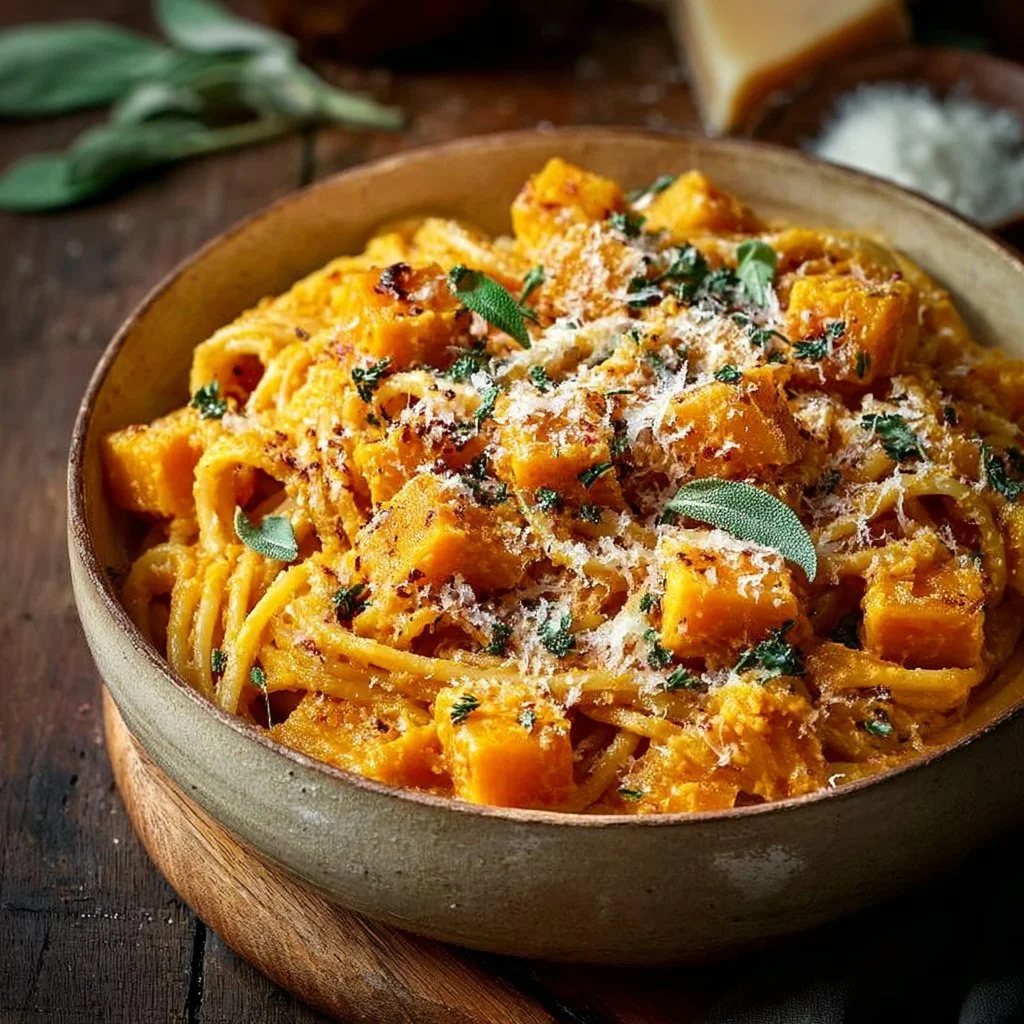
It turned into the main event — sweet roasted squash, a hint of nutmeg, sharp Parmesan, and pasta that soaks up all that flavor.
It’s an easy weeknight dinner that feels like something you’d order at a cozy trattoria.
If you like hearty fall cooking with minimal fuss, this recipe delivers every time.
I sometimes pair it with other seasonal bakes to build a full meal, like the flavors in a butternut squash apple bake for dessert-style sweetness.
Why You’ll Love This Recipe
- Fast to make with pantry staples and one roasted pan.
- Sweet and savory balance that satisfies meat-lovers and vegetarians alike.
- Flexible: eats great hot, room temperature, or warmed the next day.
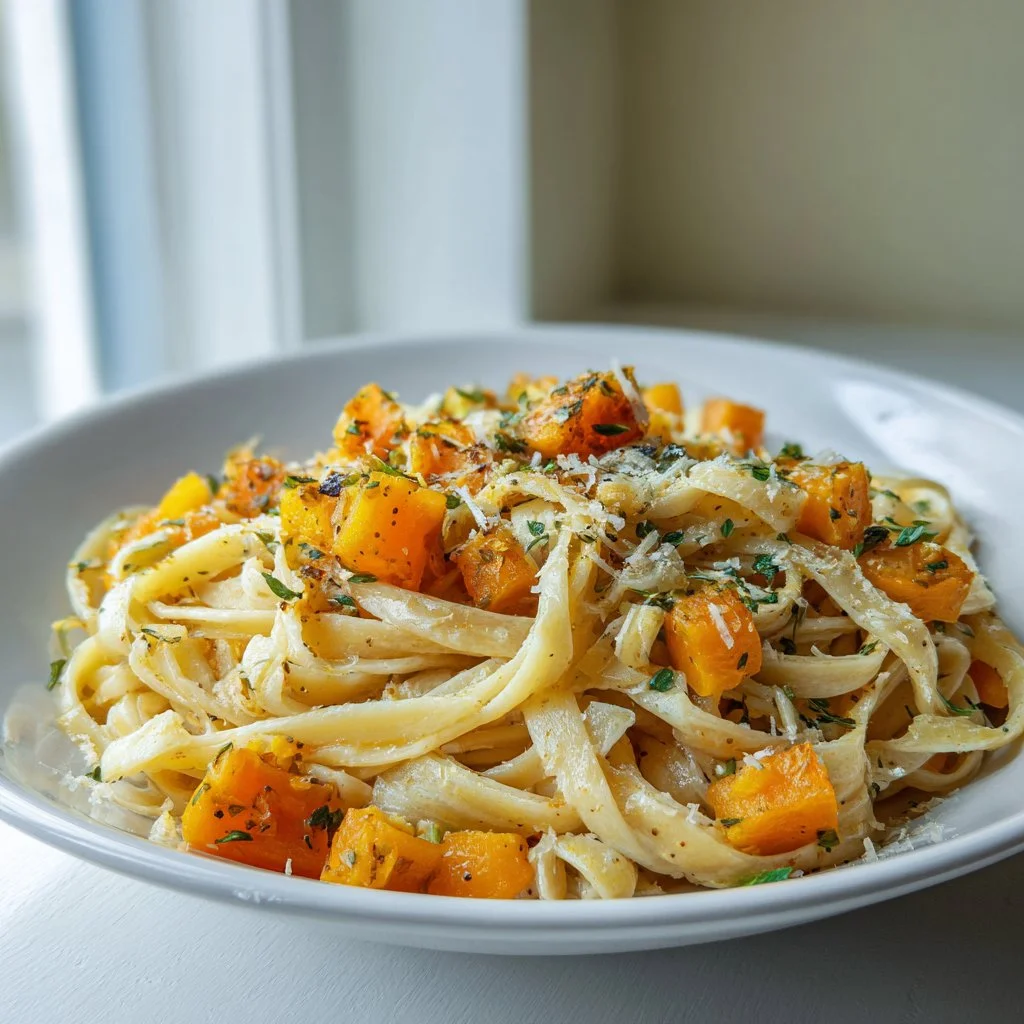
- Looks impressive on the plate with bright herbs and grated Parmesan.
The texture is what sells it: the squash becomes tender and slightly caramelized when roasted, giving a silky, almost saucy coating that clings to flat pasta like fettuccine or tubes like penne. The garlic and nutmeg add background warmth without overpowering the squash. A finish of fresh herbs and Parmesan creates contrast—herbaceous brightness and salty umami—so every bite has a little lift.
"Five stars! I served this for guests and everyone asked for seconds. Comfort food with a grown-up twist." — Reader
Key Ingredients
Butternut squash (1 medium, peeled and cubed)
The squash is the heart of this dish. Choose one that feels heavy for its size and has a matte, blemish-free skin. Heavier squash means a denser, sweeter flesh which gives you better caramelization when roasted.
Pasta (12 ounces; fettuccine or penne recommended)
Pasta shape matters: flat noodles like fettuccine trap the roasted squash bits, while penne and rigatoni catch tender cubes. Use a high-protein semolina pasta for texture that holds up to tossing; if you prefer a softer bite, choose a standard wheat pasta.
Olive oil (2 tablespoons) and garlic (2 cloves, minced)
Good olive oil carries flavor and helps the squash roast without drying out. Use extra-virgin for finishing quality, but a lighter EVOO is fine for roasting. Fresh garlic roasted with the squash mellows and becomes sweet—don’t substitute garlic powder if you can avoid it.
Salt, pepper, and nutmeg (1/4 teaspoon)
Salt and pepper are basic but essential; salt enhances the squash’s natural sugars. Nutmeg is subtle but crucial here — just a pinch adds warmth that complements Parmesan and brings the flavors together without being spicy.
Fresh herbs (sage or thyme) and Parmesan cheese (grated)
Fresh sage or thyme adds an herbal lift and aroma. Sage leaves crisp nicely if you toss a few on the squash during the last five minutes of roasting. A freshly grated hard cheese like Parmigiano-Reggiano finishes the dish with savory depth.
Full ingredient list:
- 1 medium butternut squash, peeled and cubed
- 12 ounces pasta (such as fettuccine or penne)
- 2 tablespoons olive oil
- 2 cloves garlic, minced
- Salt and pepper, to taste
- 1/4 teaspoon nutmeg
- Fresh herbs (such as sage or thyme), for garnish
- Parmesan cheese, grated, for serving
Step-by-Step Instructions
Step 1: Roast the squash
Preheat your oven to 400°F (200°C).
Toss the peeled, cubed butternut squash with olive oil, minced garlic, a good pinch of salt, a few grinds of black pepper, and the nutmeg until the cubes are evenly coated.
Spread the cubes in a single layer on a rimmed baking sheet so they roast rather than steam.
Roast for 25–30 minutes, stirring once halfway through, until the edges are caramelized and the centers are tender when poked with a fork.
Pro Tip: Use a rimmed sheet to catch juices and avoid overcrowding the pan; cubes should have space to brown. You’ll know they’re ready when the edges are golden and a fork slides in easily.
Step 2: Cook the pasta
While the squash roasts, bring a large pot of salted water to a rolling boil.
Cook the pasta to just shy of al dente if you plan to toss it with the hot squash, because it will continue to soften slightly.
Reserve a splash of the pasta water before you drain; that starchy liquid is handy if you want to loosen the sauce.
Pro Tip: Salt the water heavily — it should taste like the sea. This is how you season the pasta itself, not just the sauce.
Step 3: Combine and toss
Put the drained pasta in a large serving bowl.
Add the hot roasted butternut squash and any flavorful pan bits into the bowl with the pasta.
Toss gently so the squash coats the pasta; if it seems dry, add a tablespoon or two of the reserved pasta water to bring everything together.
Pro Tip: Tossing while both components are warm helps the flavors marry. If you want a silkier coating, blitz half of the roasted squash with 1–2 tablespoons olive oil in a blender and fold it back in for a creamy finish.
Step 4: Finish and serve
Taste and adjust seasoning with salt and pepper.
Serve immediately, topped with chopped fresh sage or thyme and a generous sprinkle of grated Parmesan.
A final drizzle of good olive oil brightens the plate.
Pro Tip: For a crisp texture contrast, fry a few sage leaves in olive oil until they’re crackly and sprinkle them on top just before serving.
Expert Tips for Success
- Roast temperature and pan choice matter — 400°F and a heavy rimmed baking sheet encourage caramelization. Darker pans will speed browning; reduce time slightly if using them.
- Cube the squash uniformly — aim for 3/4-inch pieces so they cook evenly. Uneven pieces produce a mix of underdone and mashed bits.
- Don’t skip the garlic — roasting whole garlic cloves with the squash mellows bitterness and adds depth you can’t replicate with powder. Minced garlic tossed raw in the oil works too, but it browns quickly; keep an eye on it.
- Use reserved pasta water sparingly — a tablespoon or two emulsifies the coating without making the dish soupy. The starch acts like glue for the olive oil and roasted squash.
- Make it creamy without cream — pureeing half the roasted squash with a splash of pasta water creates a luscious, dairy-free sauce that still benefits from Parmesan later.
- Timing: cook the pasta so it finishes just as the squash comes out of the oven. This avoids overcooking and keeps bites with nice texture contrast.
- Cheese choice: freshly grated Parm is ideal. Pre-grated powders have anti-caking agents that prevent true melting and reduce flavor.
- Herb timing: add delicate herbs at the end to preserve brightness; tougher herbs like rosemary can be added earlier to roast with the squash for a deeper flavor.
- Equipment: a large bowl for tossing and a sturdy spatula will keep the squash intact. If you’re using a sheet pan with a rim, you’ll catch caramelized bits to fold into the pasta.
- If feeding a crowd, double the squash but keep a single oven tray going for more even roasting. Alternatively, roast in two pans and rotate their position halfway through.
Storage & Freezing
Fridge storage: Transfer leftovers to an airtight container and refrigerate for up to 3–4 days.
When cold, the pasta will firm up as the squash cools and the sauce tightens, which is normal.
Reheating from fridge: Warm gently in a skillet over medium-low heat with a splash of water or reserved pasta water.
Toss frequently to avoid sticking. Alternatively, microwave in 30-second increments, stirring between bursts.
Freezer: You can freeze the roasted squash separately for up to 3 months in a freezer-safe bag or container; thaw overnight in the fridge before combining with freshly cooked pasta.
Freezing cooked pasta with squash is possible but the texture will degrade faster — expect a softer pasta on thawing.
Thawing & reheating from frozen: Thaw in the refrigerator overnight.
Reheat in a skillet with a splash of water and fresh herbs, and add freshly grated Parmesan to revive the flavor.
Avoid high heat which can make squash grainy and pasta gummy.
Variations & Substitutions
- Add protein: Brown some Italian sausage and toss it in for a heartier meal. For a similar flavor profile with less fat, try crumbled turkey for a lean swap. If you want inspiration, see this savory sausage-stuffed butternut squash idea and adapt the sausage filling for pasta.
- Make it vegetarian/vegan: Use nutritional yeast in place of Parmesan and finish with olive oil for richness. Roast extra garlic for an umami boost.
- Swap the nutmeg: If you’re out of nutmeg, a small pinch of ground cinnamon can provide a similar warming note, but use less to avoid sweetness.
- Add greens: Stir in baby spinach or kale at the end; the residual heat wilts them just enough. This adds color and nutrients without changing the core recipe.
- Creamier sauce: For a silkier plate, blend half the roasted squash with a little milk or vegetable stock and fold back into the pasta. If you prefer gnocchi, inspired creamy versions like the one I sometimes pair with sausage are a hearty alternative — try adapting techniques from a creamy butternut squash gnocchi and sausage recipe to your pasta.
Frequently Asked Questions
What type of pasta is best for butternut squash pasta?
Either flat pasta like fettuccine or ribbon noodles grabs the squash coating nicely, while penne and rigatoni trap cubes inside their tubes. Choose based on texture you prefer — long for silky bites, short for chunkier mouthfuls.
Can I make this gluten-free?
Yes. Use your favorite gluten-free pasta and follow the same cooking times as the package suggests. Note that some gluten-free pastas change texture faster, so watch the doneness closely.
How do I prevent the squash from becoming mushy?
Cut evenly sized cubes, give them space on the baking sheet, and roast at 400°F. Overcrowding or a lower oven temp causes steaming rather than roasting, which yields a softer, less caramelized squash.
Is it better to puree the squash or leave it chunky?
Both work and depend on preference. Pureed squash makes a creamy coating and feels more like a sauce. Chunky squash gives texture and bite. Try a half-and-half approach for the best of both worlds.
Can I prepare parts of this ahead?
Yes. Roast the squash a day ahead and refrigerate. Reheat gently and toss with freshly cooked pasta. Roasted squash also freezes well — thaw overnight in the fridge before using.
Final Thoughts
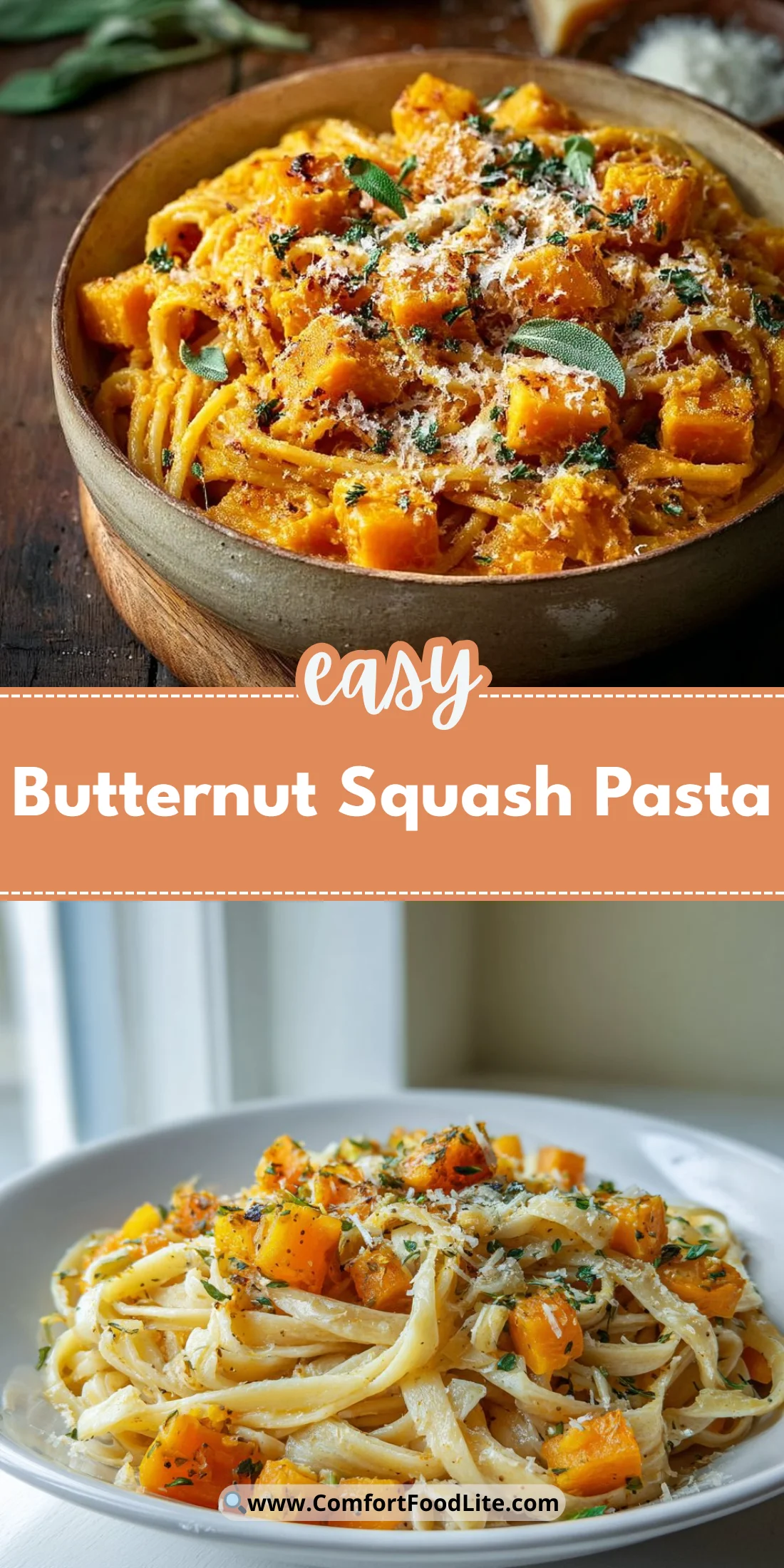
This butternut squash pasta is simple, seasonal cooking that punches above its weight.
It’s the kind of dish you’ll want in rotation for quick dinners and low-key entertaining.
If you enjoyed this, consider trying the comforting twist in this easy roasted butternut squash with ground turkey or the cozy classic chicken pot pie pasta for other weeknight options.
Conclusion
For a silkier, cream-forward interpretation, check the Creamy Butternut Squash Pasta Recipe – Love and Lemons which has a lovely blendered-squash method.
If you want a cheesier, roast-forward take with extra indulgence, read the Cheesy Roasted Butternut Squash Pasta – The Dish On Healthy for techniques and add-ins.
For a more garlicky, restaurant-style finish, Half Baked Harvest’s Creamy Roasted Garlic Butternut Squash Pasta is a great inspiration.
If you made this recipe, please leave a star rating in the recipe card below and pin this to Pinterest so you can find it again.
Butternut Squash Pasta
Ingredients
Main Ingredients
- 1 medium butternut squash, peeled and cubed Choose one that feels heavy for its size and has a matte, blemish-free skin.
- 12 ounces pasta (such as fettuccine or penne) Flat noodles trap the roasted squash bits; use high-protein semolina pasta for texture.
- 2 tablespoons olive oil Use good quality extra-virgin olive oil for finishing.
- 2 cloves garlic, minced Roasting mellows bitterness; avoid substituting with garlic powder.
- 1/4 teaspoon nutmeg A pinch adds warmth that complements Parmesan.
- to taste salt and pepper Salt enhances the natural sugars of the squash.
- for garnish fresh herbs (such as sage or thyme) Add at the end to preserve brightness.
- for serving Parmesan cheese, grated Freshly grated cheese is ideal for flavor.
Instructions
Roast the Squash
- Preheat your oven to 400°F (200°C).
- Toss the peeled, cubed butternut squash with olive oil, minced garlic, salt, pepper, and nutmeg until evenly coated.
- Spread in a single layer on a rimmed baking sheet and roast for 25-30 minutes, stirring halfway, until edges are caramelized.
- Use a rimmed sheet to catch juices and avoid overcrowding.
Cook the Pasta
- Bring a large pot of salted water to a boil.
- Cook the pasta to just shy of al dente, reserving a splash of pasta water before draining.
Combine and Toss
- In a large serving bowl, combine the drained pasta and hot roasted butternut squash with any flavorful pan bits.
- Toss gently to coat, adding reserved pasta water as needed.
Finish and Serve
- Taste and adjust seasoning with salt and pepper.
- Serve topped with fresh herbs and grated Parmesan, and drizzle with olive oil.