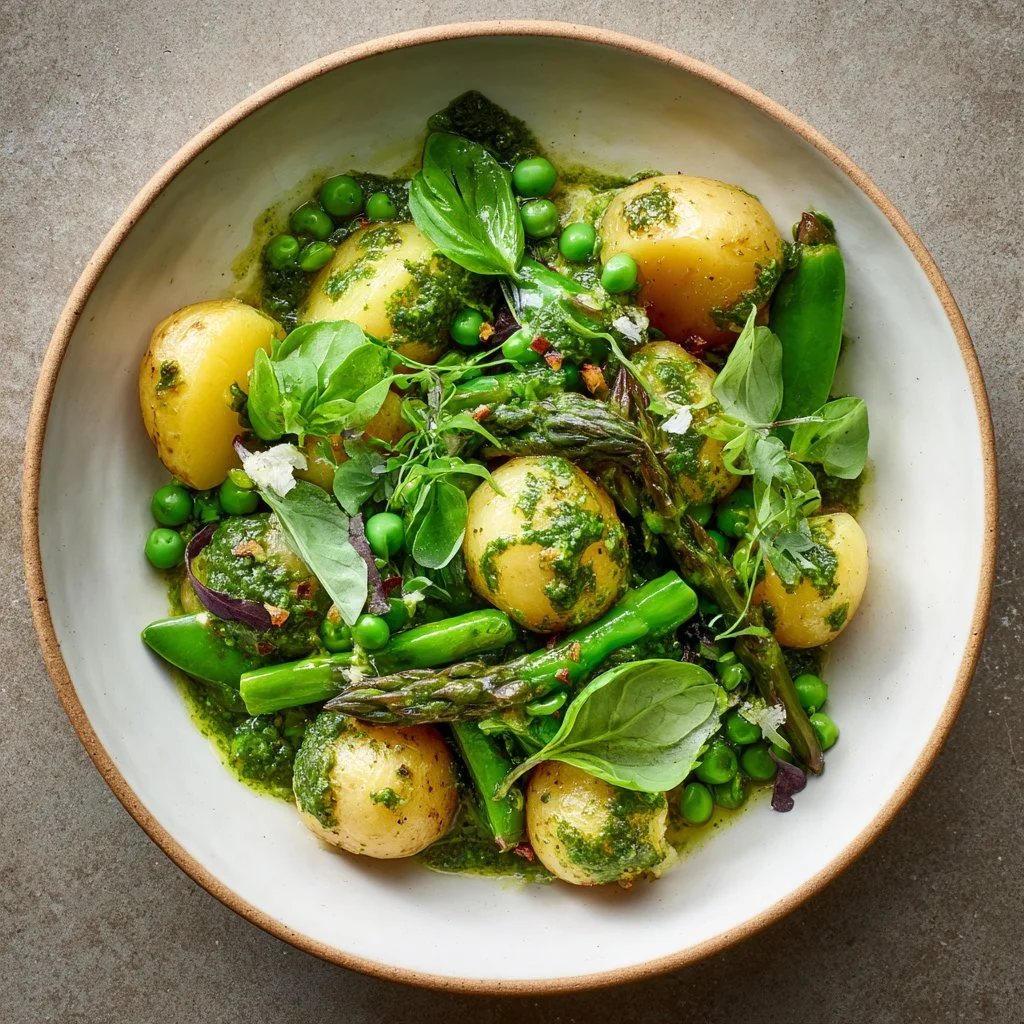
Bright, herb-scented and full of spring crunch, this British Spring Salad celebrates the season with Jersey royals, tender asparagus and a punchy wild garlic pesto.
It’s quick to pull together and impressive to serve, whether for a picnic or a relaxed dinner.
If you enjoy lively seasonal salads, you might also like this shrimp and avocado spring salad for a protein-forward variation: shrimp and avocado spring salad.
Read on for why this simple combination works so well and how to perfect it every time.
Why You’ll Love This British Spring Salad
- Bright seasonal flavours that scream spring.
- Easy to make but restaurant-worthy on a platter.
- Warm potatoes paired with crisp, blanched vegetables for contrast.
- Wild garlic pesto adds herbal depth and a stunning green colour.
- Minimal cooking time means maximum freshness.
- Flexible enough to pair with grilled fish or make vegetarian.
The taste is a balance of earthy new potatoes, a garlicky herb punch from wild garlic pesto, and sweet pops from peas and broad beans. Texturally it’s engaging: soft, warm potatoes, crunchy asparagus tips, and the tender pop of peas and broad beans. The result is clean, bright and very satisfying.
“Absolutely loved this — the wild garlic pesto was a revelation and the warm potatoes made it feel like a proper spring celebration. Five stars!” — Emma P., home cook
Key Ingredients for British Spring Salad
Jersey royal potatoes
Jersey royals are waxy new potatoes with thin skins and a sweet, earthy flavour that hold shape when boiled. Buy small, firm tubers with unblemished skins and similar sizes for even cooking. If you substitute with floury potatoes, expect them to break apart; choose baby new potatoes as the best alternative.
Wild garlic leaves / Wild garlic pesto
Wild garlic (or ramps) gives the pesto an immediate spring aroma and a bright chlorophyll green. When buying leaves, look for vivid green, unblemished foliage and avoid any that smell strongly of decay. If you can’t find wild garlic, a basil-pesto swap works, but the character will be less wild and slightly sweeter; add a small pinch of lemon zest to mimic wild garlic’s freshness.
You can also learn more about pairing green spring flavours with grain salads like this asparagus and chickpea quinoa salad: asparagus chickpea quinoa salad.
Asparagus
Asparagus provides crisp, slightly grassy notes and visual height to the salad. Choose firm stalks with compact tips and avoid limp, woody ends. Thicker asparagus can be tough if under-blanched; thin stalks cook faster. If unavailable, tenderstem broccoli makes a decent substitute but changes the flavour profile.
Peas & Broad Beans
Frozen garden peas and broad beans offer sweet, springtime pops and maintain color after a quick blanch. Use frozen for convenience and peak flavour outside the very short fresh-pea season. If you sub with canned peas, the texture will be softer and less vibrant; fresh peas (in-season) are ideal but require shelling.
Full Ingredient List for British Spring Salad
- 500g Jersey royal potatoes
- 150g frozen broad beans
- 150g frozen garden peas
- 250g asparagus
- Wild garlic pesto (see note in directions)
- 75g wild garlic leaves (for pesto)
- A small handful basil leaves (for pesto)
- 150ml olive oil (for pesto)
- 20g pine nuts (for pesto)
- 1 tsp capers (for pesto or finish)
- 10g grated Pecorino
- Handful of pea shoots (for garnish)
- Cracked black pepper
- Pinch of Maldon salt
Step-by-Step Instructions for British Spring Salad
Step 1: Make the wild garlic pesto
Start by preparing the wild garlic pesto. In a food processor or blender add the wild garlic leaves, basil, pine nuts, capers, grated Pecorino and olive oil. Blitz until it forms a paste — you can choose a chunky texture or a silky smooth emulsion depending on preference. Set aside in a small bowl while you cook the vegetables.
Pro Tip: The pesto should be a vivid, glossy green and smell gently garlicky without sharp heat.
Step 2: Cook the Jersey royal potatoes
If any potatoes are much larger than the others, halve them so pieces are uniform. Place all the potatoes in a large pan, cover with cold water, bring to a boil, then reduce to a simmer. Cook for about 10 minutes or until a knife slides through easily; they should be tender but not falling apart.
Pro Tip: Potatoes should look intact, with skins taut and a faint sheen from steaming after you drain them.
Step 3: Blanch the asparagus, peas and broad beans
While the potatoes cook, bring a second pan of salted water to the boil. Add the asparagus, peas and broad beans and blanch for just 1 minute until they are bright and just tender. Immediately drain and transfer to a colander to remove excess water.
Pro Tip: Vegetables should be bright, vivid and slightly glossy — they should not look dull or waterlogged.
Step 4: Toss potatoes with most of the pesto
Once potatoes are cooked, drain and allow them to steam for about a minute so the surface dries slightly. Toss the warm potatoes with two-thirds of the wild garlic pesto; the heat will help the oil and herbs coat the potatoes.
Pro Tip: Coated potatoes should glisten with herb oil and retain their shape, not be mushy.
Step 5: Assemble and finish the British Spring Salad
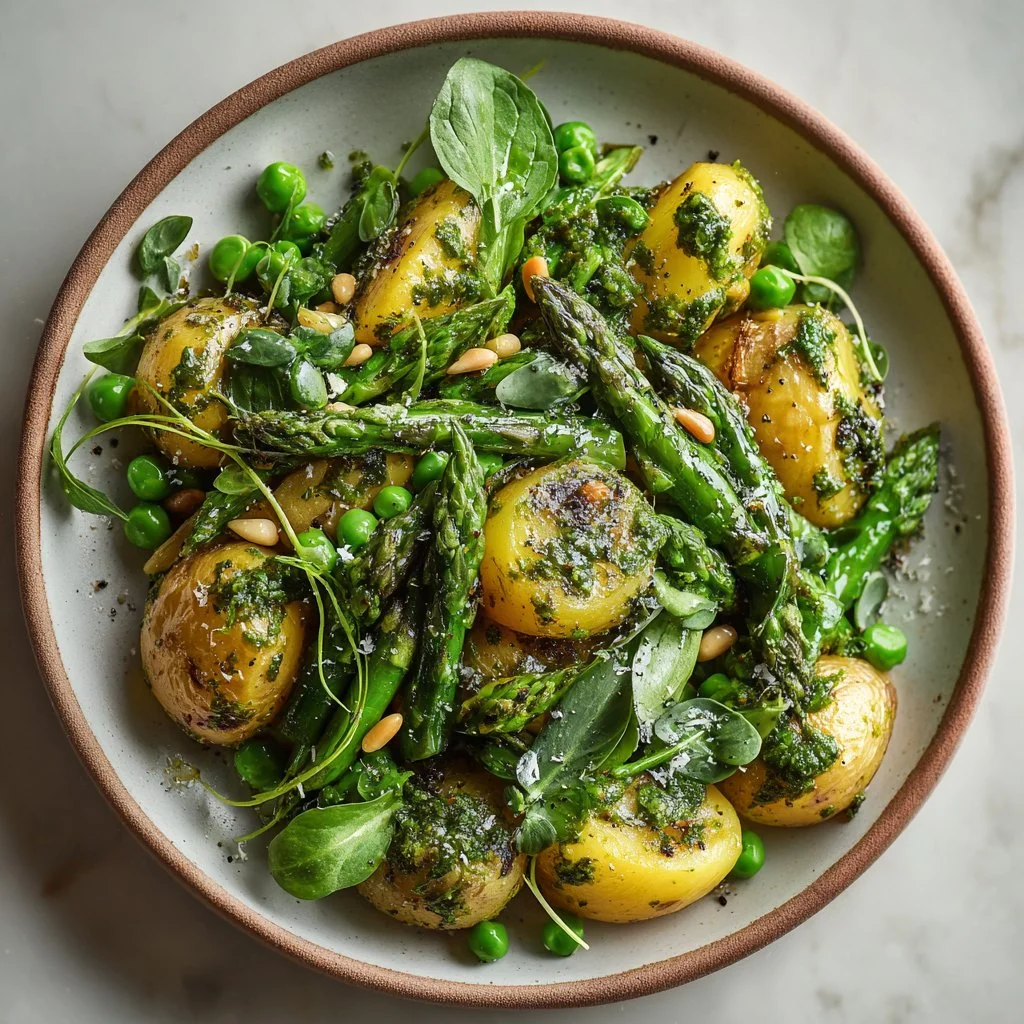
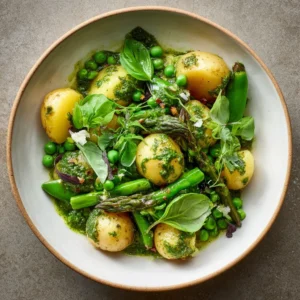
On a large serving platter spoon on the warm pesto potatoes. Arrange the blanched asparagus, broad beans and peas on top. Drizzle with the remaining pesto, season with cracked black pepper and a pinch of Maldon salt, then scatter pea shoots on top for freshness. Serve immediately.
Pro Tip: The final platter should look vibrant — streaks of green pesto, pale potatoes and bright green veg with pea shoots peeking out.
Expert Tips for British Spring Salad
- Temperature tip: Serve the salad warm — the contrast between warm potatoes and cool blanched veg preserves texture and flavour.
- Texture troubleshooting: If potatoes are gummy, they were overcooked; next time reduce simmer time and test with a knife earlier.
- Equipment tip: A food processor gives the smoothest pesto; a mortar and pestle yields more texture and personality.
- Oil quality: Use a good extra-virgin olive oil for the pesto; low-quality oil will make flavours flat.
- Herb timing: Make pesto close to serving time to keep the colour bright; if made earlier, store airtight in the fridge with a thin film of oil on top.
- Common mistake: Over-blanching greens — remove from heat promptly and drain to avoid dull colour and mushy texture.
- Visual tip: Reserve a few whole pea shoots and a drizzle of pesto to finish the platter for a professional look.
- Pairing tip: This salad pairs beautifully with grilled proteins; try serving alongside an air-fryer bang bang salmon for a complete meal idea: air-fryer bang bang salmon with cucumber salad.
Storage & Freezing for British Spring Salad
Fridge storage: Store leftover assembled salad in an airtight glass container in the refrigerator for up to 2–3 days. Keep in mind that the potatoes will absorb dressing and the blanched vegetables will soften over time. For best texture, plan to eat within 48 hours.
Freezer storage: Do not freeze the fully assembled salad — the textures will degrade. Instead, freeze the leftover wild garlic pesto in an airtight container or ice cube tray for up to 3 months. Label containers with the date.
Thawing: Thaw frozen pesto in the fridge overnight then stir to reincorporate separated oil. Avoid microwaving pesto; gentle stirring at room temperature is best.
Reheating: Gently reheat leftover potato portions in a low oven (about 150°C / 300°F) for 8–10 minutes to warm without drying. Add fresh pea shoots and a spoon of pesto after reheating to refresh the salad.
Variations & Substitutions for British Spring Salad
Protein-packed seaside version
Add flakes of hot-smoked salmon or warm slices of grilled chicken on top. The smoky-salty protein balances the herbaceous pesto and makes the salad a fuller main dish.
Nut-free pesto option
Omit pine nuts and use sunflower seeds or toasted pumpkin seeds instead. The texture and nuttiness remain but this makes the salad friendly for nut-allergy households.
Fruity, sweet-tart twist with figs
Scatter chopped fresh figs or roasted figs over the salad and swap Pecorino for a milder goat cheese. The figs add honeyed sweetness and a soft texture contrast; see inspiration from fig-forward recipes if you love fruit in salads: 10 delicious fig recipes.
Mediterranean swap
Replace wild garlic pesto with a lemony basil pesto and add olives and halved cherry tomatoes. This turns the salad into a sunnier, Mediterranean-style plate with brighter acidity.
Frequently Asked Questions About British Spring Salad
Q: Can I make the wild garlic pesto ahead of time?
A: Yes. Store it in an airtight jar in the fridge for up to 48 hours with a thin layer of olive oil on top to prevent oxidation. For longer storage, freeze pesto in ice cube trays and transfer cubes to a freezer bag for up to 3 months.
Q: What’s the best way to blanch asparagus without overcooking?
A: Bring a pot of salted water to a rolling boil, add asparagus and set a timer for 1 minute for thin stalks and up to 2 minutes for thicker stalks. Immediately drain and spread on a tray to stop steaming or briefly plunge into iced water if you want to arrest cooking and preserve bright colour.
Q: Can I use fresh peas instead of frozen?
A: Absolutely. Fresh peas are excellent in-season and sweeter than frozen. Shell them and blanch for 1 minute; remember they’ll take a touch longer to cook than frozen peas if larger.
Q: How much pesto should I plan per person?
A: This recipe uses about 150ml olive oil and 75g wild garlic leaves in the pesto batch — plan on roughly 1–2 tablespoons of pesto per serving on top of the potatoes, with extra to drizzle. You can scale the pesto volume up or down depending on how herb-forward you like the salad.
Q: Is there a gluten-free or vegan version?
A: The salad is naturally gluten-free. For a vegan version, omit the Pecorino and substitute nutritional yeast or a small amount of toasted breadcrumbs for umami and texture; use capers and extra pine nuts for richness.
Final Thoughts on British Spring Salad
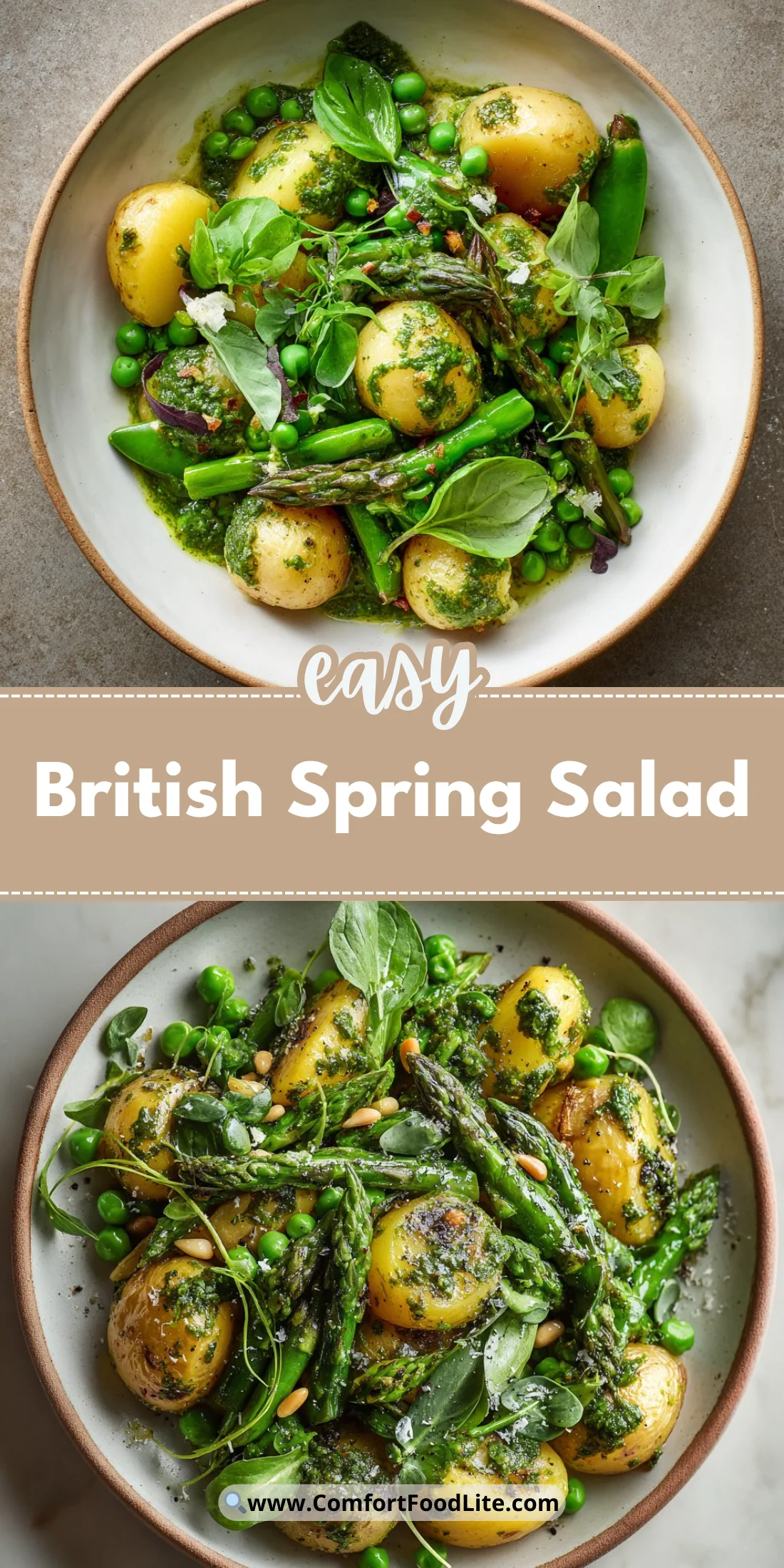
This British Spring Salad is a seasonal showstopper: herb-heavy, bright and texturally inviting.
If this recipe brought spring to your table, please leave a star rating in the recipe card below and pin it to Pinterest.
For historical and seasoning context, see the Maldon Salt take on spring salads at British Spring Salad – Maldon Salt.
For a deep-dive on classic spring salad ingredients, read the essay on seasonal salads at The Salad in Winter–and Spring – British Food in America.
If you’re researching spring onion and green-herb usage, Rachel Phipps’ notes are a useful resource: Spring onions. – by Rachel Phipps.
British Spring Salad
Ingredients
For the salad
- 500 g Jersey royal potatoes Choose small, firm tubers for even cooking.
- 150 g frozen broad beans Use frozen for convenience and peak flavor.
- 150 g frozen garden peas Frozen maintains color after blanching.
- 250 g asparagus Choose firm stalks, avoid limp ends.
- 10 g grated Pecorino For added flavor.
- 1 pinch Maldon salt For seasoning.
- 1 handful pea shoots For garnishing.
- cracked to taste black pepper To taste.
For the wild garlic pesto
- 75 g wild garlic leaves Look for vivid green leaves.
- 1 small handful basil leaves Provides additional flavor.
- 150 ml olive oil Use high-quality extra-virgin for best flavor.
- 20 g pine nuts For creaminess in the pesto.
- 1 tsp capers For added umami.
Instructions
Make the wild garlic pesto
- In a food processor, combine the wild garlic leaves, basil, pine nuts, capers, grated Pecorino, and olive oil. Blitz until smooth or to your desired texture.
Cook the Jersey royal potatoes
- If the potatoes vary significantly in size, halve the larger ones. Place in a large pan, cover with cold water, bring to a boil, then simmer for about 10 minutes until tender.
Blanch the asparagus, peas, and broad beans
- In another pan, bring salted water to a boil, then add asparagus, peas, and broad beans. Blanch for 1 minute, then drain immediately.
Toss potatoes with pesto
- Drain the potatoes and let them steam dry for a minute. Toss with two-thirds of the pesto while warm.
Assemble the salad
- On a serving platter, spoon the warm pesto potatoes. Top with blanched asparagus, peas, and broad beans. Drizzle with remaining pesto, season, and garnish with pea shoots.