The first time I made this bang bang fried rice, it converted leftover rice into a weeknight superstar.
It’s fast, bold, and forgiving—exactly what busy cooks need.
The sauce is spicy-sweet, the rice gets crisp edges, and the protein brings everything together.
This recipe is a winner because it uses simple pantry staples to deliver restaurant-style flavor at home.
It scales easily, reheats well, and works with shrimp, chicken, or tofu.
You’ll get a hit of heat from sriracha, a deep savory backbone from soy and optional oyster sauce, and a nutty finish from sesame oil.
Why You’ll Love This Recipe
- Quick weeknight dinner that cooks in one pan.
- Flexible protein options for omnivores and vegetarians.
- Uses day-old rice so you waste less and get better texture.
- Bold flavor without a lot of complicated steps.
- Easy to customize to spice tolerance or pantry items.
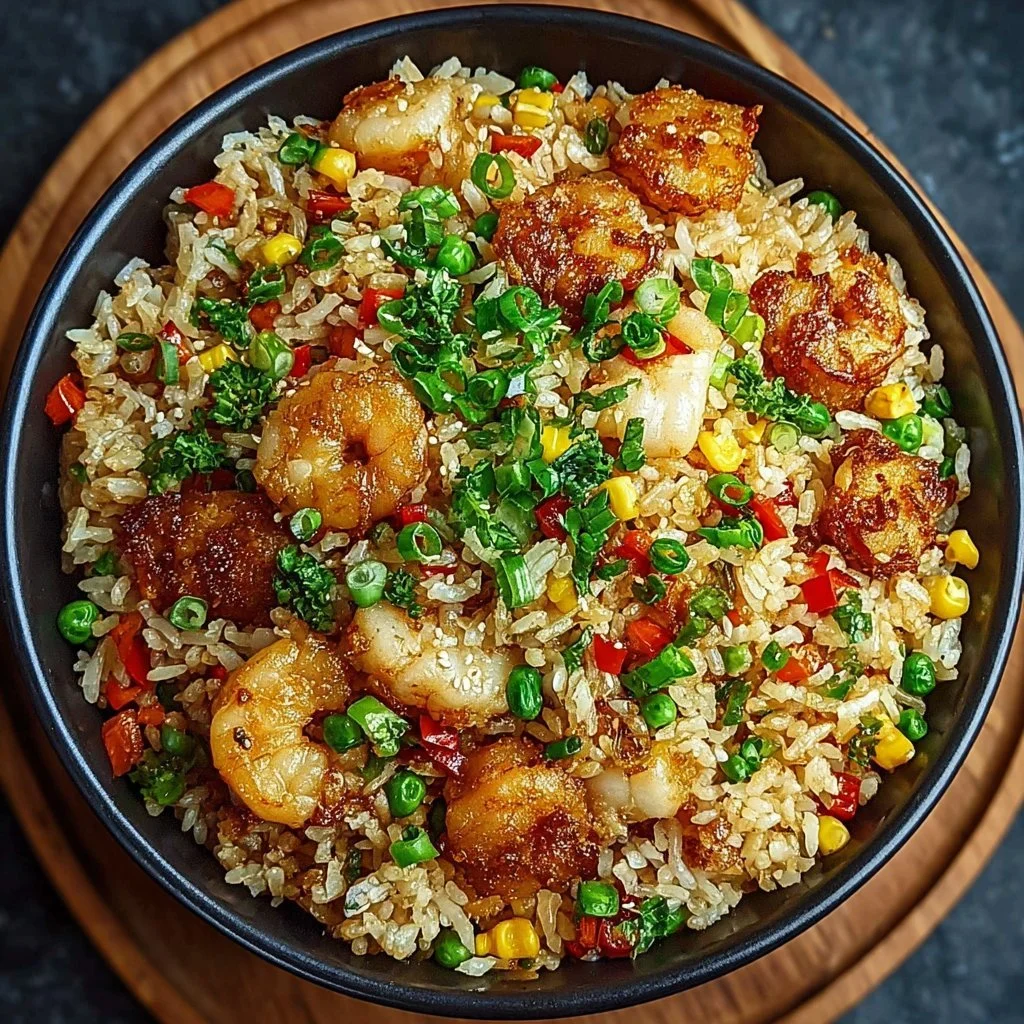
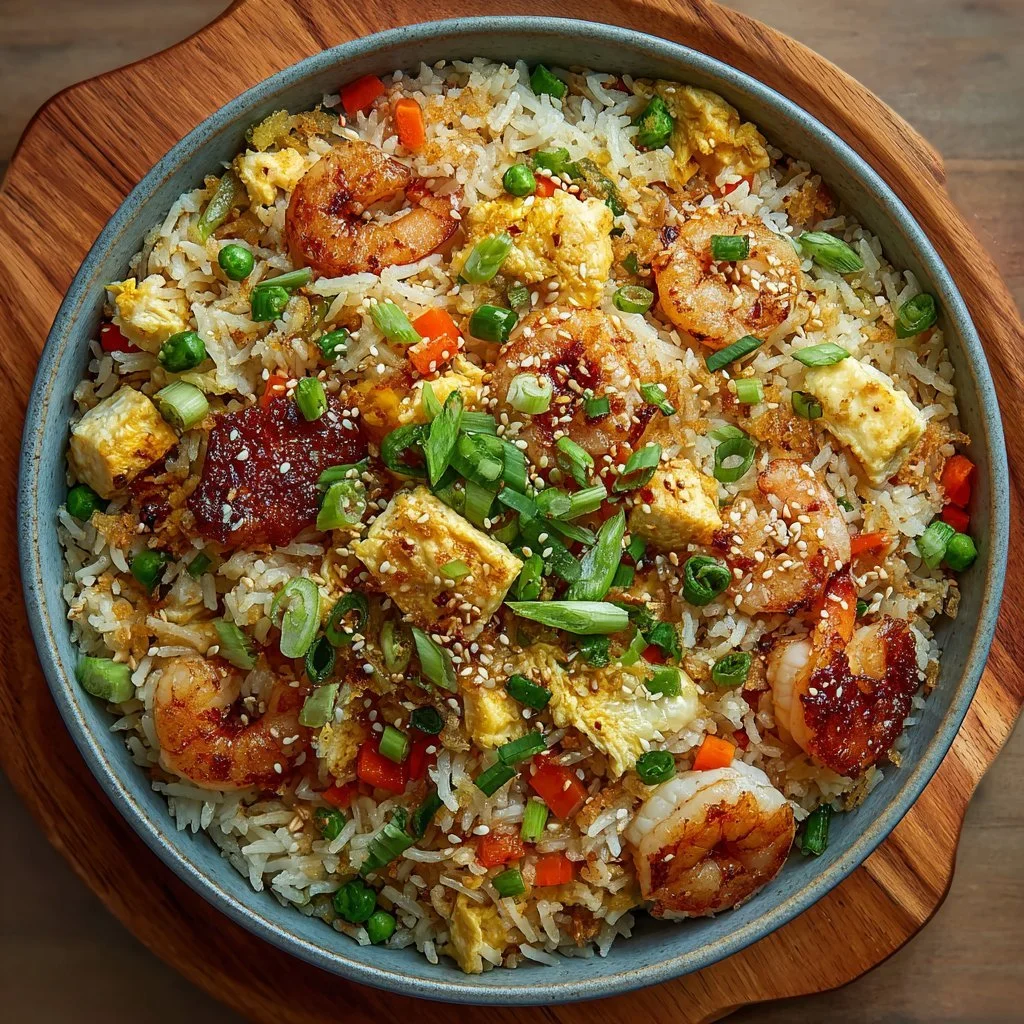
The texture of this dish is what makes it addictive.
Day-old jasmine separates so each grain gets coated and slightly toasted, giving a pleasing chew and occasional crisp edges.
The veggies add pops of color and crunch, while the protein keeps bites substantial.
Flavor-wise you’ll notice salty-sweet notes from the soy and oyster sauce, a tingle of heat from the sriracha, and a toasty finish from sesame oil.
"Five stars — my family fought over the pan. Easy, fast, and packs restaurant flavor." — Miriam, reader
Key Ingredients
Jasmine Rice (day-old preferred)
Day-old jasmine rice is the backbone of real fried rice.
Using rice that’s been chilled dries the grains slightly, preventing mush and encouraging those desirable toasted edges.
If you must use fresh rice, spread it on a tray to cool quickly and refrigerate for at least an hour.
Soy Sauce
Soy sauce brings salty, savory umami that ties the whole dish together.
I reach for a naturally brewed, low-sodium soy sauce like Kikkoman when I want balance and predictable salinity.
If you prefer depth, try a mix of light soy for seasoning and a splash of dark soy for color.
Sriracha Sauce
Sriracha is the quick shortcut for bang bang heat and a touch of sweetness.
It’s smooth, shelf-stable, and blends easily into sauces so you get even spice distribution.
Adjust quantity to taste or swap for a chili garlic sauce if you want more texture and heat.
Sesame Oil
Sesame oil is used sparingly but it changes everything.
A teaspoon or tablespoon added at the end delivers an aromatic, nutty finish that reads as authentic.
Toasted sesame oil is intense—use a small amount at the end of cooking for best effect.
Full Ingredient List:
- 4 cups cooked jasmine rice (preferably day-old)
- 1 cup cooked shrimp, chicken, or tofu (diced)
- 1 cup mixed vegetables (carrots, peas, bell peppers)
- 3 green onions (chopped)
- 2 cloves garlic (minced)
- 2 tablespoons soy sauce
- 1 tablespoon sriracha sauce
- 1 tablespoon oyster sauce (optional)
- 1 tablespoon sesame oil
- 2 tablespoons vegetable oil
- Salt and pepper to taste
- Sesame seeds (for garnish)
Step-by-Step Instructions
Step 1: Prepare the Rice and Protein
If using fresh rice, cook it according to package directions and spread it on a sheet to cool.
For best results, use day-old rice from the fridge so it’s less sticky and separates easily.
Dice your cooked protein—shrimp, chicken, or pressed and fried tofu—so it heats evenly.
Pro Tip: Cold rice clumps break apart more easily with the back of your spatula; if clumps remain, smash gently rather than over-stirring.
Step 2: Heat the Pan
Heat a large skillet or wok over medium-high heat.
Add the 2 tablespoons of vegetable oil and swirl to coat the surface.
The pan should be hot but not smoking before you add aromatics.
Pro Tip: A drop of water should sizzle and evaporate on contact—that’s your signal the pan is ready.
Step 3: Sauté the Aromatics
Add the minced garlic to the hot oil and sauté for about 30 seconds until fragrant.
Avoid browning the garlic too much to prevent bitterness.
This quick bloom in oil releases flavor that will carry through the dish.
Pro Tip: If you’d like, add a small knob of ginger with the garlic for fresh brightness.
Step 4: Add the Protein
Add your choice of cooked shrimp, chicken, or tofu to the pan.
Stir-fry for 2–3 minutes until the protein is heated through and picking up a little color.
If using tofu, let it sit a moment to form a light crust before stirring.
Pro Tip: For extra caramelization, pat protein dry with paper towels before adding to the wok.
Step 5: Mix in the Vegetables
Add the mixed vegetables and stir-fry for about 2 minutes more until vegetables are warmed and still slightly crisp.
Bell peppers should hold their shape; peas and carrots should be tender-crisp.
This keeps texture contrast in every bite.
Pro Tip: Frozen mixed vegetables are fine—add them straight from frozen and give an extra 30–45 seconds for water to evaporate.
Step 6: Add the Rice
Break up any clumps and add the cold rice to the skillet.
Use a spatula to separate grains and toss them with the protein and vegetables.
Keep the pan hot so the rice briefly fries instead of steaming.
Pro Tip: Spread rice across the pan and let it sit for 20–30 seconds to develop a slight crust before stirring again.
Step 7: Season the Rice
Pour in the soy sauce, sriracha, oyster sauce (if using), and sesame oil.
Stir thoroughly to coat every grain and distribute the sauce evenly.
Taste and adjust with salt and pepper as needed.
Pro Tip: Start with the lower end of soy sauce measurement and adjust; you can always add more but you can’t take it away.
Step 8: Garnish and Serve
Once everything is heated through and well combined, remove the pan from heat.
Sprinkle with chopped green onions and sesame seeds for freshness and texture.
Transfer to a serving dish and enjoy immediately.
Pro Tip: A squeeze of lime or a dash of rice vinegar before serving brightens the whole dish.
Expert Tips for Success
- Use day-old rice for the best texture. Freshly cooked rice releases steam and makes the finished dish gummy.
- Keep the pan hot and don’t overcrowd it. High heat helps you get those toasty edges and prevents steaming.
- Dry protein before cooking. Moisture equals steam; drying or patting protein helps achieve a quick sear.
- Measure salty ingredients carefully. Soy and oyster sauces carry a lot of sodium—start small and adjust after tasting.
- Add sesame oil at the end. Toasted sesame oil loses its aroma if cooked too long, so stir it in off-heat for the best aroma.
- Use neutral oil for frying. Oils with high smoke points (vegetable, canola, grapeseed) allow you to cook at higher temps without burning.
- Let flavors rest a minute before serving. A short rest off the heat lets sauces settle into the rice and reduces steaminess.
- If using frozen veggies, cook them long enough to let excess water evaporate; otherwise the dish will be watery.
- For extra depth, add a small pat of butter or a splash of toasted sesame paste when seasoning for a silkier mouthfeel.
- Don’t skimp on aromatics—fresh garlic and green onions complete the profile and make the dish smell irresistible.
Storage & Freezing
Fridge: Store leftover bang bang fried rice in an airtight container for up to 3–4 days.
Cool it to room temperature before refrigerating to avoid condensation in the container.
Reheat in a skillet over medium heat with a splash of oil or water to revive texture.
Freezer: To freeze, portion the rice into airtight, freezer-safe containers or heavy-duty freezer bags.
Press out extra air and freeze for up to 2 months for best quality.
Label with the date so you can rotate meals easily.
Thawing & Reheating: Thaw overnight in the fridge if possible.
Reheat on the stove in a hot skillet with a teaspoon of oil; spread the rice so it reheats quickly and gets a little crisp.
Microwave works in a pinch—cover and use 60–70% power, stirring every 45–60 seconds to avoid hotspots.
Add a splash of soy or a drizzle of sesame oil after reheating to refresh the flavors.
Variations & Substitutions
Vegetarian/Vegan: Use tofu for protein and swap oyster sauce for mushroom-flavored stir-fry sauce or tamari for a vegan umami boost.
Low-Sodium: Use low-sodium soy sauce and skip the oyster sauce. Boost flavor with extra garlic, a squeeze of lime, or fresh herbs.
Spicier Kick: Increase sriracha or add a spoonful of chili crisp for crunch and heat. You can also fold in sliced fresh chiles.
Different Grains: Try sushi rice for stickier texture or brown rice for a nuttier, chewier whole-grain option—note that brown rice needs longer cooking and different water ratio when fresh.
Frequently Asked Questions
Q: Can I use fresh rice instead of day-old rice?
A: Yes, but cool it quickly to reduce moisture. Spread hot rice on a baking tray and refrigerate for at least an hour. This helps grains separate and avoids a mushy final result.
Q: How do I prevent my fried rice from turning soggy?
A: Keep heat high, don’t overcrowd the pan, and use day-old rice. Avoid adding too much sauce at once—add gradually and taste as you go.
Q: Is oyster sauce necessary?
A: No. Oyster sauce adds extra umami and sweetness, but you can omit it or substitute with hoisin, mushroom stir-fry sauce, or a small pinch of sugar and more soy for balance.
Q: Can I make this ahead for meal prep?
A: Absolutely. Portion into meal prep containers and refrigerate. Reheat in a hot skillet for best texture. For freezer meals, freeze in single portions and thaw overnight before reheating.
Q: What’s the best protein for this recipe?
A: Shrimp cooks quickly and pairs beautifully with the bang bang flavors. Chicken gives a hearty option, and tofu soaks up sauce for a vegetarian-friendly version. Choose based on time and preference.
Final Thoughts
This bang bang fried rice is a reliable go-to when you want big flavor with minimal fuss.
It’s forgiving, fast, and easy to adapt to whatever’s in your fridge.
Please leave a star rating in the recipe card below and pin this to Pinterest if you loved it.
Conclusion
For inspiration and variations on bang bang rice and chicken combos, check out this practical take on Bang Bang Chicken Fried Rice from I Am Homesteader.
If you want a spicy, crispy perspective on the dish with different texture tips, see the helpful guide at Sauced Up Foods.
Looking for another tested recipe with measurements and user reviews, read the version on Allrecipes.
And if you want a shrimp-forward home-cook approach with step photos, try this approachable tutorial at Sunny Slide Up.
Bang Bang Fried Rice
Ingredients
Main Ingredients
- 4 cups cooked jasmine rice (preferably day-old) Using chilled rice prevents mushy texture.
- 1 cup cooked shrimp, chicken, or tofu (diced) Choose your preferred protein.
- 1 cup mixed vegetables (carrots, peas, bell peppers) Fresh or frozen vegetables work well.
- 3 pieces green onions (chopped) For garnish.
- 2 cloves garlic (minced) Adds aromatic flavor.
Sauce and Seasoning
- 2 tablespoons soy sauce Use low-sodium for a healthier option.
- 1 tablespoon sriracha sauce Adjust quantity to taste.
- 1 tablespoon oyster sauce (optional) Adds umami flavor.
- 1 tablespoon sesame oil Adds nuttiness; use at the end of cooking.
- 2 tablespoons vegetable oil For frying.
- to taste salt and pepper Adjust based on personal preference.
- sesame seeds (for garnish)
Instructions
Preparation
- If using fresh rice, cook according to package directions and spread on a sheet to cool. Ideally, use day-old rice from the fridge.
- Dice your cooked protein into small pieces for even heating.
Cooking
- Heat a large skillet or wok over medium-high heat and add vegetable oil.
- Once the oil is hot, sauté the minced garlic for 30 seconds until fragrant.
- Add the diced protein and cook for 2–3 minutes until heated through.
- Mix in the vegetables and stir-fry for about 2 minutes until they are crisp.
- Add the cold rice and break up clumps using a spatula; toss everything to combine.
- Pour in the soy sauce, sriracha, oyster sauce (if using), and sesame oil, stirring well.
- Remove from heat and garnish with chopped green onions and sesame seeds before serving.